
Leo spent two years in the gym with very little to show for it. He trained hard, rarely missed a week, and still looked roughly the same in August as he had in February. What finally changed things was not a brutal new session or a shelf of supplements. It was a plan, written down, that told him what he was doing on Monday and why.
That is the part many lifters skip. Effort feels like the variable that matters, so people chase soreness and novelty, then wonder why they are not seeing the progress they expected. Muscle responds to organized stress applied repeatedly over time, with enough recovery in between for the body to adapt. Without some structure, it is easy to work hard without knowing whether you are actually progressing.
The structure itself does not have to be complicated. Four decisions carry much of the result: how you progress the load, which exercises you keep, how often you train each muscle, and what you do during the hours you are not training. Building a realistic, structured exercise routine can also make it easier to stay consistent and recognize progress over time.
Progressive Overload Is the Engine of the Plan
Nothing grows without a reason to grow. Progressive overload is that reason, and it simply means the demand on a muscle increases gradually over time. That might mean:
- adding a little more weight
- completing an extra repetition at the same load
- adding another set
- improving control or range of motion
Pick one variable and nudge it rather than changing everything in the same week.
The Human Performance Resource Center folds this into its FITT-VP framework, where progression sits alongside frequency, intensity, time, type, and volume as elements of a training plan.
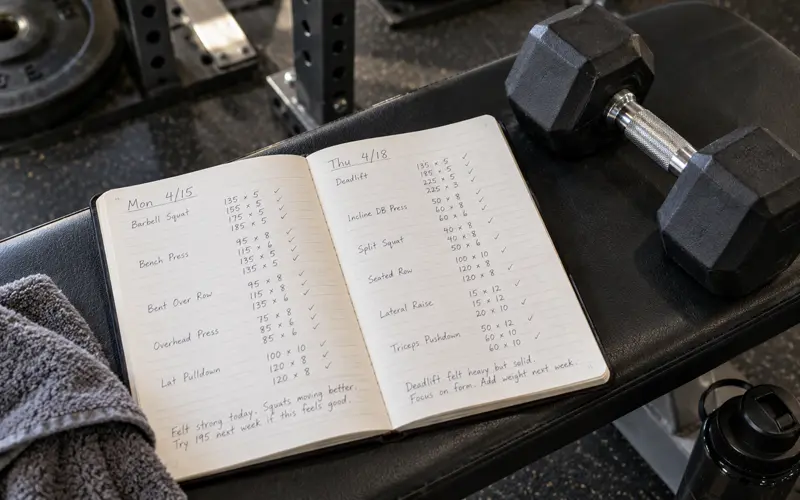
Writing the numbers down matters more than people expect because memory can be unreliable. A logbook turns a vague sense of effort into evidence, and that makes it much easier to see whether the last month actually moved anything forward.
Choose Exercises That Earn Their Place
A muscle does not know whether the resistance came from a barbell, dumbbell, cable stack, or machine, so the question is less about which tool is best and more about which movements work well for your body, goals, and available equipment.
Many strength programs build sessions around compound exercises that work several muscle groups at once, such as squats or leg presses, hinges, presses, and pulling movements. These exercises can form the foundation of a workout because they allow you to train multiple areas efficiently.
Isolation movements can then fill in the gaps. A lateral raise, hamstring curl, biceps curl, or similar exercise can give additional attention to specific muscles without requiring another major compound movement.
Most importantly, leave the exercise list alone long enough to get good at it. Constantly replacing movements makes it much harder to tell whether you are progressing.
Set a Training Frequency You Can Repeat
Frequency is where ambitious plans quietly die. Training a muscle more than once during the week can be an effective approach, but the exact schedule depends on your training volume, recovery, experience, and lifestyle.
Common options include:
- an upper and lower split performed four days per week
- full-body training three days per week
- another split that distributes enough weekly training volume without making recovery difficult
The best layout is the one that fits your calendar and is realistic enough to repeat. Consistency matters more than creating a schedule that looks impressive on paper but falls apart after two weeks.
Friction can also make consistency harder. A commute plus a queue for the squat rack can cost more sessions than expected. Plenty of lifters solve that by training at home, and the Boot Camp & Military Fitness Institute guide to choosing the right home gym setup walks through which machines may suit different goals.
If you prefer home workouts, even a thoughtfully arranged workout space can make regular training easier to fit into everyday life. The best schedule is the one still standing in week twelve.
Treat Recovery and Nutrition as Part of the Training
Training provides the stimulus, while recovery gives the body time to adapt. Lifters chasing gains in bulk can sometimes put most of their attention on the workout itself while overlooking sleep and nutrition.
Protein plays an important role in supporting muscle repair and growth. Many people focused on building muscle aim for a higher-protein diet, often spreading protein intake throughout the day rather than relying on one large meal. Individual needs vary based on body size, activity level, overall diet, and training goals.

Some people trying to gain muscle also choose a modest calorie surplus to provide additional energy for training and growth. It does not need to be excessive, and the right amount varies from person to person.
Sleep matters too. The Sleep Foundation reports that athletes generally need seven to nine hours, while some may benefit from additional rest depending on their training demands.
Recovery time between challenging sessions is equally important. Rather than following one strict number of hours for everyone, give heavily trained muscles enough time to recover before working them hard again.
Putting the Structure to Work
Leo’s version of all this fit on a single index card taped inside a cupboard door. Four sessions a week, five lifts in each, one number to beat per lift, and a bedtime he mostly kept. Nothing about it was particularly complicated, which is part of why it was sustainable.
Give any structure a fair trial before you judge it. Eight to twelve weeks can provide a much clearer picture than a couple of workouts because strength and visible muscle changes happen gradually.
Track the load, track the reps, and let the overall trend rather than any single day decide whether something needs to change.
When progress does stall, change one thing at a time. You might:
- add a set
- adjust the load and build back up
- improve sleep or recovery
- take a lighter training week
- reconsider whether your current volume is still appropriate
The people who make steady progress are rarely the ones who train hardest on one particular afternoon. They are the ones who create a workable plan, follow it consistently, and adjust it when necessary.