

Getting back into a workout routine can sometimes feel harder than starting one for the first time. You remember what you used to be able to do, from the weights you lifted to how long you could exercise, and it is tempting to expect your body to pick up exactly where it left off.
Whether your break lasted a few weeks, several months, or much longer, there is no need to make up for lost time. Starting with a realistic routine gives you a chance to rebuild your strength and endurance without making exercise feel overwhelming.
Start With Where You Are Now
Your first few workouts are a chance to see where you are today. A weight that once felt easy may feel heavier, or you may get tired sooner than you remember. Give yourself time to adjust instead of comparing every workout to what you could do before your break.
The goal during these first few weeks is simply to start moving consistently again. Once exercise feels like part of your schedule, you can gradually begin challenging yourself more.
Keep Your First Workouts Manageable
Motivation is usually high when you decide to start exercising again, which makes it easy to do too much. You may feel ready for five workouts a week when two or three would give you a much better starting point.
The CDC’s physical activity guidelines recommend that adults work toward at least 150 minutes of moderate-intensity aerobic activity each week, along with muscle-strengthening activity on at least two days. If you have been inactive for a while, you can gradually work toward those amounts rather than trying to reach them during your first week.
Choose a Schedule That Fits Your Life
A workout routine only works when you have time to follow it. Instead of building your schedule around an ideal week, think about what a normal busy week looks like and choose workout days that realistically fit.
Consistency matters more than creating an impressive schedule. Three workouts you complete every week will do more for your routine than planning five and regularly missing two of them.
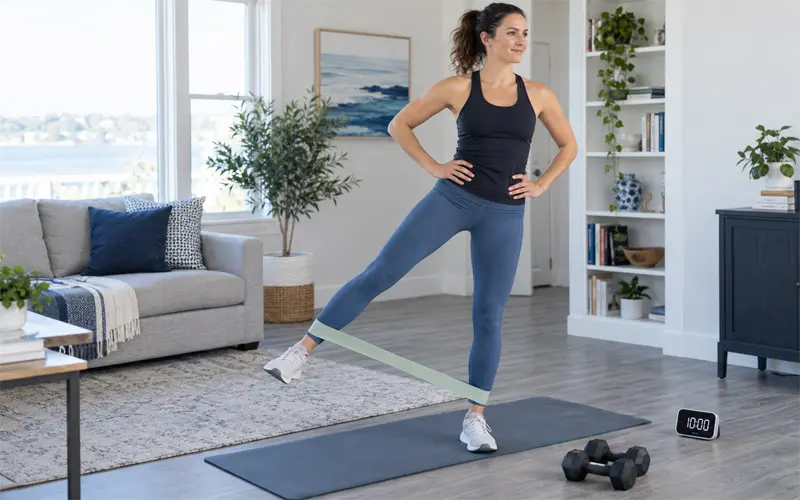
Having a home workout space can also remove some of the barriers to getting started. You do not need an elaborate gym; having your equipment organized and ready can make it much easier to fit exercise into the day.

Bring Strength Training Back Gradually
If you lifted weights before your break, resist the urge to immediately return to your previous weights. Start lighter, pay attention to your form, and give yourself a few workouts to see how your body responds.
You also do not need a complicated list of exercises. A simple strength routine can cover the major areas of your body:
- Legs and glutes
- Back
- Chest and shoulders
- Arms
- Core
Dumbbells are enough for many exercises, while resistance loop bands can add variety without requiring much equipment or space.
Add Cardio Without Overdoing It
Cardio does not have to mean running or spending an hour on a machine. Walking, cycling, rowing, swimming, or dancing can all help you rebuild endurance.
Start with an amount that feels manageable. If 15 or 20 minutes feels good right now, there is no reason it has to become 45 minutes immediately.
As your endurance improves, increase either the time or intensity gradually. You may be surprised by how quickly activities that initially feel challenging begin to feel normal again.
Expect Some Soreness
Returning to exercises you have not done recently may leave your muscles sore, particularly during the first week or two. That does not mean you need to push yourself until every workout leaves you struggling to move the next day.
Moderate workouts give your body time to adapt while making it easier to return for your next scheduled session. Sharp pain, worsening joint pain, or discomfort that feels different from ordinary muscle fatigue should not be something you try to work through.
Make It Easy to Start
Sometimes the hardest part of exercising is getting started. Removing a few small obstacles can make that transition easier, especially while you are still rebuilding the habit.
Set out your workout clothes the night before, keep your shoes and equipment accessible, and decide what workout you are doing before it is time to begin. If you exercise in the morning, having everything ready means fewer decisions when you are still waking up.
Once you start, the workout itself often feels easier than all the thinking you did beforehand.
Give Short Workouts Some Credit
A busy day does not have to turn into a skipped workout simply because you do not have time for your full routine. Having a shorter backup option gives you something between doing everything and doing nothing.
That could mean:
- A 15-minute walk
- Three strength exercises
- A short bike ride
- Ten minutes of core work
- A quick resistance-band session
Some days you may start with the short version and decide to keep going. Other days, 15 minutes really will be all you have time for. Either way, you kept exercise in your day.
Support Your Workouts With Nutrition
Returning to regular exercise also means giving your body what it needs to support your activity. Hydration, balanced meals, and enough protein can all play a role in how you feel during and after workouts.
Protein is especially useful when strength training is part of your routine, and there are plenty of practical ways to increase your protein intake without changing everything you eat.
If you prefer exercising after eating, understanding what to eat before a workout can also help you find meals or snacks that work with your workout schedule.
Focus on Consistency Before Performance
It is easy to get caught up in how much weight you are lifting, how far you walked, or how many calories your watch says you burned. Those numbers can be useful, but they do not need to be the focus when you are just getting back into a routine.
At first, simply track whether you showed up. If you planned three workouts and completed three workouts, that is progress. Once consistency feels normal again, performance goals become much easier to work toward.
Increase One Thing at a Time
As your workouts start feeling easier, you can gradually make them more challenging. The key is not changing everything at once.
You might add a few minutes to your cardio, increase the weight of your dumbbells, add another set, or choose a slightly harder exercise variation. Give yourself time to adjust before making another change. Small increases may not feel dramatic, but they are much easier to sustain.
Do Not Depend on Motivation
Motivation is great when it shows up, but eventually there will be a morning when staying in bed sounds better or an evening when you would rather sit on the couch.
That is where routine becomes more important. Building realistic habits is a big part of staying motivated on a fitness journey because you are no longer relying entirely on whether you feel like exercising that day. The more often you follow your schedule, the less effort it takes to convince yourself to start.
Give Yourself Time to Find Your Rhythm Again
Getting back into a workout routine does not require a dramatic first week. You do not need to return immediately to your old weights, workout length, or schedule to be making progress.
Start with what feels manageable, gradually increase the challenge, and pay attention to what works with your life now. After a few consistent weeks, exercise begins to feel less like something you are trying to restart and more like part of your normal routine again.