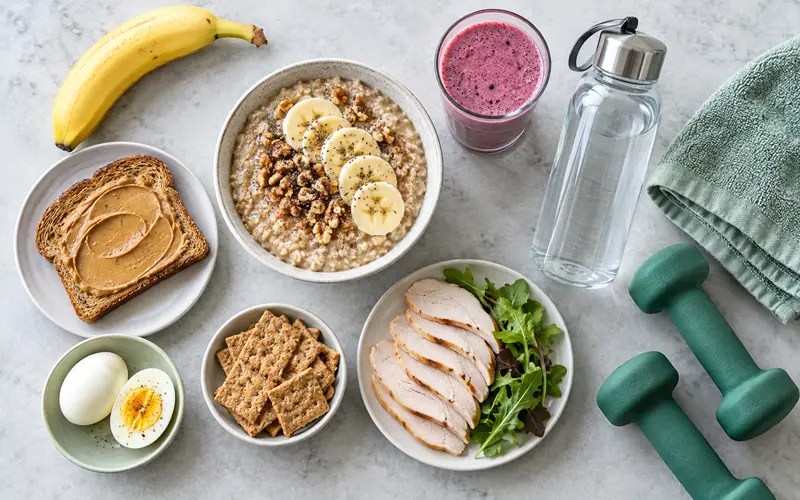
What you eat before a workout can affect your energy, comfort, and ability to finish strong. The best choice depends on how soon you plan to exercise, what type of workout you are doing, and how your stomach handles food during movement.
A full meal may work well several hours before exercising, while a banana or piece of toast makes more sense when a workout begins in 30 minutes. Some people can also complete a short morning workout without eating first. There is no single pre-workout meal that works for every person or every exercise session.
The easiest approach is to match the size and composition of the food to the amount of time available for digestion.
What Should You Eat Before a Workout?
Carbohydrates are the body’s most accessible source of exercise fuel. Protein supports muscle maintenance and recovery, while fat and fiber provide everyday nutritional benefits but take longer to digest.
A practical pre-workout meal usually contains:
- Carbohydrates for readily available energy
- A moderate amount of protein
- A smaller amount of fat
- Enough fluid to begin the workout hydrated
The closer the meal is to the workout, the smaller and easier to digest it should be. Large portions, fried foods, rich sauces, and meals high in fat or fiber can cause heaviness or stomach discomfort when eaten shortly before exercising.
According to the joint sports nutrition guidance from the Academy of Nutrition and Dietetics, Dietitians of Canada, and the American College of Sports Medicine, appropriate food and fluid choices can support exercise performance and recovery. However, the ideal amounts depend on the athlete, workout, and overall diet.
When to Eat Before a Workout
The following chart provides a simple starting point. Personal tolerance matters, so adjust the portions and timing based on how you feel while exercising.
| Time Before Workout | What to Eat | Simple Examples |
|---|---|---|
| 2–4 hours | A balanced meal with carbohydrates, protein, and a moderate amount of fat | Chicken with rice and vegetables, eggs with toast and fruit, or a turkey sandwich with fruit |
| 1–2 hours | A smaller meal or substantial snack with carbohydrates and some protein | Oatmeal with milk, toast with an egg, a smoothie, or crackers with turkey |
| 30–60 minutes | A light, easy-to-digest snack focused mainly on carbohydrates | Banana, applesauce, toast, pretzels, dry cereal, or a small granola bar |
| Less than 30 minutes | Water and, if needed, a very small amount of quick carbohydrate | A few bites of banana, applesauce pouch, or several crackers |
These time ranges are flexible. Someone who comfortably eats an hour before strength training may need more time before running because bouncing and continuous movement can make digestion more noticeable.
What to Eat Two to Four Hours Before a Workout
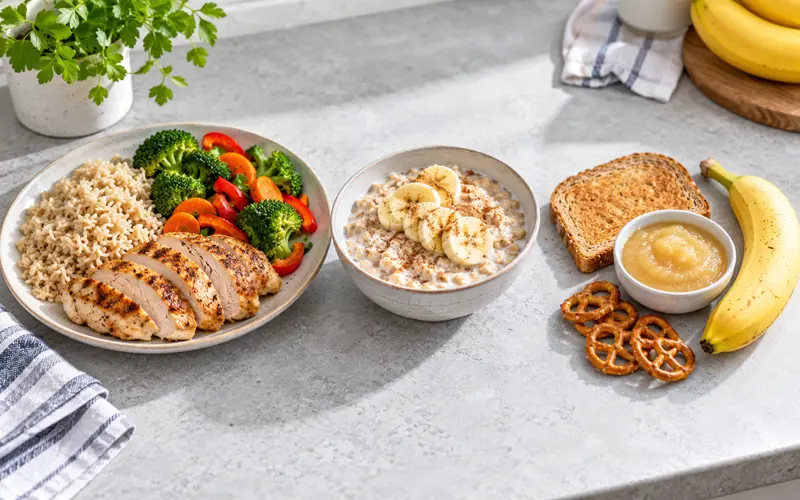
When there are several hours available before exercising, eat a normal meal rather than searching for a special fitness food. The meal should provide carbohydrates, protein, and enough food to prevent hunger without leaving you uncomfortably full.
Good combinations include:
- Grilled chicken, rice, and cooked vegetables
- Turkey sandwich with fruit
- Scrambled eggs, whole-grain toast, and a banana
- Baked potato topped with chicken and a small amount of cheese
- Pasta with lean ground turkey and a light sauce
- Rice bowl with lean meat, vegetables, and a modest amount of avocado
A balanced meal can fuel the workout while contributing to daily protein needs. Anyone who struggles to get enough protein throughout the day can use simple ways to increase protein intake without forcing every meal to become a massive serving of meat.
What to Eat One to Two Hours Before a Workout
With less time to digest, reduce the meal size and be cautious with heavy fats and large amounts of fiber. Carbohydrates remain helpful for energy, while a smaller serving of protein can make the snack more satisfying.
Options include:
- Oatmeal prepared with milk
- Toast with a hard-boiled egg
- Banana with a thin layer of peanut butter
- A small smoothie with fruit and protein
- Crackers with sliced turkey
- Half of a turkey sandwich
- A protein shake with a piece of fruit
- Low-fat cottage cheese with fruit, if dairy sits well
Protein powder can be convenient when eating a traditional meal before an early workout is not appealing. Understanding what to look for when choosing a protein powder can make it easier to find one that fits individual dietary preferences and digestion.
What to Eat 30 to 60 Minutes Before a Workout
Food eaten shortly before exercise should be small and easy on the stomach. This is not the ideal time for a large salad, a greasy breakfast sandwich, or a protein bar loaded with fiber and sugar alcohols.
Choose a simple carbohydrate such as:
- A banana
- Toast with a little jam
- Applesauce
- A small handful of pretzels
- Dry cereal
- A rice cake
- A few crackers
- Half of a basic granola bar
A small amount of protein is fine if it is well tolerated, but there is no need to pack a full meal into the final 30 minutes. The goal is to provide a little energy without beginning the workout feeling overly full.
Is Oatmeal Good Before a Workout?
Oatmeal can be a good pre-workout food because it supplies carbohydrates and is easy to combine with protein. However, its fiber content means timing and portion size matter.
A regular bowl of oatmeal generally fits better one to two hours before exercise. Adding milk, a small amount of protein powder, or an egg on the side can create a more balanced meal. Someone exercising within 30 minutes may feel better with a smaller portion or a lower-fiber option such as toast, applesauce, or a banana.
Avoid loading pre-workout oatmeal with large amounts of nut butter, seeds, or high-fiber toppings unless there is plenty of time for digestion.
Should You Eat Before a Workout?
Not every workout requires a separate meal or snack. If you ate a balanced meal within the last few hours and are completing a short or moderate workout, you may already have enough energy.
Eating beforehand may be more helpful when:
- Several hours have passed since the last meal
- Hunger makes it difficult to concentrate
- The workout will be long or intense
- Energy tends to drop midway through exercise
- You feel weak, shaky, or lightheaded when exercising without food
A brief walk, easy bike ride, or 20-minute strength session may not require additional food. Longer endurance workouts and demanding strength sessions are more likely to benefit from deliberate pre-workout nutrition.
The International Society of Sports Nutrition’s position on nutrient timing also emphasizes that total daily nutrition remains important. Perfectly timing one snack cannot compensate for consistently eating too little or missing important nutrients throughout the day.
Pre-Workout Food for Strength Training
Carbohydrates and protein make a useful combination before resistance training. Carbohydrates help provide workout energy, while protein contributes to the daily intake needed to maintain and build muscle.
A full pre-workout meal might include chicken and rice, eggs and toast, or a turkey sandwich. When there is less time, a banana with a protein shake or toast with an egg can work well.
Protein does not have to be consumed immediately before lifting to be useful. Meeting protein needs across the entire day is more important than squeezing a large shake into the few minutes before training, and adding protein to regular meals and snacks can make that goal easier to reach.
Pre-Workout Food for Cardio
The duration and intensity of cardio influence how much food may be helpful. A comfortable 20-minute bike ride requires less preparation than a long run, strenuous cycling class, or extended hike.
For a short cardio workout, a normal meal eaten earlier may be enough. Before longer or more demanding exercise, a carbohydrate-rich meal or snack can help supply energy.
Good choices include:
- Rice or potatoes with lean protein several hours beforehand
- Oatmeal one to two hours beforehand
- Toast, fruit, or pretzels closer to the workout
- A banana when only a small snack is needed
People who experience stomach discomfort during cardio should experiment with smaller portions and allow more digestion time.
What to Eat Before an Early-Morning Workout
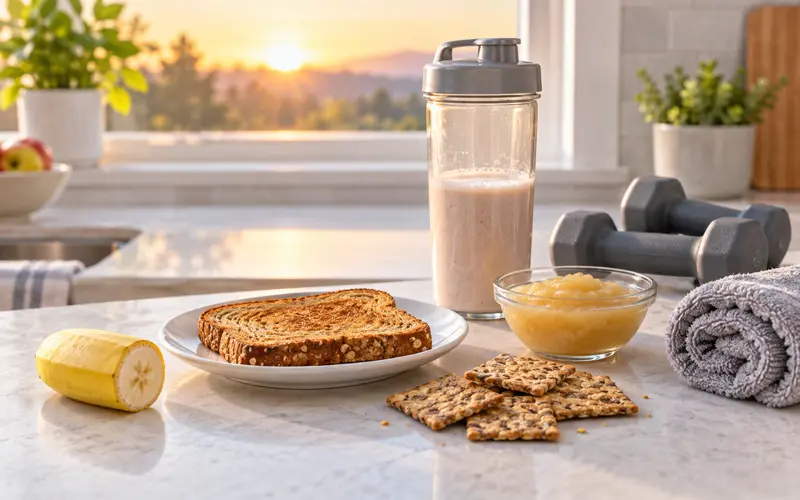
I usually exercise early, and eating a full breakfast before starting is not realistic for me. On mornings when I feel comfortable and have enough energy, I can complete a shorter workout and eat afterward. If I wake up hungry or plan a harder session, a few crackers, toast, or part of a banana is much easier than forcing down a meal.
Early-morning options include:
- Half of a banana
- A piece of toast
- A few crackers or pretzels
- Applesauce
- A small amount of a protein shake
- A small granola bar
After the workout, eat a more substantial breakfast containing protein and carbohydrates. A shake, eggs with toast, or oatmeal with a protein source can replenish energy and make it easier to meet daily nutrition goals.
Foods to Limit Immediately Before Exercising
Foods do not have to be unhealthy to cause discomfort during a workout. Some simply digest more slowly or create problems when eaten too close to physical activity.
Consider limiting the following immediately before exercising:
- Fried or greasy foods
- Large servings of cheese or rich sauces
- Heavy meals
- Large salads
- Beans and other very high-fiber foods
- Large amounts of nuts or nut butter
- Spicy foods
- Protein bars containing sugar alcohols
- Carbonated beverages
There is no reason to permanently eliminate foods that work well at other times. The goal is to avoid feeling overly full, bloated, or uncomfortable while moving.
Hydration Before a Workout
Food is only part of pre-workout preparation. Beginning a workout dehydrated can make exercise feel harder, especially in Florida heat or during outdoor activity.
Drink water consistently throughout the day instead of trying to consume a large amount immediately before exercising. The National Athletic Trainers’ Association fluid-replacement recommendations emphasize beginning activity hydrated and replacing fluid based on individual sweat losses and exercise conditions.
Water is generally enough for a typical short workout. Longer sessions, intense exercise, or prolonged activity in hot or humid weather may require additional fluids and electrolytes, especially when you are sweating heavily. Continue drinking fluids after your workout to replace what was lost and support recovery.
Finding the Right Pre-Workout Routine
The best pre-workout meal is one that provides energy without causing digestive discomfort. Start with familiar foods, match the portion to the time available, and notice how different combinations affect the workout.
A banana may be enough before a short morning ride. A balanced meal makes more sense before an afternoon strength session. Longer workouts may require more carbohydrates and planning.
Consistency matters more than finding a perfect food. Eating balanced meals, getting enough protein, staying hydrated, and building a realistic fitness routine will have a greater effect than relying on one carefully timed snack.