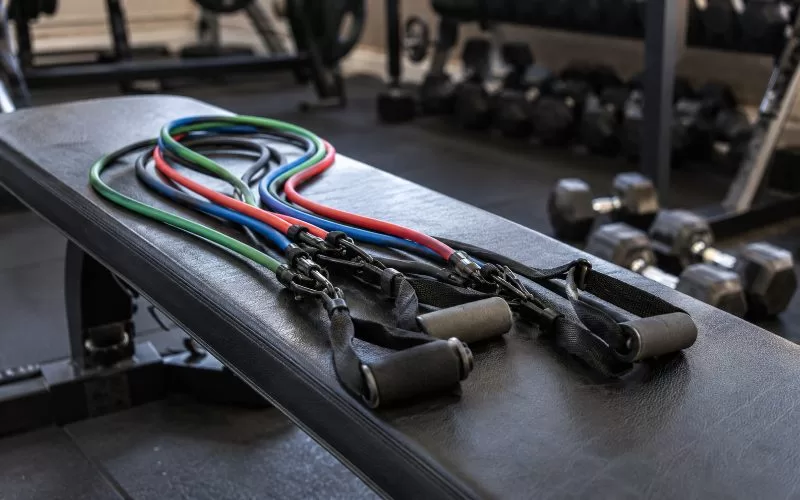
Pull-up bands are one of those simple fitness tools I like for home strength training because they make upper-body work feel a little more approachable. The way you place the band under your foot or knee can change how much support you get, so it is worth understanding the difference before you start.
Pull-up bands, also known as resistance bands, are a versatile and essential tool for enhancing your fitness routine, particularly when it comes to mastering pull-ups. These exercise bands for pull-ups offer support by reducing the amount of body weight you need to lift, allowing you to focus on form and build the necessary strength over time while still getting the benefits of strength training. They can also fit nicely into a simple home workout routine when you want strength-training tools that do not take up a lot of space.
Whether you’re a beginner trying to achieve your first pull-up or an experienced athlete looking to increase your pull-up repetitions, understanding how to use these bands effectively is crucial. I always find a quick comparison helpful before getting into the details, especially when small form changes can make an exercise feel completely different.
| Placement | Best For | Support Level |
|---|---|---|
| One foot | Building toward unassisted pull-ups | Moderate |
| Both feet | Beginners needing more help | Higher |
| One knee | More controlled support | Moderate |
| Both knees | Learning form and building confidence | Highest |
Start with a resistance band that gives you enough support to move with control. If you feel shoulder, back, wrist, or joint pain, stop and adjust your setup before continuing.
Foot Placement Techniques for Pull-Up Bands
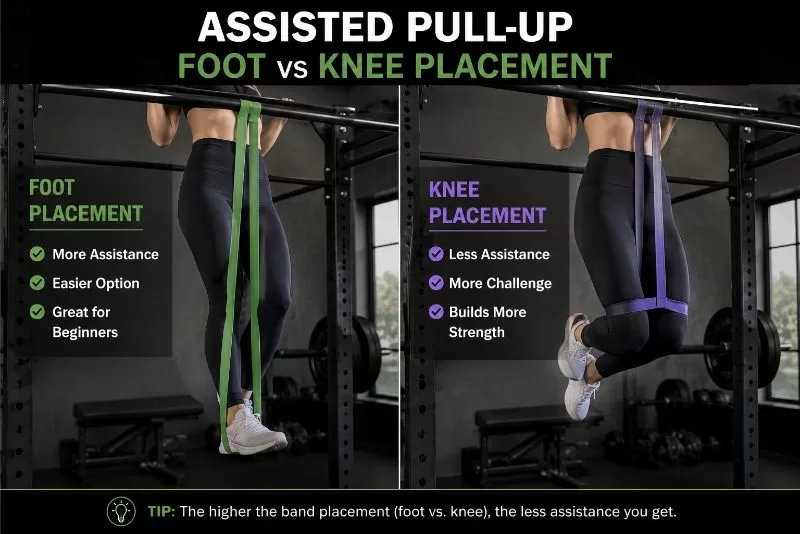
When using exercise bands for pull-ups, foot placement is a critical factor that influences the effectiveness of your workout. Proper foot placement ensures that the band provides adequate support, enabling you to complete more pull-ups with the correct form. Typically, there are two popular techniques for foot placement: single-foot and double-foot positions.
Single-Foot Placement
- How to Perform: Loop the band around the pull-up bar and place one foot inside the loop. The other foot remains free, helping to balance and stabilize your body as you pull up.
- Benefits: This placement offers moderate support and allows for greater focus on your core muscles, as the free leg helps in stabilizing your body.
- Best For: Individuals who are transitioning from assisted pull-ups to unassisted ones.
Double-Foot Placement
- How to Perform: Loop the band around the bar and place both feet inside the loop. This method provides more support, reducing the amount of body weight you need to lift.
- Benefits: Ideal for beginners who require more assistance, it helps in building initial strength and confidence.
- Best For: Beginners or those recovering from an injury.
Proper execution of these techniques ensures that you engage the correct muscle groups, promoting safety and effectiveness. Whether you opt for single or double-foot placement, maintaining control of your movements is essential to prevent swinging and maintain the integrity of your pull-up form.
Knee Placement Options and Their Benefits
Knee placement with exercise bands for pull-ups is another effective method to customize your workout intensity. This technique can be particularly beneficial if you have limited mobility in your legs or prefer to maintain a more compact posture during your exercise. Understanding the options for knee placement can help you decide which is most suitable for your fitness goals.
Single-Knee Placement
- How to Perform: Loop the band around the bar and place one knee inside the loop while keeping the other leg free or bent at the knee.
- Benefits: This provides a balance between support and challenge, engaging your core and upper body effectively. It also allows for a more controlled movement.
- Best For: Intermediate users who are comfortable with pull-ups but seek extra support for higher repetitions.
Double-Knee Placement
- How to Perform: Loop the band and place both knees inside the loop. This method maximizes support, making it easier to focus on form and range of motion.
- Benefits: Offers the most assistance, making it suitable for beginners or those focusing on form correction.
- Best For: Beginners or individuals building endurance.
Using knee placements with pull-up bands can help you achieve a full range of motion while maintaining proper alignment. This can lead to more effective workouts and quicker progression towards unassisted pull-ups.
Common Mistakes in Foot and Knee Placement
When utilizing exercise bands for pull-ups, avoiding common mistakes is vital to ensure safety and maximize the effectiveness of your workouts. Incorrect placement or technique can lead to inefficient exercises or, worse, injury.
These are the little setup mistakes I would watch for before adding more reps:
- Incorrect Band Tension: Selecting a band with too much or too little resistance can hinder your progress. Ensure the band provides enough support without making the exercise too easy or too hard.
- Improper Foot/Knee Positioning: Aligning your foot or knee incorrectly in the band loop can cause instability, leading to poor form. Make sure your foot or knee is securely placed to maintain balance.
- Not Engaging Core Muscles: Failing to engage your core can result in excessive swinging, which reduces the workout’s efficacy and increases injury risks. Keep your core tight throughout the exercise.
- Over-Reliance on Bands: Relying too heavily on the band for support can stall your progress. Gradually decrease the band’s assistance as you gain strength.
- Ignoring Body Alignment: A misaligned body position can strain your back and shoulders. Maintain a straight line from head to toe while pulling up.
To prevent these mistakes, focus on technique and be mindful of your body’s alignment throughout each pull-up. This attention to detail will enhance your workouts and help you progress more efficiently.
How Proper Placement Enhances Your Pull-Up Workout
Proper placement of your feet or knees in exercise bands for pull-ups significantly enhances the quality of your workout. It allows you to maintain correct form, which is crucial for targeting the right muscles and preventing injuries. By ensuring your body is positioned correctly, you can engage more muscle groups, leading to more balanced strength development.
One of the primary benefits of proper placement is the ability to perform more repetitions with better form. This not only helps in building muscle endurance but also improves your overall pull-up technique. When your form is correct, you’re less likely to develop bad habits that could hinder your progress or cause strain over time.
Additionally, proper placement helps in focusing on specific muscle groups. For example, foot placement techniques can emphasize core stabilization, while knee placements can allow for a more compact and controlled pull-up motion. By targeting these areas effectively, you can enhance your strength, endurance, and overall fitness level.
Exercises Beyond Pull-Ups Using Exercise Bands
Exercise bands for pull-ups are incredibly versatile and can be used for a variety of exercises beyond pull-ups. Incorporating these bands into your routine can offer a comprehensive workout that targets multiple muscle groups. Here are some exercises you can try:
Assisted Push-Ups
- How to Perform: Loop the band around your back and hold each end under your palms. Perform push-ups as usual.
- Benefits: Provides support for beginners and adds resistance for advanced users, enhancing upper body strength.
Band Rows
- How to Perform: Attach the band to a sturdy anchor point at chest height. Pull the band towards you, keeping your elbows close to your body.
- Benefits: Targets the back and biceps, improving posture and upper body strength.
Tricep Extensions
- How to Perform: Stand on the band with feet shoulder-width apart. Hold the band behind your head with both hands and extend your arms upwards.
- Benefits: Strengthens the triceps, adding definition to your arms.
Lateral Band Walk
- How to Perform: Place the band around your ankles and take steps to the side, keeping tension on the band.
- Benefits: Engages the hips and glutes, improving lower body strength and stability.
These exercises showcase the versatility of exercise bands, making them a worthwhile addition to any fitness routine. Whether you’re looking to enhance your upper body strength or improve lower body stability, the bands offer numerous benefits.
Choosing the Right Exercise Bands for Your Needs
Selecting the appropriate exercise bands for pull-ups is crucial for achieving fitness goals safely and effectively. I would rather start with a band that gives a little too much support than one that makes the movement sloppy. Resistance bands can be especially useful because they are portable, affordable, and adaptable for different fitness levels, which makes them a practical option for strength training at home. With various types and resistance levels available, understanding your needs and abilities will help you make an informed decision. Here are some factors to consider:
- Resistance Levels: Bands come in different resistance levels, typically indicated by color. Beginners might opt for lighter resistance, while more experienced individuals can choose heavier bands for added challenge.
- Material and Durability: Consider the material of the band, as it affects durability and comfort. Natural latex bands are popular for their elasticity and longevity.
- Length and Width: The band’s length and width can influence the range of motion and level of support. Ensure the band is long enough to accommodate different exercises and wide enough to provide comfort.
- Purpose and Versatility: Think about how you plan to use the bands. If you like using bands for more than strength training, you may also like the way resistance loop bands can be used in yoga and Pilates. If you’re focusing solely on pull-ups, a specific pull-up band might be best. However, if you want to incorporate various exercises, a set with multiple bands might be more suitable.
- Budget: While price can be an indicator of quality, there are affordable options that provide excellent performance. Balance cost with quality to find a band that meets your needs without overspending.
Mastering Pull-Ups with Proper Placement
Mastering pull-ups is a rewarding endeavor that requires dedication, technique, and the right tools. Exercise bands for pull-ups offer an excellent way to build the necessary strength and endurance to achieve this goal. Incorporating a variety of exercises with bands not only aids in pull-up training but also contributes to overall fitness improvement. Having a flexible plan can also make it easier to stay consistent, which is one reason I like the idea of structured exercise for building confidence. From assisted push-ups to lateral band walks, these bands provide versatility that can keep your workout routine fresh and engaging.