
Learning how to increase your protein intake does not require eating large portions of meat or completely changing the way you eat. Small adjustments throughout the day can make it much easier to reach your protein goal while still eating meals you enjoy.
I began paying more attention to protein when strength training and maintaining muscle became a bigger part of my daily routine. What helped most was not relying on a perfect high-protein meal. It was learning how to spread protein throughout the day and keeping a few easy options available for the times when I did not feel like cooking.
How Much Protein Do You Need?
Protein needs are not the same for everyone. Age, body size, activity level, health, and fitness goals can all affect how much protein may be appropriate.
The FDA uses 50 grams as the Daily Value for protein, based on a 2,000-calorie diet. However, that number is a general reference for food labels rather than a personalized goal. The USDA’s DRI Calculator provides an estimate based on factors such as age, height, weight, and activity level.
A nutrition app or online protein calculator can also provide a starting point. Anyone with kidney disease, certain medical conditions, or questions about significantly increasing protein should speak with a healthcare professional or registered dietitian first.
Start the Day with Protein
Breakfast can be one of the easiest meals to overlook, especially when mornings are busy. A pastry, piece of toast, or bowl of cereal may be convenient, but it may not provide much protein on its own.
I have never been someone who wants a traditional breakfast first thing in the morning, so I rely on a protein shake. It gives me a reliable source of protein without requiring me to cook when I am barely ready to start the day.
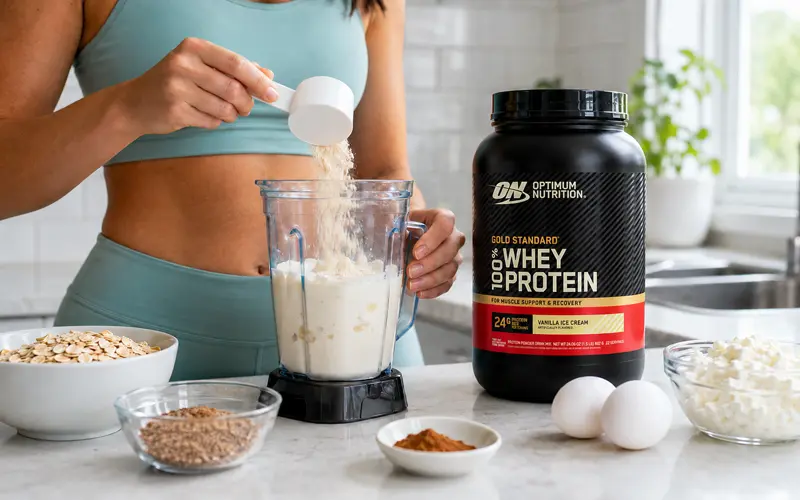
Easy ways to add more protein at breakfast include:
- Eggs or egg whites
- Greek yogurt or cottage cheese
- A protein shake or smoothie
- Oatmeal mixed with protein powder
- Whole-grain toast with eggs or nut butter
- A breakfast wrap made with eggs, cheese, and lean meat
- Yogurt topped with nuts, seeds, or protein granola
Protein powder can be particularly convenient, but the flavor, texture, ingredients, and number of protein grams per serving all matter. The science behind clean protein and athletic performance offers a closer look at what to consider when comparing protein powders.
Include a Protein Source at Every Meal
Waiting until dinner to eat most of the day’s protein can make a higher target difficult to reach. Instead, choose a protein source when planning each meal and then build the rest of the meal around it.
For lunch, this could mean adding shredded chicken, turkey, beans, eggs, cottage cheese, or tofu to a salad, bowl, sandwich, or wrap. Dinner might include chicken, lean beef, pork, fish, beans, lentils, tofu, or another plant-based protein.
This does not mean every meal needs to contain a huge serving. Spreading protein across breakfast, lunch, dinner, and snacks can feel much more manageable than trying to catch up at the end of the day.
One of my favorite strategies is to look at what I am already planning to eat and ask what protein could easily be added. A rice bowl can include chicken and black beans. A salad can include eggs or grilled chicken. A baked potato can be topped with cottage cheese, beans, or shredded meat.
Keep Easy High-Protein Snacks Available
Snacks can help close the gap between meals, especially on busy workdays. They are also useful when lunch was lighter than expected, or dinner is still several hours away.
Convenient options include:
- Cheese sticks
- Hard-boiled eggs
- Cottage cheese
- Greek yogurt
- Roasted chickpeas
- Edamame
- Turkey roll-ups
- Nuts and seeds
- Protein bars
- Ready-to-drink protein shakes

Compare labels because some products marketed as protein snacks contain less protein and more added sugar or calories than expected. Roasted chickpeas, nuts, edamame, and other high-protein, high-fiber snacks can be more satisfying between meals. Protein bars are also convenient to keep at work or in a bag. I liked the taste and texture when I tried Built Bar, but the protein, calories, and added sugar should still fit your needs.
Make Simple High-Protein Swaps
Increasing protein does not necessarily mean giving up favorite meals. In many cases, changing or adding one ingredient can raise the protein content without making the meal feel completely different.
Try swaps such as:
- Use Greek yogurt in place of regular yogurt.
- Choose cottage cheese as a dip base.
- Add beans or lentils to soups, bowls, and salads.
- Use an egg-based wrap instead of a traditional flour wrap.
- Add extra chicken or beans to a burrito bowl.
- Mix protein powder into oatmeal or a smoothie.
- Choose higher-protein pasta made from chickpeas, lentils, or edamame.
- Add eggs, cheese, beans, or lean meat to meals that are mostly carbohydrates.
Cottage cheese can be blended until smooth, making it an easy way to add protein to dips and sauces. Combining it with cheddar, salsa, and taco seasoning creates a high-protein cottage cheese queso that is more filling than a traditional dip.
Choose Both Animal and Plant-Based Protein
Meat can provide plenty of protein, but it does not need to be the only source. Combining animal and plant-based foods adds variety and makes it easier to avoid relying on the same chicken breast every day.
Animal-based options include eggs, dairy products, chicken, turkey, lean beef, pork, and fish. Plant-based choices include beans, lentils, chickpeas, edamame, tofu, tempeh, nuts, seeds, and some whole grains.
A few easy plant-based combinations include:
- Rice and black beans
- Lentil soup with whole-grain bread
- Tofu with vegetables and rice
- Chickpeas added to a salad or wrap
- Edamame added to a grain bowl
- Peanut butter on whole-grain toast
Plant-based foods can also contribute fiber, vitamins, minerals, and healthy fats. The USDA’s FoodData Central can be used to compare protein amounts in individual foods, although the exact number may vary by serving size, brand, and preparation method.
Use Protein Powder When It Makes Sense
Whole foods offer more than protein alone, but protein powder can be useful when convenience is the main concern. It can be blended into shakes and smoothies or mixed into oatmeal, yogurt, and certain recipes.
I use whey protein because I prefer its taste and texture, but whey is not the only choice. Protein powders can also be made from egg whites, soy, peas, rice, hemp, or a blend of plant proteins. People looking for a dairy-free alternative may want to consider egg white protein powder, although its benefits and drawbacks depend on individual dietary needs and preferences.
Single-serving VADE Nutrition dissolvable protein packs make protein powder more convenient outside the house by eliminating the need to carry a large container or measure a scoop.
When comparing supplements, look at the protein source, protein per serving, ingredient list, added sugar, taste, and how well the product fits your routine. Supplement websites may also provide more info about different formulas, but product claims should always be considered alongside the nutrition label and your individual needs.
Make Better Choices When Dining Out
Eating away from home does not have to derail a protein goal. Look for meals that include grilled chicken, eggs, beans, lean meat, fish, or another recognizable protein source.
You can also ask for extra chicken on a salad, add beans to a bowl, order eggs with breakfast, or substitute a protein-rich side when one is available. Even casual restaurant meals can contribute protein. Someone visiting Pennsylvania might want to try the best cheesesteak in Philadelphia, although a cheesesteak is better treated as an occasional local experience than an everyday protein strategy.
The goal is not to make every restaurant order perfect. It is simply to notice whether the meal contains a meaningful protein source and make an easy adjustment when it does not.
Track Your Protein for a Few Days
You do not have to track food forever, but recording meals for several typical days can reveal where protein is missing. You may discover that breakfast contains very little, lunch varies dramatically, or most of your protein is concentrated at dinner.
Nutrition labels are especially helpful because protein usually appears in grams even when a percentage of the Daily Value is not shown. The FDA recommends using the number of protein grams to compare products.
Once you recognize the patterns, you may no longer need to record everything. I find it easier to repeat a few reliable meals and snacks than to calculate every bite indefinitely. A consistent breakfast shake, a protein source at lunch, and a planned afternoon snack remove much of the guesswork.
Make Protein Easier, Not Perfect
The easiest way to increase protein intake is to make it part of meals and snacks you already enjoy. Begin with one area that consistently falls short, such as breakfast or afternoon snacks, and make a small change there before rebuilding the rest of your diet.
Protein shakes, eggs, dairy products, lean meats, beans, lentils, tofu, nuts, and seeds can all contribute. The best options are the ones that fit your schedule, preferences, budget, and health needs well enough to use regularly.
I have found that consistency matters more than creating a perfect high-protein menu every day. When easy protein choices are already in the kitchen, reaching a daily goal becomes much more realistic.