

Have you ever returned from vacation feeling like you needed another vacation to recover? It is surprisingly easy to turn a trip into an exhausting checklist. We spend money to visit somewhere new, so naturally, we want to see everything, try new restaurants, and make the most of every day. Before long, the itinerary becomes more demanding than a normal workweek.
I enjoy having plans when I travel, but too many plans can take away from the experience. Learning how to relax on vacation is not necessarily about scheduling spa treatments or spending the entire trip beside the pool. Often, it simply means leaving enough time to enjoy where you are without rushing from one activity to the next.
Stop Trying to See Everything
One of the quickest ways to wear yourself out is to treat every destination like your only chance to see it. Even if you can fit six attractions into one day, that does not mean you will enjoy doing it.
Choose the experiences that matter most and give yourself enough time to appreciate them. Two memorable activities are often better than five rushed ones that leave you constantly checking the time. You can still plan a variety of activities that make a vacation more memorable without trying to squeeze all of them into one trip.
Build Empty Space Into the Itinerary
I used to think an empty block on a vacation schedule meant I had failed to plan something. Now, I know that unscheduled time can become one of the best parts of the trip.
Leave an afternoon open, skip dinner reservations one evening, or plan a morning when nobody needs to be somewhere at 8:00. That extra time lets you return to a place you loved, explore something unexpected, take a nap, sit by the pool, or simply do nothing for a while.
Leaving some flexibility makes it easier to enjoy the trip without constantly worrying about where you need to be next.
Make Arrival Day Easy
Arrival days are unpredictable. Flights get delayed, traffic happens, hotel rooms are not always ready, and someone is usually hungry by the time everyone reaches the destination. Scheduling an expensive tour or complicated dinner reservation shortly after arriving adds more pressure to a day that may already be tiring.
Keep the first day simple whenever possible. Check in, unpack, explore the immediate area, have an easy meal, and give everyone time to settle in. If you are flying, practical accommodations can make travel days easier as well. In some situations, booking an airport hotel makes more sense than trying to work around an early departure or late arrival.

Do Not Schedule Every Morning Early
Getting up early for a sunrise tour or special attraction can be completely worthwhile. Waking up early five days in a row, however, may begin to feel a lot like going to work.
Sleep is part of vacation too. If the itinerary repeatedly requires alarms, rushed showers, and breakfast on the run, consider whether every early activity deserves a place on the schedule. Alternating busy mornings with slower ones gives everyone a chance to recharge without missing the experiences that matter most.
Stay Somewhere That Supports the Vacation You Want
Where you stay can have a big impact on how relaxing the trip feels. If your idea of a good vacation includes sitting beside the water, paying a little more for a beachfront location may make more sense than booking a less expensive hotel that requires driving to the beach every day.
If sightseeing is the priority, staying within walking distance of major attractions can reduce transportation hassles and save valuable time. The least expensive hotel is not always the best value when its location creates additional driving, parking expenses, and frustration. Considering the total cost of the trip can help you save money on flights and hotels without making the vacation less enjoyable.
Give Everyone Some Choice
Family vacations can quickly become stressful when one person feels responsible for keeping everyone else happy. The truth is that not everyone needs to enjoy every activity for the trip to be successful.
Before leaving, let each person choose one or two experiences that matter most to them. This makes it easier to prioritize the itinerary and removes some of the pressure to find activities that please everyone equally. A hassle-free family vacation is easier to plan when everyone has realistic expectations and understands that there may need to be some compromise.
Limit How Much Work Comes With You
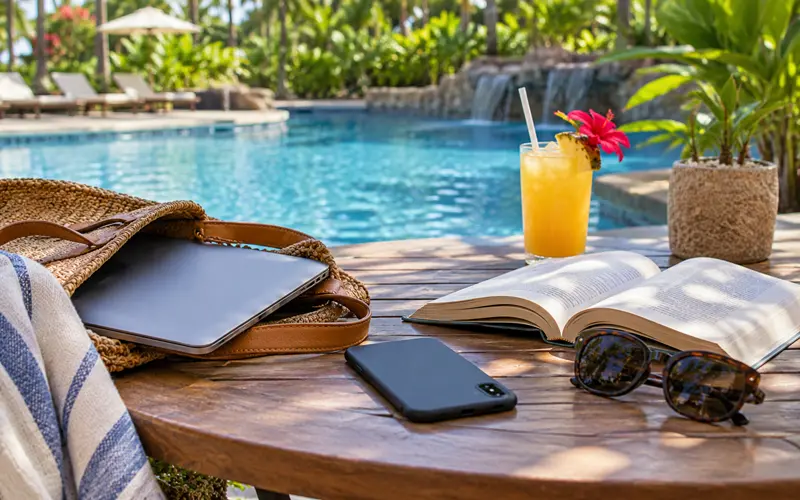
Technology makes it easy to remain connected to work while technically being on vacation. Email, messages, and documents are all available on your phone, which can lead to answering a question beside the pool that probably could have waited until Monday.
If your job allows it, decide before leaving what qualifies as an emergency. Turn off unnecessary notifications and resist opening your email simply because you have a quiet moment. It is difficult to mentally disconnect when part of your attention remains at work throughout the day.
Stop Trying to Capture Every Moment
Photos are one of my favorite parts of traveling because I love looking back at the places we have visited. However, there is a difference between taking meaningful photos and experiencing the entire trip through a phone screen.
Take the picture, then put the phone away and enjoy what is in front of you. You probably do not need 47 versions of the same sunset or a video of every minute of an attraction. Sometimes, the best way to remember a place is to be fully present while you are there.
Plan Around Your Natural Energy
Not everyone travels the same way. Some people are ready to explore at sunrise, while others would rather enjoy a leisurely breakfast and stay out later. Whenever possible, plan the day around how you naturally function instead of forcing yourself into a schedule that leaves you tired and irritable.
I also prefer alternating high-energy and low-energy activities. A busy morning at an attraction can be followed by an afternoon at the pool, while a long walking tour pairs well with an easy dinner close to the hotel. That balance keeps every day from feeling like a marathon and gives you time to recover before the next activity.
Pack With Comfort in Mind
Physical discomfort can make an otherwise enjoyable vacation unnecessarily tiring. Shoes that hurt, clothing that does not suit the weather, an overpacked suitcase, or forgotten necessities can all cause problems that could have been avoided.
Packing the right travel essentials can make everything from airport days to sightseeing more comfortable. Shoes deserve particular attention when the trip involves substantially more walking than you normally do at home. Vacation is not the best time to rely on a brand-new pair that has never been worn for more than a few minutes.
Leave Time to Enjoy the Hotel or Resort
It always surprises me when people spend a significant amount of money on a beautiful resort and then schedule themselves away from it for every waking hour. If you chose a hotel because it has a great pool, beach, spa, balcony, restaurant, or beautiful grounds, leave enough time to enjoy those amenities.
Sitting beside the pool for three hours is not wasting vacation, and neither is reading on the balcony or enjoying a slow lunch at the resort. Those quieter moments may not appear on the itinerary, but they are often what makes the trip feel relaxing.
Keep the Last Day Manageable
The final day can determine how you feel when you arrive home. Packing at midnight after a full day of activities and then waking up at 4:30 a.m. for a flight is a quick way to undo some of the rest you enjoyed during the trip.
Start organizing your luggage earlier, leave time for a final meal, and avoid turning checkout into a frantic event. When possible, choose a return schedule that does not get you home late at night when you must return to work first thing the following morning. Even a little time to unpack, settle in, and sleep can make returning to your normal routine much easier.
Allow Vacation to Be Vacation
A good vacation does not need to be productive. You do not have to visit every landmark, maximize every dollar, reach a certain number of steps, or return home with a perfect collection of photographs.
Some of my favorite vacation memories come from simple moments: discovering an unexpected restaurant, spending an afternoon by the water, sitting outside with a drink, or laughing about something that was never part of the itinerary. The only way those moments happen is when the schedule leaves room for them.
Plan the important parts, leave time between them, and enjoy the destination without constantly preparing for what comes next. You may see fewer attractions, but you are much more likely to come home feeling like you had a vacation.