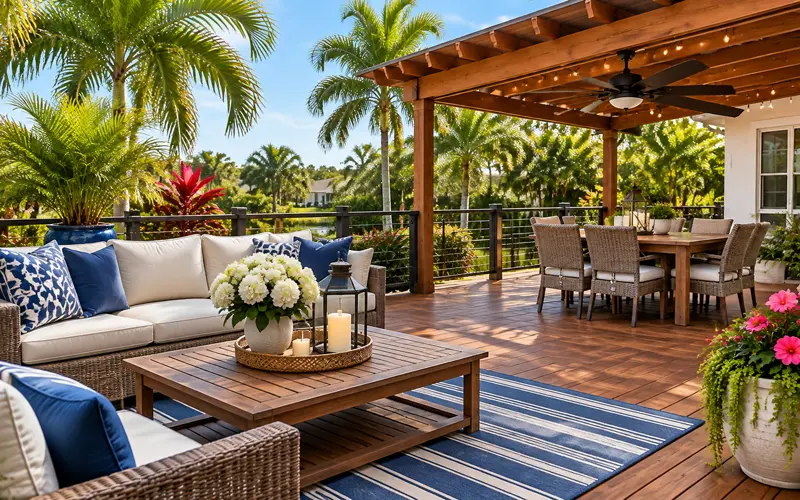
Living in a warm, sunny climate changes how we think about our homes, especially our outdoor spaces. Intense sun, high humidity, and heavy seasonal rains present unique challenges when designing a deck. A layout that works in a cooler state might leave you with uncomfortably hot deck boards and seating areas that are difficult to enjoy during peak afternoon hours.
To create an outdoor space you’ll love throughout the year, it’s important to design around how you actually plan to use it. Partnering with an experienced deck building company in Florida can help ensure your layout, materials, and features match both your lifestyle and the local climate.
Designing Around Shade and Temperature Control
One of the biggest challenges of enjoying an outdoor deck in Florida is dealing with the heat. Without adequate shade, deck surfaces can become extremely hot, making it uncomfortable to walk barefoot or spend time outside during the afternoon.
Shade should be part of the design from the beginning rather than something added later. A pergola with climbing plants, a covered seating area, or a retractable awning can provide relief from direct sunlight.
The position of your deck also matters. Consider where the sun falls throughout the day and which areas receive the most afternoon exposure. Thoughtful placement of seating, shade structures, and surrounding landscaping can make the space more comfortable.
Selecting Climate-Resilient Deck Materials
Building materials in warm climates are constantly exposed to sunlight, humidity, and seasonal rainfall. Traditional softwoods can warp, splinter, discolor, or deteriorate without proper treatment and regular maintenance.
Composite decking, mineral-based composites, and tropical hardwoods offer different levels of resistance to moisture, fading, and changing temperatures. Each material has advantages worth considering before making a final decision.
| Deck Material | What to Consider |
|---|---|
| Pressure-treated wood | More affordable initially but requires ongoing maintenance |
| Composite decking | Often lower maintenance, with performance varying by product |
| Mineral-based composite | Designed for durability and moisture resistance, depending on the material |
| Tropical hardwood | Naturally durable options are available but may require maintenance to preserve their appearance |
Color is another consideration. Lighter deck boards generally absorb less solar heat than darker shades, although actual surface temperatures depend on the material and conditions.
Creating Functional Zones for Year-Round Use
In Florida, a deck can become a natural extension of your home’s living space. Rather than treating the entire area as one large open surface, think about creating separate zones based on how your family spends time outdoors.
Consider incorporating:
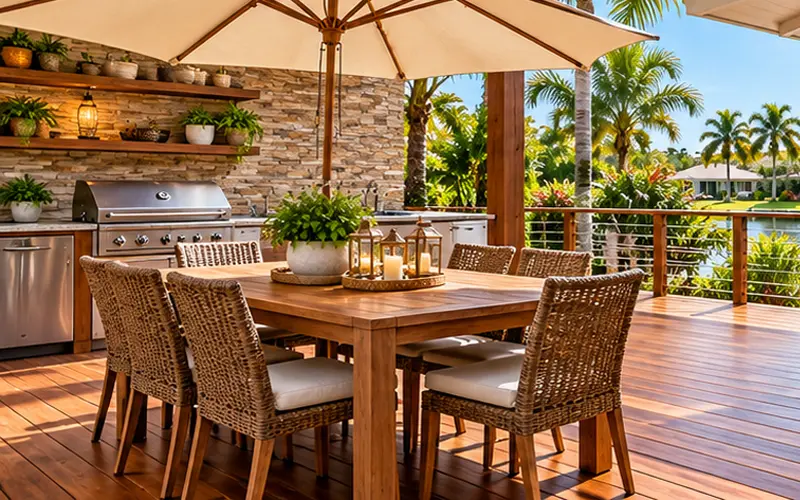
- An outdoor cooking area: A grill, counter space for food preparation, and convenient storage can make entertaining easier.
- A shaded dining space: A comfortable place for family meals or enjoying breakfast outside.
- A relaxation area: Lounge chairs and comfortable seating near the pool or garden.
- An entertaining space: An open area with enough room for guests to gather and move around comfortably.
Planning the layout around everyday activities also makes the deck easier to navigate. Leave enough room between furniture, cooking areas, and entrances so family members and guests can move freely.
The same approach applies to patio decorating. A well-planned outdoor space should feel inviting while remaining practical for everyday use.
Incorporating Ventilation and Bug Protection
Poor airflow and insects can quickly make an otherwise beautiful outdoor space uncomfortable, especially during Florida’s humid evenings.
Elevated deck designs, open railings, and properly positioned outdoor ceiling fans can help improve air circulation. Where the design allows, keeping surrounding areas open to natural breezes can also make a difference.
Screens are another useful feature, particularly for homeowners who enjoy spending evenings outside. A partially screened seating area can help keep mosquitoes and other insects away without requiring the entire deck to be enclosed.
Maximizing Evening Ambiance with Lighting and Water
When afternoon temperatures are at their highest, evenings often become one of the most enjoyable times to spend outside. The right lighting can make a deck feel welcoming while improving visibility around stairs, walkways, and seating areas.
Low-voltage LED accent lighting can be installed along stair risers, beneath railing caps, or around deck posts to provide subtle illumination.
Lighting doesn’t have to be elaborate to make an impact. A combination of soft accent lighting and brighter task lighting near cooking areas can make the space both functional and attractive.
For additional inspiration, thoughtfully placed outdoor landscape lighting can help connect the deck with the surrounding yard and create a more inviting atmosphere after sunset.
Water features can add another relaxing element. A small fountain or decorative water wall provides calming background sounds, while outdoor misting systems may offer additional cooling in suitable conditions, although their effectiveness is more limited in humid weather.
Making Your Deck Work for Your Lifestyle
Building a deck in a warm climate does more than expand your living space. It creates an opportunity to design an outdoor environment around your family’s activities, preferences, and daily routines.
By considering shade, durable materials, functional zones, ventilation, and lighting from the beginning, you can create a deck that remains comfortable and practical throughout much of the year.
Whether your goal is entertaining friends, relaxing by the pool, or simply enjoying a quiet morning outdoors, thoughtful planning helps ensure your investment becomes a space you’ll use and appreciate for years to come.