
A chipped mug can survive three house moves while a much more expensive purchase disappears into a donation box. The difference isn’t obvious on a receipt. One object belongs to a household’s history, while the other never quite found a place in it.
Why some purchases become part of your story goes beyond the buying decision itself. Consumer psychology offers some insight into that difference, but the experience is familiar to most of us. Belongings that once seemed ordinary can become surprisingly difficult to replace.
In a shopping environment built around the next new thing, that emotional attachment deserves attention. The interesting question isn’t simply what made an object appealing at checkout, but what happened between bringing it home and deciding, years later, that it mattered.
Meaning Builds Long After Checkout
A buying decision opens the story, but it doesn’t write the ending. Repeated use, personal effort, and meaningful occasions give an object connections that its seller can’t supply. Emotional attachment grows from that history, not from a price tag. An unplanned purchase can become meaningful, too, especially when it becomes part of everyday life rather than simply a reminder of something we once wanted.
There’s also a difference between expressing a role and living it. Owning running shoes doesn’t establish a running habit. The miles, routines, and shared outings give that purchase a personal meaning that the design alone can’t supply.
These objects have two different measures of value:
- Market value is what another person would be willing to pay for an item.
- Personal value comes from the memories, relationships, and experiences connected to it.
Brand storytelling addresses a broad audience, but an owner’s story has a specific cast and setting. A LEGO set rebuilt with someone’s children becomes part of afternoons spent together, not merely the idea of creativity. This also explains why old shoes can remain meaningful long after their logo loses its appeal. The brand becomes less important than the life lived in them.
Why Impulse Buys Fade and Keepsakes Endure
The difference between a forgotten purchase and a treasured possession often begins with the circumstances surrounding it. An object bought to fill an idle afternoon has a different starting point from one chosen to mark a graduation, even if both cost the same amount.
The Quick Thrill That Rarely Lasts
Impulse buying puts the immediate reward at the center of the experience. It might be the discovery, the bargain, or simply the pleasure of having something new. Once that moment passes, an item without a useful role may have little else to offer.
A novelty mug left unopened has fewer opportunities to gather memories than the plain one used every morning. Behavioral economics distinguishes immediate rewards from longer-term value, which offers a useful way to understand why some purchases quickly lose their appeal.
Conscious spending shifts attention toward the life an object will actually have. Someone focused on choosing quality and comfort considers more than the excitement of making a purchase.
Keepsakes That Mark a Milestone
An engraved watch from a graduation, a grandparent’s ring, and a Canadian Silver Maple Leaf coin set aside for a child’s birth year all carry different histories. To the market, the coin is simply a widely traded ounce of pure bullion, but to the family, it marks the year a child arrived. Its significance doesn’t depend on daily use.
A watch can stop working without losing its place in a graduation story. A ring can remain precious to a family member who wouldn’t necessarily choose its design. The occasion gives the possession a role that usefulness, fashion, and resale value can’t fully describe. Sometimes the smallest keepsakes hold the biggest memories, even when they have little monetary value.
How Ownership Makes Ordinary Things Feel Personal
Psychological ownership describes the feeling that something is genuinely our own, beyond the fact that we’ve paid for it. Familiarity, control, and hands-on involvement all contribute to that feeling, helping explain why otherwise ordinary possessions can become difficult to replace.
The Endowment Effect in Everyday Life
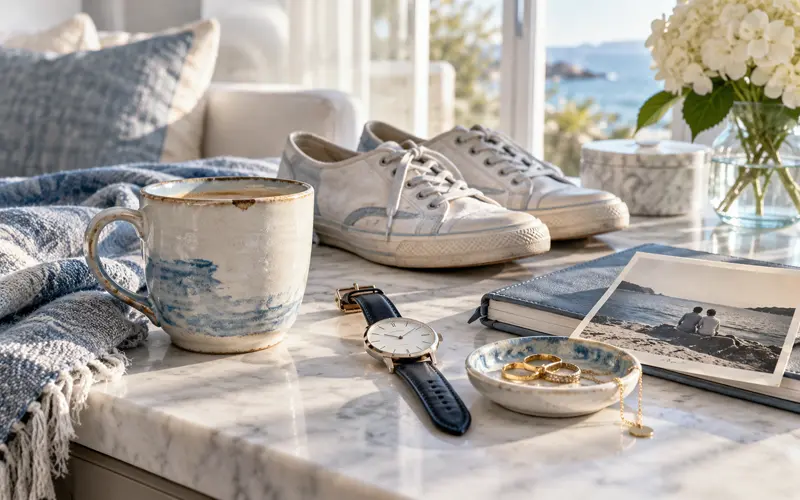
The endowment effect describes a tendency for people to value an object more highly simply because they own it. A worn coffee mug makes the distinction easy to picture. A visitor sees replaceable kitchenware, while its owner sees the familiar handle and the companion to countless morning routines.
That difference isn’t an objective measure of the mug’s quality. Ownership and practical familiarity can also overlap without being identical. Broken-in shoes have a known fit, while a new pair introduces uncertainty. Their owner might resist replacing them for practical reasons as well as sentimental ones.
Not every preference for an older possession comes from nostalgia, and personal attachment doesn’t necessarily translate into a higher selling price. The value often comes from something only the owner can fully appreciate.
Why Effort Deepens Attachment
Research associated with Dan Ariely describes the IKEA effect, a phenomenon in which people may value things they’ve successfully assembled more highly than comparable ready-made objects. The name references IKEA, but the concept concerns personal participation rather than a particular brand.
A self-assembled shelf contains something an identical finished shelf doesn’t: its owner’s work. Repairs and adjustments can add their own experiences of involvement, although repairing a chair isn’t identical to the assembly tasks studied in the research.
Product customization offers another form of participation. Nike By You lets buyers select design details before their shoes arrive. However, personalized products aren’t necessary for developing a meaningful connection. An ordinary chair repaired over several weekends already has a history that a brand-new replacement doesn’t share.
How Belongings Become Chapters of Your Identity
Some possessions remind us of earlier versions of ourselves. An old work bag might bring back memories of a first commute rather than its original price. Like a photograph, it connects a particular person to a particular chapter of life.
These connections often develop gradually as everyday belongings become associated with important experiences, relationships, and personal milestones.
Identity and Belonging Through Things
Running shoes bought at the beginning of a new habit can eventually represent the moment someone started thinking of themselves as a runner. A first Apple iPhone purchased for a new job might recall the transition into working life, long after its features have become outdated.
Identity and belonging aren’t limited to recognizable brands or expensive purchases. Shoes chosen for personal style and everyday comfort can become part of someone’s familiar appearance precisely because they’re worn so often.
Over time, certain belongings become connected to who we are, where we’ve been, and the experiences that helped shape our lives. Their importance may have very little to do with why we purchased them in the first place.
When Your Story Outgrows the Brand’s Story
Aspirational branding offers ready-made associations: Nike with athletic ambition, Starbucks with a coffee ritual, or LEGO with creative play. Those associations may influence an initial purchase, but they don’t tell the entire story of an owner’s relationship with an object.
Brand loyalty and personal attachment answer different questions. Loyalty concerns choosing the same name again, while attachment explains why one particular possession matters, even when its owner no longer prefers the company that made it.
Eventually, the memories associated with an item can become far more important than the brand itself. What started as an ordinary purchase develops a meaning that advertising could never fully anticipate.
What Makes a Purchase Worth Remembering?
Things with a real place in daily life have opportunities to become familiar, while milestone keepsakes hold their connection to a person or occasion. Neither route guarantees that a possession will be treasured forever, and not every purchase needs to become a meaningful keepsake.
Still, it’s interesting how the belongings we hold onto aren’t necessarily the newest, most expensive, or most impressive. They might be something we use every day, a gift from someone special, or an item tucked away because it reminds us of a particular moment in time.
Ultimately, the purchases that remain with us often have less to do with what we paid for them and more to do with the experiences and memories they represent. They’re the things that still have something particular to say about the lives we’ve lived.
SEO Keyword: emotional attachment to objects
SEO Title: Why We Get Emotionally Attached to Things We Own
Meta Description: Explore the psychology behind why some purchases become part of your story, from emotional attachment and ownership to identity and lasting meaning.