
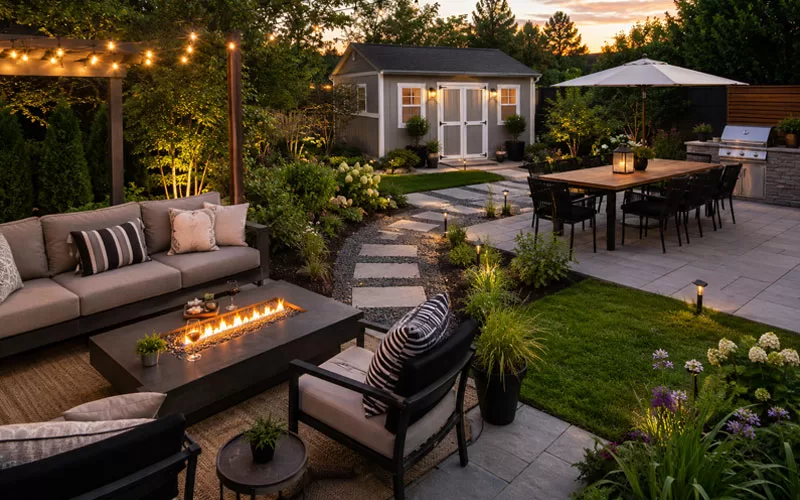
A beautiful backyard is nice to look at, but the best outdoor spaces are designed to be used. Whether you have a large yard, a poolside patio, or a smaller area behind your home, a few thoughtful backyard upgrades can make it feel more comfortable, organized, and inviting.
I think the easiest way to improve a backyard is to stop looking at it as one large space. Instead, divide it into purposeful zones for storage, dining, relaxing, gardening, and entertaining. This makes it easier to decide which upgrades will actually improve the way you use your yard.
A backyard bocce court is another way to give an open yard a purposeful activity zone, especially if you want a low-key game area that feels intentional and easy to enjoy.
Begin With a Practical Storage Zone
Outdoor spaces quickly become cluttered with gardening tools, pool supplies, sports equipment, patio cushions, and seasonal decorations. Creating a dedicated storage zone keeps those items protected while helping the rest of the backyard look cleaner and more relaxing.
A shed can provide basic storage, but it can also become a workshop, gardening station, hobby room, or quiet backyard retreat. Companies offering customizable sheds show how these structures can be adapted for residential storage, studios, workshops, and larger multipurpose spaces.
Before choosing one, consider what you need to store and how often you need to access it. Shelving, wall hooks, pegboards, labeled bins, and overhead racks can help you use the interior efficiently instead of allowing everything to pile up on the floor.
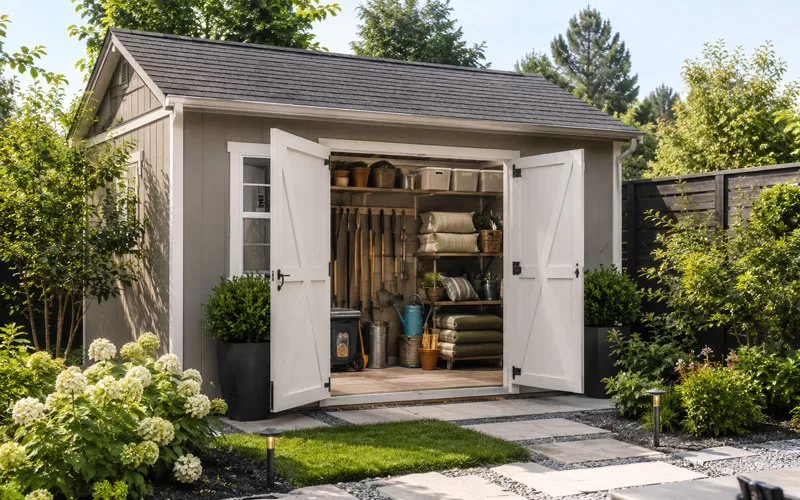
Material is another important consideration. Wood has a traditional appearance, while steel can provide strength and versatility. Homeowners looking for a lower-maintenance alternative may also want to research the best vinyl storage sheds. Vinyl does not require the same staining or painting as wood and will not rust like untreated metal, making it a practical option in humid or rainy climates.
Living in Florida, I know how quickly heat, rain, and humidity can affect anything left outdoors. Choosing a shed material that can handle your local weather is just as important as choosing the right size.
Whichever material you choose, make sure the shed is placed on a level, properly prepared foundation. Local permit requirements, neighborhood restrictions, drainage, wind ratings, and setback rules should also be checked before installation.
Create a Comfortable Conversation Area
Once outdoor clutter is under control, focus on creating a place where people will genuinely want to sit. Rather than scattering chairs around the patio, arrange your furniture as you would in a living room, with seats facing one another and a table within easy reach.
Comfort matters more than having a perfectly matched furniture set. Deep seating, supportive cushions, outdoor pillows, and a small table for drinks can turn an unused corner into a favorite gathering place. Choose pieces that make the area feel welcoming without overcrowding it, and leave enough open space for people to move comfortably.
An outdoor rug can visually define the conversation zone, while planters or a privacy screen can separate it from the rest of the yard. Choose weather-resistant fabrics and furniture finishes that can handle your local climate, especially in areas with intense sunlight, frequent rain, or high humidity.
Make a Fire Feature the Center of the Space
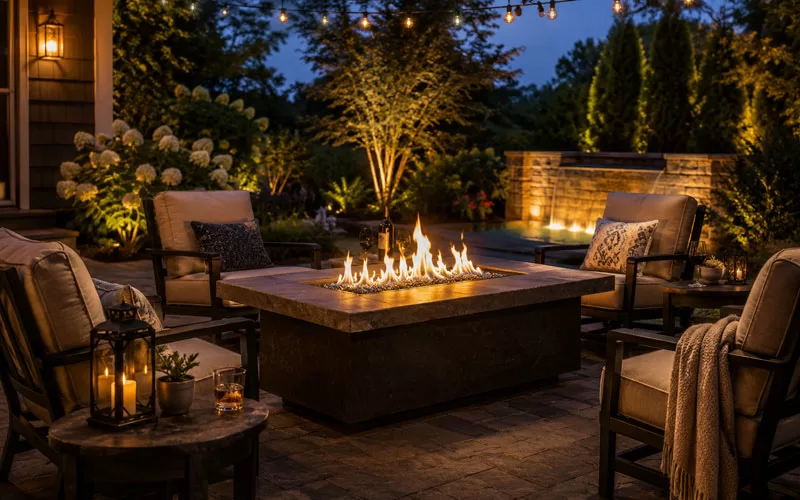
A fire feature creates a natural gathering point and makes the backyard feel warmer and more inviting. Traditional wood-burning fire pits offer a rustic atmosphere, but they also create smoke, ash, and sparks. A propane or natural-gas option provides a cleaner appearance and can usually be turned on and off without preparing or extinguishing a wood fire.
Modern gas fire pit tables are especially useful because they serve as both a fire feature and a piece of outdoor furniture. Their wider surfaces can provide room for drinks or small plates when designed and used according to the manufacturer’s directions.
I personally like upgrades that serve more than one purpose, especially in an outdoor space where every piece of furniture takes up valuable room. A fire pit table can add warmth, atmosphere, and a practical surface without requiring several separate items.
Arrange seating around the table while leaving enough open space for people to move comfortably. Avoid squeezing the feature underneath low branches, fabric shades, or other combustible materials. Outdoor fire pits should generally be positioned at least 10 feet away from the home or anything that can burn. Children and pets should also be closely supervised whenever the fire is in use.
Add Shade Where You Need It Most
Even a well-designed backyard will go unused if it becomes unbearably hot in the middle of the day. Shade makes outdoor dining, lounging, and entertaining much more comfortable.
A large patio umbrella is one of the simplest options and can be moved as the sun changes position. Shade sails work well over open areas, while retractable awnings allow you to adjust the coverage throughout the day. For a more permanent addition, a pergola can define an outdoor room while supporting curtains, climbing plants, lighting, or a ceiling fan.
Before installing anything permanent, watch how sunlight moves across your yard. The sunniest location in the morning may be shaded later in the afternoon, so placing shade based on when you actually use the space can prevent an unnecessary expense.
Set Up a Simple Outdoor Dining Zone
An outdoor kitchen can be beautiful, but you do not need a complete kitchen installation to make dining outside easier. A sturdy table, comfortable chairs, a grill, and a small serving cart may be all you need for weeknight dinners or casual gatherings.
For a larger entertaining space, an outdoor drink station can keep ice, bottles, garnishes, and bar tools close to the dining area instead of sending everyone back to the kitchen. Kobayashi Bar offers commercial-grade 304 stainless steel stations, including freestanding options designed for outdoor patio and pool bar layouts. Stainless steel can be a practical choice in a Florida backyard, where frequent rain and humidity make durable materials especially important.
Place the dining area reasonably close to the kitchen so you are not carrying food and supplies across the entire yard. A weather-resistant cabinet or cart can hold serving trays, grilling tools, napkins, and other essentials during a meal.
Anyone planning a larger project can borrow ideas from a thoughtful deck design to organize spaces for cooking, dining, and relaxing without making the layout feel cramped. Leave clear walkways between each zone and avoid placing dining chairs where they block doors or heavily traveled paths.
Use Lighting to Connect the Backyard
Outdoor lighting is one of the easiest ways to make a noticeable difference without rebuilding the entire yard. Rather than relying on one bright floodlight, combine several softer sources of illumination.
Path lights can improve visibility along walkways, while sconces provide practical lighting near doors. String lights, lanterns, and subtle accent lights create an atmosphere around dining and conversation areas. Uplighting can also highlight trees, textured walls, and tropical landscaping.
For me, lighting is one of those finishing touches that can completely change how a backyard feels. A space that looks ordinary during the day can feel much more inviting in the evening with a few carefully placed lights.
The goal is to provide enough illumination for safety while preserving a calm outdoor atmosphere. These outdoor landscape lighting ideas include practical ways to layer lighting around patios, pools, walkways, and landscaping.
Bring Life to Empty Corners
Plants help connect hard surfaces, furniture, and outdoor structures so the backyard feels like one complete space. Large containers can soften patio corners, while tall plants can add privacy without requiring a permanent wall.
Choose plants suited to the amount of sunlight, rainfall, and maintenance you can realistically provide. Native and climate-appropriate plants often require less supplemental watering once established and tend to perform better in local conditions.
A raised garden bed can also turn an unused section of the yard into a productive space for vegetables, herbs, or flowers. Raised beds can improve accessibility and make it possible to garden in areas with compacted or limited soil. Place frequently used herbs near the grill or dining area so they are easy to reach while cooking.
Choose Upgrades Based on How You Live
The most successful backyard upgrades are not necessarily the biggest or most expensive. They are the ones that solve everyday problems and make the space easier to enjoy.
Start by addressing the feature that prevents you from using your backyard now. That might mean adding storage to control clutter, creating shade over an unbearably sunny patio, improving worn seating, or installing lighting around a dark walkway.
Once that problem is solved, build the rest of the yard gradually. A well-placed shed, comfortable conversation area, attractive fire pit table, and a few carefully chosen plants can transform an ordinary backyard into an extension of your home—one that feels organized, comfortable, and ready to enjoy.