
If you’ve ever tried to manage a move in a busy city, you already know the challenge goes beyond cardboard boxes. Tight parking, apartment stairwells, changing weather, and strict building rules can turn a simple plan into a logistical puzzle. Whether you’re renovating, downsizing, or between leases, staying organized during a temporary move can save you time, money, and a surprising amount of stress.
Start With a Real Inventory, Not a Guess
A temporary move usually feels casual at first. You tell yourself it’s only for a few weeks, so maybe you can just “figure it out.” That’s usually where things start getting more complicated than expected.
Start by listing what’s actually leaving your space. Break it into categories like furniture, daily essentials, electronics, seasonal items, and fragile pieces. A notes app works fine, though a spreadsheet is even better if you like seeing everything organized in one place.
This step helps you avoid moving five lamps you won’t use and forgetting the one desk chair you need every day. It also makes packing less random. When you know what you own, you can decide what stays accessible, what gets stored, and what probably should’ve been donated months ago.
Use Storage Based on Access, Not Just Price
Cheap storage can look appealing until you need something from the back corner and realize retrieval is more difficult than expected. Think about how often you’ll need your belongings. If access matters, a mobile storage solution can be useful during transitions, especially in a city where driving back and forth across neighborhoods eats up half your day.
Having storage delivered, loaded on your schedule, and kept available for local moves can cut down on some of that hassle. Price still matters, of course, but convenience has real value. Missing work to coordinate a unit, borrowing a truck twice, or replacing damaged items can cost more than the initial savings. If you’re already trying to keep moving costs under control, it makes sense to look at the full picture rather than just the storage rate.
Know What Kind of Temporary Move You’re Dealing With
Not every short-term move works the same way. A college student heading home for summer has different needs than a family living through a kitchen remodel. The logistics change quickly depending on timing, budget, and space.
If you’re between apartments, you may need quick access to clothing, cookware, and work items. If your home is under renovation, your priority may be protecting furniture from dust, debris, and accidental damage. Good planning can make a big difference when you’re trying to make a home renovation less stressful. If you’re helping a relative relocate, flexibility often matters more than speed.
The more clearly you define the situation, the easier it becomes to build a realistic plan. Temporary doesn’t mean simple. It usually means several moving parts, a few deadlines, and at least one unexpected change along the way.
Pack in Zones So Unpacking Isn’t a Disaster
Random packing creates random problems. You end up opening six boxes just to find a phone charger, a clean towel, or the pan you use for nearly everything.
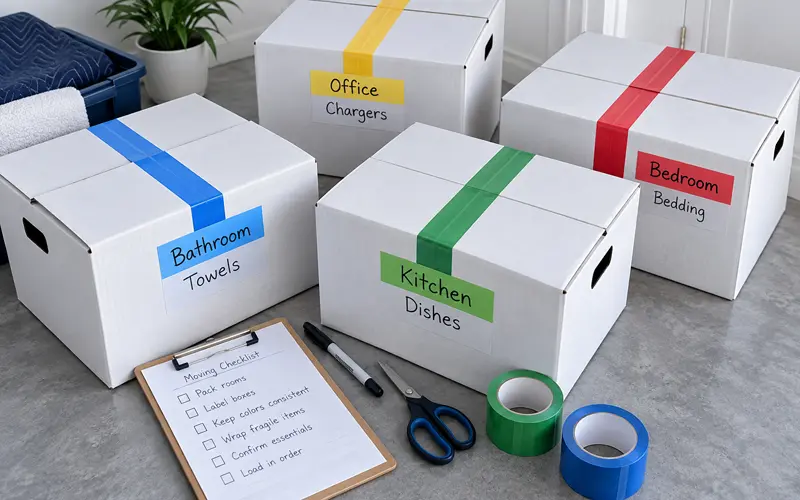
Pack by zones instead. Keep bedroom items together, bathroom supplies together, and kitchen basics together. Label boxes with both the room and the contents, not just “miscellaneous,” which won’t help much when you’re trying to find something later.
Color-coded tape or stickers can make this even easier:
- Blue for bathroom items
- Green for kitchen items
- Yellow for office supplies
- Another color for bedrooms or storage-only boxes
If multiple people are involved, everyone can follow the same system without asking constant questions. This method also helps if you’re splitting items between storage and a temporary living space, because essentials stay easy to find while less-used items can stay packed.
Build a First-Week Kit You Can Grab Instantly
Your first week in a temporary setup often feels off-balance. You know your stuff exists somewhere, yet daily life can still become a scavenger hunt.
Pack one clearly marked kit with the things you’ll need right away. Include a few outfits, medications, toiletries, chargers, basic kitchen supplies, important documents, snacks, and cleaning items. Add scissors, tape, and a flashlight too. Those items may not seem important until you need them late at night.
If kids or pets are involved, make separate kits for them as well. Familiar items matter more than people expect during transitions. A favorite blanket or usual feeding setup can make the change easier. The goal is simple: make the first few days functional, even if the rest of your belongings are still in transit or storage.
Think About Building Rules, Parking, and Timing
A move can be perfectly planned on paper and still get derailed by building logistics. Many apartments and condos require elevator reservations, loading dock access, or certificates from moving companies. Some buildings only allow move-ins during certain hours.
Parking matters too, especially in dense neighborhoods. If a truck has nowhere legal to stop, every trip from curb to door gets slower. In bad weather, those delays can turn into damaged boxes and soaked furniture.
Before moving day, find out:
- Whether a freight elevator needs to be reserved
- If there are restrictions on moving hours
- Where a moving truck can legally park
- Whether protective floor coverings are required
- If the building requires documentation from the moving company
These details sound small until moving day arrives. Good timing and access planning can save more stress than buying extra packing supplies.
Protect What Matters Most During the Transition
Temporary moves often create a false sense of safety. You assume your belongings are only in limbo for a short time, so maybe they don’t need as much protection. That’s not always the case.
Use sturdy boxes for heavy items and proper padding for anything fragile. Wrap electronics carefully, keep cords labeled, and avoid overstuffing boxes just to reduce the count. That strategy usually backfires when a box becomes too heavy or the bottom gives out.
For important documents, jewelry, sentimental items, and daily-use tech, keep them with you instead of placing them in general storage. If something is hard to replace, treat it differently. A short-term move still exposes your belongings to lifting, stacking, changing temperatures, and more handling than usual.
Keep the Return Plan as Organized as the Exit
A lot of people plan the move out and barely think about the move back. Then reentry arrives, and the process feels messy all over again.
Create a simple return plan before you finish packing. Note which items need to come back first, what rooms should be set up immediately, and what can stay packed longer. If you’re renovating, ask for a realistic timeline, then leave yourself a little extra room in case the schedule changes.
Take photos of cable setups, furniture layouts, and box labels before everything gets moved. Those reference points save time later. Keep a running checklist of address changes, delivery updates, and utility adjustments too.
Temporary moves are easier when you treat them like a full project rather than a brief interruption. A little structure keeps everything more manageable until you’re fully settled again.