
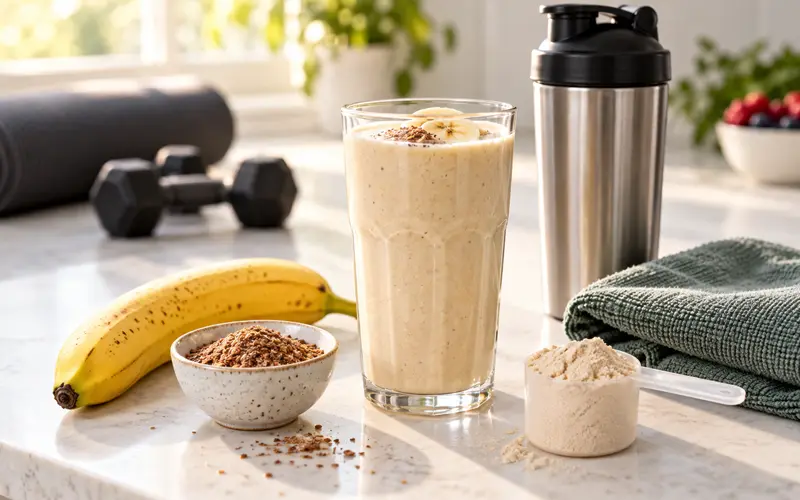
A post-workout protein shake can be one of the easiest ways to refuel after exercise, but the ingredients should match what your body and schedule need. Some shakes only need protein and liquid, while others work better with carbohydrates, fiber, and healthy fats.
I drink a shake most mornings because traditional breakfast foods do not always appeal to me, especially immediately after a workout. It gives me a convenient way to start the day with protein without cooking a full meal. Over time, I have also learned that adding every ingredient with a healthy reputation does not necessarily create a better shake.
Knowing what to put in a post-workout protein shake can help you create something that supports recovery, tastes good, and fits into the rest of your diet.
Do You Need a Protein Shake After a Workout?
A protein shake is convenient, but it is not required. Your muscles can use protein from chicken, eggs, milk, cottage cheese, tofu, beans, and other foods just as they can use protein supplied by a powder. The main advantage of a shake is that it is quick, portable, and easy to consume when you are not ready for a solid meal.
Protein supplies amino acids that the body uses to repair and build muscle tissue. Resistance training and adequate protein work together, which makes protein especially important when the goal is to become stronger or preserve muscle.
The International Society of Sports Nutrition’s position on protein and exercise emphasizes that total daily protein intake matters more than racing to drink a shake within minutes of finishing a workout. A shake can make meeting that daily need easier, but it cannot replace consistent eating habits or an effective workout routine.
Start With a Complete Protein Source
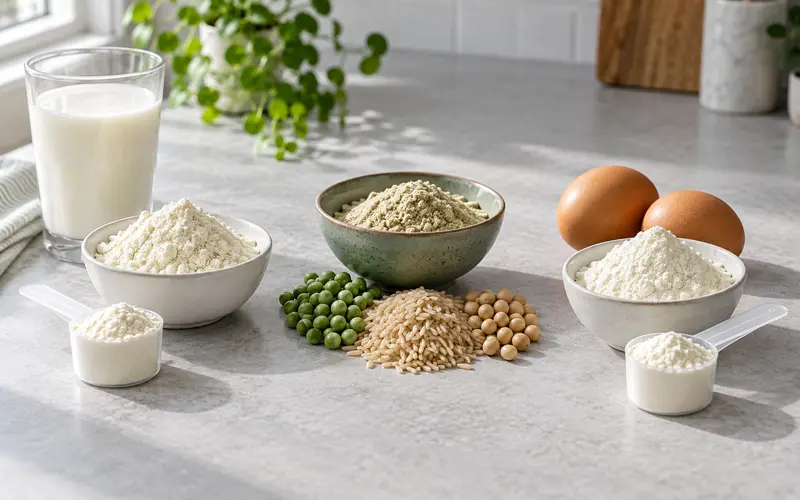
Protein powder should form the foundation of a post-workout shake. Whey protein is a popular choice because it contains all nine essential amino acids and naturally provides leucine, an amino acid involved in muscle protein synthesis.
Whey concentrate generally contains more lactose, carbohydrates, and fat than whey isolate. Whey isolate is filtered further and may be easier for some people with lactose sensitivity to tolerate, although anyone with a milk allergy still needs to avoid it. Plant-based powders made from soy or carefully blended sources such as pea and rice can also provide a complete amino acid profile.
Egg white protein is another dairy-free option. Understanding the benefits and drawbacks of egg white protein powder can help narrow the choices when whey and plant-based powders are not a good fit.
Collagen powder can contribute protein, but it is not a complete protein and should not serve as the primary recovery protein in a shake. I prefer to think of collagen as a separate supplement rather than counting it as a replacement for whey or another complete protein source.
How Much Protein Should a Post-Workout Shake Contain?
A practical target for many active adults is approximately 20 to 40 grams of high-quality protein in a meal or shake. Body size, workout intensity, age, overall diet, and fitness goals can all affect the right amount.
More protein in a single shake is not automatically more beneficial. A huge serving may leave you uncomfortable while adding more calories than you intended. Check the nutrition label because serving sizes and grams of protein vary considerably between powders.
Your shake also needs to fit into your total daily intake. Someone already eating protein-rich meals may need a smaller shake than someone who struggles to eat enough throughout the day. These convenient ways to increase daily protein can help fill other gaps without depending on protein powder for every meal.
Choose a Liquid That Fits Your Goals
The liquid changes the flavor, texture, protein, and calorie content of a shake.
Water creates the lightest option and lets the flavor of the powder remain prominent. Dairy milk adds protein and carbohydrates while making the shake creamier. Lactose-free filtered milk can provide similar benefits for people who have trouble digesting regular milk.
Soy milk generally contains more protein than many other plant-based milks. Almond, oat, and coconut milk can also work, but their protein and sugar content vary widely. Look at the label instead of assuming every milk alternative offers the same nutrition.
A shaker bottle may be all you need when combining protein powder with water or milk. Fruit, seeds, nut butter, or ice usually require a blender to create a smoother texture.
Add Carbohydrates When They Serve a Purpose
Carbohydrates help replenish glycogen, which is the stored carbohydrate your body uses during activity. They can be especially helpful after a long, demanding, or high-intensity workout. A short strength session may not require a large amount of carbohydrate immediately afterward, particularly if you plan to eat a balanced meal soon.
Useful carbohydrate additions include:
- Banana
- Berries
- Mango
- Oats
- Dairy milk
- Unsweetened oat milk
- A small amount of honey
- Dates
Fruit provides carbohydrates along with vitamins, minerals, and flavor. A banana also creates a thicker texture and can reduce the need for added sweeteners.
Specialized carbohydrate powders such as maltodextrin powder are more commonly used for demanding endurance training or rapid refueling. Most recreational workouts do not require them. Whole-food carbohydrates are usually more practical and provide a broader range of nutrients.
The food eaten before exercise matters as well. Balanced pre-workout food and timing can affect how much refueling you need immediately afterward.
Include Fiber Without Turning the Shake Into Sludge
Fiber can make a shake more satisfying and support digestive health, but a little can change the texture quickly. Ground flaxseed, chia seeds, berries, and oats are common options.
I like ground flaxseed because it blends easily and adds fiber without completely changing the flavor. Chia seeds thicken as they absorb liquid, so they work best when used sparingly unless you intentionally want a pudding-like shake.
Adding multiple fiber-rich ingredients at once can create an overly thick drink and may cause digestive discomfort. Start with one addition and increase it gradually if needed.
Decide Whether Healthy Fats Belong in the Shake
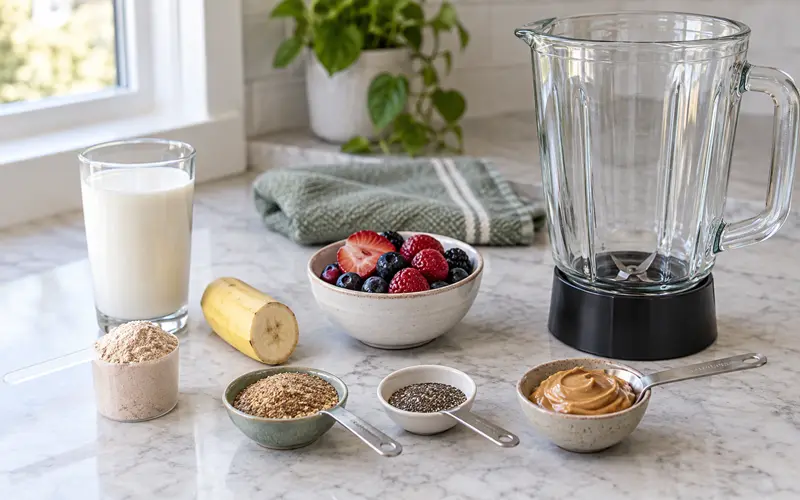
Peanut butter, almond butter, avocado, flaxseed, chia seeds, and MCT powder can add fat and make a shake more filling. That can be useful when the shake replaces breakfast or needs to keep you satisfied for several hours.
Healthy fats are less important when the shake is only a bridge to a meal. They also increase calories quickly, especially when nut butter, seeds, and MCT powder appear in the same drink.
I decide what to include based on how I am using the shake. A quick recovery drink can remain simple, while a shake serving as breakfast needs enough substance to feel like a meal.
Add Flavor Without Excessive Sugar
A post-workout shake should taste good enough that you will drink it consistently. Flavored protein powder may already contain sweeteners, so taste the shake before adding honey, syrup, or sweetened milk.
Easy flavor additions include:
- Cinnamon
- Vanilla, almond, or coconut extract
- Unsweetened cocoa powder
- Frozen fruit
- Peanut butter powder
- Instant coffee or espresso powder
- A small pinch of salt
Extracts and spices provide a noticeable flavor change without adding much volume. Frozen fruit can provide sweetness and replace some or all of the ice.
A Practical Formula for a Post-Workout Shake
My morning shake starts with whey protein because I want a complete protein source at the center of it. From there, I choose additions according to what I need that day rather than following the exact same formula every time.
Ground flaxseed adds fiber, while fruit or milk can provide carbohydrates when I want a more complete post-workout breakfast. I have experimented with oats, collagen, and MCT powder, but now I choose ingredients based on what I want from that particular shake. Taste, texture, and how the shake fits with the rest of my meals matter just as much as the ingredient list.
That flexible approach makes the habit easier to maintain. The same principle applies to creating a realistic fitness routine: a routine is more useful when it fits your life well enough to repeat consistently.
Common Post-Workout Shake Mistakes
Even nutritious ingredients can work against your goals when the portions or combinations are not well considered.
- Treating the shake as mandatory: A regular meal containing enough protein can support recovery just as well.
- Adding too many calorie-dense ingredients: Nut butter, MCT powder, seeds, full-fat milk, and sweeteners can turn a simple shake into a very large meal.
- Relying on collagen as the main protein: Collagen does not provide the same complete amino acid profile as whey, soy, egg, or a balanced plant-protein blend.
- Assuming every plant milk is high in protein: Many almond, oat, and coconut beverages contain very little.
- Using too much fiber at once: Large amounts of chia, flaxseed, oats, and supplemental fiber can create digestive discomfort.
- Ignoring the rest of the day: A post-workout shake should complement meals rather than compensate for an inconsistent diet.
- Choosing powder based only on marketing: Protein content, serving size, ingredients, sweeteners, and independent testing deserve more attention than package claims.
How to Choose a Protein Powder
Start by checking the type and amount of protein per serving. When choosing a cleaner protein powder, review the ingredient list for allergens, sweeteners, thickeners, and other additions that may affect taste or digestion.
Protein powders are dietary supplements, and the FDA does not approve dietary supplements for safety and effectiveness before they are sold. Independent certification can provide another level of reassurance that the label matches the product.
The NSF Certified for Sport program tests supplements for label accuracy, contaminants, and substances prohibited by major athletic organizations. Competitive athletes have the strongest reason to seek sport-specific certification, but any consumer can use independent testing as one factor when comparing products.
Protein Shakes Should Support the Rest of Your Diet
Protein powder offers convenience, but whole foods provide nutrients that a scoop of powder may not. Eggs, poultry, dairy products, beans, lentils, tofu, nuts, and seeds can all contribute to daily protein intake. A varied selection of high-protein foods also supplies different vitamins, minerals, fats, and carbohydrates.
A simple post-workout shake can include protein powder, milk or water, and fruit. A shake replacing a full meal may need protein, carbohydrates, fiber, and some fat. There is no advantage to making it more elaborate than necessary.
The best post-workout protein shake is one that supports your nutrition needs, agrees with your stomach, and fits naturally into your routine. Start with a complete protein source, add ingredients with a clear purpose, and adjust the combination based on the workout and the meal that comes next.