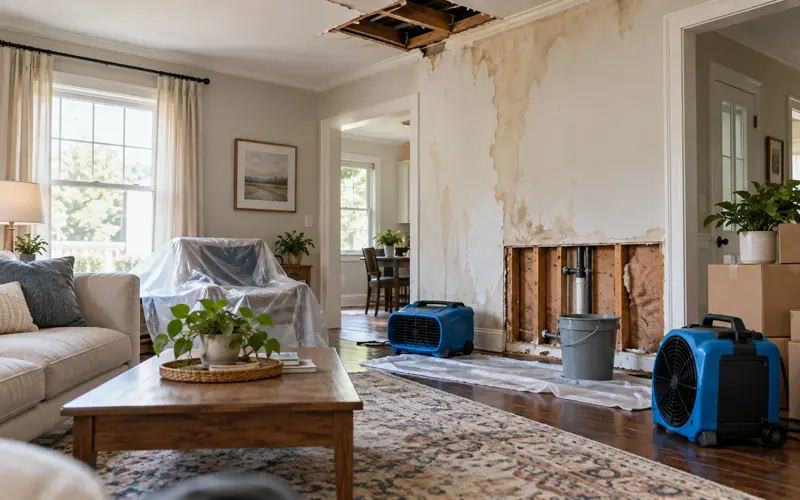
No one buys a home expecting to deal with serious property damage. Yet fires, storms, plumbing problems, and other unexpected events can leave homeowners suddenly trying to figure out what happens next.
There are calls to make, decisions to weigh, and sometimes a property that may not even be safe to walk through. Knowing the general recovery process ahead of time cannot undo the damage, but it can make the days and weeks that follow easier to manage.
Even homeowners who stay on top of routine maintenance and small repairs can find themselves dealing with a situation that could not have been anticipated or prevented.
When the Damage Runs Deeper Than It Looks
Some losses leave a home looking almost normal at first glance, while the real damage sits below the surface.
Fire damage is one of the clearest examples because heat, soot, and smoke can travel well beyond the room where the fire began. Odors and residue may settle into walls, flooring, furniture, and other materials that cannot simply be wiped clean.
Work of this kind often requires a trained crew that can clean, treat, and rebuild affected areas in the proper order rather than simply covering visible damage. Homeowners in this situation may need a company that handles fire damage restoration as a complete process, from the initial inspection and cleanup through repairs.
Storm damage can create similar hidden problems. Preparing ahead of severe weather can reduce some risks, and taking practical steps to prepare your home before storm season is worth making part of regular home care. Even a well-prepared property, however, can still experience unexpected damage.
The First Hours After a Loss
Once emergency services have released the property and confirmed when it is safe to approach, the first priority should be the people involved rather than possessions.
Make sure everyone is accounted for, and seek medical attention when necessary. After immediate safety concerns have been handled, homeowners can begin dealing with the practical side of the situation.
The first calls will often include:
- The insurance company
- Utility providers when services may need to be shut off or inspected
- Family members who need to know what happened or where you will be staying
- A qualified restoration or repair company when immediate cleanup or stabilization is needed
Not every decision has to be made immediately. Unless there is a safety issue that requires quick action, taking time to understand the situation before agreeing to major repairs or expenses can help prevent rushed decisions.
Working With Your Insurance Provider
Most homeowners insurance policies require losses to be reported promptly, so contacting the insurance provider early is important even when the full extent of the damage is not yet clear.
An adjuster may inspect the property and determine what the policy covers. This is also a good time to review the policy carefully and ask questions about anything that is unclear.
Questions may include:
- What types of damage are covered?
- What exclusions apply?
- What are the coverage limits and deductible?
- Is temporary housing included?
- Are there requirements for choosing contractors or approving repairs?
- What documentation will be needed for damaged belongings?
Keep a written record of conversations, including dates, names, claim numbers, and important details. Property claims can stretch across several weeks or longer, and having an organized record makes it much easier to keep track of what has been discussed.
Choosing the Right Repair Company
The company responsible for repairing or restoring a home can have a major effect on how smoothly the process goes.
Before hiring anyone, look for a company with appropriate licensing and insurance and a history of similar work. Ask for references when possible and take the time to verify credentials rather than relying only on a sales presentation.
A reputable company should be willing to:
- Explain the work that needs to be completed
- Provide a written scope of work
- Clearly outline estimated costs and payment expectations
- Answer questions without creating unnecessary pressure
- Explain how changes or additional damage will be handled
Be cautious with anyone who appears unexpectedly after a neighborhood disaster, demands a large payment before work begins, or pressures homeowners to sign immediately. A little extra time spent checking credentials can help avoid additional problems later.

Expect the Repair Timeline to Change
Property recovery frequently takes longer than homeowners initially expect.
Depending on the type of loss, the process may include inspection, cleanup, drying, demolition, repairs, inspections, and final finishing. Some stages cannot begin until the previous work has been completed.
Insurance approvals, permits, contractor schedules, and material availability can also affect the timeline.
Instead of relying solely on an early verbal estimate, ask for a written schedule when possible. If something changes, ask how that change affects the remaining work. Clear communication can make delays easier to manage and reduce surprises along the way.
Some Belongings May Still Be Saved
A damaged room does not necessarily mean everything inside it is lost.
Furniture, clothing, documents, photographs, and other belongings may sometimes be cleaned, treated, or restored depending on the type and severity of the damage. Items that seem unsalvageable at first glance may be worth having evaluated before they are discarded.
Make a list of belongings that have the greatest financial or sentimental importance and let the restoration crew know about them. Photographs, family keepsakes, important documents, and irreplaceable items may deserve attention before more easily replaced possessions.
It is also a good idea to photograph damaged belongings and rooms before anything is removed whenever it is safe to do so and your insurer recommends documenting the loss.
Finding Somewhere to Stay
When a home cannot safely be occupied, temporary housing quickly becomes one of the biggest practical concerns.
Some homeowners insurance policies provide coverage for additional living expenses when a covered loss makes the home uninhabitable. Coverage varies, so confirm the amount, eligible expenses, and time limits with the insurance provider rather than assuming everything will be reimbursed.
Keep receipts for lodging, meals, transportation, pet accommodations, and other additional expenses related to being displaced.
Families with children, pets, older relatives, or accessibility needs should mention those requirements early. Finding suitable temporary housing may take more time when there are additional needs to consider.
Making the Recovery Process More Manageable
Repairing the property is only one part of recovering from a major loss. Insurance paperwork, contractor meetings, temporary housing, and everyday responsibilities still have to be managed at the same time.
Keeping information organized can make the process easier. Consider creating one folder, binder, or digital file for:
- Insurance documents and claim information
- Contractor estimates and agreements
- Photographs of the damage
- Receipts and expenses
- Inspection reports
- Notes from phone calls and meetings
It can also help to divide responsibilities when possible. One person might communicate with the insurance company while another keeps track of contractor updates or receipts.
Recovering from unexpected property damage rarely happens in one simple step. Taking care of immediate safety concerns first, understanding insurance coverage, choosing qualified professionals, and keeping good records can help homeowners move through the process with fewer surprises and gradually get their home back to normal.