
Your home should provide a break from the stresses of daily life, not add to them. Nobody wants to get home after a long day and spend the evening worrying about keeping up with housework, unfinished chores, and household responsibilities.
While no home stays effortlessly clean and organized, a few simple changes can reduce your workload. Along with staying ahead of routine home maintenance, creating practical systems for everyday tasks can make your home feel calmer and easier to manage.
1. Let Technology Handle Repetitive Tasks
Technology can reduce the burden of small, repetitive tasks and give you more control with less effort. Tools such as smart plugs, programmable thermostats, convenient motorized blinds, robot vacuum cleaners, and app-controlled appliances can save a surprising amount of time. Choose automated tools that solve an actual problem in your home instead of gadgets that create even more settings and notifications to manage.
Simplifying bills and paperwork can help as well. Set up automatic payments for regular bills, switch to paperless statements when appropriate, and keep important documents together in one folder or secure location. Review subscriptions every few months to make sure you still use them. A little administrative work done regularly can prevent a much bigger headache later.
2. Tackle Clutter in Short Sessions
Clutter makes a home harder to clean, organize, and enjoy. One of the easiest ways to deal with it is to remove it the same way it accumulated: little by little. Instead of attempting a huge cleanout in one weekend, set a timer for 10 or 15 minutes and focus on one drawer, shelf, or cabinet. Short sessions make decluttering less overwhelming and easier to fit into a normal day.
Ask whether each item is used, needed, or genuinely loved. If it is not, consider donating, recycling, or disposing of it responsibly. Keep surfaces as clear as possible, especially in kitchens, entryways, and living areas where clutter tends to collect quickly. Many spring cleaning tips can also be used throughout the year to prevent clutter and cleaning projects from becoming unmanageable.
3. Give Everyday Items a Logical Home
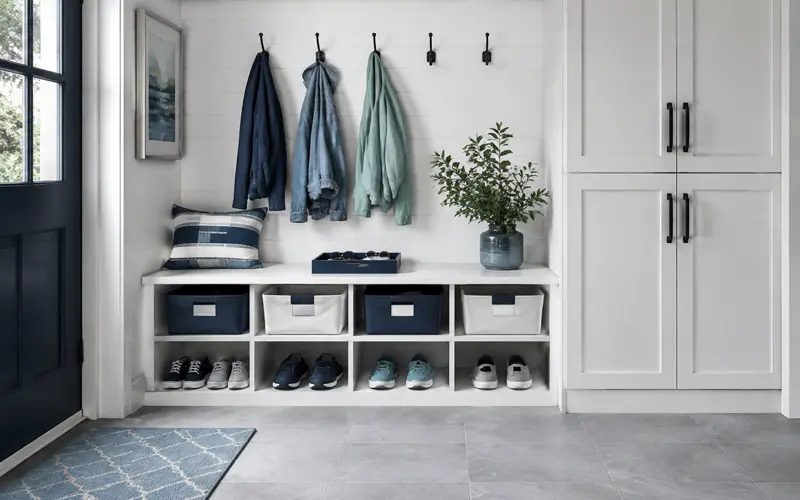
Simple storage systems make it easier to find what you need and return items to the correct place. Use baskets, boxes, drawer dividers, and labels to group similar items together. Batteries, tape, chargers, and office supplies, for example, are easier to manage when they are stored in separate labeled containers rather than scattered throughout different rooms.
Whenever possible, store items close to where they are used. Keep kitchen cleaning products in the kitchen, bathroom cleaning products in the bathroom, coats and shoes near the door, and everyday cooking utensils within easy reach of the stove or countertop. Cleaning products should always be secured where children and pets cannot reach them.
When storage locations are inconvenient, items tend to drift toward the places where they are regularly used. Giving everything a practical home makes it easier for everyone in the household to put things away.
4. Build a Cleaning Routine You Can Maintain
A manageable cleaning routine is more effective than an ambitious schedule that you cannot maintain. Divide household chores into daily, weekly, and monthly tasks so you are not trying to handle everything at once.
- Daily tasks might include wiping kitchen counters, placing laundry in the hamper, and clearing dishes.
- Weekly tasks could include vacuuming, changing bedding, and cleaning the bathrooms.
- Monthly tasks might include wiping baseboards, cleaning appliances, and checking areas that are easy to overlook.
Keep basic cleaning supplies in convenient places, such as a small caddy under the kitchen sink or in an upstairs bathroom. Make sure any supplies stored under a sink are secured from children and pets. Having products nearby saves time and makes quick cleanups easier.
Choosing washable mats, easy-to-clean materials, and fewer decorative objects can also reduce the amount of dusting and scrubbing required. Additional time-saving cleaning strategies can help you maintain a tidy home without devoting an entire day to housework.
5. Use Predictable Routines to Simplify Your Week
The fewer decisions you need to make each day, the easier your home becomes to manage. Simple morning, evening, and weekend routines can help everything run more smoothly. Prepare backpacks, work supplies, or gym bags the night before, and choose outfits in advance if mornings often feel rushed. You might also designate a regular day for laundry, grocery shopping, or meal planning.
Meal planning does not have to be elaborate. Even a list of five reliable dinners can prevent last-minute stress and unnecessary spending. Keep a few pantry staples available, such as pasta, rice, canned tomatoes, and frozen vegetables, so you can prepare a quick meal when plans change.
Small Changes Can Make a Home Easier to Manage
Making your home easier to manage is largely about reducing friction in everyday life. Decluttering gradually, improving storage, simplifying cleaning, building predictable routines, and using helpful tools can create a calmer and more efficient space.
Start with the area that causes the most frustration and make one small improvement. Over time, small changes can transform how your home functions and reduce the amount of work required to maintain it.