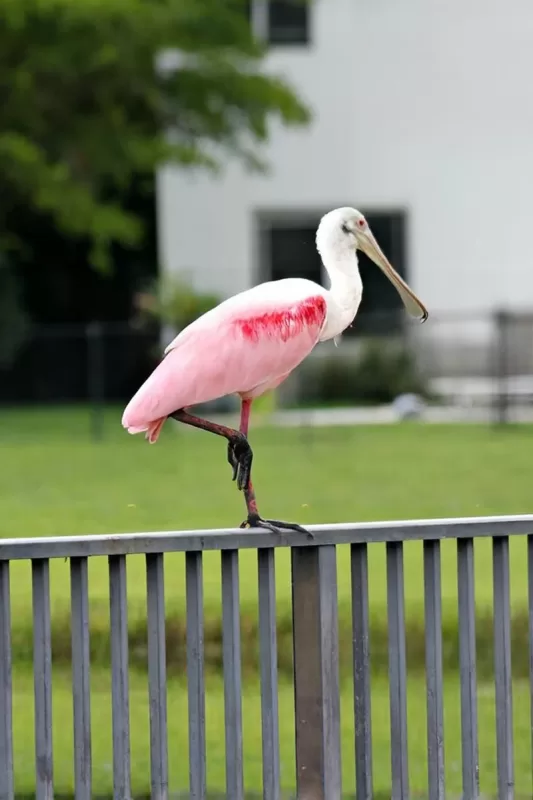
There are some Florida moments that feel ordinary at first, until you realize you are looking at something truly beautiful. That is exactly how this roseate spoonbill sighting felt. One day, this soft pink bird landed on our fence in South Florida, and it immediately stood out against the everyday backyard view.
At first glance, it almost did not look real. Florida is full of birds, especially near canals, lakes, wetlands, and coastal areas, but a roseate spoonbill has a way of stopping you in your tracks. The pink coloring is striking without being loud, and the long legs and graceful shape make it look perfectly at home near the water.
What made the moment even more special was that it happened right at home. It was not during a planned birdwatching trip or a visit to a nature preserve. It was simply one of those unexpected South Florida wildlife moments that remind you how much beauty can show up in your own backyard. For a more structured animal-focused outing, the Palm Beach Zoo animal experiences give families a closer look at some of the animals in a guided zoo setting.
Living in Florida, it is easy to get used to the palm trees, warm weather, and birds passing through the neighborhood. But every now and then, something appears that makes you slow down and pay attention. For me, this roseate spoonbill was one of those moments.
What Makes the Roseate Spoonbill So Unique
The roseate spoonbill is best known for two things: its beautiful pink color and its unusual spoon-shaped bill. The bill is long, flat, and rounded at the end, which gives the bird its name. According to the Cornell Lab of Ornithology, roseate spoonbills use that distinctive bill to sweep through shallow water while searching for food.
Their pink color is one of the reasons people notice them so quickly. While flamingos often get most of the attention when people think of pink birds, the roseate spoonbill has its own softer, more elegant look. The shade can vary, but the mix of pale pink feathers, brighter wing coloring, long legs, and that unmistakable bill makes them easy to recognize once you know what you are seeing.
Roseate spoonbills feed in shallow fresh, brackish, and saltwater areas, often eating small fish, crustaceans, and aquatic insects. The Florida Fish and Wildlife Conservation Commission notes that they are protected in Florida as a state-designated threatened species, which makes seeing one feel even more meaningful.
They are not the kind of bird you simply glance at and move past. Their color draws you in first, but their quiet, steady way of moving through the water is what makes them so interesting to watch. There is something calm and almost delicate about them, even with that oversized spoon-shaped bill.
Why Roseate Spoonbills Are Seen in South Florida
South Florida is a natural place to spot roseate spoonbills because of the landscape. Wetlands, mangroves, marshes, shallow coastal waters, canals, and lake edges all create the kind of habitat where wading birds can feed and rest. That is part of what makes Florida wildlife so interesting: sometimes the same birds you might expect to see in a refuge or preserve can also appear near a neighborhood canal or backyard waterway.
The Audubon Field Guide describes roseate spoonbills as birds of marshes, mangroves, and shallow waters, which fits so much of South Florida’s natural environment. They are often associated with coastal areas and wetlands, but they can also show up in places that feel much closer to everyday life.
That is one of the things I love about Florida living. You can be driving to the store, walking near a pond, visiting a park, or looking out your back window and suddenly see something that feels like it belongs in a nature documentary. If you enjoy exploring Florida’s natural side, places with boardwalks, preserves, and Florida hiking trails can be wonderful for noticing birds and wildlife you might otherwise miss.
Roseate spoonbills are also one of the birds people may spot while visiting coastal wildlife areas. They are mentioned often in connection with Florida refuges and nature destinations, including places like Sanibel, where wildlife watching is part of the experience.
A Special Backyard Wildlife Moment
The photo I took that day has always been one of my favorites because it captured something unexpected. It was not staged, planned, or taken during a perfect golden-hour photo session. It was simply a roseate spoonbill sitting on our fence, bringing a little flash of pink beauty into an ordinary South Florida day.
That is what makes backyard wildlife so special. It reminds you that Florida is not only beaches, restaurants, theme parks, and road trips. It is also the quiet moments: a bird landing nearby, the stillness around a canal, the sound of wings overhead, or the surprise of seeing a pink wading bird where you least expected it.
Since that first sighting, roseate spoonbills have become one of those birds I always notice. Once you have seen one up close, they are hard to forget. Their color, shape, and graceful movement make them one of South Florida’s most beautiful birds, and spotting one feels like a small gift from nature.
For anyone living in or visiting Florida, keep an eye on shallow water areas, wetlands, canals, and quiet edges of lakes or preserves. You never know when one of these beautiful pink birds may appear. Sometimes the best Florida moments are not the ones you plan at all, but the ones that land right in front of you.