
Vacations are supposed to be a break from normal routines, and I don’t think taking a trip means every healthy habit has to come along in exactly the same form. At the same time, I usually feel better when there is some movement in my day.
The good news is that staying active on vacation does not require waking up early to use the hotel treadmill or planning the trip around workouts. Walking through a new city, swimming in the pool, exploring a trail, or spending ten minutes doing a little strength work can all keep you moving.
The goal is to find activities that fit naturally into the vacation rather than trying to recreate your normal fitness routine somewhere else.
Make Movement Part of the Vacation
Walking is probably the easiest way to stay active while traveling because it requires no equipment and often happens naturally. Historic districts, waterfronts, museums, theme parks, markets, and downtown areas can keep you on your feet for hours while you are sightseeing.
When the distance is reasonable and the area is safe for pedestrians, walking between attractions can also give you a better look at a destination than you would get from a car.
The CDC’s physical activity guidelines recommend that adults work toward at least 150 minutes of moderate-intensity aerobic activity each week, along with muscle-strengthening activity on two days. Those minutes can be spread throughout the week, which means activity does not have to happen during a traditional workout.
I would much rather spend an hour exploring somewhere interesting than spend that hour staring at the wall from a treadmill. Kayaking, snorkeling, biking, and other fun vacation activities can naturally add movement without making exercise the focus of the trip.
Depending on the destination, try:
- A walking tour through a historic neighborhood
- Bike rentals along a beach or waterfront
- Kayaking, paddleboarding, or snorkeling
- A scenic hike
- Botanical gardens, zoos, or large museums
- Swimming at the hotel or beach
Nature-focused trips make this particularly easy. Choosing one of the hikes and walking trails on Nantucket, for example, combines sightseeing and activity without requiring a separate workout.
You also do not need to choose the most strenuous option available. A beautiful two-mile walk that leaves you with enough energy to enjoy the rest of the day may be a much better vacation choice.

Take Advantage of Where You’re Staying
Your hotel or resort may offer plenty of opportunities to move without ever setting foot inside its fitness center.
- At the pool: Swimming is an obvious option, but you do not have to swim formal laps. Swim with the family, walk through the water, or alternate time on a lounge chair with time in the pool.
- At the beach: Walk along the shoreline, swim when conditions are safe, or simply spend more time in the water.
- Around the resort: Walk to breakfast, explore the property, take the stairs for a few floors, or walk to a nearby restaurant when it is practical.
An evening stroll works especially well while traveling because it doubles as another chance to explore. It can also incorporate the same after-dinner walking habit that fits easily into an everyday routine at home.
None of these choices needs to be about getting in more steps. They are simply easy ways to move when the opportunity is already there.
When You Want an Actual Workout
Some vacation days involve a lot more sitting than others. Long flights, road trips, tours, and rainy days can leave you wanting a little intentional movement.
That is where a short hotel-room workout can be useful.
You do not need 45 minutes or an elaborate program. Depending on your fitness level, available space, and physical limitations, choose three or four familiar exercises:
- Chair squats
- Wall push-ups
- Glute bridges
- Standing marches
- Calf raises
- Core exercises
Ten or fifteen minutes can be plenty before getting on with the rest of the day.
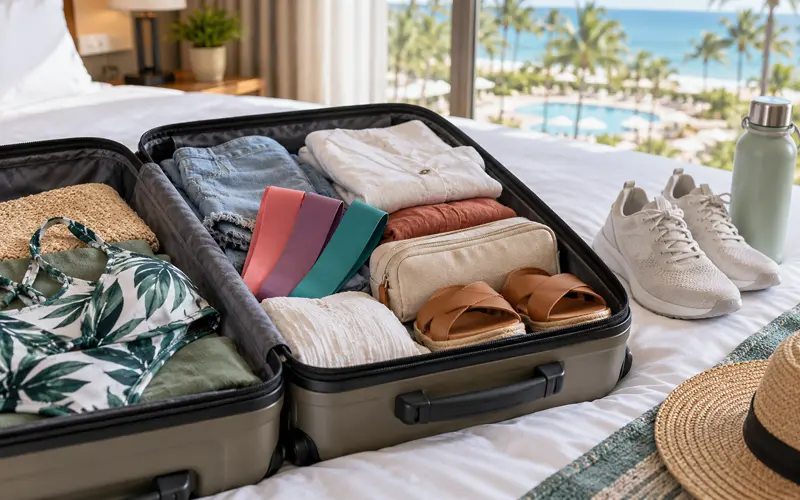
Resistance bands are also easy to bring along if you want the option of doing some strength work. They take up very little suitcase space, and many resistance loop band exercises work well in the limited space of a hotel room.
Keep the Vacation Workout Simple
A vacation workout does not need to resemble your routine at home. A simple approach might be:
Pick 3–4 exercises → spend 10–15 minutes moving → get ready and enjoy the day.
If you never take the resistance bands out of your suitcase because you spent the week swimming, walking, and exploring, that is fine too.
Balance Activity With Food and Rest
Food is part of traveling, and movement should not become a way to compensate for enjoying a restaurant meal, dessert, or cocktail. I prefer to think about activity as something that helps me feel energetic and enjoy the trip rather than something I have to do because of what I ate.
You can still maintain familiar eating habits when they fit easily into the day. Breakfast may look similar to what you eat at home, while lunch and dinner give you opportunities to try local restaurants.
If protein is normally something you prioritize, simple ways of increasing protein throughout the day can work while traveling without turning every meal into a nutrition calculation.
Know When You’ve Already Been Active
Before adding a workout, think about what you have already done that day.
You probably do not need additional exercise after:
- Spending six hours walking around a theme park
- Hiking for several miles
- Exploring a city on foot all afternoon
- Kayaking or paddleboarding
- Swimming and walking around a resort for most of the day
Activity does not stop counting simply because you were having fun while doing it.
Rest belongs in the plan too. Some days may include thousands of steps and hours of activity, while others may involve sleeping late, reading beside the pool, and going out for a leisurely dinner.
Forget the All-or-Nothing Approach
Staying active on vacation becomes much easier when you stop measuring activity only by whether you completed an official workout.
Instead of asking when you are going to exercise, think about how you are likely to move that day. A sightseeing walk, afternoon swim, bike rental, morning hike, or ten minutes with a resistance band can all provide plenty of activity.
On another day, you may decide that rest sounds better, especially after several busy days of exploring.
Your regular fitness routine will still be there when you get home. Vacation activity should help you enjoy where you are, not become another schedule you have to follow. Finding a comfortable balance between movement, good food, sightseeing, and plenty of downtime can help you return home feeling refreshed and ready to settle back into your normal routine.