
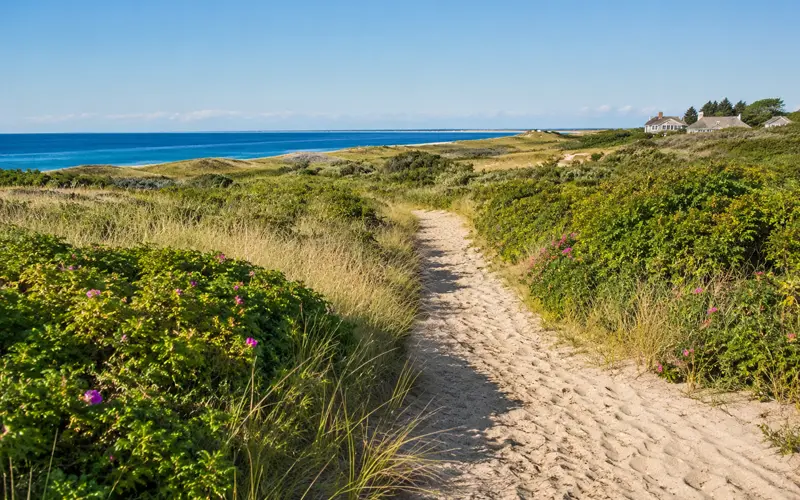
Nantucket may be best known for its beaches, historic cottages, and classic New England scenery, but some of the best views on the island are found away from the busiest streets. Walking trails wind through salt marshes, forests, cranberry bogs, coastal bluffs, grasslands, and wide stretches of protected open space, giving visitors a completely different way to experience the island.
Located about 30 miles off the coast of Cape Cod, Nantucket has an impressive amount of land protected from development. The Nantucket Conservation Foundation alone maintains more than 9,000 acres, including many of the island’s most popular places for walking and hiking.
Most Nantucket hikes aren’t challenging mountain treks. Instead, they are scenic walks where the appeal comes from quiet surroundings, coastal landscapes, wildlife, and the opportunity to slow down and explore a side of the island you might otherwise miss.
Best Nantucket Hikes at a Glance
There is a surprising amount of variety within Nantucket’s relatively small footprint. Some trails provide ocean views while others disappear beneath tree canopies or cross landscapes that feel much farther removed from civilization.
- Sconset Bluff Walk: Best for ocean views and classic Nantucket cottages
- Squam Swamp: Best woodland hike
- Squam Farm: Best combination of meadows and forest
- Sanford Farm and Ram Pasture: Best for a longer nature walk
- Middle Moors: Best for wide-open landscapes
- Nantucket Field Station: Best for birdwatching and salt-marsh scenery
- Tupancy Links: Best casual conservation walk
- Windswept Bog: Best for wetlands and secluded scenery
Trail conditions can change with weather, erosion, conservation work, and the season, so checking current information before heading out is always worthwhile.
Sconset Bluff Walk
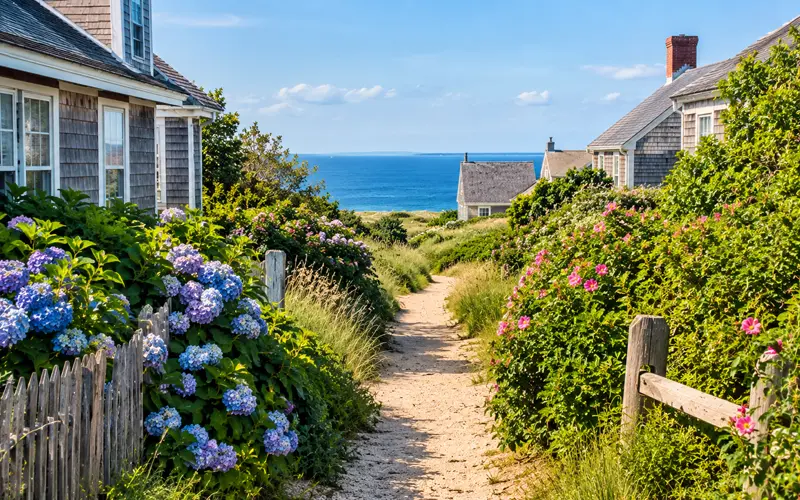
The Sconset Bluff Walk is one of Nantucket’s most distinctive walking experiences. Rather than passing through wilderness, this narrow public footpath follows the eastern shoreline through portions of the Sconset Bluff, running behind private homes and offering glimpses of gardens, historic cottages, and the Atlantic Ocean.
Part of its charm comes from how different it feels from a traditional hiking trail. You may pass rose-covered cottages and manicured landscaping one moment and catch an expansive coastal view the next. The trail is narrow and uneven in places, and the Town of Nantucket notes that there is no parking specifically designated for the Bluff Walk.
Because the path crosses behind private properties, staying on the marked public trail and respecting homeowners’ privacy is especially important. Pairing the walk with time in the village of Siasconset—usually called ‘Sconset—makes this an easy addition to a day spent exploring the eastern side of Nantucket.
Squam Swamp
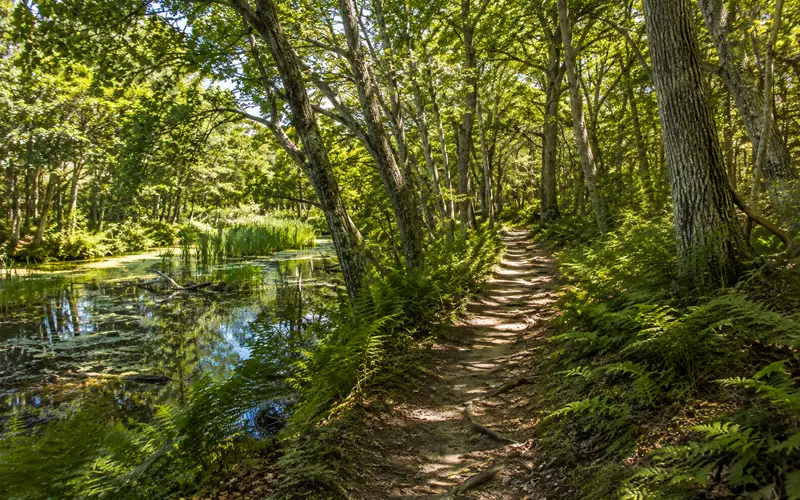
For a completely different side of Nantucket, head into Squam Swamp. Instead of beach grass and ocean views, this trail leads through one of the island’s more unusual forested environments, with hardwood trees, freshwater wetlands, bogs, and vernal pools.
The well-marked Squam Swamp trail is approximately 1.75 miles round trip and includes numbered posts that correspond with an interpretive guide. The landscape includes black tupelo, red maple, sassafras, beech trees, ferns, and pockets of wetlands, creating an atmosphere that feels surprisingly lush for an island associated so strongly with beaches and dunes.
This is one of the best Nantucket hikes for travelers who enjoy noticing the landscape as much as reaching a destination. There are no facilities at the trailhead, so bring water and anything else you need before setting out.
Squam Farm
Adjacent to Squam Swamp, Squam Farm provides a more open walking experience. The approximately 200-acre property is surrounded by a 1.5-mile trail following dirt roads and paths, with rolling terrain, meadows, fields, and woodland.
Because the farm was historically used for agriculture, much of the scenery feels different from the thick vegetation found in Squam Swamp. Walking both areas provides an interesting contrast between open grassland and Nantucket’s less common forest habitats.
There is also a connecting access path between Squam Swamp and Squam Farm, which gives hikers the option of extending their walk rather than treating the properties as entirely separate destinations.
Sanford Farm, Ram Pasture, and Head of the Plains
Travelers looking for a longer stretch of conservation land should consider Sanford Farm, Ram Pasture, and Head of the Plains. Together with neighboring protected properties, this area creates a large corridor of grasslands, heathlands, wetlands, shrub thickets, and woods on the western side of Nantucket.
Sanford Farm itself was once an operating dairy farm, and remnants of its agricultural history can still be found within the property. Today, interconnected trails make the area popular for hiking, walking, and dog walking.
This is the type of Nantucket hiking area where it pays to look at a trail map before starting. Rather than following one short path to a single attraction, you can choose a route based on how long you want to walk and which parts of the conservation area you want to explore.
The Middle Moors
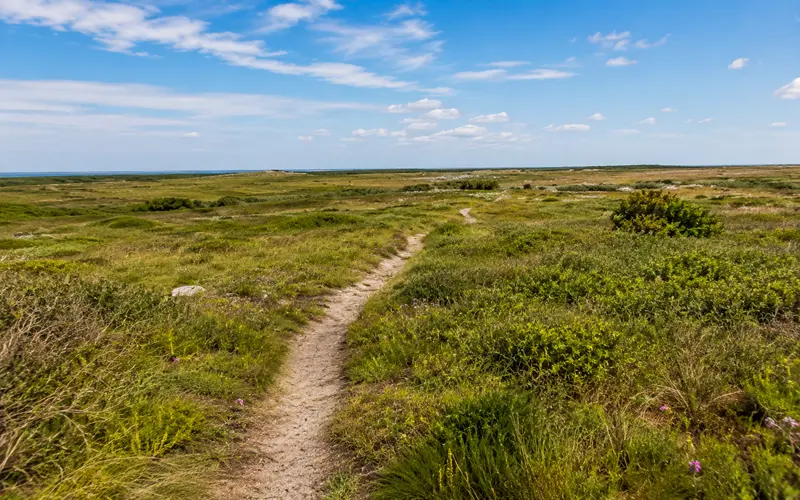
If your idea of Nantucket is primarily beaches and cottages, the Middle Moors may completely change that picture. More than 3,200 acres of protected open space stretch across this portion of the island, creating the largest expanse of undeveloped land on Nantucket.
One of the most interesting destinations within the Middle Moors is Altar Rock, which rises about 100 feet above sea level. That may not sound high compared with mountain hikes, but Nantucket’s relatively flat terrain makes it a natural viewpoint, with clear-day vistas that can include Polpis Harbor, Coatue, Great Point Light, Sankaty Head Light, and ‘Sconset.
Another section is nicknamed the Serengeti because its low-growing vegetation and scattered trees create an unusually broad, open landscape. Trail information is available at the Milestone Overlook trailhead, and there are no facilities within the Middle Moors, making water and basic trail preparation important.
Nantucket Field Station and Folger’s Marsh
Birdwatchers and travelers who prefer coastal wetlands should put the Nantucket Field Station and Folger’s Marsh on their list. This 110-acre protected property combines roughly one mile of walking trails with salt marsh, freshwater ponds, beach frontage, and views toward Coatue across Nantucket Harbor.
Herons, egrets, shorebirds, songbirds, and other wildlife use the marsh and surrounding habitats, so this is a walk that rewards taking your time. Rather than covering miles quickly, bring binoculars or simply stop occasionally to watch what is happening around the ponds and marsh.
The property is located along Polpis Road and is generally open from sunrise to sunset. Parking is available along the access road.
Tupancy Links
Tupancy Links is one of Nantucket’s popular conservation properties for casual walking and dog walking. Open grasslands and easy-to-follow paths make it a good option when you want outdoor time without committing to one of the island’s longer trail systems. The Nantucket Conservation Foundation specifically includes Tupancy Links among its popular dog-walking areas.
This is less about tackling a traditional hike and more about enjoying Nantucket’s preserved landscape at an easy pace. Open terrain also means you may have less protection from wind or sun than you would on a forested trail, so conditions can feel very different depending on the day.
If you are traveling with a dog, check current conservation rules before choosing a trail. Restrictions apply to dogs in some protected Nantucket properties during nesting season to help protect shorebirds and their chicks.
Windswept Bog
Windswept Bog offers another glimpse of Nantucket that visitors don’t always expect. The property encompasses 231 acres of restored wetlands, hardwood forest, shrub swamp, and freshwater ponds on land that once operated as a cranberry bog.
Walking trails extend through the surrounding conservation land and connect toward additional protected acreage in the Middle Moors. That gives visitors the flexibility to enjoy a quiet walk around the wetland landscape or make the outing part of a longer exploration.
The restoration of Windswept Bog is also an interesting reminder that Nantucket’s protected spaces aren’t frozen in time. Conservation work here is designed to return the former agricultural bog to a naturally functioning wetland while continuing to provide public access to the landscape.
What to Know Before Hiking on Nantucket
Even though most Nantucket walking trails involve relatively gentle terrain, they shouldn’t be treated exactly like paved city walks. Trails may include sand, roots, mud, narrow passages, uneven ground, and areas exposed to sun and wind.
A little preparation goes a long way, especially when you are spending several hours outdoors. Along with checking trail conditions, it helps to think through the same sun protection, footwear, and practical items you would pack for a beach vacation.
- Carry water, particularly on longer routes and open trails.
- Wear comfortable shoes with enough traction for uneven terrain.
- Bring sunscreen and insect repellent during warmer months.
- Check the weather before starting, especially when walking exposed coastal areas.
- Download or photograph a trail map when exploring larger conservation properties.
- Stay on marked trails and respect private property.
- Follow posted wildlife and dog restrictions.
- Leave plants, wildlife, and natural features undisturbed.
For longer walks, it is also worth carrying a few basic traveling essentials, especially water, sun protection, and anything you may need if you are farther from town.
The Town of Nantucket notes that some conservation trails can be rugged for people with mobility concerns, although portions of properties such as Tupancy Links and Sanford Farm/Ram Pasture may be navigable with an all-terrain wheelchair.
Walking Is One of the Best Ways to See Nantucket
It would be easy to visit Nantucket, spend most of the trip around town and the beaches, and never realize how much protected open space lies beyond them. The island’s hiking and walking trails reveal forests, marshes, grasslands, working landscapes, wildlife habitat, and coastal scenery that add an entirely different dimension to a Nantucket vacation.
Whether you choose the ocean views of Sconset Bluff Walk, the shaded forest at Squam Swamp, the vast openness of the Middle Moors, or the wetlands surrounding Windswept Bog, you don’t need a strenuous climb to find a memorable trail. The best Nantucket hikes are often less about conquering a destination and more about seeing just how varied this small Massachusetts island can be.