Traveling with a dog can make a vacation more memorable, but it also changes the way you plan the trip. Hotels, rest stops, meals, activities, and even the amount of luggage in the car require a little more thought when a four-legged passenger is coming along.
The good news is that traveling with a dog does not have to be stressful. I think the biggest difference comes down to preparation. Knowing where you will stop, what your hotel allows, and what your dog needs to feel comfortable can eliminate many of the problems that make pet travel difficult.
Whether you are planning a weekend getaway or a long road trip, these dog travel tips can help make the experience easier for everyone.
Decide Whether Your Dog Will Enjoy the Trip
Before planning a dog-friendly vacation, consider whether your dog actually enjoys traveling.
Some dogs happily jump into the car and settle down for hours. Others become anxious, carsick, or overwhelmed by unfamiliar surroundings. Age, health, temperament, and previous travel experience can all make a difference.
If your dog rarely rides in the car, start with several shorter drives before attempting a long road trip. The CDC’s pet travel safety guidance recommends gradually increasing the length of car rides to help pets prepare for longer trips.
A vacation should be enjoyable for your dog too. In some situations, leaving a dog with a trusted family member, sitter, or boarding facility may be the kinder choice.
Schedule a Veterinary Check When Needed
For a routine road trip, your dog may not necessarily need a special veterinary appointment. However, it is important to make sure vaccinations and identification information are current.
Traveling across state lines can involve additional requirements. The USDA Animal and Plant Health Inspection Service explains that individual states and territories can establish their own animal health requirements, which may include health certificates, vaccinations, testing, or treatments.
Check the rules for your destination well before leaving rather than assuming every state has the same requirements. International travel requires considerably more planning, and requirements vary by country.
Make Sure Identification Is Current
A lost dog is frightening anywhere, but being hundreds of miles from home makes the situation even more difficult.
Your dog should have a secure collar with an identification tag containing a current phone number. If your dog is microchipped, verify that the registration includes your current contact information.
I would also keep a recent photo of the dog readily available on my phone. Most of us already have dozens, but having a clear full-body photo can be useful if a pet becomes separated from the family.
Pack a Separate Bag for Your Dog
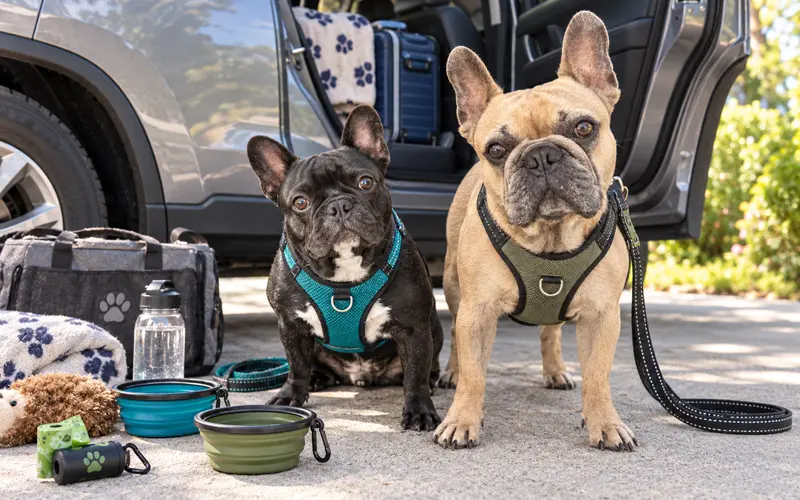
Giving your dog a dedicated travel bag makes everything easier to find, particularly during quick stops.
My basic dog travel packing list would include:
- Food for the entire trip plus a little extra
- Bottled or familiar water
- Food and water bowls
- Leash and harness
- Waste bags
- Medications
- Vaccination and veterinary information
- Bedding or a familiar blanket
- A favorite toy
- Treats
- Towels
- Pet-safe cleaning supplies
- Basic pet first-aid supplies
Our guide to what to pack when traveling with pets goes into more detail about preparing a pet travel bag. Try to keep the essentials somewhere accessible instead of burying them underneath everyone’s suitcases.
Keep Your Dog Secure in the Car
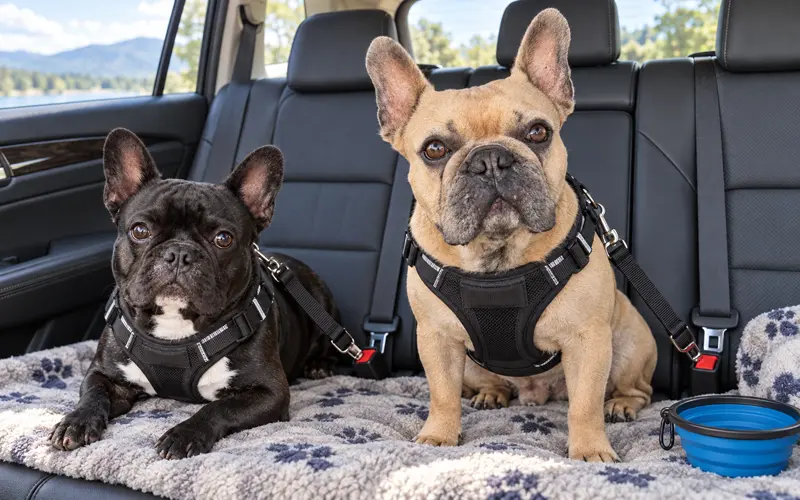
Dogs should not roam freely through a moving vehicle. Aside from being distracting to the driver, an unsecured dog can be injured during a sudden stop or accident.
The CDC recommends securing dogs riding on a seat in the back seat with an appropriate harness attached to the seat buckle. Dogs traveling in crates should have enough room to stand, sit, lie down, and turn around, and the crate itself should be secured so it cannot shift.
Allowing a dog to hang its head completely outside a moving car window may look fun, but it exposes the dog to debris and potential injury.
Plan Regular Road Trip Stops
Humans may be willing to push through another hour before stopping. Dogs do not understand that plan. Build bathroom, water, and movement breaks into the drive. Regular stops give your dog an opportunity to stretch, relieve itself, and decompress before getting back into the car.
When planning a long drive, many of the same strategies that make a family road trip more comfortable work when pets are passengers too. Easy access to supplies and planned stops can make the entire drive feel less chaotic. Keep your dog leashed before opening the vehicle door, even if the dog is normally reliable off leash. A busy interstate rest area is not the place to test recall skills.
Never Leave a Dog Alone in a Parked Car
This rule is especially important when traveling through warm climates. The temperature inside a vehicle can become dangerous quickly, even when outdoor temperatures do not seem extreme. Cracking the windows does not make a parked vehicle safe for a dog.
Plan meals and stops around your pet. Drive-through restaurants, curbside pickup, outdoor dining, and taking turns going inside are much safer alternatives.
Research Pet-Friendly Hotels Before Booking
A hotel describing itself as “pet-friendly” does not automatically mean it will work for your dog.
Before booking, check:
- Pet fees
- Weight restrictions
- Breed restrictions
- Number of pets permitted
- Designated pet-friendly rooms
- Rules about leaving pets unattended
- Available outdoor relief areas
Pet fees can also change the true cost of a hotel considerably. A seemingly inexpensive room may no longer be the best deal after adding a nightly pet charge or cleaning fee. Calling the hotel directly can be worthwhile when the property’s pet policy is unclear.
Help Your Dog Settle Into the Hotel
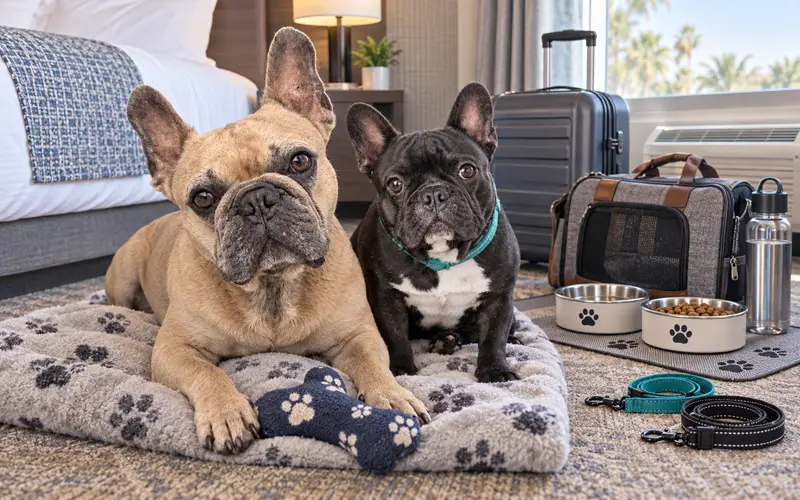
A hotel room is filled with unfamiliar smells and sounds. Even a dog that is perfectly calm at home may react differently. Take your dog for a bathroom break and short walk before settling into the room. Bring familiar bedding or a blanket that smells like home and give the dog time to explore the new space.
Avoid leaving your dog alone immediately after arriving. Letting the dog become comfortable with the room first can make the transition easier.
If your dog is accustomed to sleeping near you at home, suddenly expecting completely different nighttime behavior on vacation may be difficult. There are several things to consider when deciding whether a dog should sleep in your bed, and consistency can be especially reassuring in an unfamiliar environment.
Be Considerate of Other Hotel Guests
Pet-friendly does not mean every hotel guest wants to interact with dogs. Keep your dog leashed in common areas and avoid allowing it to approach strangers without permission. Clean up immediately after bathroom breaks and follow designated pet-area rules.
Excessive barking can become a problem quickly in a hotel where rooms share walls. If your dog normally barks at hallway sounds, a white-noise machine or television at low volume may help mask unfamiliar noises.
Look Beyond Pet-Friendly Hotels
A truly dog-friendly vacation is about more than finding a hotel that accepts pets.
Before leaving home, research dog-friendly:
- Parks
- Walking trails
- Beaches
- Restaurant patios
- Outdoor attractions
- Shopping districts
- Breweries or cafés
- Scenic areas
Save several options before the trip. That makes it easier to change plans when the weather, crowds, or your dog’s energy level make the original itinerary less appealing.
Keep Your Dog’s Routine Familiar
Vacation schedules rarely look exactly like home schedules, but dogs often do better when the basics remain predictable. Try to keep meals, medications, bathroom breaks, and bedtime reasonably close to the dog’s normal routine.
Bringing familiar food is particularly important. Vacation is generally not the best time to experiment with a completely new diet or unfamiliar treats.
Give Your Dog Downtime
It is easy to overschedule a vacation, especially when you want to see as much as possible. Dogs can become tired and overstimulated too.
A morning walk, afternoon excursion, busy restaurant patio, and evening downtown stroll may be far more activity than your dog normally experiences. Build quiet periods into the itinerary. Sometimes the best dog-friendly vacation afternoon is simply relaxing together in the hotel room after a morning adventure.
Plan for Emergencies Before You Need One
Before arriving, locate a veterinary clinic and a 24-hour emergency animal hospital near your destination and save the information in your phone.
Bring enough medication for the entire trip plus a reasonable cushion in case travel plans change. Keep medications in their original labeled containers when possible. A small amount of advance preparation can save valuable time if something unexpected happens.
Make the Journey Part of the Vacation
A road trip with a dog usually takes longer than the same drive without one, and accepting that before leaving makes the experience much more enjoyable.
Instead of treating every stop as a delay, look for parks, scenic overlooks, walking paths, and interesting places along the route. Some of the best travel memories happen somewhere between the starting point and the destination.
With realistic expectations, the right supplies, and a dog-friendly itinerary, traveling together can become one of the most enjoyable ways to explore somewhere new.