Packing for a trip sounds simple until you are halfway to the airport and suddenly wondering whether you packed your phone charger, medication, or the one item you know will be ridiculously expensive to replace once you arrive. While every vacation requires a few destination-specific items, there are certain travel essentials that make almost any trip easier.
The goal is not to pack everything you might possibly need. It is to pack strategically so the things that matter most are easy to find, difficult to lose, and available when you need them. Whether you are flying across the country, heading overseas, or leaving on a weekend getaway, these essentials can help you stay organized and comfortable without weighing down your suitcase.
Start With the Travel Essentials You Cannot Replace Easily
Clothes and toiletries can usually be replaced if something goes wrong. Your identification, medications, money, and important travel information deserve more attention because losing them can create much bigger problems.
Before leaving home, make sure you have:
- Driver’s license or other required identification
- Passport for international travel
- Boarding passes or transportation confirmations
- Hotel and rental car information
- Credit and debit cards
- A small amount of cash
- Prescription medications
- Health insurance information
- Travel insurance information, when applicable
- Emergency contact information
For international travel, keep digital copies of important documents such as your passport, insurance information, lodging details, and emergency contacts somewhere secure and easy to access.
Store digital copies somewhere secure that you can access without having the original document in your hand. Just remember that a copy of your passport is a backup resource—it does not replace the actual passport when one is required.
Keep Important Items in Your Carry-On
If you are flying, think of your carry-on as the bag containing everything you would hate to be without if your checked luggage were delayed. That does not mean stuffing an entire second wardrobe into it, but it does mean being thoughtful about what stays with you.
Your carry-on should generally include your identification, wallet, medications, electronics, chargers, valuables, and important travel documents. Adding a clean shirt and basic toiletries can also make an unexpected luggage delay much easier to handle.
A small zippered pouch or organizer inside your personal item is useful for the things you reach for repeatedly. Instead of digging through the entire bag for earbuds, lip balm, a charging cable, or medication, you know exactly where those smaller essentials are.
Pack a Portable Charger and the Cables You Need
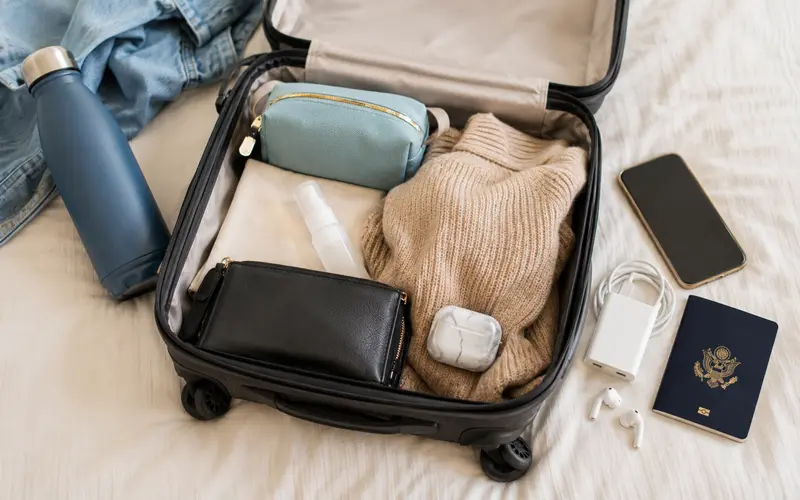
Your phone becomes even more important when you travel. It may hold your boarding pass, hotel confirmation, maps, reservations, tickets, photos, and access to your banking apps. A portable power bank can keep you from searching for an outlet when your battery is running low.
Keep the charging cables you use most often together in a small tech pouch. Depending on what you are bringing, that might include cables for your phone, watch, earbuds, tablet, e-reader, or camera. A compact wall charger with multiple ports can also reduce the number of individual plugs taking up space in your bag.
When flying, power banks need special attention. The FAA requires spare lithium batteries and power banks to remain in carry-on baggage rather than checked luggage. Airlines can have additional restrictions, so it is worth checking the rules for your specific carrier before packing.
Bring Headphones or Earbuds
Headphones are one of those small travel essentials that can make a long travel day noticeably better. You can listen to music, watch downloaded movies, enjoy an audiobook, or simply block out some of the surrounding noise.
Download entertainment before leaving home instead of relying on airport, airplane, or hotel Wi-Fi. The same goes for books, podcasts, playlists, and anything else you may want during the trip.
If you use wireless earbuds, pack their charging case and make sure everything is fully charged before you leave.
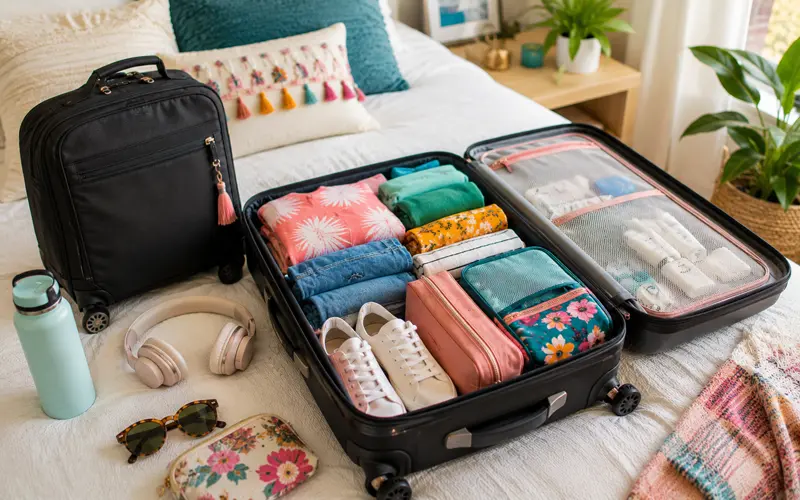
Use Packing Cubes to Keep Your Suitcase Organized
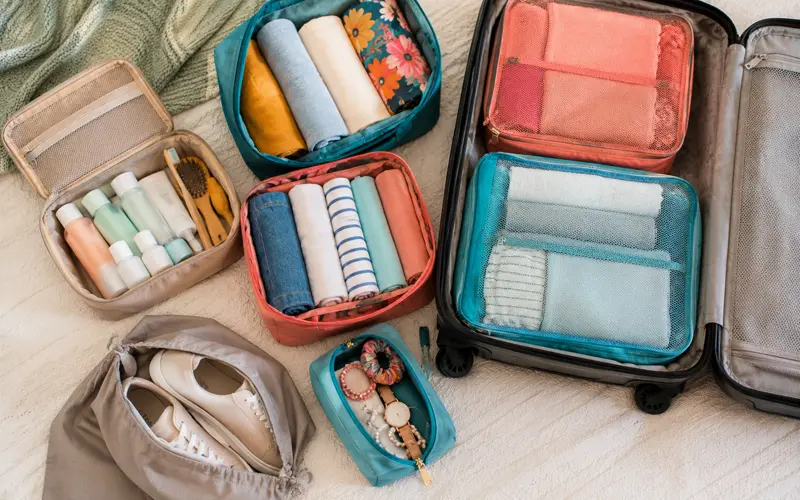
Packing cubes are not essential in the same way your passport is, but they can make living out of a suitcase much easier. Instead of digging through layers of clothing every morning, you can separate shirts, bottoms, undergarments, swimwear, or different family members’ belongings.
They are especially helpful when you are changing hotels during a trip because you do not have to unpack and repack the entire suitcase at every stop.
Even without packing cubes, grouping similar items together makes a difference. Smaller zippered bags work well for accessories, charging cables, toiletries, and other items that tend to disappear into suitcase corners.
Packing cubes can make it easier to keep everything organized, but how you arrange your clothes matters too. Using a few simple suitcase packing tips can help you fit what you need without cramming everything in or overpacking.
Build a Small Travel Toiletry Kit
A basic toiletry bag should contain the products you genuinely use rather than an assortment of travel-size products you think you might need.
Depending on your routine, consider packing:
- Toothbrush and toothpaste
- Deodorant
- Face wash and moisturizer
- Shampoo and conditioner
- Hairbrush or comb
- Hair ties
- Sunscreen
- Razor
- Makeup and makeup remover
- Contact lenses and solution
- Feminine hygiene products
- Small nail file or clippers
Reusable travel bottles are helpful for products you already own, especially if you prefer particular hair or skincare products. Just make sure anything going through airport security meets current requirements for your itinerary.
Place anything that could leak inside a sealed toiletry bag or reusable plastic pouch. A few seconds spent securing liquids before departure is much easier than discovering shampoo all over your clothes when you open your suitcase.
Pack Medications and a Simple First-Aid Kit
Regular prescription medications should be near the top of your travel packing list. When flying, keep essential medication with you rather than putting it in checked luggage that could be delayed or lost.
For international travel, research your destination before packing prescription and over-the-counter medications. Some medications that are legal in the United States are restricted elsewhere. The CDC provides guidance for traveling with medications and recommends checking the rules for your destination.
You do not need to turn your suitcase into a pharmacy, but a small personal first-aid kit can be useful. Consider items such as adhesive bandages, pain reliever, antihistamine, motion-sickness medication, and any other basic supplies appropriate for you and your destination.
Add a Reusable Water Bottle
Travel days can be long, and it is easy to forget about staying hydrated when you are moving between airports, rental cars, hotels, and attractions. An empty reusable water bottle takes up little room and can be refilled throughout your trip.
For air travel, bring it through security empty and fill it afterward. A leak-resistant bottle is preferable when it will spend most of the day tucked into a backpack or personal item.
A collapsible bottle can save space, but a regular insulated bottle may be more useful if keeping drinks cold is important to you. Choose whichever style you are likely to carry instead of leaving behind in the hotel room.
Don’t Forget a Few Comfort Items
You do not need every travel gadget available, but one or two comfort items can make a long flight or drive considerably more pleasant.
Depending on how you travel, useful options might include:
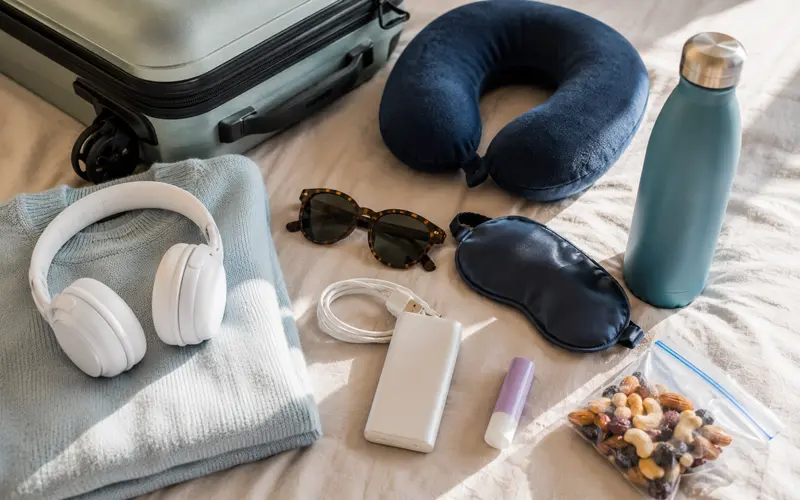
- Lightweight sweater or wrap
- Travel pillow
- Eye mask
- Compression socks
- Small pack of tissues
- Hand sanitizer
- Lip balm
- Travel-size hand lotion
- Snacks
Choose comfort items based on the trip rather than packing them automatically. A neck pillow that is helpful on an overnight flight may be unnecessary for a two-hour drive.
If you’re traveling by car, you have a little more flexibility with what you bring. Keeping a few family road trip essentials within easy reach, such as snacks, entertainment, and basic safety supplies, can make a long drive much more comfortable.
Keep a Foldable Bag in Your Luggage
A lightweight foldable tote or packable day bag takes up very little suitcase space and can serve several purposes during a trip. Use it for a day at the beach, shopping, sightseeing, carrying snacks, or separating items on the trip home.
It can also be helpful for dirty laundry or clothing that gets wet during your vacation. Packing a couple of reusable zippered bags gives you another easy way to separate damp swimsuits, shoes, or anything else you do not want touching clean clothes.
For a beach trip, you’ll want to make room for a few destination-specific items. Adding essentials like sunscreen, swimwear, and comfortable sandals to your beach vacation packing list will make sure you’re ready for plenty of time by the water.
Consider a Luggage Tracker
A small luggage tracking device can provide extra reassurance when you check a bag, particularly when your itinerary includes connections. It will not prevent luggage from being delayed, but it can give you additional information about where your bag may be.
Before flying, check your airline’s current rules regarding baggage tracking devices. Battery requirements can matter, and the FAA provides specific guidance for luggage containing tracking devices.
Place the tracker securely inside the luggage rather than somewhere it could easily fall off during baggage handling.
Choose Clothing That Works Together
One of the easiest ways to overpack is to choose clothing one outfit at a time. Instead, build a small travel wardrobe around pieces that can be mixed and matched.
Start with neutral bottoms and add tops that work with more than one pair. Bring shoes that can be worn with several outfits rather than packing a different pair for every occasion. If your plans include a nicer dinner or event, choose one outfit specifically for it and keep the rest versatile.
Check the weather shortly before leaving rather than relying only on what temperatures are normally like at your destination. A lightweight layer is useful even in warmer locations because airplanes, restaurants, and hotels can be surprisingly cool.
Leave Some Room in Your Suitcase
A perfectly packed suitcase should not necessarily be a completely full suitcase. Leaving a little extra space makes repacking easier and gives you room for anything you purchase while traveling.
It can also help you avoid overweight baggage fees. If you tend to shop on vacation, a small digital luggage scale can tell you whether you need to rearrange items before arriving at the airport.
Packing lighter can also help keep travel costs down, especially if it means avoiding extra baggage fees. It’s one of several simple ways to travel on a budget without cutting back on the experiences you want to enjoy.
A Simple Travel Essentials Checklist
You will need to adjust your packing list for the destination, weather, length of your trip, and how you are traveling, but these basics cover most vacations:
- Identification and passport when required
- Wallet, cards, and cash
- Travel confirmations and reservations
- Prescription medications
- Phone
- Charging cables
- Portable power bank
- Headphones or earbuds
- Toiletries
- Basic first-aid supplies
- Reusable water bottle
- Comfortable travel layer
- Snacks
- Packing cubes or organizers
- Foldable tote or day bag
- Luggage tracker if desired
- Weather-appropriate clothing
- Comfortable shoes
- Copies of important documents for international trips
The best travel essentials are not necessarily the newest gadgets or the things that fill the most packing lists. They are the items that solve the small problems that can turn into big inconveniences away from home. Start with the things you cannot easily replace, add what keeps you comfortable and organized, and then tailor the rest of your packing list to the trip you are taking.
Packing thoughtfully leaves you with less luggage to manage and fewer things to worry about once you arrive—which means more time to enjoy where you’re going.