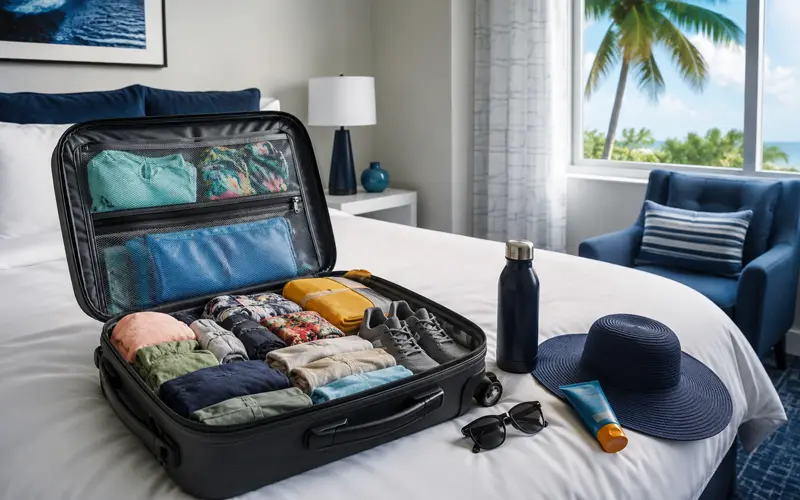
Packing for a Florida vacation sounds easy until everything begins piling up on the bed. Swimsuits, sandals, sunscreen, rain gear, nicer outfits, beach supplies, and “just in case” items can quickly fill a suitcase.
Living in South Florida, I know the weather is one of the biggest reasons people overpack. It may be sunny when you leave the hotel, pouring rain by midafternoon, and chilly inside a restaurant because the air conditioning is turned up. Preparing for Florida does require some flexibility, but it does not require bringing half your closet.
The easiest approach is to think about what you will genuinely use each day. Pack for your planned activities, choose pieces that work together, and leave behind the extras that are unlikely to leave the suitcase.
Plan Your Days Before Packing
You do not need a detailed itinerary for every hour, but knowing the general shape of your vacation makes packing much easier. A week filled with beaches and casual restaurants requires different clothing than a trip that includes theme parks, nicer dinners, and several indoor attractions.
Start by listing the activities you are fairly certain you will do. Consider whether they require special clothing, shoes, or equipment. Anything that does not match an actual plan should earn its place in your suitcase rather than being added automatically.
Florida destinations can also be farther apart than they appear. Traffic around beaches, theme parks, and major cities can turn a short distance into a much longer drive. Planning one main area each day reduces time in the car and limits how many supplies you need to carry.
If your vacation includes several destinations, practical road trip tips for families can help you organize the drive without filling every available inch of the vehicle.
Choose Clothing That Works Together
Florida is generally casual, so most travelers do not need a completely different outfit for every activity. Lightweight tops and bottoms that coordinate can be mixed throughout the trip, giving you more options with fewer pieces.
I prefer packing colors that can be worn together rather than creating an outfit that only works one way. A casual dress can work for sightseeing during the day and dinner in the evening. Shorts can be paired with several tops, while a lightweight cardigan can be used whenever the air conditioning feels more like winter.
For most Florida vacations, a practical clothing list might include:
- Lightweight shirts or tank tops
- Comfortable shorts or casual skirts
- One or two casual dresses
- Swimsuits and a cover-up
- Sleepwear
- Undergarments and socks
- One lightweight sweater or jacket
- A compact rain jacket or poncho
Bring enough clothing for the trip, but do not pack multiple backup outfits for every day. If you are staying longer than a week, access to a washing machine may be more useful than an oversized suitcase.
Be Selective About Shoes
Shoes consume a surprising amount of luggage space. Unless a specific activity requires special footwear, most people only need comfortable walking shoes, sandals, and perhaps one slightly dressier option.
Comfort matters more than appearance when your plans include theme parks, shopping districts, or long sightseeing days. Florida heat can make feet swell, and shoes that feel fine at home may become uncomfortable after several hours of walking.
Wear the bulkiest pair while traveling and pack smaller shoes around the edges of the suitcase. Stuffing socks or small accessories inside closed shoes uses otherwise wasted space.
Prepare for Heat Without Packing Too Much
Florida heat is not only about temperature. Humidity can make an ordinary warm day feel much more intense, particularly when you are walking across hot pavement or spending hours outside.
Breathable clothing, sunscreen, sunglasses, and a refillable water bottle will usually be more useful than several extra outfits. A small portable fan can also be helpful during outdoor events, attraction lines, or particularly humid afternoons.
Try to schedule beaches, parks, and outdoor sightseeing earlier in the day when possible. Restaurants, museums, aquariums, and other indoor stops provide a welcome break during the hottest hours.
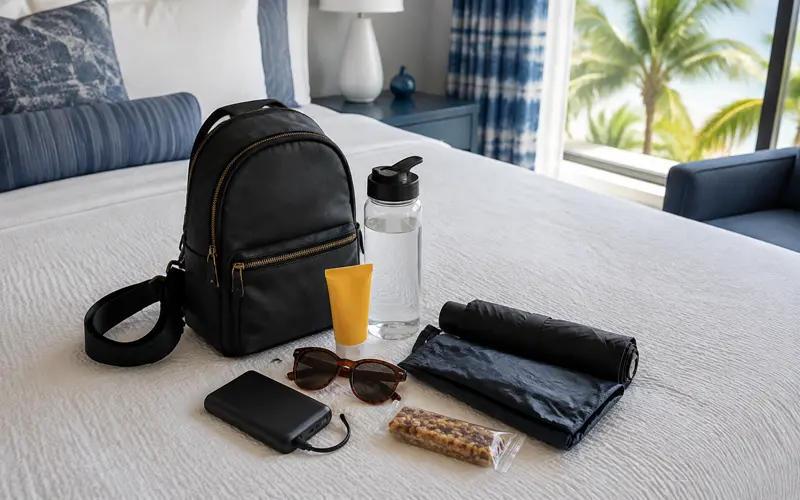
A small daily bag should hold the essentials without becoming a burden:
- Sunscreen
- Sunglasses
- Water
- Phone and portable charger
- Necessary medication
- A compact umbrella or poncho
- A small snack
- Identification and payment cards
I would rather return to the hotel for something unexpected than carry a heavy bag all day filled with items no one uses.
Expect Florida Rain
A bright morning can become a stormy afternoon very quickly, especially during Florida’s warmer months. That does not mean you need heavy rain gear or multiple pairs of backup shoes.
Pack one compact umbrella or lightweight poncho per person. Quick-drying clothing is helpful, and a zippered bag gives you somewhere to place wet items until you return to your room.
Check the hourly forecast each morning and keep an indoor alternative in mind. Moving lunch earlier or visiting an indoor attraction during a storm is often easier than hauling rain supplies everywhere in anticipation of bad weather.
Keep the Beach Bag Under Control
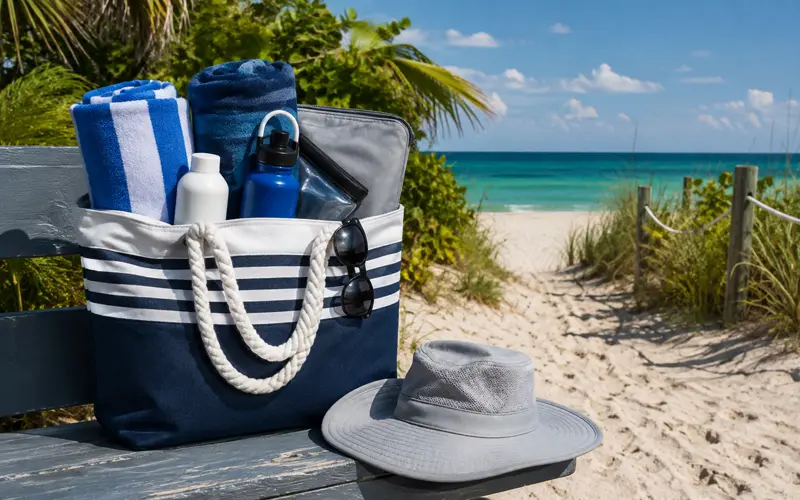
Beach bags tend to grow because every item sounds useful while you are still at home. By the time you cross hot sand carrying towels, chairs, toys, coolers, and several bags, the relaxing beach day can start to feel like work.
Focus on the items your group consistently uses. Sunscreen, water, towels, sunglasses, and a bag for wet clothing cover the basics. Add chairs, an umbrella, toys, or snorkeling equipment only when they match your plans.
Choosing a beach with nearby parking, restrooms, or rentals can eliminate the need to bring as much equipment. I have found that a small group of practical Florida beach essentials covers most beach days without overloading the bag. Good beach vacation packing habits, such as choosing quick-drying clothing and organizing sun protection in advance, can make the day easier from the moment you arrive.
One well-packed beach bag is almost always easier than several loosely organized totes.
Make Small Adjustments for Young Children
Travelers with young children naturally need more supplies, but even that part of the packing list can be kept manageable. Pack for the length of the outing rather than carrying every diaper, snack, toy, and outfit brought on vacation.
A small pouch containing a few diapers, wipes, a changing mat, disposable bags, and one spare outfit can be moved between a stroller, day bag, and vehicle. Backup supplies can remain at the hotel.
The destination should determine which equipment comes along. Strollers are useful on paved paths and longer attraction days but can be frustrating on sand, crowded entrances, and uneven walkways. Baby carriers may be more practical in locations where wheels become difficult to manage. Choose a carrier appropriate for the child’s age and size, practice using it before traveling, and avoid heavy covers that can trap heat.
Older children can carry a small backpack with one activity, a snack, and a lightweight layer. Giving everyone responsibility for a reasonable amount of personal gear can keep one adult from becoming the family’s luggage cart.
Use Your Hotel as Home Base
There is no reason to carry the entire contents of your suitcase on every outing. Keep duplicate toiletries, extra clothing, larger snacks, and backup supplies in your room.
Designate one area for items that leave with you each morning. Keys, sunglasses, sunscreen, portable chargers, and the day bag are easier to find when they return to the same place every evening.
I also like the idea of preparing the next day’s outfit before going to bed. It takes only a few minutes and prevents the morning scramble that often leads to tossing unnecessary extras into a bag.
Before your trip, confirm whether the accommodation has laundry facilities, a refrigerator, beach towels, toiletries, or equipment available to borrow. There is no benefit to packing something the hotel already provides.
Reset Your Bags Every Evening
A quick evening reset makes packing light easier throughout the vacation. Remove trash and receipts, hang wet clothing, recharge electronics, and replace anything that was used.
Look at the following day’s plans before repacking. Beach towels do not need to accompany you to an indoor museum, and a full collection of electronics is unnecessary for a short morning walk.
Packing light is not about leaving behind something important. It is about carrying what makes the day easier and avoiding items included only because they might be useful. With clothing that works together, realistic daily plans, and a smaller collection of essentials, you can spend your Florida vacation enjoying the destination instead of managing your luggage.