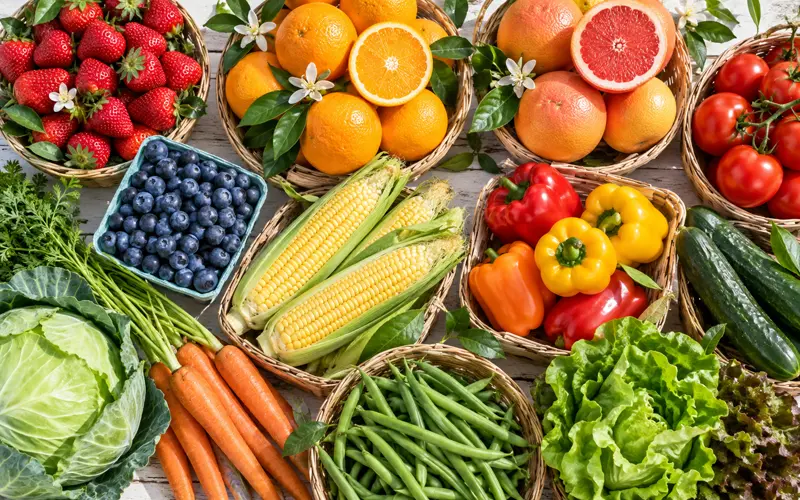
Florida fruits and vegetables in season do not always follow the calendar shoppers might expect. While much of the country associates summer with tomatoes, peppers, and leafy greens, Florida’s extreme summer heat means many familiar vegetables reach their peak during winter and spring instead.
Living in South Florida, I can find a wide variety of produce in grocery stores throughout the year. However, produce being available does not necessarily mean it was recently harvested in Florida. Knowing the state’s typical growing seasons helps me recognize what is likely to be fresher, more flavorful, and locally grown.
This month-by-month Florida seasonal produce guide makes it easier to plan grocery trips, visit farmers markets, and choose fruits and vegetables when they are at their natural peak.
Understanding Florida’s Growing Seasons
Florida’s growing calendar is different from colder parts of the country because the state has mild winters, hot summers, and several distinct growing regions. A crop harvested in South Florida may have a slightly different schedule than the same crop grown in Central or North Florida.
Cooler months bring many of Florida’s most familiar vegetables, including tomatoes, lettuce, bell peppers, cabbage, broccoli, and snap beans. Summer shifts the focus toward tropical fruits such as mangoes, lychees, longans, avocados, and passion fruit.
The Florida Department of Agriculture and Consumer Services crop calendar lists typical harvest periods rather than guaranteed availability dates. Weather, location, crop variety, and individual farms can move the beginning or end of a season.
Florida Seasonal Produce by Month
The following calendar highlights Florida fruits and vegetables that are typically harvested during each month. Guava and mushrooms are harvested year-round, while several other crops stretch across multiple seasons.
| Month | Florida Fruits and Vegetables Typically in Season |
|---|---|
| January | Avocado, bell pepper, broccoli, cabbage, carambola, cauliflower, celery, eggplant, grapefruit, guava, lettuce, mushrooms, oranges, passion fruit, peanuts, radishes, snap beans, squash, strawberries, sweet corn, tangerines, and tomatoes |
| February | Bell pepper, broccoli, cabbage, carambola, cauliflower, celery, eggplant, grapefruit, guava, lettuce, mushrooms, oranges, papaya, peanuts, potatoes, radishes, snap beans, squash, strawberries, sweet corn, tangerines, and tomatoes |
| March | Bell pepper, broccoli, cabbage, carambola, cauliflower, celery, cucumbers, eggplant, grapefruit, guava, lettuce, mushrooms, oranges, papaya, peanuts, potatoes, radishes, snap beans, spinach, squash, strawberries, sweet corn, tangerines, and tomatoes |
| April | Bell pepper, blueberries, cabbage, cantaloupe, carambola, carrots, cauliflower, celery, cucumbers, eggplant, grapefruit, guava, lettuce, mushrooms, oranges, papaya, peaches, peanuts, potatoes, radishes, snap beans, spinach, squash, strawberries, sweet corn, tangerines, tomatoes, and watermelon |
| May | Bell pepper, blueberries, cabbage, cantaloupe, carrots, celery, cucumbers, eggplant, grapefruit, guava, mangoes, mushrooms, oranges, papaya, peaches, peanuts, potatoes, radishes, snap beans, squash, sweet corn, tangerines, tomatoes, and watermelon |
| June | Avocado, cantaloupe, eggplant, guava, lychees, mangoes, mushrooms, oranges, papaya, passion fruit, peanuts, potatoes, sweet corn, tomatoes, and watermelon |
| July | Avocado, carambola, guava, longans, lychees, mangoes, mushrooms, passion fruit, peanuts, and watermelon |
| August | Avocado, carambola, guava, longans, mangoes, mushrooms, passion fruit, and peanuts |
| September | Avocado, carambola, grapefruit, guava, mushrooms, oranges, peanuts, and tangerines |
| October | Avocado, carambola, cucumbers, grapefruit, guava, mushrooms, oranges, peanuts, squash, sweet corn, tangerines, and tomatoes |
| November | Avocado, bell pepper, carambola, cucumbers, eggplant, grapefruit, guava, mushrooms, oranges, passion fruit, peanuts, radishes, snap beans, squash, sweet corn, tangerines, and tomatoes |
| December | Avocado, bell pepper, cabbage, carambola, cauliflower, celery, cucumbers, eggplant, grapefruit, guava, lettuce, mushrooms, oranges, passion fruit, radishes, snap beans, squash, strawberries, sweet corn, tangerines, and tomatoes |
Florida Produce in Winter
Winter is one of the best seasons for fresh vegetables in Florida. From December through February, farmers harvest many crops that would normally be associated with spring or summer in northern states.
Florida strawberries begin appearing during winter, along with tomatoes, lettuce, peppers, celery, cabbage, cauliflower, and sweet corn. Citrus is also abundant, with grapefruit, oranges, and tangerines all in season.
Strawberries should be bright red without soft or moldy areas. Because they do not continue ripening after they are picked, pale berries will not become sweeter on the kitchen counter. I like using fresh winter berries in a strawberry cheesecake dip or serving them with other fruit for an easy dessert.
Winter vegetables work well in salads, soups, roasted side dishes, and simple weeknight meals. This is also a good season to experiment with locally grown produce that might otherwise be overlooked, such as carambola, radishes, or snap beans.
Florida Produce in Spring
Florida’s spring produce selection becomes especially varied in April and May. Blueberries, cantaloupe, peaches, watermelon, carrots, potatoes, cucumbers, and tomatoes overlap with the last of the cool-season vegetables.
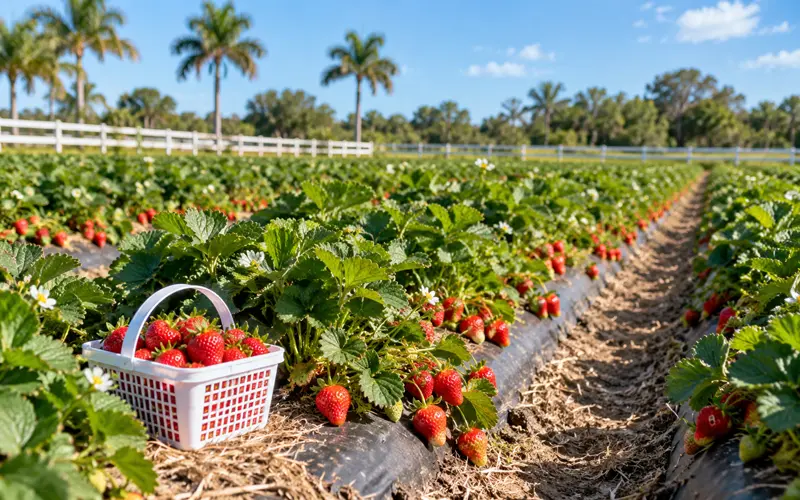
April has one of the longest lists of locally harvested choices. It is an ideal time to visit a farmers market or U-pick farm because strawberries may still be available as blueberries and peaches begin arriving.
Watermelon season also starts in April and generally continues through July. A ripe watermelon should feel heavy for its size and have a creamy yellow field spot where it rested on the ground. Melons should be washed before cutting because a knife can transfer dirt or bacteria from the rind to the fruit inside.
Spring produce can be used in salads, snack plates, grilled dishes, and fresh desserts. Colorful combinations of berries, melon, cucumbers, and peppers also work well when creating easy summer charcuterie boards for cookouts or pool days.
Florida Produce in Summer
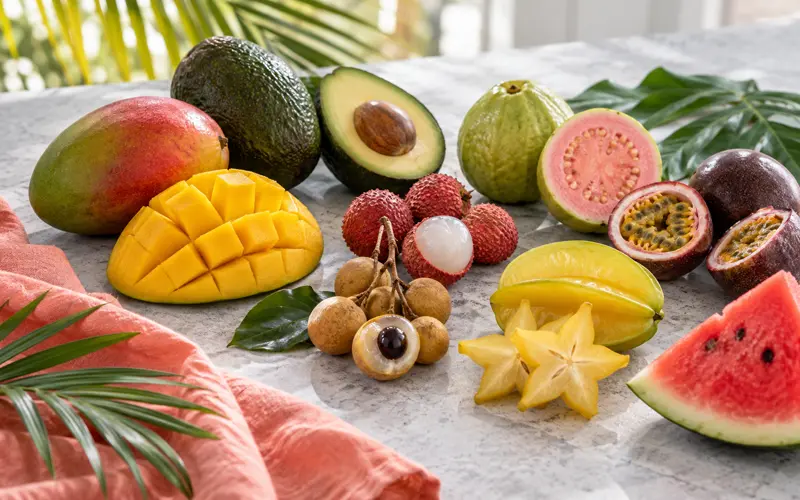
Summer is when Florida’s tropical fruits take center stage. Mangoes, lychees, longans, carambola, guava, avocado, and passion fruit tolerate the warm climate better than many traditional vegetables.
Mango season typically runs from May through August. The color of a mango is not always the best indication of ripeness because different varieties develop different colors. A ripe mango usually gives slightly when gently squeezed and may have a sweet aroma near the stem.
Lychee has a much shorter season, generally limited to June and July, while longans are typically harvested during July and August. Avocados have a longer Florida season extending from June through January. Florida avocados are usually larger, smoother, and lower in fat than Hass avocados, with a lighter and less buttery texture.
Watermelon remains available through July, making it a refreshing choice for hot Florida days. Pairing watermelon or other tropical fruit with cheese, nuts, or whole-grain crackers creates healthy summer snacks that are more satisfying than fruit alone.
Summer is not Florida’s biggest vegetable season. When I do not want to heat the kitchen, fresh fruit, chilled vegetables, rotisserie chicken, sandwiches, and salads can become the foundation of no-cook summer dinners.
Florida Produce in Fall
September can feel like the quietest point in Florida’s produce calendar. Tropical fruits are winding down, while most cool-season vegetables have not yet returned.
Avocados, carambola, guava, citrus, mushrooms, and peanuts help bridge the gap. By October, cucumbers, squash, sweet corn, and tomatoes begin returning. November brings an even larger selection with bell peppers, eggplant, snap beans, radishes, and passion fruit joining the calendar.
Florida citrus also begins its long season in September. Oranges typically remain available through June, while grapefruit and tangerines continue through May. The timing makes fresh citrus especially useful for fall drinks, marinades, fruit salads, and holiday recipes.
How to Identify Florida-Grown Produce
The easiest way to identify locally grown food at a grocery store is to look for the “Fresh From Florida” logo or a Florida-grown label. The Fresh From Florida seasonal food program also provides information about current crops and ways to use them.
At a farmers market, I ask where the produce was grown rather than assuming every item is local. Some vendors sell a combination of their own harvest and produce purchased from distributors.
Other details worth checking include:
- Signs identifying the farm or Florida growing region
- Country-of-origin stickers on individual fruits
- Packaging marked “Florida grown”
- Harvest or packing dates when available
- Produce that matches Florida’s current growing season
A strawberry sold at a Florida market in January is likely to be local. The same strawberry sold in August probably traveled from another state or country.
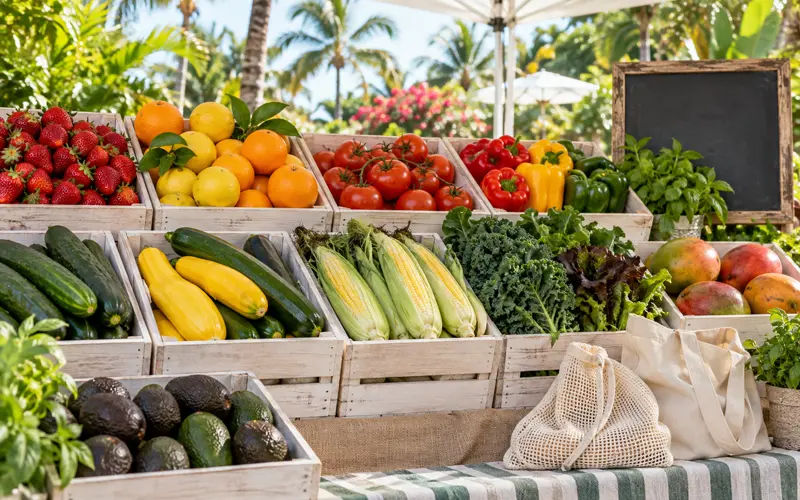
How I Choose Fresh Fruits and Vegetables
Appearance is useful, but perfect-looking produce is not always the freshest. Minor variations in shape or color are normal. I focus more on firmness, aroma, weight, and signs of deterioration.
Leafy greens should look crisp rather than wilted or slimy. Berries should be dry and free of mold. Tomatoes should feel heavy and have a noticeable tomato aroma near the stem. Melons should be firm without deep soft spots, while peaches, mangoes, and avocados can have a slight give when ripe.
I also avoid buying more delicate produce than I can realistically use. A large container may look economical, but it is not a bargain if half of it spoils before anyone eats it.
Storing Florida Produce for Better Freshness
Different fruits and vegetables require different storage methods. Tomatoes generally maintain better flavor at room temperature, while berries, lettuce, mushrooms, and cut produce belong in the refrigerator.
I keep a few reusable produce bags available for farmers market trips and use ventilated produce storage containers for berries and vegetables that need airflow. Storage needs can vary, so the government’s FoodKeeper storage guide is useful when I am unsure whether something belongs on the counter or in the refrigerator.
A few simple habits help reduce waste:
- Refrigerate berries without washing them first.
- Wash berries immediately before eating.
- Store leafy greens with a dry paper towel to absorb excess moisture.
- Keep potatoes in a cool, dark, ventilated location.
- Allow firm mangoes, avocados, and peaches to ripen at room temperature.
- Refrigerate ripe fruit if it will not be eaten immediately.
- Store cut fruit and vegetables in covered containers.
- Keep ethylene-producing fruit, such as apples and ripe bananas, away from produce that spoils quickly.
Washing Fresh Produce Safely
Fresh produce should be rinsed under clean running water before it is prepared or eaten. Soap, bleach, and commercial produce washes are unnecessary and should not be used.
Firm produce such as potatoes, cucumbers, and melons can be scrubbed with a clean produce brush. Washing a melon is important even when the rind will not be eaten because cutting through an unwashed surface can carry contaminants into the flesh.
The federal four steps to food safety also recommend washing produce before peeling or cutting it and drying it with a clean cloth or paper towel. Precut fruit and vegetables should remain refrigerated.
Easy Ways to Use Seasonal Florida Produce
Buying seasonal produce becomes more practical when I already have a few simple ways to serve it. Not every fruit or vegetable needs a special recipe.
Fresh fruit can be added to breakfast, chilled for snacks, frozen for smoothies, or arranged on a snack board. Vegetables can be roasted, grilled, chopped into salads, added to eggs, or served raw with dip.
Some of my easiest combinations include:
- Strawberries and blueberries with cottage cheese or yogurt
- Watermelon with feta and fresh mint
- Mango with lime juice and a light sprinkle of chili seasoning
- Tomatoes, cucumbers, and avocado with a simple vinaigrette
- Sweet corn added to salads, tacos, or quesadillas
- Roasted squash, peppers, and eggplant
- Citrus sections added to green salads
- Fresh tropical fruit served with poolside pineapple salsa and tortilla chips
Enjoying Florida Produce Throughout the Year
Florida’s produce calendar is one of the advantages of living in a warm climate. Even during the hottest or quietest growing months, something fresh is usually being harvested somewhere in the state.
I use the calendar as a flexible shopping guide rather than a rigid rule. Weather can shorten a harvest, delay a crop, or create regional differences. Checking labels and asking where food was grown are still the best ways to confirm that produce is local.
Choosing Florida fruits and vegetables in season gives me a chance to enjoy familiar foods at their peak while discovering tropical fruits and locally grown vegetables I might otherwise pass by. It also makes grocery planning easier because each new season brings a different group of ingredients into focus.