

I used to think of sleep as something separate from weight loss. Food choices and exercise seemed like the parts that counted, while sleep was simply how I recovered at the end of the day. The more attention I paid to my habits, however, the easier it became to see the connection.
After a poor night of sleep, I am usually hungrier, less interested in preparing a balanced meal, and more likely to want something sweet for quick energy. My planned workout may suddenly feel much harder too.
That does not mean one restless night will cause weight gain or erase healthy progress. It also does not mean sleeping longer automatically makes the scale go down. The relationship between sleep and weight loss is more practical than that: insufficient sleep can affect appetite, cravings, decision-making, energy, and the daily routines that make weight management easier.
Can Lack of Sleep Prevent Weight Loss?
Lack of sleep does not make weight loss impossible, but it may make it harder to maintain the habits that support it. Weight changes in response to many factors, including food intake, activity, medications, health conditions, hormones, stress, and fluid retention. Sleep is one piece of that larger picture.
Research supports a connection between sleep and eating behavior. In a randomized clinical trial highlighted by the National Institutes of Health, adults with overweight who usually slept fewer than 6.5 hours increased their sleep by an average of about 1.2 hours and consumed an average of 270 fewer calories per day during the two-week intervention.
The study was short and does not prove that everyone will have the same result. It does show why sleep deserves a place beside nutrition and exercise in a realistic weight-loss plan.
Why Poor Sleep Can Make Weight Loss Harder
The effects of poor sleep often overlap. Feeling tired can increase hunger while also reducing the energy and patience needed to plan meals or exercise.
| Effect of poor sleep | How it may appear during the day |
|---|---|
| Increased appetite | Feeling hungry sooner or less satisfied after eating |
| Stronger cravings | Wanting sweet, salty, or higher-calorie foods |
| More eating opportunities | Snacking during additional late-night waking hours |
| Lower energy | Choosing convenience foods or skipping a planned workout |
| Reduced focus | Making impulsive food decisions or struggling to follow a routine |
Hunger and cravings may feel stronger
Sleep helps support the systems that regulate hunger and fullness. The National Heart, Lung, and Blood Institute explains that insufficient sleep can affect hormones involved in appetite, including ghrelin and leptin. In everyday life, the result may feel much less scientific: I can eat my usual breakfast after a bad night and still feel as if it did not satisfy me.
Tiredness can also make highly palatable foods more appealing. Sweet, salty, and higher-calorie foods offer easy comfort and quick energy when preparing a full meal sounds exhausting.
Hunger is not a failure of willpower, and an unusually hungry day does not require punishment or extreme restriction. A regular meal with protein, fiber, and carbohydrates often helps more than trying to ignore hunger until it becomes overwhelming. When the urge to snack feels more habitual than physical, a few practical ways to manage food cravings can make the difference easier to recognize.
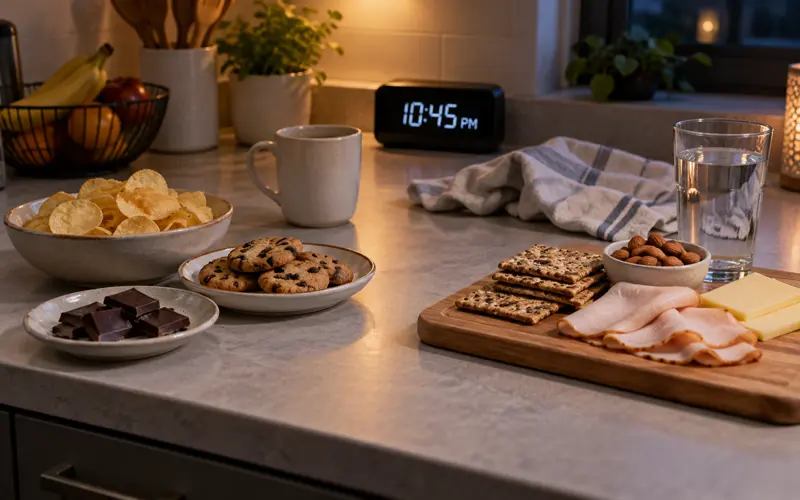
Being awake longer creates more opportunities to eat
Sometimes the explanation is straightforward. A later bedtime adds more waking hours to the day, and those hours often happen when we are relaxing near the kitchen. An evening snack can fit into a balanced diet, but unplanned grazing may add up when it becomes part of every late night. If I am genuinely hungry, I choose a defined snack rather than eating directly from a bag or container. Pairing protein or fiber with something I enjoy is usually more satisfying than picking a food that looks perfect on paper but leaves me searching for something else 20 minutes later.
Low energy can change food decisions
Sleep loss can affect attention, decision-making, and emotional regulation. That helps explain why the dinner I planned in the morning can feel far less appealing at the end of an exhausting day. Takeout, drive-through meals, or handfuls of convenient snacks require almost no effort.
I do not think the answer is expecting more discipline when I am already depleted. I would rather keep a few low-effort meals available, such as eggs and toast, rotisserie chicken with microwaveable vegetables, a protein shake with fruit, or a simple sandwich with a crunchy side. Making a balanced choice easier is more dependable than assuming I will want to cook when I can barely keep my eyes open.
Workouts may feel harder
A tired body does not always want to exercise, and reduced focus can make a challenging workout feel harder than usual. Sleep deficiency can also slow reaction time and increase mistakes, according to the NHLBI. After one rough night, a walk, a shorter ride, or a lighter strength session may be a better fit than an intense workout. Long-term progress comes from a routine that can adapt to real life, and a realistic approach to fitness and healthy eating makes it easier to remain consistent without treating every workout as all or nothing.
Sleep affects more than appetite
Insufficient sleep is also associated with changes in how the body responds to insulin and regulates blood sugar. That does not mean a few restless nights will cause a metabolic condition, but chronic sleep deficiency is linked with a higher risk of obesity, type 2 diabetes, high blood pressure, heart disease, and stroke.
Weight loss may be the reason someone first pays attention to sleep, but it is not the only reason better rest matters. A broader look at the health benefits of getting enough sleep explains how sleep also supports concentration, mood, physical recovery, and general health.
How Much Sleep Supports a Healthy Weight?
The Centers for Disease Control and Prevention recommends at least seven hours of sleep per night for adults ages 18 to 60. Adults ages 61 to 64 generally need seven to nine hours, while adults 65 and older generally need seven to eight.
Those numbers are useful guidelines, but sleep quality matters too. Seven hours filled with repeated awakenings may not feel restorative. Common signs of poor sleep quality include difficulty falling asleep, waking repeatedly during the night, and feeling tired even after allowing enough time for sleep.
I pay more attention to patterns than to one imperfect night. If I regularly wake up refreshed and have steady energy through most of the day, my routine is probably working better than it would if I chased a perfect number while ignoring how I feel.
Sleep Habits That Can Support Weight-Loss Efforts
A good sleep routine does not need to become another demanding wellness project. A few consistent changes usually make more sense than attempting to overhaul every evening at once.
- Keep bedtime and wake time reasonably consistent, including on weekends.
- Give yourself enough time in bed to reach your sleep target.
- Avoid caffeine late in the day if it delays sleep or causes nighttime waking.
- Finish large meals and alcohol far enough before bed that they do not disturb your sleep.
- Dim the lights and reduce stimulating screen time during the last part of the evening.
- Keep the bedroom dark, quiet, relaxing, and comfortably cool.
- Build regular movement into the day while noticing whether late workouts leave you energized at bedtime.

Temperature can make a noticeable difference, especially during warm Florida nights. I keep the room cool and use bedding that does not feel heavy or stuffy. Breathable muslin bedding is one option for people who prefer light, layered covers. Adjusting the thermostat, running a fan, or changing sleepwear may be enough for others.
The goal is not to create a bedroom that looks perfect. It is to remove the things that repeatedly wake you or make it difficult to settle down. Understanding how bedroom temperature affects sleep comfort can help when overheating or feeling cold interrupts the night.
What I Do After a Bad Night of Sleep
I try not to turn one bad night into a bad week. The following day is when I need fewer decisions and more structure, so I return to the basics:
- I eat normal meals instead of drastically cutting food to compensate for extra hunger.
- I include protein and fiber early in the day to make meals more satisfying.
- I drink water regularly because fatigue and thirst can be easy to confuse.
- I choose movement that matches my energy and coordination.
- I avoid a late-afternoon caffeine rescue that could interfere with the next night.
- I return to my usual bedtime rather than shifting my schedule completely.
Most importantly, I do not treat tiredness as a character flaw. A low-energy day calls for a simpler plan, not harsher rules.
Getting back to my routine at the next meal or the next bedtime protects consistency far better than trying to make up for everything at once.
When Poor Sleep Needs More Attention
Healthy habits can improve many sleep problems, but they cannot solve every cause of poor sleep. Regular loud snoring, gasping during sleep, morning headaches, severe daytime sleepiness, persistent insomnia, or repeatedly waking without feeling refreshed may point to an underlying sleep disorder. The CDC recommends talking with a healthcare provider when sleep problems occur regularly or when symptoms of a sleep disorder are present.
It is also worth discussing sleep changes with a provider when they begin after starting a medication, occur alongside significant mood changes, or continue despite allowing adequate time for rest. A sleep diary that tracks bedtime, waking, naps, exercise, caffeine, alcohol, and medications can help reveal patterns and give a provider more useful information.
Better Sleep Makes Healthy Choices Easier
Sleep is not a shortcut for weight loss, and it cannot replace balanced meals or regular movement. It does, however, influence how manageable those habits feel. When I am rested, I have more patience to prepare food, more energy to exercise, and a much easier time recognizing whether I am hungry or simply tired. Improving sleep may not produce an overnight change on the scale, but it can make the choices that support long-term weight management feel far more sustainable.