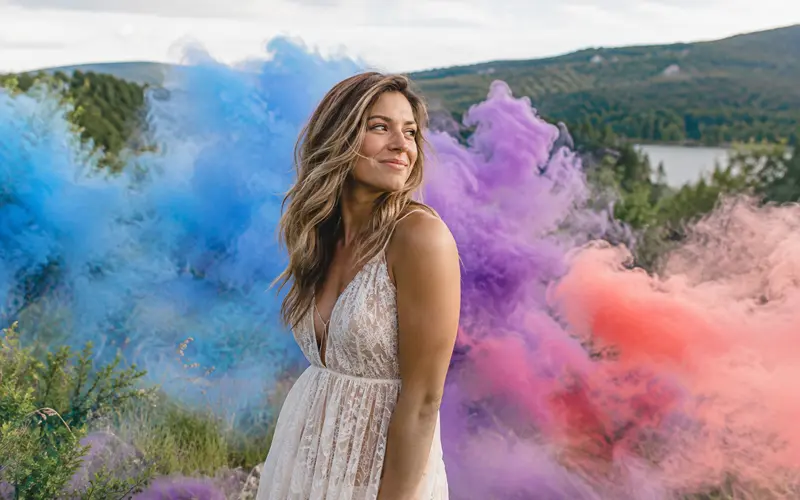
Outdoor photography often depends on light, location, and timing. Yet even a beautifully framed landscape or well-directed portrait can benefit from one additional element: atmosphere. Colored smoke introduces movement, texture, and contrast, transforming an ordinary outdoor scene into something that feels cinematic.
Used thoughtfully, smoke can soften harsh backgrounds, emphasize motion, and create striking blocks of color. It is especially effective for portraits, fashion editorials, engagement shoots, sports photography, and creative content for social media. It works best when the smoke feels like a natural part of the photograph rather than something added just for effect.
Why Colored Smoke Works So Well in Photographs
Smoke is visually unpredictable. It drifts, curls, and disperses according to the wind, temperature and surrounding landscape. That variation adds movement and means no two shots will look exactly the same.
Color also influences the mood of a photograph. Warm tones such as red, orange and yellow can suggest energy, excitement or summer heat, while blue, purple and green tend to create a cooler, more mysterious atmosphere. White smoke has a softer, more neutral appearance and can add depth without competing strongly with clothing or scenery.
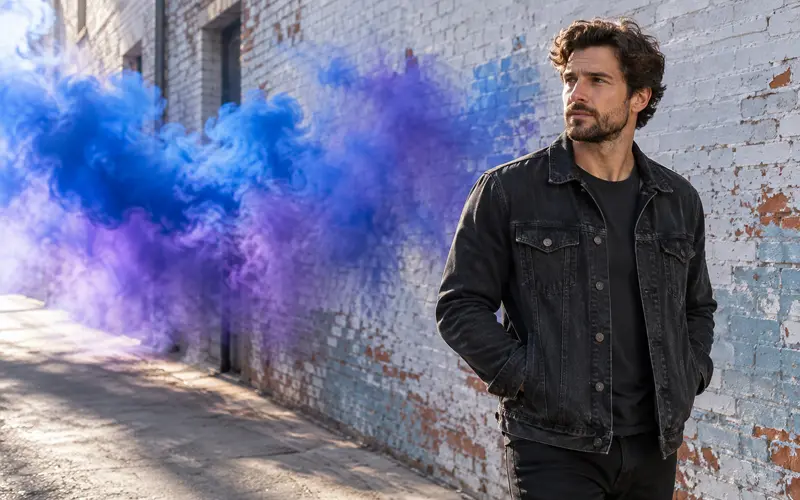
The best results usually come from contrast. A vivid color stands out against a muted landscape, while pale smoke may be more effective against dark clothing, trees, or architectural backgrounds. Before the shoot, consider the dominant colors in the location and the subject’s wardrobe. A little planning can prevent the smoke from disappearing into the background.
Plan the Scene Before Releasing the Smoke
Smoke moves quickly, so preparation matters. Scout the location in advance and identify where the subject will stand, where the photographer will work and which direction the wind is likely to carry the smoke. Choosing the right setting can make just as much difference as choosing the smoke itself, especially when you have access to photo shoot locations with several different backgrounds. Ideally, the smoke should move across or behind the subject rather than directly toward the camera.
A light breeze is often useful because it gives the smoke shape without dispersing it immediately. Strong or unpredictable wind, however, can make it difficult to control. Check the forecast and be prepared to change the composition if conditions shift.
Think about the background, too. A simple setting often works best. Open fields, woodland edges, beaches, and industrial spaces can all provide interesting textures, but cluttered backgrounds may compete with the smoke and the subject. Allowing plenty of negative space gives the color room to expand within the frame.
It is also worth planning several compositions before the smoke is activated. Decide whether you want a close-up portrait, a wide environmental image, or a sequence showing the smoke changing shape. Once the effect begins, there may be only a short window to capture the strongest moment.
Choosing Color and Composition
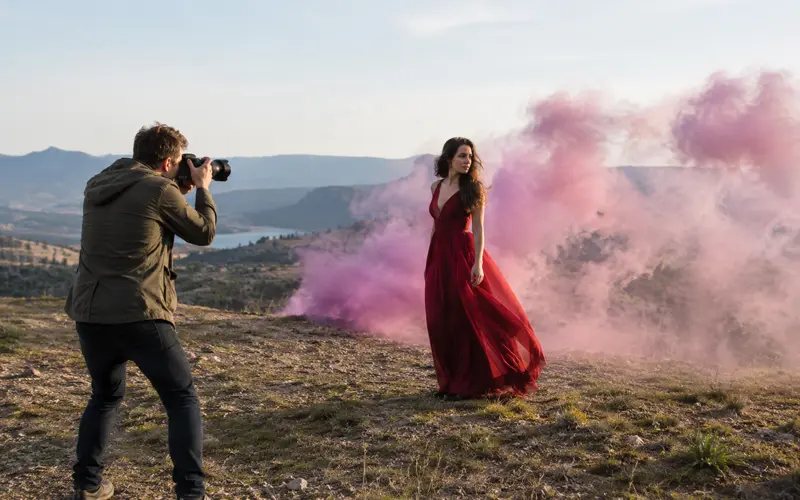
Think about how the color will work with the overall look of the photo. For a joyful outdoor celebration, bright complementary colors can create a lively, playful result. For a more dramatic portrait, a single deep tone may be more powerful than several colors competing for attention.
You can use smoke in several ways:
- Behind the subject: Creates a glowing, atmospheric backdrop.
- In front of the subject: Can partially obscure the frame and add mystery.
- Around moving subjects: Emphasizes gestures, running, dancing, or sports action.
- At the edge of the composition: Can draw the viewer’s eye toward the main subject.
When planning an event or styled shoot, those looking to find colorful accessories for outdoor celebrations may also find smoke products useful for creating coordinated visual moments. The goal is to make sure the color works with the setting instead of taking over the photo.
Camera Settings for Sharper Smoke Effects
Smoke can present some unusual challenges for a camera, particularly because it is constantly moving. A camera that handles action and changing outdoor conditions well can make the process easier. The Panasonic Lumix G7 camera is one example that works well for outdoor photography and capturing movement.
These settings can help photographers achieve different effects:
| Setting | How It Affects the Photograph |
|---|---|
| Focus | Focus on the subject before releasing the smoke. Manual focus can help prevent the camera from hunting when smoke passes between the lens and subject. |
| Fast shutter speed | A shutter speed around 1/500 second or faster can freeze movement and preserve the detailed edges of the smoke. |
| Slow shutter speed | Allows the smoke to blur into a softer, more fluid effect, although subject movement may also appear less sharp. |
| RAW format | Provides greater flexibility for adjusting color, highlights, and contrast during editing. |
| Backlighting | Sunlight catches the smoke from behind, revealing texture and giving the color a luminous edge. |
| Overcast light | Produces softer, more even results and can work especially well when the subject’s expression is the priority. |
Colored smoke may look more intense on the camera screen than it does in the final image, particularly in bright sunlight. Expose carefully and check the histogram rather than relying only on the display.
Using Colored Smoke Safely
Colored smoke products involve heat and, in some cases, open flame. They should be used responsibly and according to local laws, manufacturer instructions, and venue requirements. A responsible adult should handle the product, keeping it away from children, flammable materials, dry grass, and crowded areas.
Always check whether the location permits smoke effects. Outdoor venues may have restrictions because of fire risk, visibility, air quality, or nearby roads. Keep water or suitable fire-safety equipment available, and never hold or modify a product unless its instructions specifically allow it. Protective gloves can be sensible, and everyone involved should know where to stand before the effect is activated.
Keep in mind that smoke can irritate the eyes and airways, so avoid directing it toward people, animals or nearby homes. Stop immediately if anyone feels uncomfortable.
Capture the Unexpected
The most memorable smoke photographs are not always the ones planned in advance. A sudden curl around a subject’s shoulder, a gap revealing an expression, or a gust that stretches the color across the frame can produce a stronger image than a perfectly controlled effect.
Take several shots as the smoke moves, but continue paying attention to the overall composition. Watch the edges of the frame, the subject’s posture, and the way the smoke interacts with the background. It can be tempting to focus entirely on the color, yet the strongest photographs still depend on a clear focal point.
With careful planning, the right camera settings and attention to safety, colored smoke can add movement and atmosphere to an outdoor shoot. Whether you’re photographing a celebration, portrait, or action shot, it can give a familiar setting a completely different look.