
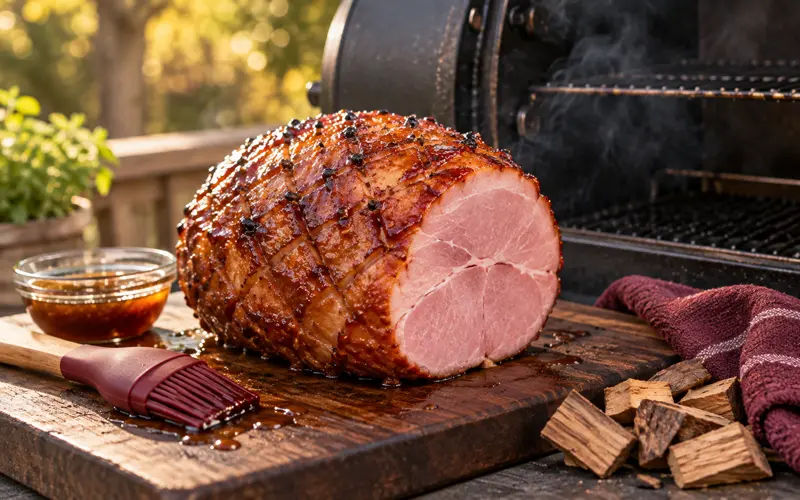
Learning how to smoke a ham starts with understanding exactly what kind of ham you purchased. A fresh ham is raw pork, while many grocery-store hams are cured and fully cooked. They can both go into a smoker, but they require different cooking times and finished temperatures.
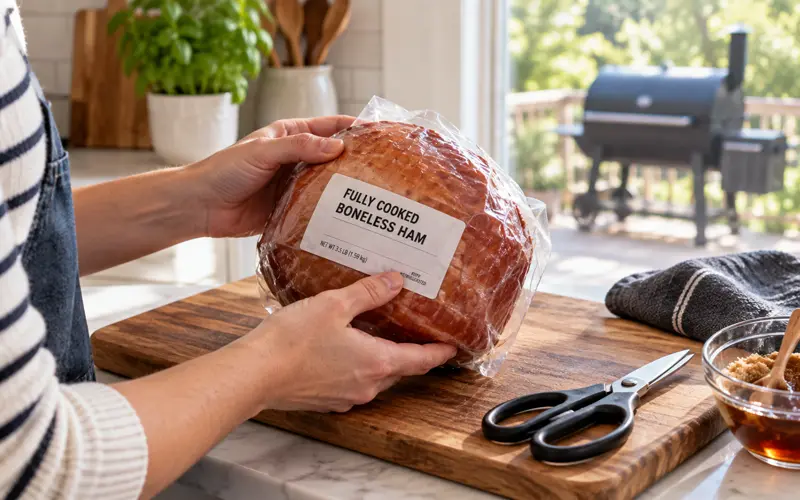
The label matters more than the shape, weight, or brand. Before seasoning the ham or heating the smoker, look for wording such as “fresh,” “cook before eating,” “fully cooked,” or “ready to eat.” That information determines whether you are cooking raw pork or gently reheating a ham that has already been cooked.
The Quick Answer
Set the smoker to 250°F and cook the ham with the cut side facing down. A fully cooked ham generally takes about 12 to 15 minutes per pound to warm through. A fresh, raw ham may take approximately 25 to 35 minutes per pound.
Always use a meat thermometer rather than relying only on time. According to the FoodSafety.gov minimum internal temperature chart, raw ham should reach 145°F followed by a three-minute rest. Fully cooked ham packaged at a USDA-inspected facility can be reheated to 140°F. Precooked ham from another source and leftovers should reach 165°F.
Fresh Ham vs. Fully Cooked Ham
The word “ham” describes a cut from the rear leg of a pig, but it does not tell you whether the meat is raw, cured, or cooked. I find that reading the complete label prevents most of the confusion before the ham ever reaches the smoker.
| Type of ham | What it means | Finished internal temperature |
|---|---|---|
| Fresh ham | Raw, uncured pork | 145°F with a three-minute rest |
| Cook-before-eating ham | Cured but not fully cooked | Follow the label; generally 145°F with a three-minute rest |
| Fully cooked ham | Cured and already cooked | 140°F when packaged at a USDA-inspected facility |
| Repackaged precooked ham or leftovers | Previously cooked but not in the original inspected packaging | 165°F |
Fresh ham has a flavor closer to a pork roast than the familiar salty-sweet flavor of holiday ham. It benefits from a generous dry rub and several hours of smoke.
A fully cooked ham already has its cured flavor. Smoking adds another layer of flavor while warming the meat, so the goal is to avoid leaving it in the smoker long enough to become dry.
What Is the Best Ham to Smoke?
For an easy and dependable result, choose a bone-in, fully cooked ham that has not been spiral sliced. The bone contributes flavor, while the intact exterior helps the meat retain moisture. A butt-end ham is generally meatier, while a shank-end ham is often easier to carve.
Spiral-sliced ham can be smoked, but the exposed slices lose moisture quickly. If that is what you have, place it in a shallow foil pan and baste it occasionally. Loosely covering it with foil during part of the cooking time can also help protect the edges.
Choose a fresh bone-in ham when you want to cook the pork completely from raw and control the seasoning from the beginning. Make sure the package says “fresh ham” and not simply “smoked ham.”
The Best Smoker Temperature for Ham
A smoker temperature of 250°F provides steady heat while giving the ham time to absorb smoke. Safe smoker temperatures generally fall between 225°F and 300°F, but 250°F offers a useful balance between cooking time and smoke flavor.
Preheat the smoker completely before adding the meat. The temperature shown on the smoker’s lid may differ from the temperature near the cooking grate, so a reliable grate-level thermometer can be helpful.
Pellet, electric, charcoal, and offset smokers can all produce a flavorful ham. Consistent temperature control matters more than the smoker style. Smoker and grill comparisons from BestHomeGears.com can help narrow down the choices when shopping for equipment.
The Best Wood for Smoking Ham
Ham pairs especially well with woods that add a mild or slightly sweet flavor.
- Apple produces a light, fruity smoke that works well with brown sugar or maple glaze.
- Cherry adds mild sweetness and deepens the color of the exterior.
- Pecan creates a richer flavor without becoming as strong as hickory.
- Hickory provides a traditional barbecue flavor but should be used sparingly.
- Maple complements sweet glazes and cured pork.
Avoid loading the smoker with too much wood. A steady stream of heavy white smoke can make the exterior taste bitter. Thin, light smoke is enough to flavor the ham without covering its natural taste.
How to Prepare a Ham for the Smoker
Keep the ham refrigerated until the smoker is nearly ready. Remove the packaging and pat the exterior dry with paper towels. If the ham has a thick layer of fat, trim it to approximately 1/4 inch.
Score the surface in a shallow diamond pattern, taking care not to cut deeply into the meat. Scoring gives the seasoning and glaze more surface area to cling to while creating an attractive exterior.
For a fully cooked ham, coat the outside lightly with yellow or Dijon mustard before adding brown sugar, black pepper, garlic powder, smoked paprika, or a favorite pork rub. The mustard helps the seasoning adhere but will not leave the finished ham tasting strongly of mustard.
A fresh ham can handle a more generous savory rub. Combine salt, black pepper, garlic powder, onion powder, smoked paprika, and a small amount of brown sugar. If the fresh ham still has its skin, ask the butcher to remove it or trim it carefully while leaving the fat cap intact.
Should You Soak or Inject a Ham?
Most store-bought cured hams do not need to be soaked. Soaking can reduce saltiness, but it can also remove flavor. If sodium is a concern, compare labels before purchasing and choose a ham with a lower sodium content.
Injection is also optional. A fully cooked ham already contains added moisture in many cases, and adding more liquid can make the texture uneven. Fresh ham can be injected with apple juice, broth, or a seasoned butter mixture, but a good dry rub and careful temperature control are usually enough.
How to Smoke a Ham Step by Step
Preheat the smoker to 250°F. Add apple, cherry, pecan, maple, or a small amount of hickory wood.
Place the prepared ham directly on the smoker grate with the cut side facing down. Position a foil pan beneath it if you want to catch drippings, or place the ham inside a shallow pan when working with a spiral-sliced ham.
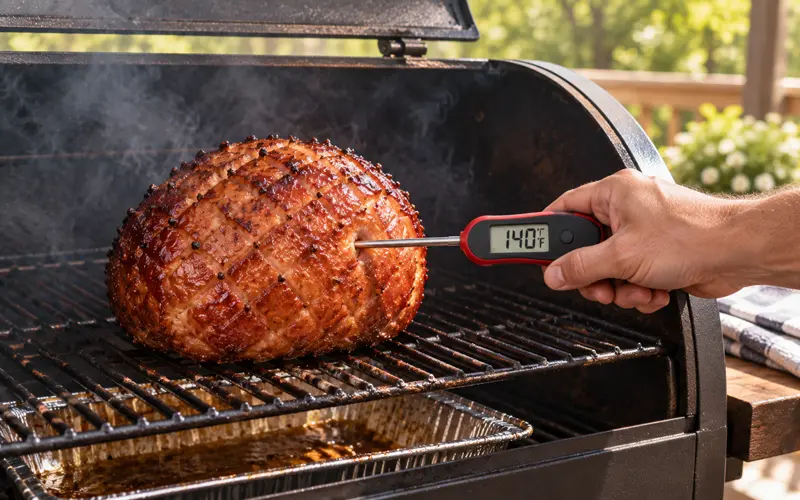
Insert a leave-in thermometer into the thickest part of the meat without touching the bone. Close the smoker and avoid opening it repeatedly. Every long temperature drop extends the cooking time.
For a fully cooked ham, begin checking the temperature earlier than expected. It may need only 12 to 15 minutes per pound. A fresh ham generally requires 25 to 35 minutes per pound, although its shape, bone, starting temperature, weather, and smoker performance can all affect the timing.
Brush on the glaze during the final 30 to 45 minutes. Applying it too early can cause the sugar to burn before the center of the ham reaches the correct temperature.
Remove the ham when it reaches the temperature required for its type. Rest a fully cooked ham for 15 to 20 minutes before slicing. A fresh ham must rest for at least three minutes for food safety, although a 15-minute rest makes it easier to carve and helps retain the juices.
Smoked Ham Time and Temperature Chart
These cooking times are planning estimates. The thermometer determines when the ham is ready.
| Ham type | Smoker temperature | Approximate time | Target temperature |
|---|---|---|---|
| Fully cooked bone-in ham | 250°F | 12–15 minutes per pound | 140°F |
| Spiral-sliced fully cooked ham | 250°F | 10–14 minutes per pound | 140°F |
| Fresh raw ham | 250°F | 25–35 minutes per pound | 145°F plus a three-minute rest |
| Cook-before-eating cured ham | 250°F | 20–30 minutes per pound | Follow the package directions; generally 145°F plus a three-minute rest |
An 8-pound fully cooked ham may take approximately 1 1/2 to 2 hours. An 8-pound fresh ham could require 3 1/2 to nearly 5 hours. Build extra time into the meal schedule because a large ham can rest under loosely tented foil if it finishes a little early.
An Easy Brown Sugar Ham Glaze
A glaze should add flavor without hiding the smoke. Combine the following ingredients in a small saucepan:
- 1/2 cup packed brown sugar
- 1/4 cup maple syrup or honey
- 2 tbsp Dijon mustard
- 2 tbsp apple juice
- 1 tbsp apple cider vinegar
- 1/2 tsp ground cinnamon
- 1/4 tsp ground cloves
Simmer the mixture over medium-low heat for three to five minutes, stirring until the sugar dissolves and the glaze thickens slightly. Use a silicone basting brush to spread a thin layer over the ham during the final 30 to 45 minutes, then add another light coating shortly before removing it from the smoker.
How to Keep Smoked Ham from Drying Out
The easiest way to prevent dry ham is to stop cooking at the correct internal temperature. Fully cooked ham does not become more tender when reheated well beyond 140°F. It simply loses more moisture.
A few additional steps can help:
- Choose an unsliced bone-in ham when possible.
- Maintain a steady smoker temperature.
- Keep the cut side facing down.
- Use a water pan if the smoker tends to run dry.
- Glaze near the end of cooking.
- Rest the ham before slicing.
- Slice only what is needed and leave the remaining portion intact.
Repeatedly opening the smoker to baste the ham is unnecessary. Checking the water pan or applying glaze once or twice is enough.
What to Serve with Smoked Ham
Smoked ham works for Easter, Christmas, Thanksgiving, Father’s Day, or a relaxed weekend meal. The sweet and smoky flavor pairs well with colorful vegetables, potatoes, fruit-based sides, and crisp salads.
A cranberry orange orzo salad with toasted walnuts adds fresh citrus flavor and a little crunch. For a more traditional holiday table, a lighter sweet potato casserole complements the smoky pork without requiring another complicated main dish.
A warm holiday spiced cranberry side dish also balances the richness of the ham. When the meal is part of a casual outdoor gathering, simple sides and toppings from a relaxed backyard cookout menu can round out the table.
Storing and Reheating Smoked Ham
Refrigerate leftover ham within two hours. Store it in a covered container or wrap it tightly so the cut surface does not dry out. Use refrigerated leftovers within three to four days or freeze them for longer storage.
Reheat only the amount needed. Place sliced ham in a covered baking dish with a small splash of broth, apple juice, or water. Reheat leftovers to 165°F, as recommended by federal food-safety guidance.
Brown Sugar Maple Smoked Ham with Dijon Glaze
Ingredients
- 1 fully cooked bone-in ham 10 pounds
- 2 tbsp yellow or Dijon mustard
- 2 tbsp brown sugar
- 1 tbsp smoked paprika
- 2 tsp garlic powder
- 2 tsp onion powder
- 1 tsp black pepper
- 1 tsp kosher salt only when using fresh ham
- ½ cup packed brown sugar
- ¼ cup maple syrup or honey
- 2 tbsp Dijon mustard
- 2 tbsp apple juice
- 1 tbsp apple cider vinegar
- ½ tsp ground cinnamon
- ¼ tsp ground cloves
Instructions
- Preheat the smoker to 250°F and add apple, cherry, pecan, maple, or hickory wood.
- Remove the ham from its packaging and pat it dry. Trim the fat to approximately 1/4 inch and score the surface in a shallow diamond pattern.
- Coat the exterior with 2 tbsp mustard.
- Combine 2 tbsp brown sugar, smoked paprika, garlic powder, onion powder, and black pepper. Add the kosher salt only when preparing a fresh, uncured ham. Rub the seasoning evenly over the surface.
- Place the ham on the smoker grate with the cut side facing down. Insert a meat thermometer into the thickest section without touching the bone.
- Smoke a fully cooked ham for approximately 12 to 15 minutes per pound. Smoke a fresh raw ham for approximately 25 to 35 minutes per pound.
- Combine 1/2 cup brown sugar, maple syrup or honey, 2 tbsp Dijon mustard, apple juice, apple cider vinegar, cinnamon, and cloves in a small saucepan. Simmer for three to five minutes.
- Brush the glaze over the ham during the final 30 to 45 minutes of smoking.
- Remove a fresh raw ham when it reaches 145°F and allow it to rest for at least three minutes. Remove a fully cooked ham packaged at a USDA-inspected facility when it reaches 140°F. Precooked ham from another source and leftovers should reach 165°F.
- Loosely tent the ham with foil and rest it for 15 minutes before slicing.
Nutrition
Nutrition information has been calculated using an autogenerating online calculation and is intended for informational purposes. For accurate nutritional information, you should calculate the nutritional information with the actual ingredients used.