
A menu that seems harder to read, a brighter lamp beside your favorite chair, or more glare on an evening drive can make you wonder whether your eyesight is changing. Some changes become common with age, but a familiar symptom does not always have a familiar cause. Eye conditions can also develop before you notice a problem.
Knowing what to watch for, making room for regular eye exams, and adopting a few practical habits can help you take care of your vision without trying to diagnose every change yourself.
Why Everyday Vision Can Change With Age
One common change is presbyopia: as the eye ages, focusing on nearby objects becomes more difficult. Reading glasses or an updated prescription may help, but an eye exam is the way to determine what is affecting your near vision.
You may notice changes during everyday activities:
- You might hold a book farther away.
- You might enlarge the text on your phone.
- You may find that small print is easier to read under a good light.
- If you already wear glasses, the change may show up as difficulty switching between reading and looking across the room.
- A dim restaurant may be more challenging than a well-lit kitchen, while glare from headlights can make night driving uncomfortable.
These experiences are worth describing to an eye care professional rather than dismissing them as an inevitable part of getting older. Note whether the change affects one eye or both, whether it appeared gradually, and which activities have become harder.
That detail can make a conversation about your vision more useful than the broad observation that things look “a little blurry.” It may also help you notice when a problem is beginning to interfere with activities you usually enjoy.
Similar Symptoms Can Have Different Causes
Blurred vision and glare do not point to one condition on their own. A cataract is a clouding of the eye’s natural lens and may make vision look hazy or increase difficulty with bright lights. Glaucoma involves damage to the optic nerve and often has no noticeable symptoms early on. Age-related macular degeneration, or AMD, affects central vision, which is important for reading and recognizing faces.
These conditions differ from presbyopia, and their care depends on what an examination finds.
That distinction matters when deciding what to do next. Buying stronger reading glasses may seem like a simple response to trouble with print, but it will not explain a new blind spot or uncover an eye disease that has yet to cause obvious symptoms.
If an exam confirms a cataract, someone considering having a cataract surgery in Houston can discuss the diagnosis, its effect on daily life, and appropriate care with an eye specialist. The starting point is the diagnosis, not an assumption based on glare or blur.
Likewise, a person who sees clearly should not assume that every part of their eye health has been checked simply because daily tasks still feel easy.
What a Comprehensive Eye Exam Can Reveal
An eye exam does more than check whether you need a different pair of glasses. During a comprehensive dilated exam, an eye care professional uses drops to widen the pupils and examine structures inside the eye.
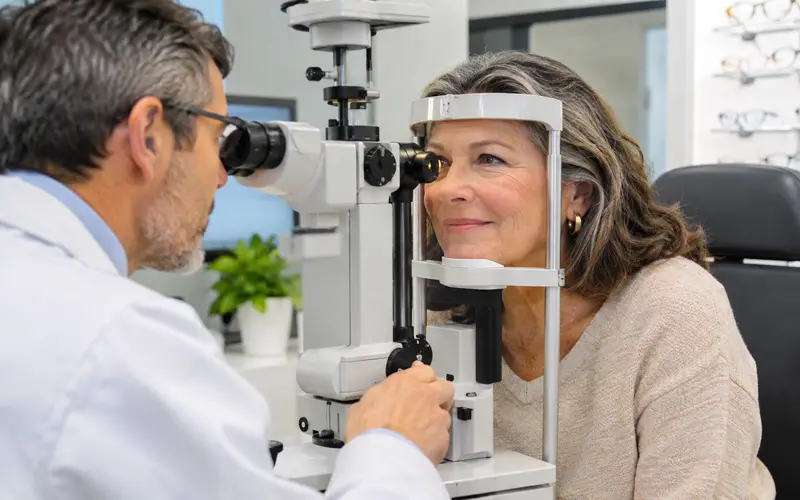
The National Eye Institute’s eye-health guidance explains that many eye diseases have no early warning signs and that a dilated exam can help detect them before symptoms appear. Feeling satisfied with your eyesight, therefore, is not the same as knowing that your eyes are healthy.
How Often Should You Have an Eye Exam?
How often you need an exam is an individual question. Several factors can affect the conversation:
- Age
- Family history
- Previous eye findings
- Health conditions such as diabetes or high blood pressure
An eye care professional can recommend a schedule suited to your circumstances rather than relying on a single timetable for everyone. If you have been told you need follow-up for a particular condition, keep that plan even when your vision feels unchanged.
Before an appointment, think about the tasks that have become difficult and when the changes began. Bring your current glasses or contact lens information, a list of medications, and relevant details about your health and family history.
Ask what the exam found, whether any findings need monitoring, and what changes should prompt you to call before your next planned visit. Those questions turn a routine appointment into a clearer plan for day-to-day care.
Everyday Habits That Support Eye Health
Protecting your eyes does not require an elaborate routine. A few everyday habits can help support your eye health:
- Outdoors, wear sunglasses to reduce UV exposure.
- When a task could send debris toward your face—yardwork, home repairs, or a project involving tools—wear protective eyewear appropriate to the activity. Ordinary sunglasses and everyday prescription glasses are not a substitute for safety glasses when flying particles are a risk.
- Not smoking supports eye health, and managing diabetes or high blood pressure with your health care team can help address conditions that may affect the eyes.
- If you use contact lenses, follow the cleaning, replacement, and wear instructions given by your eye care professional. Do not treat discomfort or redness as something to push through just because the lenses usually feel fine.
- Use adequate lighting for reading or detailed work, enlarge text when needed, and take breaks if extended screen use leaves your eyes uncomfortable.
Good habits lower some risks and help protect your eyes, but they cannot prevent every eye condition or replace an examination.
These measures address the task in front of you; they are not treatments for unexplained vision changes. If you repeatedly need to change how you read, drive, or work to compensate for your eyesight, bring that pattern up at an exam.
Everyday comfort and long-term eye health are related, but neither should be used as a substitute for checking a persistent problem.
When a Vision Change Should Not Wait
A gradual need for brighter reading light is different from a sudden change in sight. Some symptoms call for prompt medical attention:
- Sudden vision loss
- Severe eye pain
- New flashes of light or floaters
- New double vision
- An eye injury
Do not wait for a scheduled routine exam to raise an abrupt or concerning symptom, and do not try to identify its cause from a description online. If vision suddenly disappears or symptoms are severe, seek urgent medical care.
For changes that are less abrupt but keep returning, arrange an eye appointment rather than continually adapting around them. Write down when the problem started, whether it affects one eye or both, and any accompanying pain, redness, or other symptoms.
That record can help you explain what has changed, especially if the problem comes and goes. Regular exams provide a chance to find issues that may be quiet; paying attention between appointments helps ensure that a new concern gets noticed when it matters.