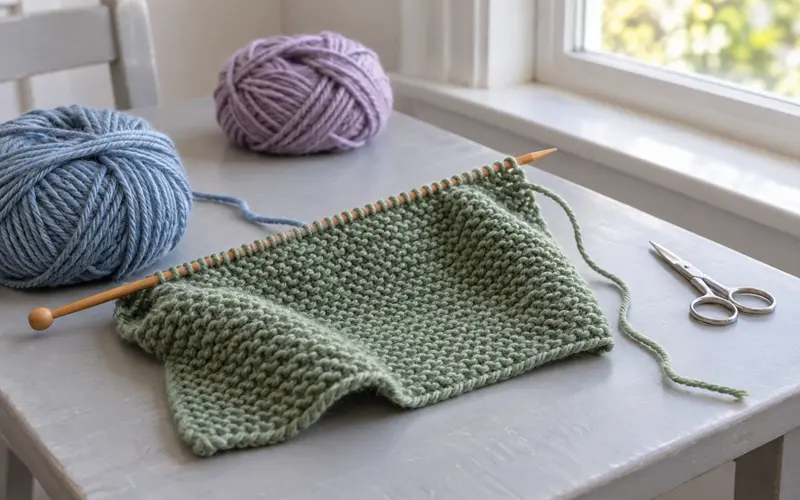
Knitting can look pretty intimidating when you have never tried it. Watching someone work quickly with two needles while following a pattern filled with abbreviations can make it seem much harder than it really is.
Like any new hobby, knitting takes some practice. Your first few rows probably will not be perfect, and it may take a little time to get comfortable holding the needles and working with the yarn. The good news is that you do not need to learn everything at once. Most beginners start with a few basic techniques and build from there.
Why Knitting Looks Harder Than It Is
One reason knitting can seem difficult is simply because experienced knitters make it look so effortless. Their hands move quickly because they have repeated the same motions hundreds or even thousands of times.
Slow the process down, though, and the basics are much easier to understand. Beginners typically start by learning how to cast on, make a knit stitch, make a purl stitch, and bind off. Many simple projects can be completed using little more than these basic skills.
The harder part in the beginning is getting everything to work together. You are learning how to hold the needles, control the yarn, maintain the right tension, and follow a pattern at the same time. Similar to learning to use a sewing machine or trying other beginner-friendly crafts, it can feel awkward until you have had enough practice for the movements to become familiar.

You Don’t Need Natural Talent
It is easy to look at someone who knits beautifully and assume they have always been good at it. More often, they have simply had a lot of practice.
Uneven rows and mistakes are completely normal when you are learning. They do not mean you are bad at knitting. Over time, your stitches become more consistent and it gets easier to recognize when something does not look right.
What Makes Knitting Challenging for Beginners?
Even though the basics are fairly simple, there are a few things that can make learning to knit frustrating.
Mistakes Can Be Confusing
When you are new to knitting, it can be difficult to tell the difference between a small mistake and one that needs to be fixed. A twisted stitch, uneven tension, or an accidental extra loop may look like a much bigger problem when you do not yet know what you are looking at.
Mistakes are part of learning, and most beginners make plenty of them. A beginner guide to learning knitting can help you understand what to expect, which mistakes are common, and how to work through some of the frustration that comes with getting started.
The Right Supplies Make a Difference
Your first knitting project will be much easier if you choose supplies that are comfortable to work with. Dark or fuzzy yarn can make individual stitches difficult to see, while very thin needles can make everything feel smaller and harder to control.
For your first project, keep things simple:
- Medium-weight yarn in a light color
- Smooth wooden or bamboo needles
- A small project with a repetitive pattern, such as a dishcloth or scarf
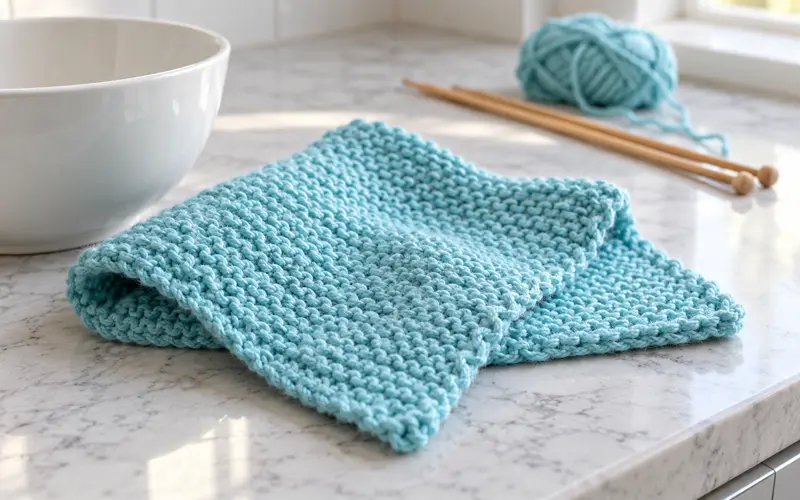
Starting with an easy project gives you a chance to practice the basic stitches without also trying to follow a complicated pattern. A simple scarf, dishcloth, or other small project lets you focus on keeping your stitches consistent and getting comfortable with the needles and yarn.
What to Expect When Learning to Knit
The beginning is usually the slowest part. You may find yourself stopping after every stitch to make sure the yarn and needles are in the right place. Knitting probably will not feel particularly relaxing at this point because you are concentrating on every movement.
With practice, you will start thinking less about where your hands need to go. Your tension will become more consistent, you will loosen your grip on the needles, and it will become easier to recognize how each stitch should look.
This is usually when knitting starts to feel less like something you are learning and more like a hobby you can enjoy. The same thing happens with many hands-on creative activities. Once you are comfortable with the basic process, you can spend more time enjoying what you are making instead of worrying about every step.
So, Is Knitting Difficult?
Knitting does require patience, especially when you are first getting started, but you do not need special skills or natural crafting ability to learn how to do it.
Starting with the basics makes a big difference. Learn one stitch, practice it until it feels comfortable, and then add another skill. Choose a simple first project rather than jumping directly into a complicated sweater or detailed pattern.
Your first project may have uneven stitches or a few mistakes, and that is fine. As you practice, the movements become easier, and the finished projects become more consistent.
Knitting may look complicated when you watch someone who has been doing it for years, but every experienced knitter started with the same basic stitches. Give yourself time to learn them, and the process becomes much easier than it first appears