
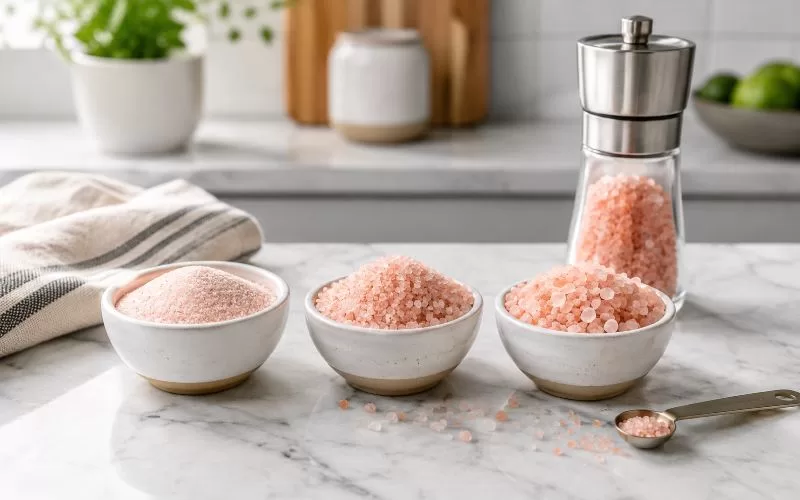
Choosing the right Himalayan salt grain size can make a real difference in how your food tastes, how evenly the salt blends, and where the salt works best outside the kitchen. Fine Himalayan salt is best for everyday cooking and baking, medium grains work well for rubs and brines, coarse salt is ideal for grinders and finishing, and larger chunks are usually used for décor, salt lamps, or specialty uses.
Himalayan pink salt has become popular for its pretty pink color, mineral-rich appearance, and versatile uses. I think part of the appeal is that it feels a little more special than regular table salt, especially when it is sitting in a grinder on the counter or sprinkled over a finished dish. Still, the grain size matters more than most people realize.
Before choosing a bag or jar, it helps to know how each salt grain behaves. Some dissolve quickly, some add crunch, and some are better for visual appeal than actual cooking.
What Is Himalayan Pink Salt?
Himalayan pink salt is a rock salt mined primarily from the Punjab region of Pakistan. Its soft pink color comes from trace minerals naturally found in the salt, including small amounts of iron and other minerals.
One important thing to keep in mind is that Himalayan salt is still salt. It may look different from table salt and may contain trace minerals, but it still contains sodium. The FDA’s sodium guidance recommends that adults limit sodium to less than 2,300 mg per day, so it is smart to use Himalayan salt in the same mindful way you would use any other salt.
For those curious about where Himalayan salt comes from and how it is sourced, Ittefaq Salt – a Himalayan salt exporter in Pakistan offers more background on pink salt products and uses.
Why Himalayan Salt Grain Size Matters
Salt grain size affects how quickly salt dissolves, how strongly it tastes in a bite, and how easy it is to measure. A spoonful of fine salt and a spoonful of coarse salt do not always season food the same way because coarse crystals leave more space between pieces.
That is one reason a recipe can taste too salty if you swap one type of salt for another without adjusting. Fine salt blends quickly and can be easy to overdo. Coarse salt is more noticeable, especially when used as a finishing salt.
This is similar to other kitchen details that seem small but make a difference. The right seasoning can make a simple snack board feel more finished, just like choosing fresh ingredients can make summer charcuterie boards feel colorful, easy, and put together.
Quick Himalayan Salt Grain Size Chart
| Himalayan Salt Grain Size | Best Uses | Texture | Best For |
|---|---|---|---|
| Extra fine | Baking, popcorn, seasoning blends, smooth sauces | Powdery and quick-dissolving | Even seasoning |
| Fine | Everyday cooking, eggs, vegetables, soups, marinades | Small, even grains | General kitchen use |
| Medium | Rubs, brines, roasting, scrubs, bath salts | Noticeable crystals | Meat, vegetables, and DIY uses |
| Coarse | Salt grinders, finishing dishes, steaks, salads | Large crunchy crystals | Texture and presentation |
| Chunks | Salt lamps, décor, salt bowls, specialty uses | Large rock pieces | Non-cooking uses |
Extra Fine Himalayan Salt
Extra fine Himalayan salt has a powdery texture that dissolves quickly. This makes it useful when you want salt to blend evenly without leaving a crunchy texture behind.
It works especially well for:
- Baking
- Popcorn
- Homemade seasoning blends
- Smooth sauces
- Eggs
- Lightly seasoning cooked vegetables
Extra fine salt can be helpful when you want control and even coverage. It mixes easily into dry ingredients, which makes it a better choice for baked goods than larger crystals. If you use coarse salt in baking without adjusting the amount, the flavor can end up uneven.
Because extra fine salt is so small, it can taste saltier faster. Start with less than you think you need, then adjust.
Fine Himalayan Pink Salt
Fine Himalayan salt is the best all-purpose option for most kitchens. If you only want to buy one grain size, this is probably the most useful one.
Fine salt works well in everyday cooking because it dissolves quickly and spreads evenly through food. It is easy to use in soups, sauces, marinades, eggs, roasted vegetables, and simple weeknight meals.
Use fine Himalayan salt for:
- Scrambled eggs
- Roasted vegetables
- Homemade sauces
- Soups and stews
- Marinades
- Pasta water
- Everyday seasoning
Fine salt is also easier to measure accurately than coarse salt. That makes it a good choice when you are following a recipe and do not want to guess.
If you are working on healthier meal choices, the goal is not necessarily to avoid salt completely but to use it intentionally. A little salt can help bring out flavor in protein-rich foods, vegetables, and filling snacks like a cottage cheese queso or other lighter comfort foods.
Medium Himalayan Salt
Medium-grain Himalayan salt is larger than fine salt but not as chunky as coarse salt. It gives you a little more texture while still being practical for cooking.
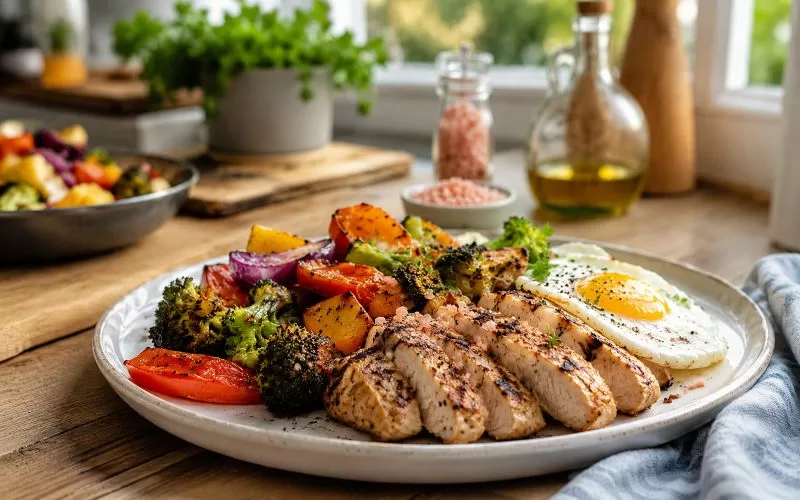
This grain size is useful for seasoning larger pieces of food because the crystals do not disappear instantly. It works nicely on meat, fish, potatoes, roasted vegetables, and foods that benefit from a more noticeable sprinkle of salt.
Medium Himalayan salt is a good choice for:
- Dry rubs
- Brines
- Roasted meats
- Grilled vegetables
- Salt-crusted cooking
- Homemade body scrubs
- Bath salt blends
Medium salt is also a nice option when making a basic rub because it mixes well with spices without becoming too powdery. If you are seasoning meat before grilling or roasting, medium salt gives the food time to absorb flavor without melting away immediately.
For bath salts or body scrubs, medium grains provide texture. Just avoid using salt scrubs on irritated, broken, or freshly shaved skin because salt can sting.
Coarse Himalayan Pink Salt
Coarse Himalayan salt has large crystals that are best when you want texture, crunch, or a pretty finishing touch. It is not usually the best choice for baking or recipes where salt needs to dissolve evenly.
This is the grain size most people like for salt mills and grinders. A grinder lets you control how much salt lands on the food and gives that fresh-cracked texture at the table.
Use coarse Himalayan salt for:
- Salt grinders
- Steaks
- Salads
- Avocado toast
- Roasted potatoes
- Fresh fruit with a tiny sprinkle
- Finishing cooked dishes
Coarse salt is one of those little kitchen upgrades that makes food feel more finished without much effort. I like it best when it is used at the end rather than hidden inside a recipe.
Just remember that coarse salt can be harder to measure. If a recipe calls for fine salt and you only have coarse salt, it is better to season lightly and taste as you go.
Himalayan Salt Chunks
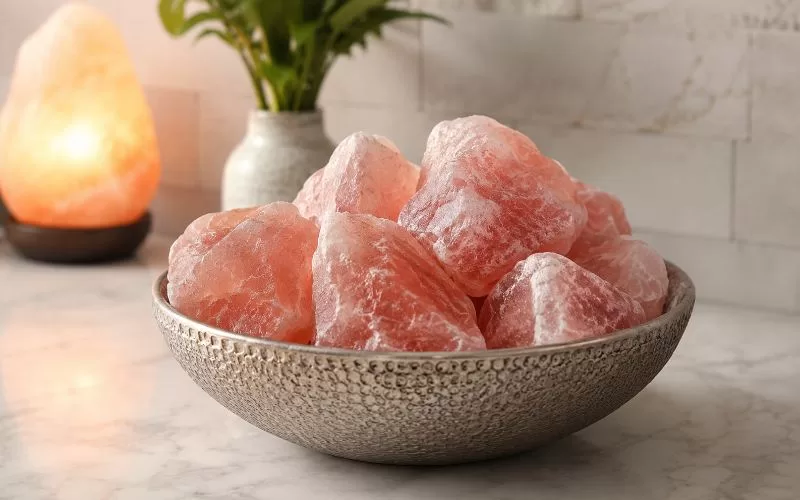
Himalayan salt chunks are large rock pieces that are usually used for decorative or specialty purposes rather than normal cooking. You may see them in salt lamps, salt bowls, candle holders, or decorative baskets.
Salt chunks can look beautiful in a kitchen, spa-style bathroom, or home décor display. They are also used in some specialty food presentations, but they are not practical for most everyday recipes.
Common uses include:
- Salt lamps
- Decorative bowls
- Spa-style displays
- Salt grinders made for larger chunks
- Bath salt displays
There are a lot of wellness claims online about salt lamps and salt chunks, but it is best to keep expectations realistic. They can add a warm, cozy glow and natural texture to a room, but strong health claims are not well supported. Think of them more as a decorative home item than a wellness solution.
Salt chunks are often used in lamps, bowls, and decorative displays because they add a warm, natural look. They can be pretty on a kitchen counter, bathroom shelf, or cozy corner, but they should be treated as décor rather than a wellness product.
Fine vs Coarse Himalayan Salt: Which Is Better?
Fine and coarse Himalayan salt are both useful, but they are not interchangeable in every situation. Fine salt is better when you want even seasoning. Coarse salt is better when you want texture or a finishing touch.
Choose fine Himalayan salt for cooking, baking, and recipes where the salt needs to dissolve. Choose coarse Himalayan salt for grinders, finishing, and foods where you want a little crunch.
If you are buying Himalayan salt for the first time, fine salt is the most practical choice. If you already have fine salt and want something more visual, coarse salt is a nice second option.
Best Himalayan Salt Grain Size for Cooking
For most cooking, fine Himalayan salt is the best choice. It blends easily, dissolves quickly, and gives you more control.
Use fine salt when making soups, sauces, eggs, casseroles, marinades, or anything that needs even seasoning throughout. It also works well for quick meals because you do not have to wait for large crystals to dissolve.
Medium salt is better for meats and vegetables before roasting or grilling. Coarse salt is best saved for finishing after cooking.
Best Himalayan Salt Grain Size for Baking
Extra fine or fine Himalayan salt is best for baking. Baked goods need salt to distribute evenly through the flour, sugar, and other dry ingredients.
Coarse salt can work on top of certain baked goods, such as pretzels, focaccia, or salted cookies, but it should not usually replace fine salt inside the recipe.
For most cakes, muffins, cookies, breads, and quick breads, stick with fine salt unless the recipe specifically calls for coarse or flaky salt.
Best Himalayan Salt Grain Size for a Grinder
Coarse Himalayan salt is the best choice for a grinder. The larger crystals are designed to break down as you grind them, giving you fresh texture and control at the table.
Do not use extra-fine or fine salt in a grinder. It can pour through too quickly or clog, depending on the grinder design.
If your grinder is adjustable, you can set it finer for everyday meals or coarser for finishing dishes.
Best Himalayan Salt Grain Size for Bath Salts and Scrubs
Medium and coarse Himalayan salt are usually best for bath salts and scrubs because they give more texture. Fine salt dissolves quickly, which can be fine for a bath soak but less useful for a scrub.
For a simple bath blend, combine Himalayan salt with warm bath water and let it dissolve before getting in. For scrubs, use caution and avoid sensitive areas. Salt can be too rough for delicate skin, and it should not be used on cuts, sunburn, or irritated skin.
If you have sensitive skin, it is better to start with a small amount or choose a gentler exfoliant.
A Note About Sodium and Health Claims
Himalayan salt may contain trace minerals, but it should not be treated like a supplement or a health treatment. According to the CDC’s sodium information, the body needs a small amount of sodium to function, but too much sodium can affect health.
It is also worth noting that different salts have similar sodium content by weight. Mayo Clinic explains that sea salt and table salt have comparable nutritional value, and the same practical thinking applies here. Himalayan salt can be a flavorful kitchen choice, but it is not a free pass to use unlimited salt.
If you are watching sodium for blood pressure, kidney health, heart health, or another medical reason, follow your doctor’s guidance and use any salt carefully.
How to Store Himalayan Salt
Himalayan salt should be stored in a dry container with a tight lid. Salt naturally attracts moisture, so leaving it open near the stove or sink can make it clump.
A few storage tips:
- Keep it in an airtight jar.
- Store it away from steam and humidity.
- Use a dry spoon when scooping.
- Keep coarse salt in a grinder or sealed container.
- Label different grain sizes if you keep more than one.
Keeping different grain sizes labeled and stored in airtight containers makes them much easier to use. Fine salt can stay near the stove for everyday cooking, while coarse salt works well in a grinder or small finishing salt jar on the counter. I also like keeping small kitchen notes with saved recipes, so it is easier to remember which ingredients and seasonings worked best the next time I make a dish.
Frequently Asked Questions About Himalayan Salt Grain Size
What is the best Himalayan salt grain size for everyday cooking?
Fine Himalayan salt is the best grain size for everyday cooking because it dissolves quickly and seasons food evenly. It works well for eggs, vegetables, soups, sauces, marinades, and most weeknight meals.
Is fine or coarse Himalayan salt better?
Fine Himalayan salt is better for cooking and baking, while coarse Himalayan salt is better for grinders and finishing dishes. The better choice depends on how you plan to use it.
Can coarse Himalayan salt go in a grinder?
Yes, coarse Himalayan salt is the best option for most salt grinders. The larger crystals are designed to be ground into smaller pieces right before serving.
What Himalayan salt grain size is best for baking?
Extra fine or fine Himalayan salt is best for baking because it mixes evenly into dry ingredients. Coarse salt should only be used on top of baked goods when you want texture.
Is Himalayan salt healthier than regular salt?
Himalayan salt contains trace minerals and has a different color and texture, but it is still sodium chloride. It should be used in moderation, just like table salt, sea salt, or kosher salt.
What is medium Himalayan salt used for?
Medium Himalayan salt is useful for rubs, brines, roasted meats, vegetables, bath salts, and homemade scrubs. It gives more texture than fine salt but is not as large as coarse crystals.
Choosing the Right Salt for Your Needs
The best Himalayan salt grain size depends on what you want it to do. Fine salt is the most practical choice for everyday cooking. Extra fine salt is helpful for baking and smooth seasoning blends, medium salt works nicely for rubs and brines, coarse salt belongs in a grinder or on finished dishes, and chunks are mostly decorative.
Himalayan salt can be a pretty and useful addition to the kitchen, but the real trick is choosing the right texture for the job. Once you understand how each grain size works, it becomes much easier to season food well, avoid over-salting, and use each type where it makes the most sense.