
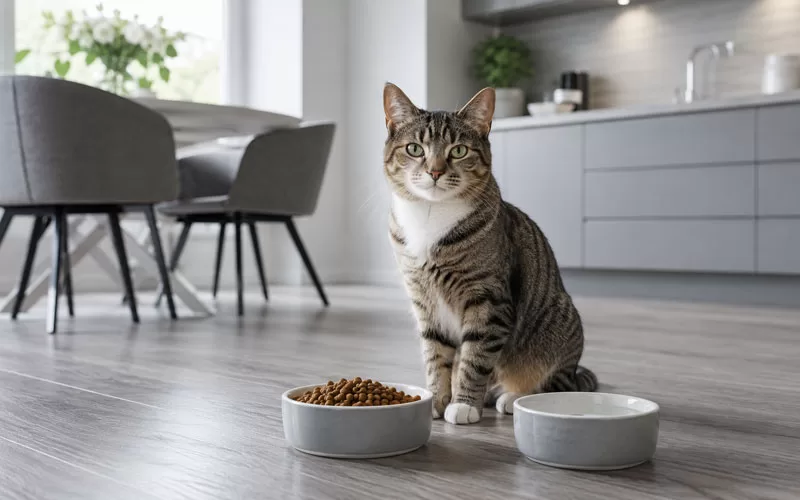
Understanding your cat’s nutritional needs is one of the most important parts of keeping them healthy, comfortable, and thriving at home. Cats are not small dogs, and they cannot eat just any pet food or table scraps and get everything their bodies need. A balanced cat diet should include animal-based protein, healthy fats, essential amino acids like taurine, vitamins, minerals, and access to fresh water every day.
As a cat owner, I know how easy it is to assume that if a cat likes a food, it must be the right choice. But cats have very specific nutritional needs, and understanding the basics makes it easier to choose food with more confidence.
Why Cat Nutrition Matters
Good nutrition supports nearly every part of a cat’s health, from energy and digestion to skin, coat, muscles, vision, and heart function. When a cat’s food is not balanced, the effects may not always show up right away, but over time poor nutrition can contribute to weight changes, low energy, digestive issues, or more serious health concerns.
The Cornell Feline Health Center notes that proper nutrition is important for a long, healthy life, and that choosing an appropriate diet is one of the key decisions cat owners make. That does not mean every cat needs a complicated feeding plan, but it does mean the food should be appropriate for cats and suited to their life stage.
Cats also have different needs depending on age, activity level, weight, and health. Kittens, adult cats, senior cats, overweight cats, and cats with medical conditions may all need different feeding guidance. When there is any doubt, your veterinarian is the best place to start.
What Nutrients Do Cats Need?
Cats are obligate carnivores, which means their bodies are designed to get important nutrients from animal-based foods. A healthy cat diet should provide the right balance of nutrients instead of relying on one ingredient or one trend.
The main nutrients cats need include:
- Animal-based protein to support muscles, energy, and overall body function
- Healthy fats for energy, skin, coat, and nutrient absorption
- Taurine, an essential amino acid cats must get from their diet
- Vitamins and minerals to support normal body processes
- Water for hydration, digestion, urinary health, and daily wellness
- The right calories for your cat’s size, age, activity level, and health
This is why feeding a food labeled for cats matters. Dog food, people food, or an unbalanced homemade diet will not automatically meet a cat’s nutritional requirements.
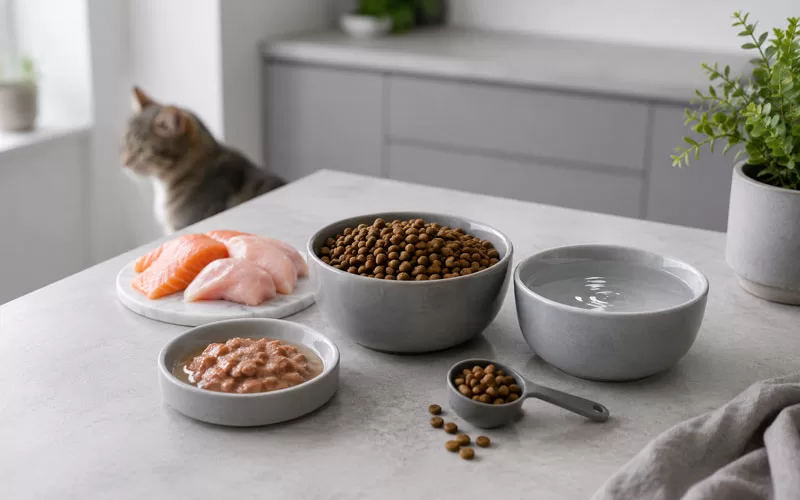
Protein Is Essential for Cats
Protein is one of the most important parts of a cat’s diet. Cats need high-quality animal protein because their bodies rely on certain amino acids found in meat-based ingredients. Protein helps support lean muscle, normal growth, tissue repair, and everyday energy.
The Merck Veterinary Manual explains that cats need diets rich in high-quality proteins and fats, along with specific amino acids such as taurine. This is one reason cat food should be formulated specifically for cats rather than shared with dogs or replaced with random foods from the kitchen.
When comparing cat foods, it is easy to focus only on the protein percentage on the front of the bag or can. That number can be useful, but it is not the whole story. Moisture levels, calorie content, ingredient quality, and whether the food is complete and balanced all matter too.
Why Taurine Is So Important
Taurine is one of the most important nutrients to understand when talking about cat nutritional needs. It supports essential functions in the body, including heart and eye health. Cats cannot make enough taurine on their own, so they need to get it from their diet.
Most complete and balanced commercial cat foods are formulated with taurine, but that is another reason it is important to choose food made for cats. Dog food does not meet the same nutritional needs, and homemade diets can easily miss key nutrients unless they are carefully formulated by a veterinary nutrition professional.
A taurine deficiency can become serious, so this is not an area where guessing is a good idea. If you are considering a homemade diet, raw diet, or major food change, it is worth talking with your veterinarian first.
The Role of Fat in a Cat’s Diet
Fat is not something to avoid in a cat’s diet. Cats need fat for energy, healthy skin, a shiny coat, and the absorption of fat-soluble vitamins. The goal is not to choose the lowest-fat food possible, but to choose a balanced cat food that provides appropriate nutrition without too many calories.
Too much food, even if it is nutritious, can still lead to weight gain. Indoor cats may be especially prone to gaining weight if they are less active or have constant access to food throughout the day.
If your cat seems hungry all the time, gains weight easily, or leaves food untouched, it may be time to look at feeding amounts, meal timing, and the type of food you are offering. Small routine adjustments can make a difference, especially when feeding becomes part of a calmer daily rhythm with your cat.
Vitamins and Minerals Cats Need
Cats also need vitamins and minerals, but more is not always better. A balanced cat food is designed to provide these nutrients in appropriate amounts. Adding extra supplements without veterinary guidance can create problems, especially if your cat is already eating a complete diet.
Important vitamins and minerals in a cat’s diet may support:
- Bone and teeth health
- Nerve function
- Immune system support
- Vision
- Muscle function
- Normal metabolism
- Skin and coat health
This is where the phrase “complete and balanced” matters. The AAFCO guide to reading pet food labels explains that pet food labels include a nutritional adequacy statement that helps identify whether a food is intended to meet a pet’s complete nutritional needs for a specific life stage.
Wet Food vs. Dry Food for Cats
Wet and dry cat food can both have a place in a cat’s diet, depending on your cat’s needs, preferences, and your veterinarian’s guidance. Dry food is convenient, easy to store, and can work well for many households. Wet food contains more moisture, which can be helpful for cats who do not drink much water on their own.
Many cat owners use a combination of wet and dry food. This can add variety while still keeping the diet practical. The most important thing is choosing food that is nutritionally complete for your cat’s life stage and feeding the right amount.
Our cat has her own routines, and it is a good reminder that cats are very much creatures of habit. A feeding setup that works well for one cat may not work as smoothly for another, which is why it helps to pay attention to what your cat actually eats, drinks, and tolerates well.
A few things to consider when choosing between wet and dry food:
- Wet food adds moisture to the diet.
- Dry food is convenient and usually easier to leave out for short periods.
- Some cats prefer one texture over another.
- Cats with urinary, kidney, weight, or dental concerns may need specific guidance.
- Feeding amounts should be based on calories, not just the size of the scoop.
Our cat has her own routines, and it is a good reminder that cats are very much creatures of habit. A feeding setup that works well for one cat may not work as smoothly for another.
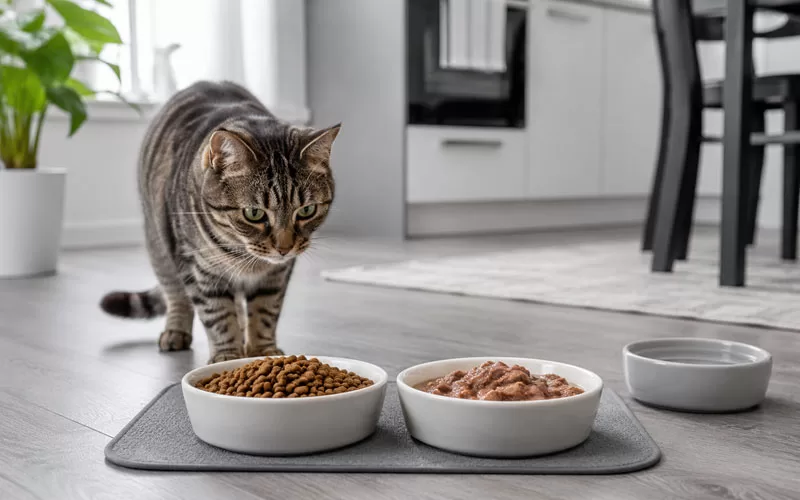
Why Fresh Water Matters
Water is an important part of feline nutrition, even though it is easy to focus only on food. Cats need fresh water available every day, and some cats are more likely to drink when the water is clean, easy to reach, and placed away from the litter box.
Some cats prefer a bowl, while others prefer a fountain. If mornings feel chaotic, simple changes like consistent feeding times, fresh water, and a predictable setup can make a cat’s routine feel smoother. A few small morning routine changes for your cat can help support comfort without making pet care feel complicated.
If your cat suddenly drinks much more or much less than usual, that is something to pay attention to. Changes in thirst, appetite, weight, litter box habits, or energy can be signs that your cat should be checked by a veterinarian.

How to Read a Cat Food Label
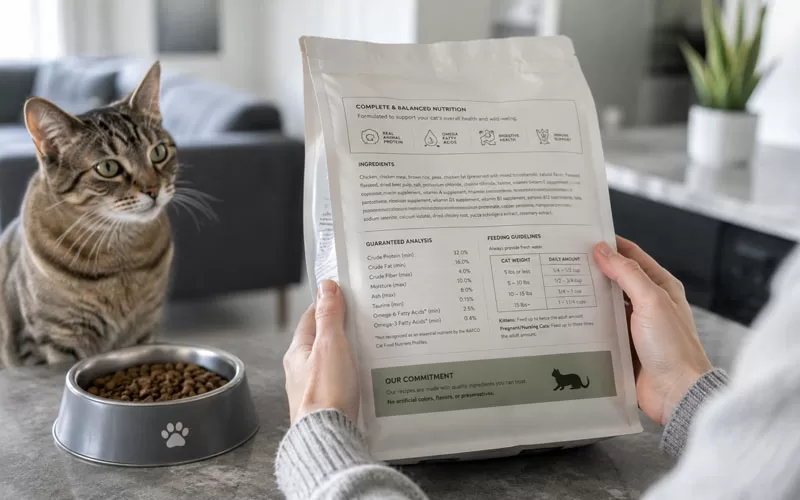
Cat food labels can feel overwhelming, but a few areas are especially helpful. Look beyond the front of the package and spend a minute reading the details on the back or side.
When comparing cat food, look for:
- Nutritional adequacy statement: This tells you whether the food is complete and balanced for a life stage.
- Life stage: Kitten, adult maintenance, senior, or all life stages.
- Feeding guidelines: These are a starting point, not a perfect rule for every cat.
- Guaranteed analysis: This lists minimums and maximums for nutrients like protein, fat, fiber, and moisture.
- Calories: Calorie content matters when managing weight.
- Ingredients: Ingredients can be helpful, but they should not be the only thing you use to judge a food.
A food with attractive packaging is not automatically the best choice. The goal is to choose something that meets your cat’s nutritional needs, fits your budget, and works for your cat’s health and preferences.
What About Raw Cat Food?
Raw cat food is a popular topic because many pet owners want to feed their cats something that feels closer to nature. Some people are interested in commercially prepared options, including raw cat food, while others think about making meals at home.
This is an area where it is important to be careful. The FDA’s information on raw pet food diets explains that raw pet food can carry risks from disease-causing bacteria, which may affect both pets and people in the household. That does not mean every pet owner will make the same choice, but it does mean raw feeding should not be treated casually.
If you are considering raw food for your cat, ask your veterinarian about:
- Whether it is appropriate for your cat’s age and health
- Food safety and safe handling
- Nutritional completeness
- Risks for children, older adults, pregnant people, or immunocompromised family members
- How to transition safely if your vet agrees it is appropriate
Cats can have sensitive digestive systems, so any major diet change should be done thoughtfully.
Homemade Cat Food Needs Extra Caution
Homemade cat food can sound appealing, especially if you want more control over ingredients. The challenge is that cats have very specific nutritional requirements, and homemade diets can easily become unbalanced.
A homemade cat diet should not be built from random recipes online. It should be formulated with professional guidance, ideally from a veterinarian or board-certified veterinary nutritionist. Missing nutrients such as taurine, calcium, or certain vitamins can create serious health problems over time.
Homemade treats or small extras are different from replacing your cat’s full diet. If you want to offer occasional cat-safe extras, ask your veterinarian what is appropriate and keep portions small.
Common Cat Feeding Mistakes
Even loving pet owners can make feeding mistakes. Most of the time, these mistakes come from trying to do the right thing without realizing cats have very specific needs.
Common mistakes include:
- Feeding dog food to cats
- Giving too many treats
- Free-feeding without watching weight changes
- Choosing food only because of marketing claims
- Switching foods too quickly
- Feeding homemade diets without professional guidance
- Ignoring changes in appetite or litter box habits
- Assuming all cats need the same food
If you are new to cat ownership, a basic guide to owning a cat can help you think through daily care beyond food, including routines, supplies, and comfort.
When to Talk to Your Veterinarian
Your veterinarian should be part of the conversation any time your cat has special nutritional needs. This is especially true for kittens, senior cats, overweight cats, underweight cats, pregnant cats, and cats with medical conditions.
Talk to your veterinarian if your cat has:
- Sudden weight loss or weight gain
- Vomiting or diarrhea that continues
- A major change in appetite
- Increased thirst
- Litter box changes
- A dull coat or low energy
- Trouble chewing
- A history of urinary issues
- Food allergies or sensitivities
Nutrition can be connected to many health concerns, but symptoms can also have causes that are not food-related. If something feels off, it is better to be proactive. Knowing the signs that it may be time for a veterinary visit can help you respond sooner instead of waiting too long.
Feeding Routines When You Travel
Cat nutrition does not stop being important when you travel. Cats often do best with consistency, so it helps to keep feeding times, food type, and water access as close to normal as possible.
If your cat will stay somewhere outside the home, ask how meals are handled, whether you can bring your own food, and how staff monitors changes in appetite. A trusted sitter, boarding facility, or hotel for pets should understand the importance of feeding instructions, fresh water, and routine.
For longer trips, pet owners may also need to think about food storage, feeding tools, medications, and comfort items. Planning ahead with the right pet travel essentials can make the experience easier, whether your pet is traveling with you or staying safely cared for while you are away.
Choosing Food That Supports Your Cat’s Daily Needs
Choosing cat food does not have to be complicated, but it should be thoughtful. Start with food made specifically for cats, look for a complete and balanced statement, choose the right life stage, and pay attention to how your cat responds.
The best food for your cat is one that supports their health, fits their needs, and works in your daily routine. Some cats do well on wet food, some do well on dry food, and some do best with a combination. Others need special diets because of weight, digestion, urinary concerns, allergies, or age.
A good cat feeding routine usually comes down to a few simple habits: offer balanced food, provide fresh water, watch portions, keep routines consistent, and contact your vet when something changes.
Keeping Cat Nutrition Simple and Supportive
Cat nutritional needs are specific, but feeding your cat well does not have to feel overwhelming. Focus on the basics first: animal-based protein, healthy fats, taurine, vitamins, minerals, water, and the right number of calories for your cat’s body and lifestyle.
I always think pet care feels easier when the basics are clear. Once you understand what cats need from their food, it becomes much easier to make thoughtful choices without getting overwhelmed by every new diet trend or package claim.
Trends will come and go, but your cat’s daily health depends on consistent, balanced nutrition. A little label reading, a practical feeding routine, and regular veterinary guidance can go a long way toward helping your cat feel their best.