
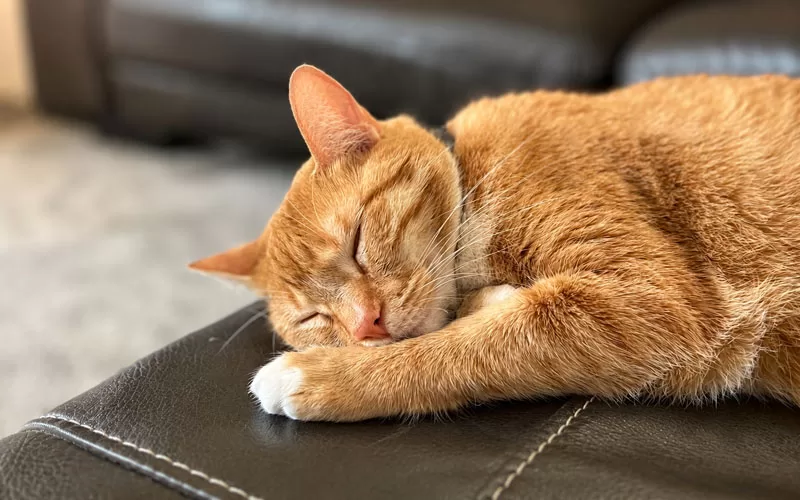
A cat-friendly home routine can help indoor cats feel calmer and more secure by making their food, water, litter box, favorite resting spots, and daily attention feel predictable. Cats may seem independent, but many of them quietly rely on familiar rhythms throughout the day. When those routines work, your cat feels more settled, and the whole house can feel calmer.
Our cat Stevie is one of the most routine-driven pets we have ever had. She knows when her food goes off, when the blinds open, where she likes to nap, and what time I am supposed to put her to bed. Her routine is not complicated, but it gives her the comfort and structure she seems to need.
Why Routine Matters for Cats
Cats like to know what to expect. A predictable routine can help them feel safer because their important daily needs happen in familiar places and at familiar times. The AAFP/ISFM Feline Environmental Needs Guidelines explain that a healthy feline environment includes safe spaces, food, water, litter areas, scratching, play, and positive human interaction.
That sounds formal, but in real life it can be very simple. It means your cat knows where to eat, where to drink, where to relax, where to go to the bathroom, and when they can expect attention from you. A good pet-friendly home does not have to be fancy. It just needs to work for the way your pet actually lives.
Start the Day With a Familiar Morning Reset
Our morning routine with Stevie is simple, but she expects it. After I feed the dogs, I go into her room, open the blinds, and give her some love and attention. She has an automatic feeder, so breakfast is not something I personally serve, but that little morning check-in still matters.
Her feeder goes off at 6 AM and 6 PM every day. That consistency helps because she is not waiting for me to remember breakfast or dinner. She gets the routine, and I do not have to worry about throwing off her schedule.
This is why an automatic pet feeder can be so helpful, especially for cats who do better with set feeding times. For us, it is not just about convenience. It helps with portion control and keeps her meals predictable.
Keep Water Easy to Find
Fresh water is another big part of a cat-friendly home routine. Stevie has a water fountain in her room, and she also drinks from the same type of fountain we use for the dogs. She has options, and both are in places she already visits during the day.
The Cornell Feline Health Center notes that cats can sometimes be encouraged to drink more when fresh water is easy to access, and some cats prefer fountains. Every cat is different, but easy access matters. For our house, fountains work well because the water is more inviting than a regular bowl. I also like that Stevie has water available in her own quiet space and in the main part of the house.
Give Your Cat Favorite Spots Around the House
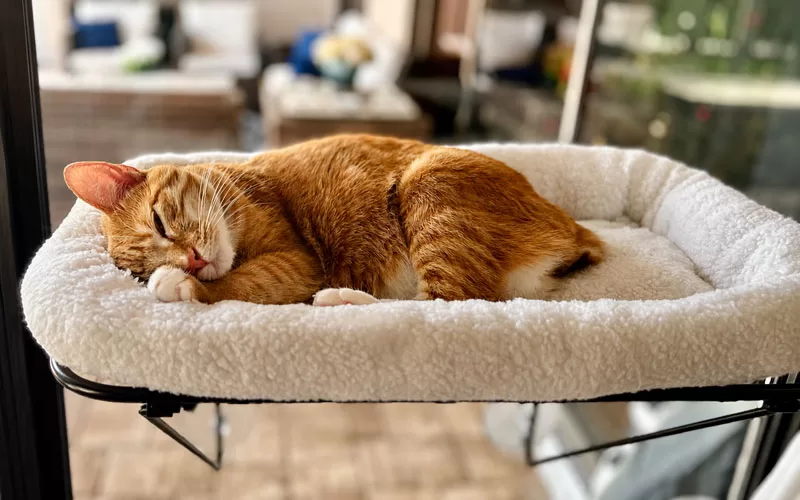
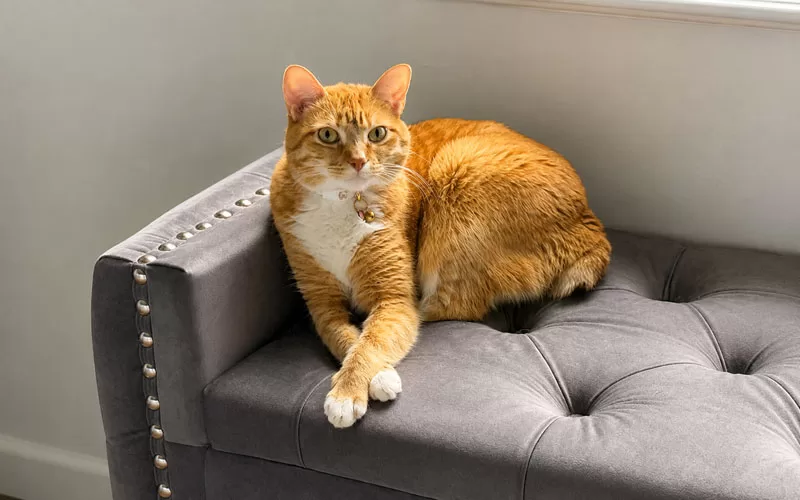
Stevie is an indoor cat, but she still has a lot of little places that feel like hers. Her favorite spot is her window perch, where she can watch everything outside. She also loves napping in dining room chairs, my office chair, and sometimes on the little sofa under the window in her guest room.
That window perch has become one of the best things we’ve added for her. A good indoor cat window perch gives a cat a cozy place to rest while still letting them watch birds, movement, weather, and all the little things happening outside. And in her case, a safe, quiet space away from the dogs.
The Ohio State Indoor Pet Initiative also points to the importance of meeting basic indoor cat needs with things like resting areas, perches, toys, and environmental enrichment. For Stevie, her favorite spots are not random. They are part of how she feels comfortable in the house.
Keep the Litter Box Routine Simple and Consistent
A clean litter box is one of those routine details that makes a big difference. I use a roll litter box for Stevie, and every morning I roll it, remove the waste, and make sure it is clean for the day. Then I change the litter about every three weeks.
The Omega Paw Roll’n Clean litter box has worked well for us because it makes daily maintenance quick and easy. I also use Micro Crystal litter, which makes cleanup easy and really helps with odor control. The process is easy, and Stevie gets a clean box every day.
Litter box habits are also one of those things worth paying attention to. Some cats are very particular, and changes in bathroom behavior can be a sign that something is off. If accidents are new, sudden, or unusual for your cat, it is worth looking at possible stress, routine changes, litter box issues, or health concerns.
Add Enrichment Without Forcing Play
Stevie has toys, and she does play with them a little, but they are not really her main focus. That is okay. Not every cat is going to chase toys all day or perform like a kitten just because the toys are there.
For her, enrichment is more about having options. She can look out the window, move from room to room during the day, nap in her favorite chairs, explore her space, or play when she feels like it. Sometimes the best cat routine is simply making sure the environment gives them choices.
If your cat enjoys toys, you can rotate a few instead of leaving everything out at once. Wand toys, soft balls, scratchers, crinkle toys, catnip toys, or a cozy hideaway can all be simple ways to add interest. But the goal is not to force activity. It is to give your cat ways to be curious, comfortable, and engaged on their own terms.
Living with a cat is really about learning their personality and noticing what they actually use and enjoy. Once you understand your cat’s favorite spots, habits, and comfort cues, it becomes much easier to create a routine that supports them instead of filling the house with things they ignore.
Create a Calm Nighttime Routine
Nighttime is where Stevie’s routine matters most. Around 9:45 or 10 PM, she is usually waiting for me to go into her room. I close the blinds, put the TV on with a 30-minute timer, turn on Super Kitties, give her a small handful of treats, spend a little time with her, turn off the light, and leave the room.
It probably sounds funny, but this routine works for her. She knows what is coming, and she settles in. I also want to be clear that she is not in the guest room at night because we are trying to keep her away from the family. She is in there because she is happier and calmer there. During the day, she has access to almost the whole house, except for two bedrooms. At night, if she is left to roam, she gets anxious and has had accidents on rugs. Her room gives her a safe, familiar place where she can relax.
Some cats need a quiet nighttime space. Others do fine with full house access. The key is paying attention to what your cat is telling you through their behavior.
Safe Independence Looks Different for Every Cat
Stevie is an indoor-only cat, so outdoor access is not part of her routine. Her independence comes from having safe spaces inside the house, predictable meals, fresh water, a clean litter box, and favorite places where she can nap or watch the world.
For other cat homes, safe independence may look different. Some families have a screened porch, enclosed patio, catio, or controlled outdoor area. In those situations, a microchip cat flap can help give the right cat access while keeping unwanted animals from coming in. That does not mean every cat needs outdoor access. It just means the best routine should match your actual cat, your home, and what feels safe for your situation.
Make the Routine Work for Your Cat
The best cat-friendly home routine is the one your cat actually responds to. For Stevie, that means meals at the same time, blinds open in the morning, her window perch, clean litter every day, water fountains, cozy nap spots, and a very specific nighttime routine.
It does not have to be perfect. It just has to be predictable enough that your cat feels secure.
When you build your home routine around your cat’s real habits, everything starts to feel easier. Your cat knows what to expect, you know what needs to be done, and the little daily moments become part of what makes life with a cat so sweet.