
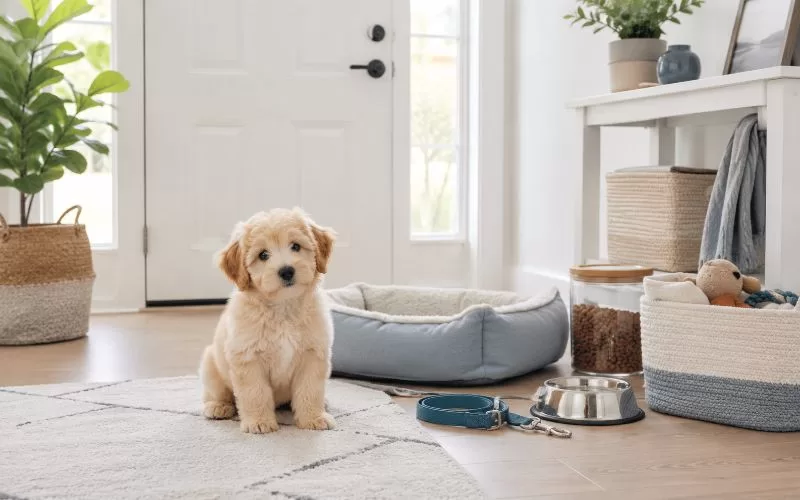
Bringing home a new puppy is exciting, but the best puppy experience starts before those little paws ever walk through tBringing home a new puppy is exciting, but the best experience starts before those little paws ever walk through the door. Your new family member needs more than a cute bed and a bowl of food. You will want a safe home, a trusted veterinarian, the right supplies, a simple routine, and a realistic plan for those first few messy, sweet, sleep-deprived days.
Whether this is your first dog or it has been years since you had a young dog in the house, a little preparation can make the transition easier for everyone. Young dogs are curious, energetic, and still learning how the world works, which means your home needs to be ready for chewing, accidents, exploring, and plenty of attention.
Here are smart things to do before getting a puppy so you can feel more prepared when your new furry family member arrives.
1. Make Sure You Are Ready for the Commitment
Before choosing toys or picking out a collar, take a realistic look at what life with a new dog will require. Puppies need time, patience, training, vet care, and consistency. They also come with expenses beyond the adoption fee or purchase price.
Plan for:
- Wellness exams and vaccines
- Parasite prevention
- Food and treats
- Crate, bed, leash, collar, and bowls
- Grooming supplies
- Training pads or outdoor potty supplies
- Toys and chews
- Possible pet insurance or emergency savings
This does not mean a puppy is not worth it. It simply means the decision should be made with clear expectations. If your schedule is full, your home is in transition, or you travel often, it may be worth thinking through how puppy care will fit into everyday life.
2. Choose the Right Puppy for Your Home
Every dog has its own personality, but breed size, coat type, energy level, and grooming needs still matter. A tiny companion dog may fit beautifully in a smaller home, while a large, high-energy breed may need more space, exercise, and training time.
Think about your household before choosing your new pet. Do you have young children? Other pets? A fenced yard? Stairs? A busy work schedule? Do you want a dog that needs frequent grooming, or would a lower-maintenance coat be better?
If you are still comparing breeds, it can help to read about different sizes and temperaments, including smaller companion mixes like a Maltese Shih Tzu Poodle mix. The goal is not just to find an adorable dog, but to find one whose needs fit your family and lifestyle.
3. Puppy-Proof Your Home
Young dogs explore with their mouths, so anything on the floor or within reach can quickly become a chew toy. Before bringing them home, walk through each room from your new pet’s point of view and look for anything that could be dangerous.
Start with obvious hazards such as cleaning products, medications, electrical cords, small objects, batteries, plants, and trash cans. The ASPCA Poison Control Center is a helpful resource to save in your phone in case your pet ever gets into something questionable, and the FDA also lists common household items that can be dangerous for pets.
Puppy-Proofing Checklist
| Area | What to Check |
|---|---|
| Kitchen | Trash cans, food wrappers, cleaning supplies, small items on the floor |
| Bathroom | Medications, razors, cleaning products, soaps, and trash |
| Living areas | Electrical cords, shoes, bags, plants, remotes, and loose decor |
| Bedrooms | Laundry, jewelry, cords, small toys, and under-bed items |
| Yard or patio | Pool chemicals, sharp items, toxic plants, mulch, and open gates |
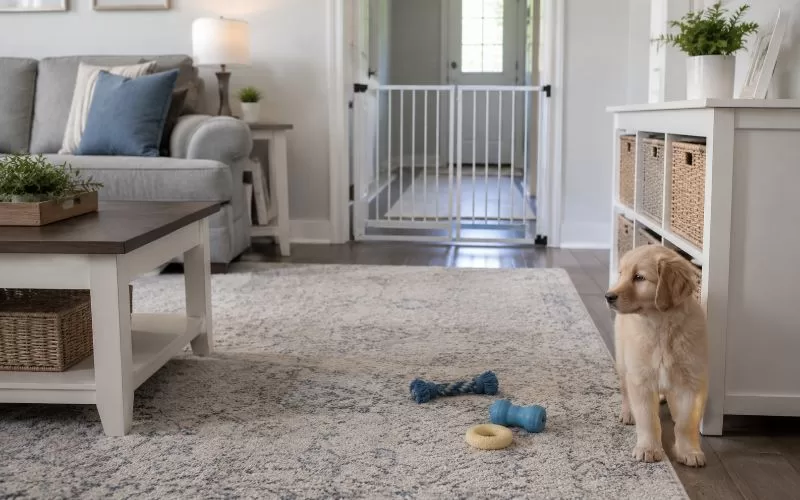
Baby gates can also help you block off stairs, bedrooms, or rooms that are not ready for exploring. You do not need to give your new dog access to the whole house right away. In fact, smaller supervised spaces often make the first few weeks much easier.
4. Decide Where Your Puppy Will Sleep
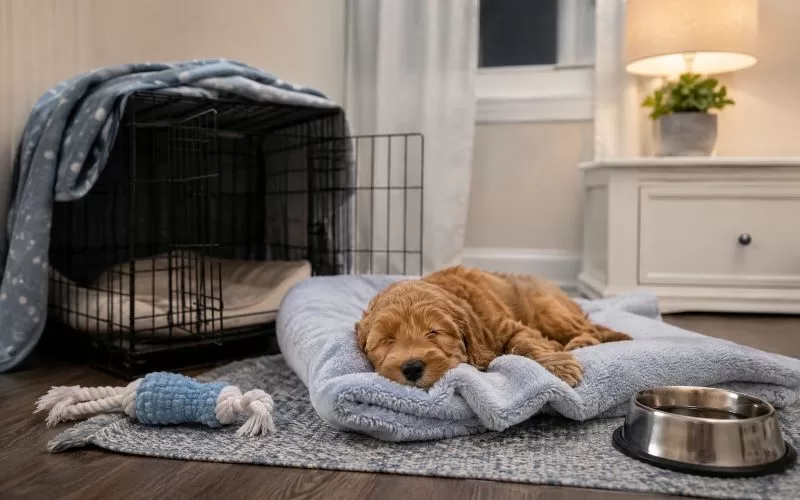
Your new dog needs a safe, comfortable sleeping space from the first night. Some families choose a crate, while others use a gated area, playpen, or washable dog bed. The important part is choosing the space before pickup day so you are not trying to figure it out at bedtime.
A crate can be helpful for potty training, travel, and giving your dog a secure place to rest. If you use one, make sure it is the right size. Your dog should be able to stand, turn around, and lie down comfortably, but the space should not be so large that one end becomes a potty area.
Add a washable blanket or bed, but avoid anything your pet may shred and swallow. Puppies need a lot of sleep, and a quiet space can help them settle after the excitement of a new home.
5. Find a Veterinarian Before Pickup Day
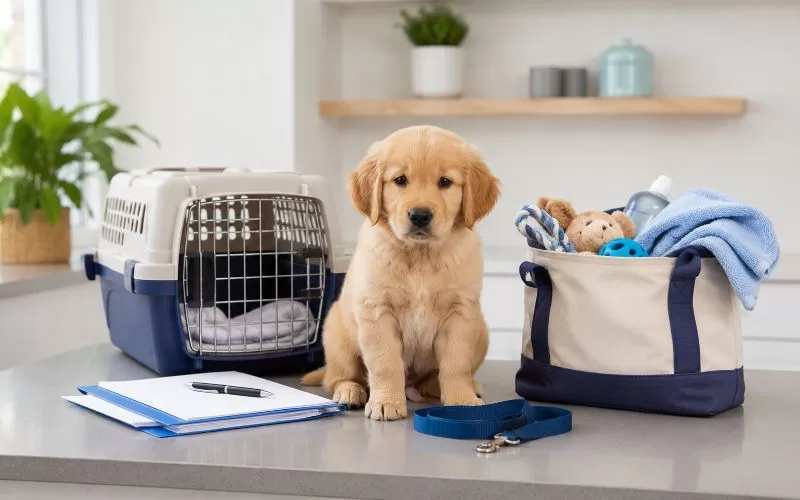
Do not wait until your new pet is already home to look for a vet. Puppies usually need a wellness exam soon after coming home, especially if they are due for vaccines, deworming, or parasite prevention.
The American Veterinary Medical Association recommends considering things like services, fees, emergency care, and communication when choosing a veterinary practice. It is also smart to ask whether the office handles your dog’s breed often, especially if you are bringing home a breed with common health considerations.
Before bringing them home, ask the breeder, rescue, or shelter for:
- Vaccine records
- Deworming history
- Current food information
- Any medications or supplements
- Microchip details, if applicable
- Spay/neuter information, if relevant
Keep these records in one place so you can bring them to the first vet appointment.
66. Understand Puppy Vaccines and Early Vet Care
Your vet will guide you through the vaccine schedule, but it helps to know that puppies usually need a series of vaccinations over time rather than one appointment that covers everything. The AVMA explains that for most puppies, the final vaccination in the puppy series is typically given at 16 weeks of age or older, though your veterinarian may adjust the schedule based on your dog’s individual needs and risk factors.
Until your vet says your new dog is fully protected, be careful about high-traffic dog areas such as dog parks, pet store floors, and shared outdoor spaces. Your dog still needs socialization, but it should be done safely and with your veterinarian’s guidance.
This is also a good time to talk about flea, tick, heartworm, and parasite prevention. Puppies are small and growing quickly, so always use products recommended for your dog’s age and weight.
7. Choose Puppy Food Carefully
Puppies need food that supports growth, not adult maintenance food. Look for a food labeled for puppies or growth, and choose one that fits your dog’s size and breed needs. The Association of American Feed Control Officials explains that pet food should be complete and balanced for the pet’s life stage, including growth for puppies.
If your new dog is coming from a breeder, rescue, or shelter, ask what food they are currently eating. Even if you plan to switch brands later, a gradual transition is easier on your dog’s stomach.
A simple transition may look like this:
- Days 1–2: Mostly current food with a small amount of new food
- Days 3–4: Half current food and half new food
- Days 5–6: Mostly new food with a small amount of old food
- Day 7+: New food, if your dog is tolerating it well
Some owners are interested in fresh or raw feeding, but that is something to discuss carefully with your veterinarian. If you are considering that route, read more about choosing a balanced raw dog food diet before making changes.
For general feeding help, you may also want to read about how to choose a healthy, balanced diet for your dog.
8. Buy the Basic Puppy Supplies First
It is easy to overbuy before bringing home a new dog, but you do not need every cute item in the pet aisle right away. Start with the essentials, then add more once you know your new pet’s habits, size, and personality.
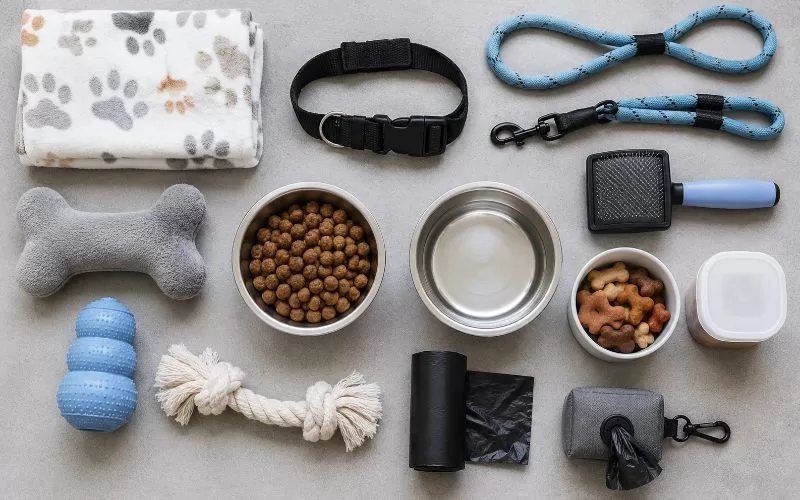
Puppy Supplies to Have Ready
- Food and water bowls
- Puppy food
- Collar or harness
- Leash
- Crate, playpen, or gated area
- Washable bed or blanket
- Puppy-safe chew toys
- Training treats
- Poop bags
- Enzymatic cleaner for accidents
- Grooming brush
- Nail clippers or grinder
- Puppy shampoo
- ID tag
If your schedule makes feeding times difficult, an automatic feeder may be helpful later. I have shared a closer look at a WOPET automatic pet feeder if you are considering one for a dog or cat-friendly home.
Toys are another must-have, but they should be safe and age-appropriate. Puppies need things to chew, chase, and explore, and interactive options like a durable dog toy that keeps dogs engaged can be useful once you know your dog’s play style.
9. Plan for Potty Training Before the First Accident
Potty training starts the moment you bring them home. Waiting a few days to “see what happens” usually just creates confusion.
Decide ahead of time where they should go potty. If you have a yard, choose a consistent outdoor spot. If you live in an apartment or need an indoor solution at first, decide whether you will use pads, a grass patch, or another system.
Puppies often need potty breaks:
- First thing in the morning
- After eating
- After drinking
- After naps
- After playtime
- Before bedtime
- Anytime they start sniffing or circling
Accidents will happen, especially in the beginning. Use an enzymatic cleaner so the smell does not encourage repeat accidents in the same spot. Keep the tone calm and consistent. Puppies learn faster from routine and praise than from frustration.
10. Prepare for the First 24 Hours
The first day home can be overwhelming for a young dog. Everything is new — the people, smells, rooms, sounds, and routine. Keep the first day simple and calm.
Let your new family member explore a small safe area instead of the entire house. Show them where the water bowl is, where they will sleep, and where they should go potty. Avoid inviting everyone over to meet your dog right away. There will be time for that later.
A good first-day plan includes:
- A quiet arrival
- A short potty break
- A small meal, if it is feeding time
- Supervised exploring
- Gentle play
- Rest time
- A calm bedtime routine
Your dog may cry the first night. That does not mean you are doing anything wrong. They are adjusting to being away from their litter, mother, shelter, or previous environment. A warm blanket, soft toy, and consistent sleep space can help.
Help Kids and Other Pets Adjust
If you have children, talk about house rules before your new dog comes home. Kids may be excited, but young dogs are small and still learning. Gentle handling matters.
Good rules include:
- Let the dog sleep when tired
- Do not pull ears, tails, or paws
- Do not chase the dog
- Keep small toys off the floor
- Use quiet voices during rest time
- Always ask before picking the dog up
If you already have pets, introduce them slowly and supervise closely. Do not expect instant friendship. Some pets need time to adjust to a new dog’s energy, sounds, and movement.
Keep Your Routine Simple
Young dogs do best when life is predictable. You do not need a strict minute-by-minute schedule, but a simple rhythm helps your dog learn what to expect.
A basic routine may include:
| Time of Day | Routine |
|---|---|
| Morning | Potty break, breakfast, short playtime |
| Midday | Potty break, nap, gentle training |
| Afternoon | Playtime, potty break, quiet rest |
| Evening | Dinner, potty break, family time |
| Bedtime | Final potty break, calm sleep routine |
This routine will change as your dog grows, but having a starting point makes the early weeks easier.
Think Ahead to Training and Socialization
Training does not have to wait until your dog is older. You can start with small, positive lessons right away. Short sessions work best because puppies have short attention spans.
Start with simple basics:
- Name recognition
- Sit
- Come
- Gentle leash practice
- Crate comfort
- Handling paws and ears
- Calm greetings
Socialization is also important, but it should be safe and age-appropriate. Your vet can help you decide when and where your dog can interact with other dogs, visit public spaces, or attend a puppy class.
Bringing Your Puppy Home with Confidence
Getting a puppy is one of those life changes that brings a lot of joy, but it also works best when you are prepared. Puppy-proofing your home, choosing the right food, finding a veterinarian, buying basic supplies, and setting up a simple routine can make the first week feel much smoother.
You do not have to have every detail perfect. Puppies learn, families adjust, and routines get easier with time. What matters most is creating a safe, loving home where your new family member can grow, learn, and become part of the family.
And once your dog is settled in, there will be plenty of sweet moments ahead — from first walks to favorite toys and maybe even a few fun dog birthday ideas when your pup’s special day rolls around.g birthday ideas when your pup’s special day rolls around.