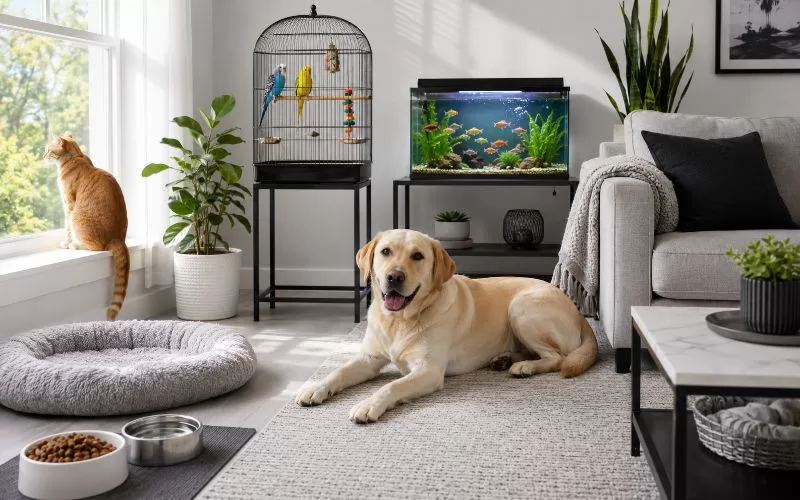
A pet-friendly home is about more than food bowls and a cozy bed; it is about creating a space where pets feel safe, comfortable, and truly part of the family. I tend to think of it in practical, everyday terms because we share our home with pets, and the smallest details often make the biggest difference — where the water bowl sits, which cords are tucked away, where they can rest, and how easily we can keep their spaces clean.
Pets bring so much joy into a home, but they also change how a home functions. Dogs need space to rest, play, eat, and safely go outside. Cats need quiet spots, climbing or window-viewing spaces, scratching options, and clean litter areas. Birds, small animals, and other pets have their own needs too. A pet-friendly home works best when it supports your pet’s everyday needs while still feeling comfortable and manageable for the whole family.
Quick Pet-Friendly Home Essentials Checklist
| Essential | Why It Matters |
|---|---|
| Comfortable bed or safe space | Gives pets a place to relax and feel secure |
| Food and water station | Keeps meals, hydration, and cleanup organized |
| Pet-proofing basics | Helps reduce accidents, chewing, escapes, and household hazards |
| Easy-to-clean surfaces | Makes life with pets more manageable |
| Toys and enrichment | Keeps pets mentally and physically engaged |
| Bathroom or potty area | Supports hygiene and daily routines |
| Air quality and odor control | Helps keep the home fresher for pets and people |
A Comfortable Bed or Safe Space
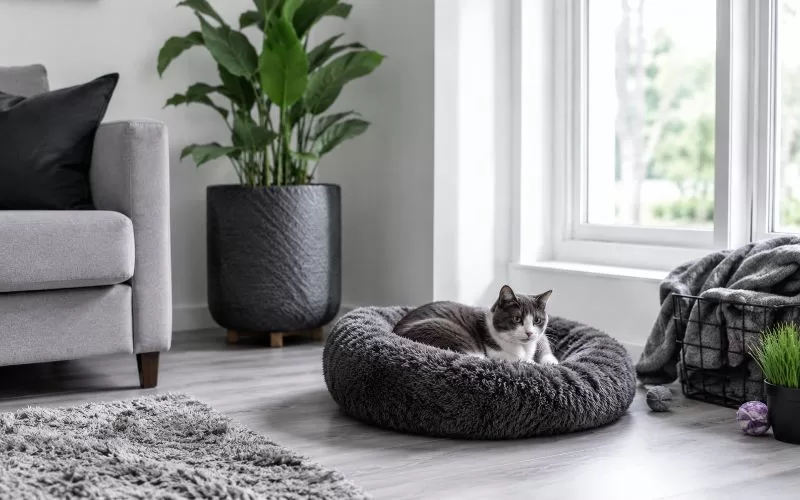
Every pet needs a place that feels like theirs. For dogs, that might be a soft bed in the family room, a crate they are comfortable using, or a quiet corner where they can settle down when the house is busy. For cats, it might be a cozy blanket, a tucked-away spot, or a quiet perch where they can watch everything without being right in the middle of it.
I have found that pets usually tell you where they feel most comfortable if you pay attention. Some want to be close to the family but not underfoot. Others prefer a quieter room, especially when visitors come over or the house gets noisy. This is one reason a simple cat-friendly home routine can make such a difference for cats, especially when it includes predictable resting spots, feeding times, and quiet spaces they can count on.
Your pet’s safe space does not need to be fancy. It just needs to give them a place where they can rest without being moved, bothered, or crowded.
A Practical Food and Water Station
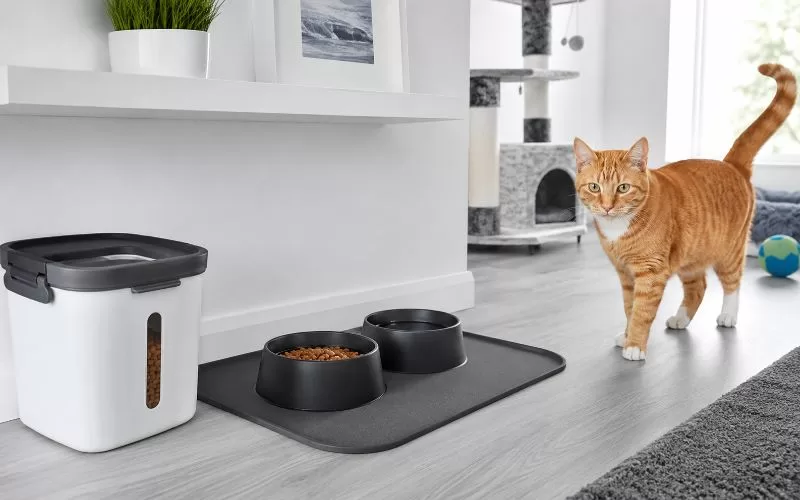
A well-planned feeding area is one of the most useful pet-friendly home essentials because it keeps meals, hydration, and daily cleanup easier to manage. Food and water bowls should be easy for your pet to reach, easy for you to clean, and placed somewhere that does not turn into a constant tripping hazard.
For dogs, I like a feeding setup that keeps bowls steady and helps contain the everyday mess that comes with meals and water breaks. A washable mat under the bowls can protect the floor from splashes, spills, and food crumbs. For cats, it is best to keep food and water away from the litter box, and some cats also prefer their water placed separately from their food.
A simple feeding area may include:
- Non-slip food and water bowls
- A washable mat underneath
- Fresh water available throughout the day
- A food storage container with a secure lid
- A feeding schedule that works for your pet’s needs
A small, organized feeding station can make daily care feel easier while keeping the area cleaner for everyone.
Pet Gates, Cabinet Locks, and Cord Safety
A safe pet-friendly home starts with removing the things pets can chew, swallow, knock over, or get into. This is especially true with puppies, curious dogs, kittens, and pets who think every closed cabinet is a personal challenge. Even older pets can get into things when they are bored, anxious, or following an interesting smell.
Start with the areas your pet can actually reach. Tuck away electrical cords, secure trash cans, keep medications in closed cabinets, and store cleaning products where pets cannot access them. The ASPCA’s guide to poisonous household products is a helpful reference if you are unsure which common items may be unsafe.
I also like thinking about pet-proofing in zones:
| Area | What to Check |
|---|---|
| Kitchen | Trash, pantry items, cleaning products, small dropped foods |
| Bathroom | Medications, razors, hair ties, cleaners |
| Living room | Cords, candles, small décor, chewable items |
| Bedroom | Laundry, shoes, jewelry, charging cords |
| Outdoor access | Gates, screens, plants, pool areas, heat exposure |
Pet gates can be useful even if your pet is well-behaved. They can block off stairs, keep pets away from freshly cleaned floors, or create separation when someone is at the door. Cabinet locks and cord covers are small fixes, but they can prevent bigger problems.
Easy-to-Clean Floors, Rugs, and Furniture
A pet-friendly home should work for the people who live there, too. That means choosing surfaces that can handle fur, paws, litter tracking, muddy feet, the occasional accident, and daily cleaning without making the house feel less like home.
A pet-friendly home can still feel stylish and put-together, but the materials need to work with real life. In busy areas, washable rugs, durable fabrics, and surfaces that are easy to wipe down usually make more sense than pieces that show every paw print, spill, or bit of fur.
This is where a few small decisions can save a lot of frustration:
- Use washable rugs or indoor/outdoor rugs in pet-heavy spaces.
- Keep a lint roller or pet hair tool near the rooms you use most.
- Choose throws or blankets for your pet’s favorite lounging spots.
- Keep towels near the door for rainy days or wet paws.
- Use baskets or bins to keep toys from taking over the room.
The best setup is one that still feels like your home, just with a little more thought for the animals who live there.
Toys, Scratching Posts, and Enrichment
Pets need more than a place to sleep. They also need things to do. Enrichment helps keep pets active, engaged, and less likely to create their own entertainment by chewing shoes, scratching furniture, or getting into things they should leave alone.
Dogs may enjoy chew toys, treat puzzles, tug toys, or balls. Cats often need scratching posts, climbing spaces, window views, and toys that encourage stalking and chasing. Birds and small animals also benefit from safe toys, perches, tunnels, and items that encourage natural behavior.
I like rotating pet toys instead of leaving everything out all the time. It keeps toys feeling fresh without constantly buying more. A basket of toys can also keep the room looking neat while still giving pets easy access. Our dogs are spoiled; they currently have two toy boxes and 4 bins tucked away, full of toys.
For dogs who spend time outside, travel, or have a curious personality, safety-focused items can also be part of enrichment and peace of mind. A GPS collar is not a replacement for supervision, but it can be a useful tool for active dogs, especially if your pet spends time in a yard or joins you away from home.
Litter Box and Bathroom Needs
A clean bathroom setup is one of the most important pet-friendly home essentials because it affects your pet’s comfort and your home’s cleanliness. For cats, that means a litter box that is easy to access, large enough to use comfortably, and kept clean. Many cat owners find that having more than one litter box makes the routine easier, especially in a multi-cat home.
For dogs, the bathroom routine may be tied to outdoor access, puppy pads, or a consistent walk schedule. Puppies, senior dogs, and small breeds may need a little more planning. A designated potty routine helps pets understand what to expect, and it helps reduce accidents inside the home.
Smaller pets, birds, and caged animals need regular cage or habitat cleaning. This is not the most glamorous part of pet ownership, but it is one of the most important. A clean habitat helps control odor and keeps your pet’s space more comfortable.
Helpful bathroom-area basics include:
- A litter mat or washable floor mat
- Waste bags or litter disposal supplies
- Enzyme cleaner for accidents
- Easy access to the outdoor potty area
- A regular cleaning schedule
- Good ventilation when possible
Safe Outdoor Access
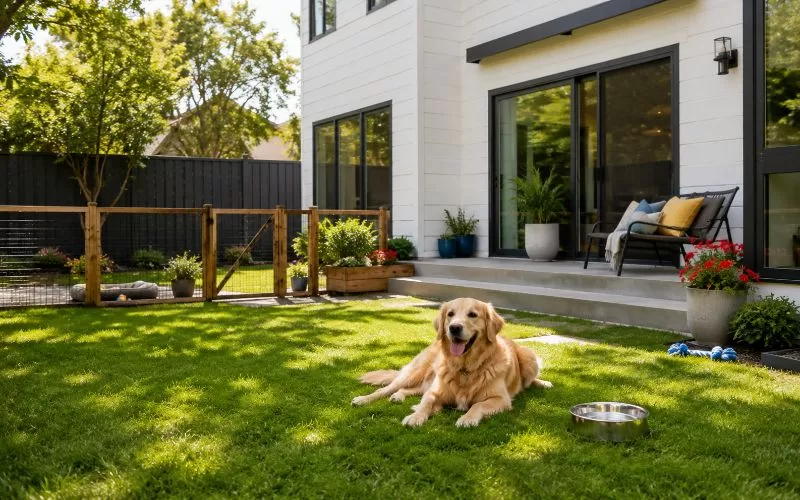
Outdoor space can be wonderful for pets, but it needs to be safe. A fenced yard, shaded patio, screened area, or supervised outdoor routine can give pets fresh air without unnecessary risk. This is especially important in warm climates, where heat, hot pavement, and direct sun can become a problem quickly.
If you have a yard, think of it as part of your overall pet-friendly yard setup by checking gates, fence gaps, safe plants, standing water, hot surfaces, shaded resting spots, and areas where a pet might dig or squeeze through. I like pets to enjoy outdoor space, but I always feel better doing a quick look around first, especially when shade and fresh water are part of the setup.
Air Quality and Odor Control
Air quality matters in a pet-friendly home, especially if anyone in the house is sensitive to dander, dust, pollen, or odors. Pets bring so much love into a home, but they also bring fur, dander, and outdoor particles inside. Regular vacuuming, washable bedding, and good airflow can make a noticeable difference.
An air purifier can be helpful in bedrooms, living rooms, or other areas where pets spend a lot of time. The EPA’s guide to air cleaners in the home is a useful resource if you are comparing filtration, room size, and what air cleaners can realistically do. I would still think of an air purifier as one part of the routine, not a replacement for cleaning.
For everyday odor control, focus on the source first. Wash pet bedding, clean litter boxes regularly, keep food areas wiped down, and vacuum soft surfaces. Scented sprays can make a room smell better for a moment, but a cleaner routine usually works better long term.
A Small Pet First-Aid and Emergency Area
This is not always included in pet-friendly home lists, but I think it belongs there. A basic pet first-aid setup gives you one place to keep important items when something small happens or when you need information quickly.
The AVMA’s pet first aid tips recommend keeping basic first-aid supplies for your pets in your household, and your veterinarian may suggest additional items based on your pet’s health. This does not mean you need a huge emergency cabinet. A small bin with the basics is often enough.
A simple pet emergency area can include:
- Your veterinarian’s phone number
- Emergency vet information
- Poison control contact information
- Copies of vaccine records
- Any current medication details
- Gauze, bandage material, and basic first-aid supplies
- A recent photo of your pet
This is also helpful if you travel with your pets. Having supplies organized at home makes it easier to pack the right items when your pet joins you on trips, instead of starting from scratch every time..
Simple Ways to Keep Your Home Pet-Friendly
A pet-friendly home works best when it changes along with your pets’ routines, ages, and everyday needs. Pets age, routines shift, new furniture comes in, and sometimes the things that worked before no longer fit. A puppy may need gates and chew-proofing, while an older dog may need softer bedding, fewer stairs, or easier outdoor access. A young cat may want climbing spaces, while an older cat may need lower resting spots.
The easiest way to keep your home working well is to look at it from your pet’s point of view every so often. Can they reach what they need? Are there any new hazards? Are their bowls, beds, toys, and bathroom areas still in the best places? Are there items that would make daily care easier?
Some of the best pet-friendly home essentials are not expensive. They are the small, thoughtful choices that make daily life smoother: a clean water bowl, a safe place to rest, a secure gate, a washable rug, a toy that keeps them busy, or a quiet corner when the house feels too active.