Editor’s Note: Personal Trainer Food ceased operations in August 2026. This review reflects my personal experience with the program when it was still available.
Sometimes getting back on track is harder than getting started in the first place. When I started Shibley Smiles in 2010, I was in a pretty good place with my weight. I exercised regularly, paid attention to what I ate, and had already found a routine that worked for me. Somewhere around 2013, I fell out of those habits, and for the next few years I struggled to find something I could stick with for more than a few days.
When I was given the opportunity to try Personal Trainer Food, I decided it was worth a shot. I already knew that eating more protein and fewer carbohydrates had worked well for me in the past, including during a previous 40-pound weight loss. What I didn’t know was whether a delivered meal program would fit into my real life or feel like another diet I couldn’t wait to finish.
Six weeks later, I was still following the program and had lost 19.6 pounds. More importantly, I had finally found something I could stay consistent with.
Personal Trainer Food Wasn’t What I Expected
When I heard “frozen food delivered to your door,” I pictured boxes of traditional frozen diet meals. I expected tiny portions arranged to resemble familiar foods, along with long ingredient lists and meals I could never realistically recreate on my own.
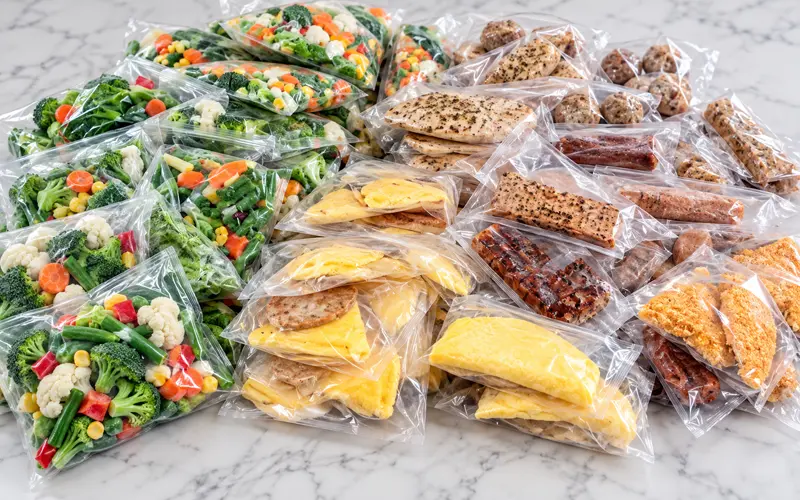
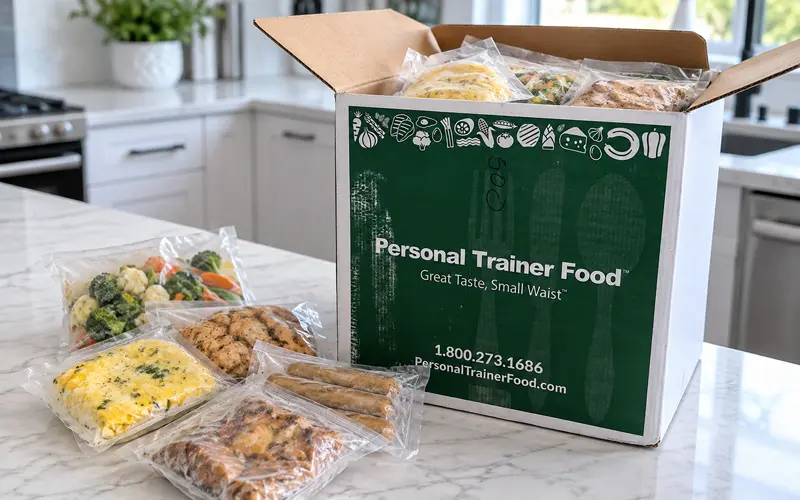
Opening that first 20-pound box changed my impression pretty quickly. Instead of stacks of boxed dinners, I found individual packages of foods I actually recognized: eggs, sausage, chicken, pork, vegetables, and other everyday foods.
That mattered to me because I didn’t just want to lose weight while someone else controlled every meal. Eventually, I needed to know how to eat without having Personal Trainer Food in my freezer. The basic combination of protein and vegetables was something I could easily understand and eventually duplicate myself.
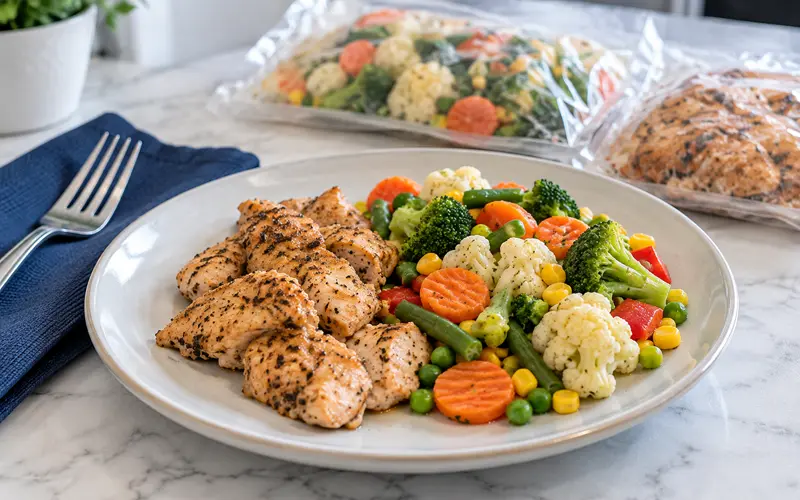
The program centered on a high-protein, lower-carbohydrate approach, which suited me well. Breakfast generally paired eggs with sausage or bacon, while lunch and dinner consisted of a protein and vegetables. There were several choices within each category, so even though the basic structure stayed the same, I wasn’t eating an identical plate every day.
Protein was already something I was trying to prioritize, and Harvard’s Nutrition Source offers a helpful overview of choosing healthy protein foods and looking at the overall quality of protein sources. I had also learned from experience that this style of eating worked well for me. Anyone trying to build meals around protein can make small changes outside of a formal program too, and there are several easy ways to increase protein intake without making every meal complicated.
What I Ate on Personal Trainer Food
One of the things I liked about the program was its simplicity. I didn’t have to spend much time deciding what I was going to eat, which removed one of the easiest ways for me to get off track.
Breakfast might be a plain, cheddar, or Western-style egg option paired with chicken sausage, turkey sausage, maple sausage, or bacon. Lunch and dinner followed the same basic formula of protein plus vegetables, and the plan also allowed additional meat and leafy, non-starchy vegetables when needed.
Two snacks were recommended each day. My routine usually looked something like this:
- Breakfast: egg choice with sausage or bacon
- Morning snack: walnuts, pistachios, or almonds
- Lunch: protein with vegetables
- Afternoon snack: a cheese stick and an apple
- Dinner: protein with vegetables
It wasn’t elaborate, and that was exactly the point. I wasn’t trying to create a different Pinterest-worthy meal three times a day. I needed an eating routine that worked during a normal workweek and didn’t require a lot of preparation.
Choosing the Personal Trainer Food Plan That Worked for Me
At the time, Personal Trainer Food offered several plan options. I liked that because not everyone needs the same amount of help with meal planning.
| Plan | What It Included | Who I Thought It Worked Best For |
|---|---|---|
| Rapid weight loss program | Meals plus additional coaching and support | Someone wanting more structure and accountability |
| 2 Meals a Day | Lunch and dinner | Someone comfortable preparing a high-protein breakfast |
| 3 Meals a Day | Breakfast, lunch, and dinner | Someone who wants nearly all daily meals planned |
| You Choose | A set number of individual menu items selected in any combination | Someone who only wants certain parts of the program |
I chose the three-meal-a-day plan, and breakfast was actually a big reason why. During the week, I didn’t have extra time in the morning to cook eggs and sausage before leaving for work. Having breakfast ready meant I couldn’t use being rushed as an excuse to grab something else.
I could also see where the other options would make sense. If breakfast was already easy for me, the two-meal plan would have covered the harder parts of the day. The You Choose option was especially interesting because I could imagine buying fresh vegetables myself while keeping the convenient proteins and breakfast foods in the freezer.
For where I was at that point, however, having all three meals planned made it much easier to stay consistent.
The Foods I Actually Looked Forward to Eating
By the time I reached six weeks, I definitely had favorites. That was another pleasant surprise because “diet food” isn’t exactly a phrase that usually makes me excited about lunch.
Breakfast became one of my favorite meals. The frittata with maple sausage was my favorite combination. I liked the peppers in the frittata because they gave it more flavor than a plain egg option, and the sweetness of the maple sausage worked well with it.
When it came to vegetables, I still enjoyed basics like broccoli, green beans, and mixed vegetables, but the Omaha Blend and Fiesta Blend were the two I ordered most often. The kidney beans and peas made the Omaha Blend a little different, while I liked the chickpeas in the Fiesta Blend.
My favorite entrées were a little easier to rank:
- BBQ pork — This moved straight to the top because I tend to like a sweeter barbecue flavor.
- Zesty tenders — I love spicy food, and these had enough kick to make them interesting.
- Bacon and cheese sticks — Another option I enjoyed and ordered again.
- Spicy chicken — An easy choice when I wanted something with more flavor.
The zesty tenders even passed the daughter test. She tried them, liked them so much that she asked me to order some for her, and suddenly part of my diet food wasn’t even mine anymore.
Of course, taste is personal. Those were the foods I found myself looking forward to, but having enough choices to figure out what I liked was part of what made the program easier to continue.
Staying on Track Wasn’t Always Effortless
I don’t want to make it sound like six weeks went by without ever wanting something that wasn’t on the plan. Changing eating habits is still changing eating habits, regardless of how convenient the food is.
The first couple of days were the hardest because I was cutting back dramatically on the sugary and high-carbohydrate foods I had been accustomed to eating. Once I got through those first days, however, I noticed a real difference in my cravings.
Friday nights were a good test. I would sometimes pick up dinner for my family, and there I was sitting in the car surrounded by the smell of food I wasn’t eating. Of course I could think, “That smells really good.” What surprised me was that I didn’t feel like I had to have it. I could want something and still choose not to eat it.
That distinction was important for me. For the first time in about three years, I had made it well beyond those first few days when I would normally give up on a new plan.
Week three was a little different. I started thinking about foods I wasn’t eating more often, even though I never went off the program. I knew from experience that my appetite and food cravings tended to change at different times during the month, so recognizing what was happening helped me work through it instead of deciding the program had suddenly stopped working.
Sometimes simply understanding why I am craving something makes it easier to deal with. Having a few practical strategies to manage food cravings can make those tougher days easier without expecting yourself to have perfect willpower every minute of the day.
My Personal Trainer Food Results After Six Weeks
Personal Trainer Food recommended paying attention to how your clothes fit and how you feel rather than relying completely on the scale.
I did not follow that advice.
I weighed myself every week because seeing the numbers move was motivating for me, and during those first six weeks they gave me plenty of motivation:
- Week 1: 5 pounds lost
- Week 2: 2.4 pounds lost
- Week 3: 4 pounds lost
- Week 4: 1.4 pounds lost
- Week 5: 3 pounds lost
- Week 6: 3.8 pounds lost
That brought my total weight loss after six weeks to 19.6 pounds.
Those were my personal results, not something I would expect everyone to experience. The CDC generally describes gradual weight loss of about 1 to 2 pounds per week as a pace that is more likely to be maintained over time, so my six-week result was faster than that general guideline.
The weekly losses weren’t identical, which I expected. There were larger weeks and smaller weeks, but the overall direction kept me motivated enough that after my first 28 days I had already ordered another box and decided to continue.
Seeing progress was only part of it. I was also excited because I had finally stayed with an eating plan long enough to give it a real chance. After several years of struggling to regain the habits I once had, that felt significant.
What Made Personal Trainer Food Work for Me
Looking at those first six weeks, I don’t think there was one magical food or feature responsible for my results. It was the combination of structure and convenience. I didn’t have to figure out breakfast before work, stare into the refrigerator at lunchtime, or make a decision every few hours about what counted as a healthy meal.
The food was already there, portions were already handled, and the meals followed an eating style that I knew worked well for me. At the same time, the food looked enough like normal food that I could see how to carry those habits forward. Protein with vegetables isn’t something that requires a specialized diet program forever, and that was important because my goal wasn’t simply to follow Personal Trainer Food successfully. I wanted to relearn how to make better food choices on my own.
There is also something to be said for finding a routine that feels realistic enough to continue. Motivation comes and goes, which is why building habits that support a long-term fitness journey matters much more to me than finding a plan I can follow perfectly for a week.
After six weeks and 19.6 pounds lost, Personal Trainer Food had given me something I hadn’t had in a while: consistency. I enjoyed enough of the food to keep eating it, the program worked with my schedule, and I could finally picture myself reaching the weight-loss goal that had seemed out of reach for the previous few years.
For me, that made the experience about more than what happened on the scale.