
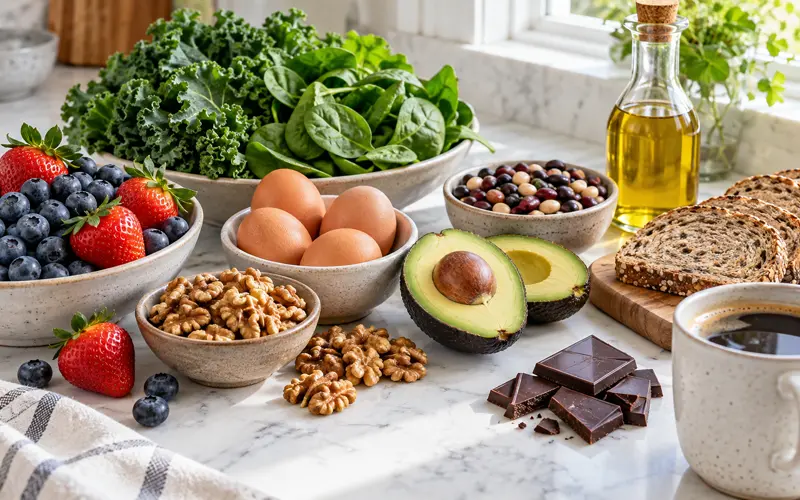
The foods we eat can influence much more than our weight or physical energy. A balanced diet also supplies the nutrients the brain needs to support concentration, memory, communication between brain cells, and long-term cognitive health.
I used to think of “brain food” as a handful of special ingredients that could immediately improve focus. The truth is less dramatic but much more useful: no individual food can prevent memory loss or guarantee a sharper mind.
Research highlighted by the National Institute on Aging has connected greater adherence to the MIND eating pattern with a reduced risk of cognitive impairment. The MIND diet combines elements of the Mediterranean and DASH diets, emphasizing vegetables, berries, whole grains, beans, nuts, lean proteins, and healthy fats.
How Food Supports Brain Health
The brain requires a steady supply of energy and nutrients to function. Omega-3 fatty acids help form cell membranes, antioxidants help protect cells from oxidative stress, and vitamins and minerals contribute to normal nerve and brain function.
Food also affects blood pressure, blood sugar, cholesterol, and circulation. Supporting those areas of health can help protect the blood vessels responsible for delivering oxygen and nutrients to the brain.
The Alzheimer’s Association’s brain-health nutrition guidance recommends balanced meals containing vegetables, lean proteins, and foods that are less processed. That is a more realistic approach than relying on trendy powders, supplements, or a single so-called superfood.
10 Foods That Support Brain Health
1. Berries
Blueberries, strawberries, blackberries, and raspberries contain colorful plant compounds called flavonoids. These compounds have antioxidant and anti-inflammatory properties that may help protect cells throughout the body.
Berries are also easy to use. I can blend them into a smoothie, add them to cereal, mix them into chia pudding, or keep frozen berries available when fresh fruit is expensive or out of season. They also fit naturally into many healthy breakfast ideas.
2. Leafy Green Vegetables
Spinach, kale, collard greens, and other leafy vegetables provide folate, vitamin K, lutein, and beta-carotene. These nutrients support overall health and frequently appear in eating patterns associated with healthier cognitive aging.
A large salad is not the only way to eat greens. Practical options include:
- Blending spinach into a smoothie
- Stirring greens into scrambled eggs
- Adding kale or spinach to soup
- Mixing finely chopped greens into rice or pasta
- Serving roasted chicken over a small bed of spinach
3. Eggs
Eggs provide protein along with choline, a nutrient used by the body to produce acetylcholine. This neurotransmitter is involved in memory, mood, and muscle control. Eggs are also inexpensive, easy to prepare, and suitable for breakfast, lunch, dinner, or a quick snack.
4. Fatty Fish
Salmon, sardines, trout, herring, and mackerel provide the long-chain omega-3 fatty acids EPA and DHA. DHA is especially concentrated in the brain and is an important structural component of brain-cell membranes.
The National Institutes of Health omega-3 fact sheet explains that fish supplies EPA and DHA directly. Walnuts, chia seeds, and flaxseed contain a different omega-3 called ALA, which the body can convert into small amounts of EPA and DHA.
I am not a seafood eater, so plant-based sources are much more realistic for me. Someone who enjoys fish can include it regularly without assuming that eating more will automatically produce greater benefits.
5. Walnuts and Other Nuts
Walnuts provide ALA omega-3 fat, while almonds and hazelnuts are sources of vitamin E. Nuts also contain protein, fiber, and unsaturated fats that can make a snack more satisfying.
I find portioning nuts into small reusable snack bags more convenient than eating directly from a large container. Chopped nuts can also be sprinkled over cereal, oatmeal, fruit, salads, and homemade snack mixes.
Nuts are among several nutrient-dense superfoods that can help make meals more filling, allowing them to support both balanced nutrition and everyday appetite management.
6. Beans and Lentils
Black beans, chickpeas, kidney beans, and lentils provide fiber, protein, folate, magnesium, and slowly digested carbohydrates. The brain depends on glucose for energy, but combining carbohydrates with fiber and protein generally creates a more balanced meal than relying on refined snacks or sugary drinks.
Beans work especially well because they can be used in so many ways:
- Add black beans to rice or a chicken bowl
- Blend chickpeas into hummus
- Stir lentils into soup
- Add kidney beans to chili
- Include beans in wraps, salads, or side dishes
They are also a practical way to increase protein intake throughout the day without depending entirely on meat.
7. Whole Grains
Oats, brown rice, quinoa, barley, whole-grain bread, and whole-grain pasta provide carbohydrates along with fiber and B vitamins. These foods supply energy while generally digesting more gradually than highly refined grains.
Whole grains do not need to replace every refined grain in the kitchen. Mixing brown and white rice, using whole-grain bread for some meals, or adding oats to breakfast can gradually increase variety and fiber.
Carbohydrates can also be useful around exercise. The best food and timing depend on the workout, meal size, and individual tolerance, as explained in this guide to what to eat before a workout.
8. Avocados and Olive Oil
Avocados and olive oil are rich in monounsaturated fats. They can replace some of the saturated fats found in butter, fatty meats, and heavily processed snacks while adding flavor and texture to meals. Avocado works well on toast, in wraps, with eggs, or in grain bowls, while olive oil can be used in dressings, marinades, roasted vegetables, and stovetop meals. A measured olive oil dispenser can make controlling the amount easier without removing healthy fats from the diet.
9. Coffee and Tea
Coffee and tea contain caffeine and plant compounds that may temporarily support alertness and concentration. That familiar morning lift is primarily a short-term effect of caffeine, not proof that coffee can permanently improve memory.
More is not necessarily better. The FDA’s caffeine guidance states that 400 milligrams per day is an amount not generally associated with negative effects for most adults, although caffeine sensitivity varies considerably.
I pay attention to timing because caffeine later in the day can interfere with sleep. An insulated travel mug keeps coffee warm without making another cup simply because the first one became cold.
10. Dark Chocolate
Dark chocolate and cocoa contain flavanols, caffeine, and theobromine. A small serving can be an enjoyable way to finish a meal, but it should be treated as a pleasurable addition to a balanced diet rather than medicine for memory or concentration. Chocolate with a higher percentage of cocoa generally provides more cocoa solids and less added sugar, although the best choice is still one that tastes enjoyable enough to feel satisfying.
The Overall Eating Pattern Matters Most
A healthy brain is not built by eating blueberries once a week or adding turmeric to one dinner. The bigger potential benefit comes from regularly choosing a variety of nutrient-dense foods.
The MIND-style approach commonly emphasizes:
- Leafy green vegetables
- Other colorful vegetables
- Berries
- Beans
- Nuts
- Whole grains
- Fish or other lean proteins
- Poultry
- Olive oil
It also encourages limiting foods that are heavily processed or high in saturated fat and added sugar. Favorite foods do not have to disappear, but they should not consistently crowd out foods that provide fiber, protein, healthy fats, vitamins, and minerals.
A Simple Brain-Supporting Day of Food
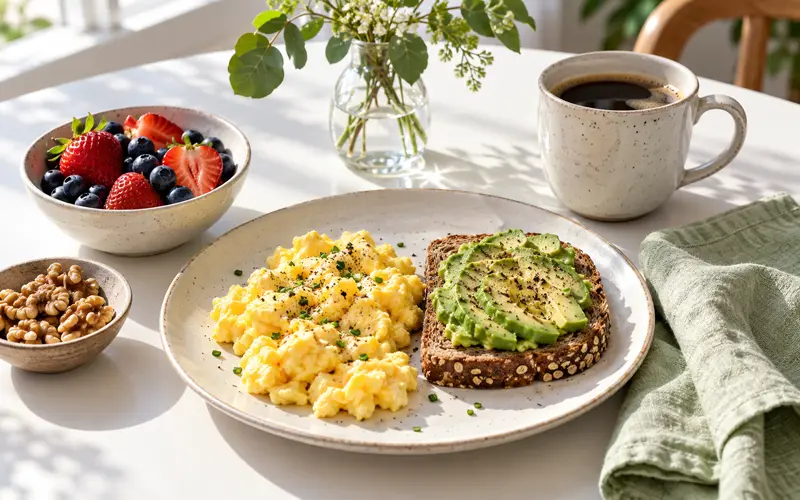
Brain-healthy eating does not have to involve elaborate recipes. Breakfast could be eggs with whole-grain toast and berries. Lunch might include chicken, beans, rice, and avocado, followed by walnuts and a small piece of dark chocolate as an afternoon snack.
Dinner can be just as simple: roasted chicken, a vegetable, and a whole grain. Someone who enjoys seafood could substitute salmon or trout for the chicken.
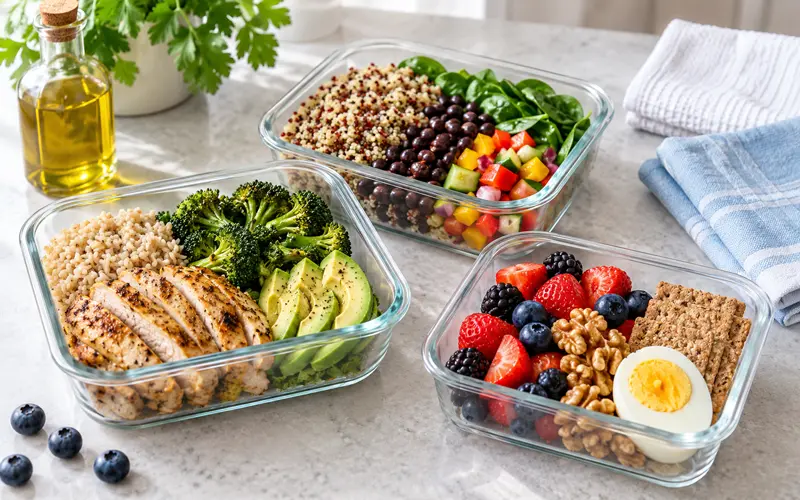
Preparing cooked grains, chopped vegetables, hard-boiled eggs, and portioned nuts in glass meal-prep containers can make balanced choices easier during a busy week. The goal is not to create a flawless menu. It is to keep enough useful ingredients available that meals do not have to be reinvented every day.
Food Is Only One Part of Brain Health
Nutrition matters, but it works alongside regular physical activity, sufficient sleep, social connection, blood pressure management, and mentally engaging activities. The Alzheimer’s Association’s healthy brain habits also include continuing to learn, protecting the head, managing health conditions, and getting enough quality sleep.
When I am sleeping well, exercising consistently, and eating balanced meals, I notice a difference in my everyday energy and ability to focus. That personal experience does not mean a particular food can cure brain fog or prevent disease, but it reinforces how closely daily habits work together.
Small Changes Can Make a Meaningful Difference
Eating for brain health does not require a strict meal plan or a cart filled with expensive specialty products. It can begin with adding berries to breakfast, eating beans more frequently, choosing walnuts for a snack, or replacing some saturated fats with olive oil.
The most useful foods for brain health are the ones that fit naturally into everyday meals. Consistency, variety, and an overall balanced eating pattern matter far more than chasing the newest superfood claim.