Long drives can be one of the best parts of a vacation when the car is organized, everyone is comfortable, and you are not constantly stopping or digging through luggage for something you need. The most useful road trip hacks are often small changes that eliminate the annoying parts of spending hours in the car. A little organization before you pull out of the driveway can make everything from snacks to charging phones easier once you are on the road.
This article focuses specifically on practical tricks that make the drive itself easier rather than creating another road trip preparation checklist. If you are looking for what to pack and how to prepare before leaving, family road trip essentials covers that side of the trip in much more detail.
Pack One Bag That Never Goes in the Trunk
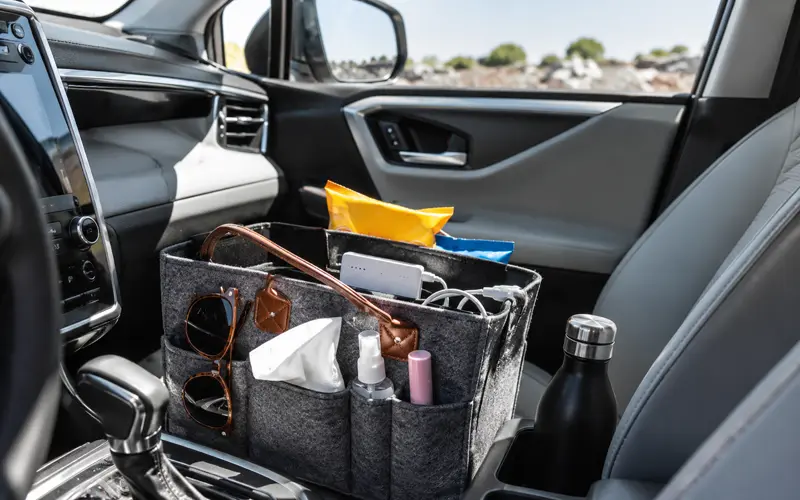
It does not matter how carefully you pack the car if the one thing you need is underneath three suitcases and a cooler. Designate one small bag for everything you are likely to reach for while you are driving. Keep it inside the passenger area where someone other than the driver can easily access it.
What goes inside will depend on who is traveling, but a useful grab-and-go bag might hold:
- Phone chargers and a power bank
- Sunglasses
- Tissues and wipes
- Hand sanitizer
- Medications you may need during the drive
- Lip balm
- A few snacks
- A plastic bag for unexpected messes
The trick is resisting the urge to turn this into another suitcase. It should contain only the things you might realistically need between stops.
Turn One Area Into the Snack Station
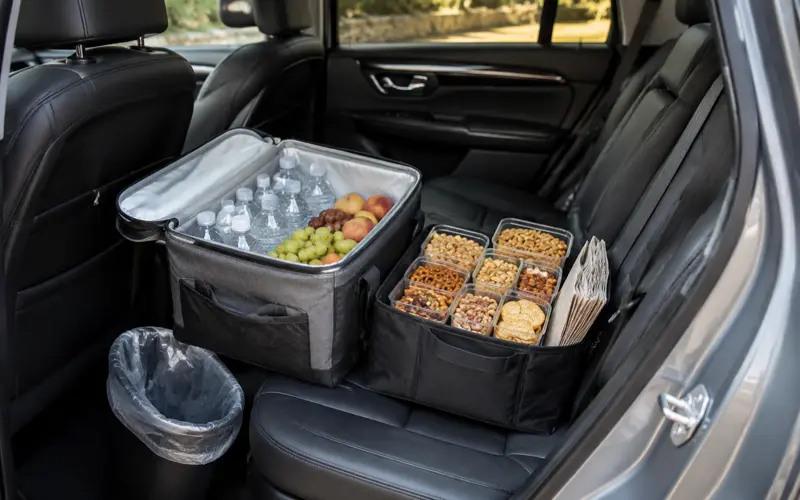
Instead of passing around a giant grocery bag every time someone gets hungry, create one designated place for road trip snacks and drinks. A small cooler paired with a tote or bin works well because cold and shelf-stable foods remain separate, and everyone knows where to look.
Individual portions are especially convenient in the car. Pretzels, crackers, nuts, fruit, cheese sticks, sandwiches, and similar foods are easier to manage than anything requiring plates or utensils. Keep napkins and a small trash bag with the food so wrappers have somewhere to go immediately.
Freezing a few bottles of water before leaving can also help keep a cooler cold early in the drive. As they thaw, they become extra drinking water instead of leaving you with loose ice and melted water in the bottom of the cooler.
Download Everything Before You Leave Wi-Fi
A long drive is not the time to discover that a favorite playlist, movie, audiobook, or navigation map requires a connection. Download entertainment and any maps you may need while you are still at home.
Offline navigation is particularly useful when a road trip takes you through rural areas or anywhere cellular service may be inconsistent. It also gives you a backup if your connection disappears at exactly the wrong moment.
Passengers can download:
| Before the Trip | Why It Helps |
|---|---|
| Offline maps | Navigation can continue through weak-service areas |
| Music playlists | No need to rely on streaming |
| Podcasts | Easy entertainment for long highway stretches |
| Audiobooks | One download can fill several hours |
| Movies or shows | Useful entertainment for passengers |
| Games | Helps avoid downloads using cellular data |
For families, alternating digital entertainment with easy games to play during a road trip can keep a long drive from becoming hours of everyone staring at separate screens.
Create a Charging Zone
Charging cords have an impressive ability to disappear underneath seats. Before leaving, decide where devices will be charged and put the necessary cables there instead of letting everyone bring loose cords into the car.
A multi-port car charger can reduce the number of adapters competing for available outlets, while a power bank provides backup power when passengers are using more devices than the vehicle can accommodate. Labeling similar-looking cables can also prevent the inevitable debate over whose charger is whose.
Keep charging equipment away from the driver’s feet, gear selector, pedals, and anything else where loose cables could become a distraction.
Combine Your Stops
Stopping for gas, then realizing 20 minutes later that someone needs a restroom, followed shortly by someone else wanting food, can add a surprising amount of time to a road trip. When possible, combine several needs into one stop.
Before getting back on the highway, make a quick mental check: gas, restroom, food, drinks, trash and stretching. It does not mean everyone has to follow a strict schedule, but taking care of several things at once can prevent repeated exits.
Regular breaks still matter. The National Highway Traffic Safety Administration recommends allowing enough time during longer trips to stop, stretch, eat, and change drivers or rest when someone becomes drowsy.
Keep the Driver’s Space Almost Empty
Organization matters throughout the vehicle, but the driver’s area should be the least cluttered part of the car. Sunglasses, a drink and perhaps one charging cable may be all that needs to be within reach. Everything else can stay with a passenger or in an organizer.
Set navigation, music and other controls before moving whenever possible. If something needs changing during the drive, let a passenger handle it or wait until you can safely stop. NHTSA considers activities such as adjusting navigation or entertainment systems forms of distracted driving when they take attention away from driving.
Pack an Overnight Bag Separately
This hack becomes particularly useful on multi-day road trips. If you are stopping at a hotel for one night before continuing to your final destination, there is no reason to unload every suitcase.
Pack one small overnight bag with pajamas, toiletries, medications, clean clothes, and anything else you need for that evening and the following morning. Put it somewhere accessible when loading the vehicle.
If everyone needs separate clothes, packing cubes can accomplish the same thing inside one shared overnight bag. Keeping the rest of your luggage packed saves time both when checking in and when getting back on the road the next morning. Using a few space-saving suitcase packing techniques can make this even easier when several people’s belongings need to fit into the vehicle.
Give Trash a Home From the Beginning
Do not wait until cup holders are full of wrappers to decide where the trash goes. Put a small car trash container or lined bag somewhere passengers can reach it before the trip begins.
Keep a few replacement bags underneath the liner so you can empty it during fuel stops and start fresh. Paper towels or wipes stored nearby also make quick cleanups easier.
Use an Empty Tote for Everything You Pick Up
Most vehicles seem to contain more stuff on the trip home than they did when they left. Souvenirs, jackets, brochures, leftover snacks, and random purchases can quickly spread throughout the car.
Pack one empty collapsible tote at the beginning of the trip and use it for anything that does not already have a designated place.
- Souvenirs
- Extra snacks
- Jackets
- Brochures
- Small purchases
- Loose travel items
When you get home, you have one bag of miscellaneous items to carry inside instead of making repeated trips back to the car.
Photograph Information You May Need
Before leaving, take screenshots of hotel details, reservation numbers, parking instructions, attraction addresses, or anything else you may need when cell service is weak. It takes only a few seconds and can save you from searching through emails or websites when you are already tired from driving.
Make the Back Seat Self-Sufficient
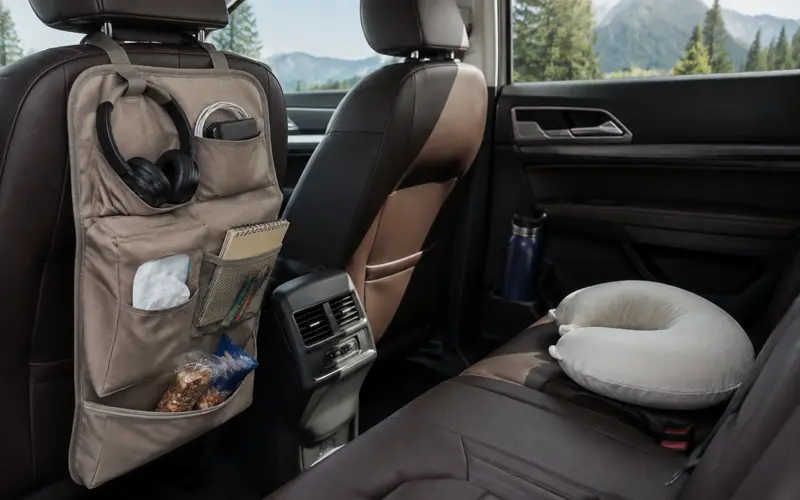
When passengers can reach what they need, the driver does not have to become the car’s snack distributor, entertainment director, and lost-item finder.
| Keep Within Reach | Why It Helps |
|---|---|
| Headphones | Keeps entertainment from disturbing everyone |
| Charging cables | Reduces repeated requests for devices |
| Tissues and wipes | Makes small messes easier to handle |
| Activities | Gives passengers something to do |
| Snacks | Prevents unnecessary stops |
A seat-back organizer or small passenger bin works well as long as it does not interfere with seat belts or child restraints.
Do Not Try to Hack Driver Fatigue
There are plenty of clever ways to make a road trip easier, but staying awake behind the wheel is not something to solve with a trick.
NHTSA says adequate sleep is the primary protection against drowsy driving. If you become sleepy during a long drive, stop somewhere safe rather than trying to push through until the next destination. (nhtsa.gov)
Let the Drive Be Part of the Trip
Saving time does not mean eliminating every stop. One of the advantages of traveling by car is having the freedom to pull over when you find something interesting along the way.
A scenic overlook, unusual roadside attraction, local restaurant, or unexpected small town can become part of the vacation rather than an interruption. Routes such as Pennsylvania’s scenic mountain drives are a good reminder that sometimes the road itself deserves some space in the itinerary.
The best road trip hacks remove small frustrations without turning the journey into a rigid schedule. Keep the things you need accessible, organize the car before it becomes messy, download what you can ahead of time, and combine stops when it makes sense. A smoother drive leaves more room for enjoying where you are going and what you discover along the way.