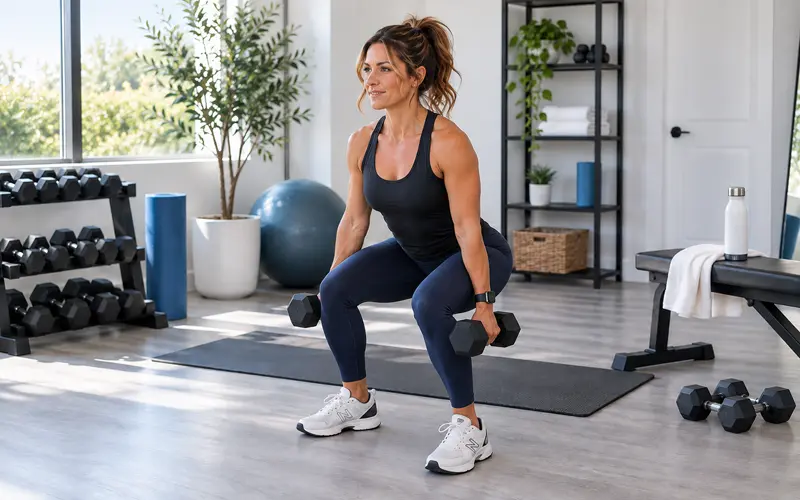
When people search for the best exercises for their body shape, they are often really asking a slightly different question: what should I focus on if I want my proportions to look more balanced?
That makes much more sense to me than the idea that pear-shaped women need one kind of workout while apple-shaped women need another. A squat is still a squat no matter what shape you are, and your body type does not determine whether an exercise is good or bad for you.
Where body shape can be useful is in deciding what you want to emphasize. You cannot completely change your natural structure, and you cannot choose exactly where your body loses fat, but you can build muscle in specific areas. Over time, that can affect your proportions and give you more definition where you want it.
What Body Shape Can — and Cannot — Tell You
Body-shape terms such as pear, apple, hourglass, rectangle, and inverted triangle are simply ways of describing proportions. Genetics, bone structure, muscle mass, and where you naturally store fat all play a role.
| Body shape | You may want to emphasize |
|---|---|
| Pear | Shoulders, back, and upper body |
| Apple | Full-body strength and lower-body development |
| Hourglass | Balanced strength training |
| Rectangle | Shoulders and glutes for more visible curves |
| Inverted triangle | Glutes, hips, and lower body |
That does not mean anyone has to train this way. It simply gives you a starting point if changing your visual proportions is part of your fitness goal.
The American College of Sports Medicine emphasizes consistency and training based on individual goals rather than complicated workout rules. That is ultimately much more important than fitting yourself into a particular body-shape category.
Pear Shape: Adding More Upper-Body Definition
A pear-shaped body generally has hips that are wider than the shoulders, with more fullness through the lower body. If you like those proportions, there is nothing you need to change.
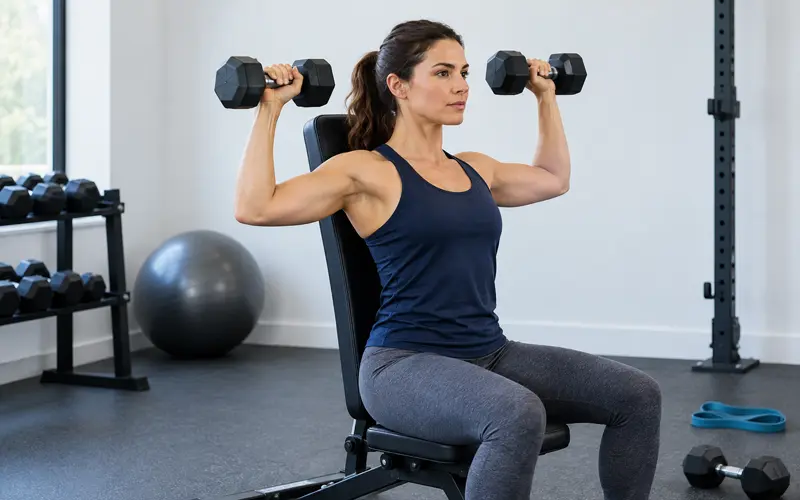
If you would prefer a little more visual balance between your upper and lower body, building the shoulders and back can help create that effect. Good exercises to work into your routine include:
- Shoulder presses
- Lateral raises
- Rows
- Lat pulldowns
- Push-ups
- Chest presses
You would still want to train your legs and glutes because a balanced strength routine matters. The difference is simply that you might give your upper body a little more attention if that is where you want to see more muscle development.
Apple Shape: Think Beyond Ab Exercises
Apple-shaped bodies tend to carry more fullness through the middle, and this is where a lot of questionable fitness advice tends to show up. Doing more crunches will strengthen your abdominal muscles, but it will not specifically remove fat from your stomach.
The American Council on Exercise notes that spot reduction is not possible, so there is no reason to build an entire workout around the midsection.
A better approach is full-body strength training with movements that work several areas of the body, such as squats, rows, presses, deadlifts, glute bridges, and core exercises. If you want to create more shape through the hips and lower body, adding a little extra glute and leg work can make sense.
Cardio can also be part of your routine, but being apple-shaped does not automatically mean you need more cardio than someone with another body shape.
Hourglass Shape: Keep Things Balanced
If your shoulders and hips are fairly similar in width and your waist is more defined, you may not feel the need to emphasize one area more than another.
In that case, a balanced strength routine makes the most sense. Work your upper body, lower body, and core, and let your actual fitness goals determine where you spend more time. You may want stronger legs, better upper-body strength, more endurance, or simply a routine that helps you feel stronger overall.
This is one of those situations where body shape really does not need to complicate anything.
Rectangle Shape: Creating More Visible Curves
With a rectangle or straight body shape, the shoulders, waist, and hips tend to be closer in width. Some people love that naturally straight silhouette and have no reason to change it.
If your goal is to create more visible curves, though, building muscle in a few specific areas can make a difference.
For more shape through the lower body:
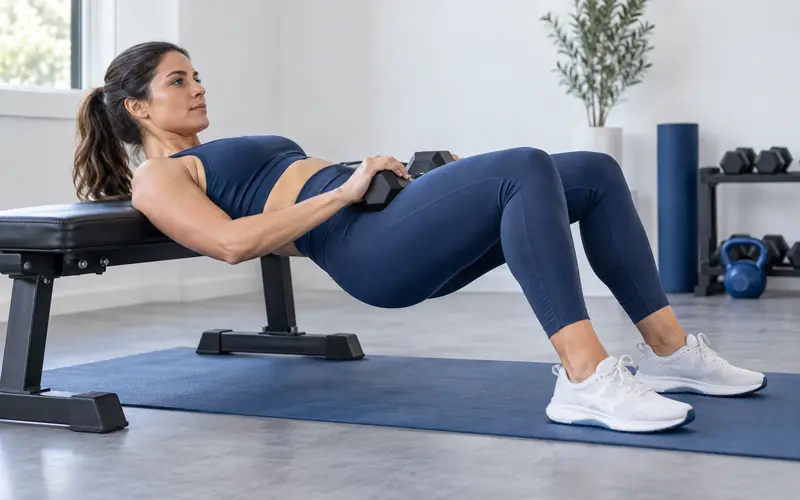
- Hip thrusts
- Romanian deadlifts
- Squats
- Split squats
- Glute bridges
For more upper-body definition:
- Shoulder presses
- Lateral raises
- Rows
You do not have to focus on both at the same time. If building your glutes is your main goal, make that the priority. If you would rather develop your shoulders, put more training volume there.
That is really the point of looking at exercises through the lens of body shape. The label is not telling you what you should do; it simply helps you decide what you may want to emphasize.
Inverted Triangle or Athletic Shape
An inverted-triangle or athletic body shape generally means the shoulders are broader than the hips.
If you want to create more balance between the upper and lower body, you may decide to put more emphasis on the glutes, hips, and legs. Hip thrusts, squats, walking lunges, step-ups, Romanian deadlifts, and split squats are all good choices.
You do not need to stop training your upper body. You are simply giving one area a little more attention based on the proportions you would like to create.
And if you like having strong, broad shoulders, there is absolutely no reason to try to minimize them.
How to Decide What You Should Emphasize
Instead of choosing exercises because a chart says they belong to your body type, ask yourself a few simple questions:
- What area would I actually like to strengthen or develop?
- Am I trying to create more upper-body or lower-body definition?
- Do I want more muscle, better endurance, or simply better overall fitness?
- What exercises do I enjoy enough to keep doing consistently?
- Do I have any injuries or limitations that affect what I should choose?
Those answers are far more useful than the name of your body shape.
A structured exercise routine can also make it easier to see whether you are progressing instead of jumping randomly from one workout to another.
Do Not Ignore the Rest of Your Body
Putting more emphasis on one area does not mean abandoning everything else. If you want broader shoulders, you still need to train your legs, and if building your glutes is the goal, your back, arms, and core still matter. It is really more about adjusting the balance of your workouts than creating an entirely different routine.
Someone who wants more upper-body development might add an extra shoulder or back exercise to strength days, while someone focused on glute growth might include a few more lower-body sets or an additional glute-focused session during the week. The rest of the routine can stay balanced so you are still building overall strength instead of narrowing your workouts too much.
If you are getting back into exercise after some time away, starting with a fitness regimen that feels realistic is more important than trying to perfect every detail from day one. Once the routine feels manageable, you can gradually adjust where you put more emphasis based on the results you want.
Your Goals Matter More Than Your Shape
Body shape can be a useful way to think about where you may want to build muscle, but it should never become a set of rules.
The best exercises are the ones that match your goals, your fitness level, and what you can realistically stick with. Strength training, walking, cycling, swimming, fitness classes, and home workouts can all be part of a good routine depending on what you enjoy and what you want to accomplish.
A sustainable workout plan will always be more valuable than chasing a so-called perfect workout for a pear, apple, hourglass, rectangle, or athletic body shape.
Your natural proportions are simply one piece of the picture. If there is an area you would like to emphasize, choose exercises that build those muscles, keep training the rest of your body, and give yourself enough consistency to actually see what changes over time.