One thing I really wish I had understood when I was younger is how important it is to strengthen your core and glutes. Back then, I probably thought about glute exercises more in terms of how your body looked. As I’ve gotten older, my priorities have definitely changed. I put much more effort into strengthening both areas because I can feel how much they help support my back and make everyday movement easier.
The good news is that working your glutes does not require an overly complicated routine or hundreds of squats every day. A handful of good exercises can challenge the muscles in different ways, and you can continue making those same movements harder as you become stronger. If you are starting over after some time away from exercise, creating a fitness regimen that feels realistic is far more useful than trying to do everything at once.
1. Glute Bridges and Hip Thrusts
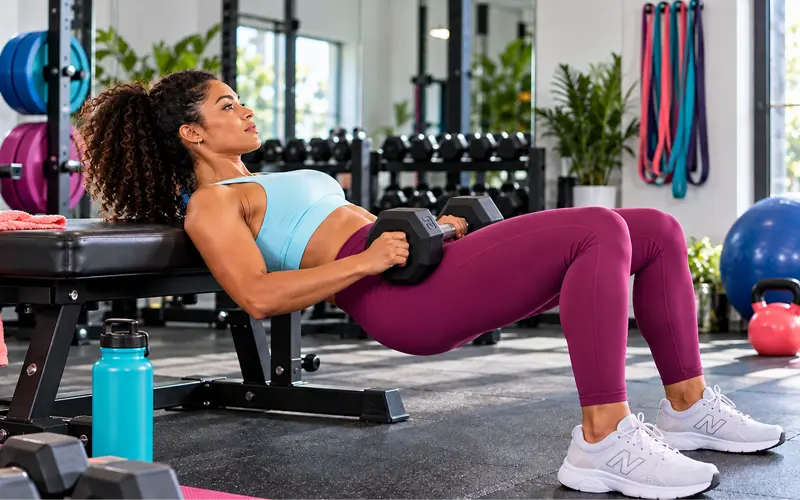
Glute bridges are a great starting point because you can do them right on the floor without much equipment. With your knees bent and feet planted, lift your hips while squeezing your glutes at the top, then lower yourself with control. It is a simple movement, but that does not mean you have to leave it behind once you get stronger.
You can progress the same basic movement in several ways:
- Add a dumbbell across your hips.
- Try a single-leg glute bridge.
- Move to hip thrusts with your upper back supported on a sturdy bench.
- Gradually increase the weight as the exercise becomes easier.
I like exercises that can grow with you like this because you do not have to constantly search for something new. You simply make the movement you already know a little more challenging.
2. Squats
Squats deserve a place in a lower-body workout because they involve much more than your glutes. Your legs, hips, and core all work together, which is part of what makes them such a useful strength exercise.
I also think this is where the old idea of doing an enormous number of squats every day gets things backward. Once bodyweight squats become easy, I would rather add resistance than keep adding repetitions. Holding one dumbbell at your chest for a goblet squat is an easy way to increase the challenge, and you can gradually move up in weight from there.
Your squat does not have to look exactly like someone else’s either. Some people are more comfortable with a slightly wider stance, while others naturally stand a little narrower. What matters most is staying controlled, keeping your feet planted, and using a range of motion that feels comfortable while maintaining good form.
3. Romanian Deadlifts
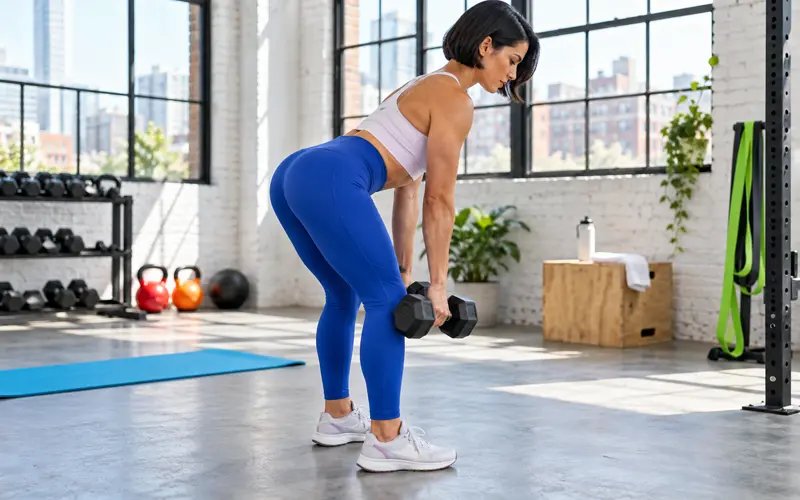
Romanian deadlifts are one of my favorite additions to a lower-body workout because they feel completely different from squats. Instead of lowering your body by bending deeply through the knees, you push your hips backward while keeping a slight bend in your legs. With a dumbbell in each hand, let the weights travel down the front of your legs until you feel the stretch through your hamstrings, then squeeze your glutes as you bring your hips forward again.
This is one exercise where lighter weight is definitely your friend while you learn the movement. It is very easy to turn a Romanian deadlift into something that looks more like a squat if you have not gotten comfortable with the hip hinge yet. The National Academy of Sports Medicine includes the dumbbell Romanian deadlift as an exercise for strengthening the glutes and hamstrings, making it a useful complement to squat-based movements.
4. Reverse Lunges or Bulgarian Split Squats
Not every exercise needs to be the hardest possible version to be worthwhile. Reverse lunges are already a great single-leg exercise, especially once you begin holding dumbbells. Step one foot backward, lower yourself under control, then use the front leg to bring yourself back to standing.
Bulgarian split squats are the more challenging cousin. Elevating your back foot places more of the work on the front leg and adds a much bigger balance component. If you can do them comfortably, they are an excellent option. If your balance becomes the main challenge before your muscles do, there is absolutely nothing wrong with sticking with reverse lunges.
That is something I appreciate more now than I probably would have years ago. Harder is not automatically better. I would rather perform a movement well and feel the muscles doing the work than struggle through a more advanced variation just because it looks impressive.
5. Step-Ups
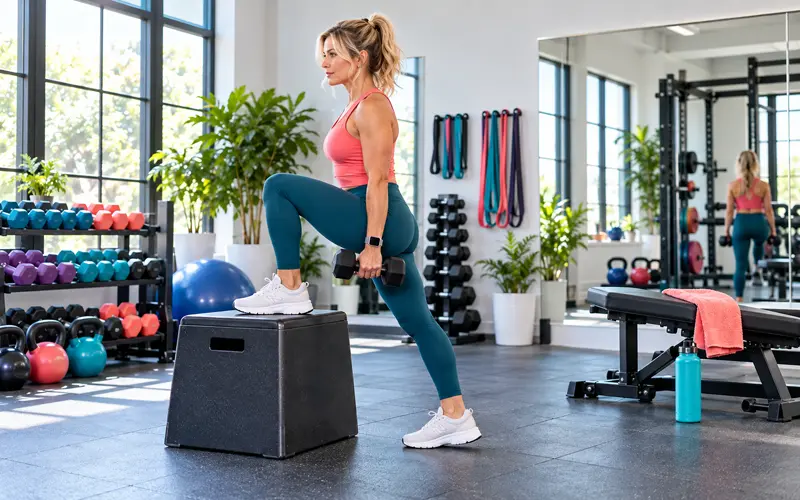
Step-ups are simple, practical, and surprisingly effective. Place your entire foot on a stable step or bench and push through that leg to bring yourself up, trying not to use the trailing foot to launch yourself onto the platform.
The easiest ways to make step-ups harder are to increase the height of the platform or hold dumbbells at your sides. Just make sure the step is not so high that you have to twist, push off excessively, or use momentum to get to the top.
I appreciate exercises like this much more now because their usefulness goes beyond a workout. Stronger glutes and legs support the kinds of movements we make all day long—climbing stairs, getting up from lower positions, and simply moving around more comfortably.
You Don’t Need Every Exercise in Every Workout
One of the easiest ways to make a workout feel overwhelming is to think you have to squeeze every good exercise into a single session. You don’t. In fact, rotating through them gives you plenty of variety without turning lower-body day into an hour-long event.
For example, one workout might be:
- Goblet squats
- Romanian deadlifts
- Glute bridges
Then another lower-body workout could include:
- Reverse lunges
- Step-ups
- Hip thrusts
The American Council on Exercise also recommends using different types of movements when training the glutes, including squats, lunges, step-ups, bridges, Romanian deadlifts, and split squats.
The part that matters is continuing to challenge yourself. That may mean adding a little more weight, doing a few more repetitions, improving your range of motion, or moving from an easier variation to a harder one. You do not need to change your entire workout every few weeks just for the sake of doing something different.
If you are trying to put a little more emphasis on one particular area, choosing exercises based on the muscles you want to focus on can help you adjust your routine without ignoring the rest of your body.
The Reason I Look at Strength Differently Now
When I was younger, I never really thought about training my glutes or core because they might help me feel better as I got older. I wish I had. Now those are two areas I make a conscious effort to strengthen because supporting my back and staying strong matters much more to me than chasing a particular body shape.
That does not mean every workout has to be intense. I have learned that being consistent and continuing to build strength over time is much more important than completely wearing yourself out. Some days you may lift heavier, while other days simply getting the workout done is a win.
Finding a routine you can actually maintain matters, which is also why staying motivated on your fitness journey often has less to do with finding the perfect workout and more to do with building habits you can stick with.