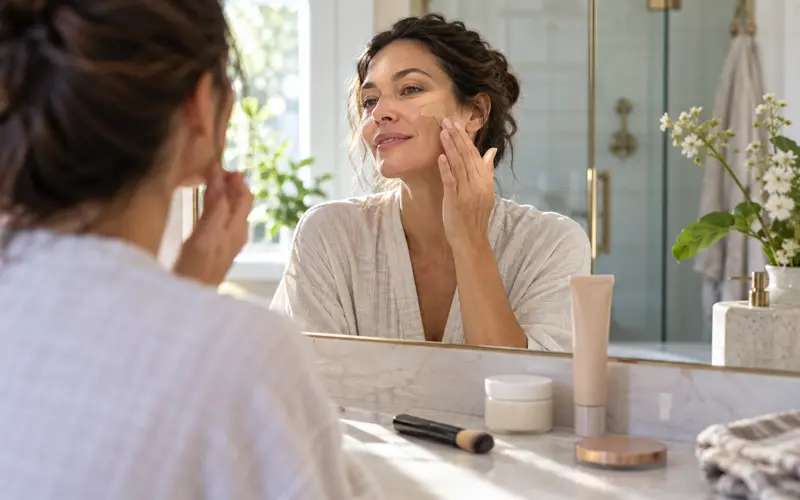
There was a time when sunscreen and makeup lived in separate corners of the bathroom cabinet. Sunscreen was the sensible step: necessary, often a little chalky, and not always elegant under foundation. Your base products did the aesthetic work afterward, smoothing tone and texture while trying not to disturb the SPF beneath.
That divide is changing. Modern tinted sunscreens are becoming more sophisticated, and for many people, they can realistically replace a light foundation, skin tint, or primer on everyday days. Not for every skin type, not for every occasion, and not every formula will get it right. But when it works, it simplifies your routine without compromising one of the most important steps in skin health.
Why the “SPF as Base” Idea Has Taken Off
The shift makes sense when you look at how people actually want to wear makeup now. Heavy, full-coverage foundation has not disappeared, but everyday beauty has moved toward skin that looks like skin. Many consumers want breathable coverage, a natural finish, and fewer layers that can pill, crease, or feel uncomfortable by midday.
At the same time, awareness around daily sun exposure has improved. We now understand that UV damage is cumulative, and it is not only a beach-day concern. UVA rays, which contribute significantly to premature aging and pigmentation, can penetrate clouds and windows. That means your weekday commute, lunch break, or time spent near a bright window can all contribute to exposure.
Daily sunscreen is also one of those habits that fits naturally into a broader realistic skincare routine rather than something that should only come out for vacations and beach days.
A tinted sunscreen sits neatly at the intersection of these priorities. It offers daily UV protection while evening out the look of redness, dullness, or uneven tone. Used well, it can make the morning routine feel less like a stack of steps and more like a streamlined approach to both skincare and makeup.
What Makes a Sunscreen Work as a Base?
Not every tinted SPF can replace makeup. Some offer minimal pigment, some leave a greasy film, and others oxidize or settle into texture.
The best candidates tend to offer a combination of:
- A comfortable finish that works with your skin type
- Enough tint to subtly even the complexion
- Broad-spectrum sun protection
- A texture that layers well with skincare and makeup
- A shade that blends naturally without requiring you to use less product
Coverage Should Be Sheer, Not Masking
A sunscreen base is not meant to behave like stage makeup. Its strength is in softening rather than concealing. Think of it as reducing contrast: calming the appearance of redness, taking the edge off pigmentation, and making skin look more even overall.
This matters because sunscreen needs to be applied generously. If a tinted SPF is too pigmented, people naturally use less to avoid looking overdone. That can compromise protection. A well-balanced formula gives enough tint to flatter the complexion while still allowing you to apply an adequate amount.
If you are exploring this category, it is worth looking at shade flexibility, finish, and ingredients rather than tint alone. You can discover complexion-friendly sun protection by comparing products designed specifically to combine daily SPF with a more polished skin appearance.
The Application Rule People Often Miss
The biggest mistake with sunscreen-as-base is applying it like foundation. A pea-sized amount may make the skin look good, but it is unlikely to provide the labeled level of protection.
A commonly used guideline is the “two-finger rule” for estimating sunscreen for the face and neck, although the exact amount can vary depending on face size and product texture. The important part is applying enough product to provide the protection stated on the label.
Once applied:
- Spread the sunscreen evenly over the face and neck.
- Give it several minutes to settle.
- Look at where you actually need additional coverage.
- Use concealer strategically instead of adding foundation everywhere.
A small amount around the nose, under the eyes, or on blemishes can keep the overall look fresh while preserving the lightweight benefit of your SPF base.

Choosing the Right Finish for Your Skin
A tinted sunscreen only feels like a good base if the finish suits your skin. This is where many people go wrong: they choose based on shade alone and ignore texture.
Oily or Combination Skin
Look for words like “matte,” “soft matte,” “oil-control,” or “non-comedogenic.” Gel-cream or fluid textures often sit better than richer creams. If you tend to shine by midday, a light dusting of powder through the T-zone can help without turning the skin flat.
Dry or Mature Skin
A satin or radiant finish may be more flattering. Dry skin can make pigment catch around texture, so hydration underneath matters. A simple moisturizer applied a few minutes before SPF can improve blendability and prevent patchiness.
Your sunscreen also does not have to work alone. Small changes to your routine, especially when the weather changes, can make a noticeable difference in how makeup and skincare sit on the skin. My summer beauty tips for staying cool and fresh include the same idea of adjusting products rather than piling on more layers.
Sensitive or Redness-Prone Skin
Mineral filters such as zinc oxide or titanium dioxide can be an option for reactive skin, although tolerance varies from person to person.
Tinted mineral sunscreens can be particularly useful because iron oxides may provide additional defense against visible light, which has been associated with pigmentation concerns, especially in deeper skin tones.
What About SPF in Foundation?
Makeup with SPF can provide an additional layer of protection, but it should not automatically replace dedicated sunscreen.
The issue is quantity. To reach the SPF stated on the foundation label, you would generally need to apply considerably more foundation than most people normally wear.
Tinted sunscreen reverses the logic. It starts as sun protection and borrows some of the cosmetic benefits of makeup. That makes it a more practical option for daily use, provided you apply enough.
Sun exposure is also only one part of the picture when it comes to protecting the appearance of your skin. Everyday habits can add up over time, which is why paying attention to habits that may contribute to skin aging can be just as important as choosing the right products.
A Simple Morning Routine
You do not need a complicated regimen. In fact, fewer layers often help tinted sunscreen sit better.
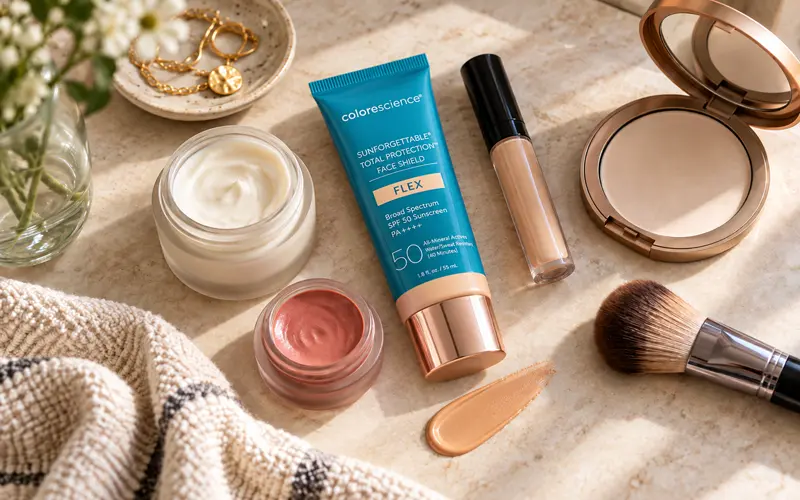
A practical morning routine can be as simple as:
- Cleanse or rinse, depending on your skin’s needs
- Apply serum or moisturizer if desired
- Use a generous layer of tinted sunscreen
- Let it settle for several minutes
- Add concealer where needed
- Finish with a little powder, blush, or other makeup if desired
That settling time is easy to overlook. Applying makeup immediately on top can disturb the sunscreen layer before it has had a chance to set. Giving it a few minutes can also help your finished base look smoother.
The Reapplication Question
Reapplication is still important, especially if you are outdoors, sweating, swimming, or spending extended time in strong sunlight. That can feel trickier when your sunscreen is also functioning as your base.
For predominantly indoor days away from direct sunlight, exposure may be lower, but extended time near windows or outdoors changes the equation.
For touch-ups, some people use:
- A tinted SPF compact
- A sunscreen stick
- A lightweight sunscreen mist
- Another thin layer of their original sunscreen when practical
No method is perfect for every situation. Whatever format you choose, remember that you still need to apply enough product to provide meaningful protection.
Sunscreen and Makeup Can Work Together
A sunscreen that doubles as your base is not simply a beauty shortcut. Done properly, it can make daily sun protection easier to incorporate into a regular routine while still giving skin a calm, even, naturally polished appearance.
The best formulas respect both sides of the job: they provide reliable SPF while offering enough cosmetic benefit that you are happy to wear them consistently.
Ultimately, the most useful sunscreen is one you will apply generously and use regularly. If a tinted formula makes that easier while reducing the number of products you need in the morning, it may deserve a permanent place in your routine.