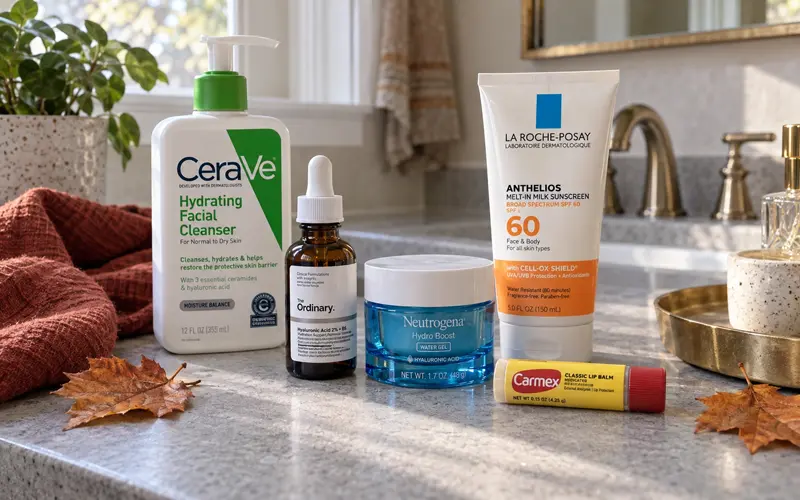
Fall in Florida does not arrive with an immediate blast of cold air. Most days are still warm, and sometimes it barely feels like the season has changed at all. My skin usually notices the difference before the weather feels dramatically different.
After months of heat, strong sun, humidity, and air conditioning, my skin may start feeling drier or more sensitive. When that happens, I make a few thoughtful adjustments while keeping the basics that already work for me.
Since I use tretinoin and red light therapy as part of my skincare routine, I am especially careful about adding new products. My goal for fall is comfortable, hydrated skin, not a routine filled with unnecessary steps.
1. Use a Gentle Cleanser
Cleansing should remove sunscreen, makeup, oil, and the buildup of the day without leaving skin feeling stripped. When my face feels tight immediately after washing it, I usually take that as a sign that my cleanser is no longer a good match for what my skin needs.
During drier weather, the American Academy of Dermatology recommends looking for gentle, moisturizing cleansers and avoiding formulas containing alcohol, which can contribute to dryness. I also use lukewarm water and skip aggressive scrubbing. Clean skin should feel fresh, not uncomfortable.
2. Add Moisture Gradually
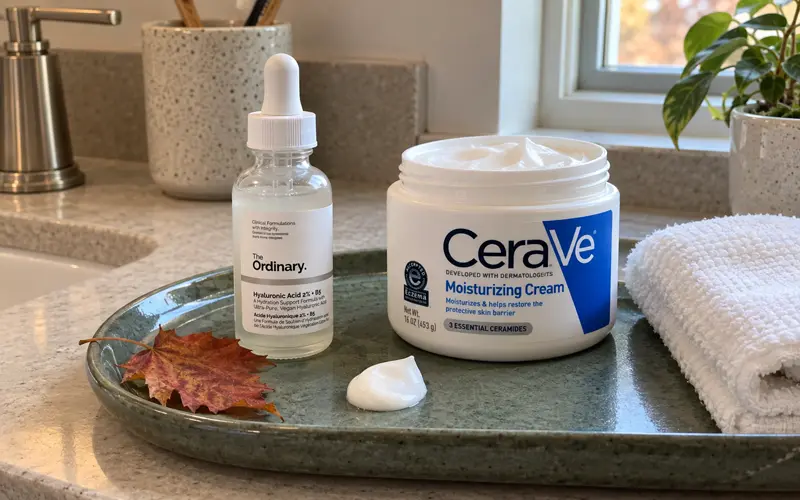
The lightweight moisturizer that works well through a humid Florida summer may not provide enough hydration in the fall. I usually make a gradual change instead of jumping directly to the heaviest cream available. Sometimes applying my regular moisturizer a little more consistently is enough. Other times, I need a richer formula at night or only on the areas that feel dry.
Creams tend to provide more moisture than lotions, while ointments create an even heavier protective layer. The AAD offers helpful guidance for choosing a moisturizer for different skin types, including oily and combination skin. A heavier product is not automatically better if it leaves skin feeling greasy or contributes to breakouts.
3. Apply Moisturizer Before Skin Completely Dries
Timing can make a difference without adding another product to the routine. After cleansing or showering, I gently pat my skin and apply moisturizer while it is still slightly damp. This helps hold onto some of the water already on the skin.
I use the same approach on my hands, arms, legs, and other areas that tend to become dry. Aloe vera can be used on the skin as a soothing option, although even natural ingredients should be patch-tested because they can cause irritation.
4. Be Careful With Exfoliants and Active Ingredients
Fall is often described as the ideal time to start using exfoliating acids, retinol, and stronger treatments. That does not mean every active ingredient needs to be added at once.
Because I already use prescription tretinoin, I pay attention when my skin starts feeling unusually dry, sensitive, or irritated. Adding a scrub or exfoliating acid on top of an established treatment can be too much. On those days, I keep things simple and focus on gentle cleansing, moisturizer, and sunscreen.
I also avoid pushing through significant irritation just because a product is supposed to produce results. Prescription treatments should be used according to the directions provided by a dermatologist or other healthcare professional. Persistent burning, peeling, redness, or discomfort is a reason to ask for professional guidance.
5. Keep Sunscreen in the Routine
Sunscreen does not become optional when summer ends, especially in Florida. The AAD recommends using a broad-spectrum, water-resistant sunscreen with an SPF of 30 or higher on exposed skin. The face, neck, ears, chest, and hands are easy areas to miss. The FDA’s sun-protection recommendations also include seeking shade and wearing protective clothing, sunglasses, and a wide-brimmed hat. Sunscreen should be reapplied as directed when spending extended time outdoors, swimming, or sweating.
6. Give Dry Areas Extra Attention
My lips and hands often become dry before I notice a major change anywhere else. Instead of waiting until they feel uncomfortable, I keep lip balm and hand cream where I am likely to use them.
A few areas that may need additional moisture during the fall include:
- Lips
- Hands and cuticles
- Elbows
- Knees
- Feet and heels
- Neck and chest
A thicker body cream after showering can help prevent that dry, tight feeling, while fragrance-free formulas may be a better choice when skin is already sensitive. Washing with excessively hot water and neglecting the neck and hands are also habits that can age skin, so I try to moisturize those easy-to-miss areas consistently.
7. Take a Closer Look After Summer
Months of strong sun and outdoor activities can leave skin feeling rough, dehydrated, or uneven. Fall gives me a natural reminder to take a closer look at any changes I may have overlooked during the summer.
Dark spots and dryness are often cosmetic concerns, but a skincare product cannot diagnose a changing mole or unusual growth. New spots or areas that change, itch, bleed, or do not heal should be evaluated by a dermatologist.
8. Consider the Air Inside Your Home
Outdoor weather is only one part of seasonal skin changes. Air conditioning continues running through much of the Florida fall, and indoor air can leave my skin feeling dry even when it is still humid outside.
Dry indoor air can sometimes leave skin feeling tight or uncomfortable. When I began using a humidifier and purifier at home, I became more aware of how much indoor air can affect everyday comfort. Humidifiers need fresh water and regular cleaning according to the manufacturer’s directions to prevent unwanted buildup.
9. Stick With the Basics
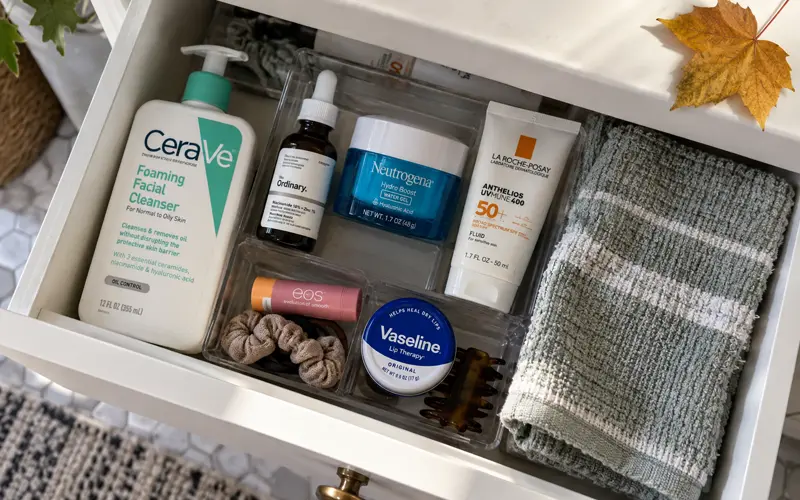
A useful fall skincare routine does not need to include ten products just because an article contains ten tips. Most days, the basics matter most: gentle cleansing, moisturizer, sunscreen, and any treatments that have already earned a place in the routine.
Following consistent daily skin care steps also makes it easier to recognize whether a new product is helping. When several things change at once, it becomes difficult to identify what caused an improvement or a reaction.
10. Let Your Skin Guide the Seasonal Changes
There is no single date when everyone needs to switch to a fall routine. Someone experiencing cold, dry weather may need heavier products much sooner than someone living through a warm South Florida autumn.
I usually rely on a lightweight summer beauty routine to manage Florida’s heat and humidity, then gradually add more hydration as fall arrives. I keep sunscreen and gentle cleansing in place, using a richer moisturizer when my skin feels dry and lighter layers when the warmer weather returns.
The best approach is to notice how the skin feels and respond without changing more than necessary. A few seasonal adjustments can help maintain comfortable, hydrated, healthier-looking skin throughout the fall.