
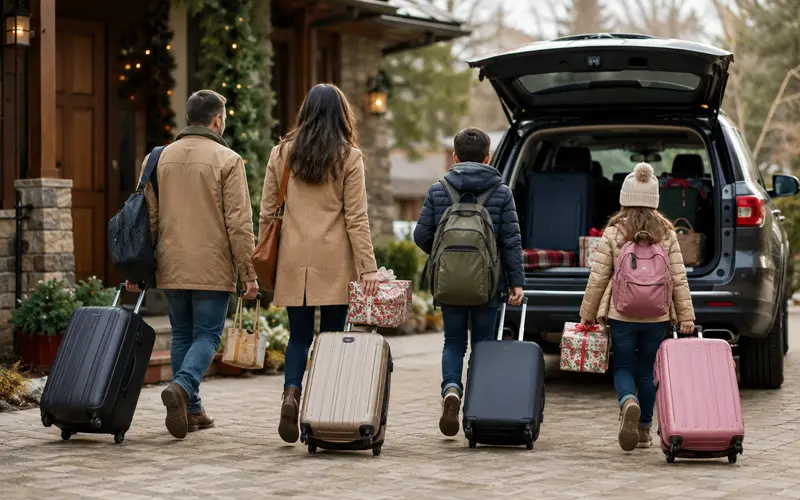
Traveling during Thanksgiving and Christmas can be one of the busiest times of the year, with crowded airports, packed highways, limited flight choices, and winter weather all capable of changing plans quickly. Holiday travel takes a little more preparation than an ordinary vacation, especially when family gatherings or celebrations leave very little flexibility in your schedule. Planning ahead does not guarantee that everything will go perfectly, but it can make unexpected problems much easier to manage.
The best holiday travel tips are often the simplest: give yourself more time, stay flexible, keep essentials close, and think through potential delays before leaving home. Whether you are flying across the country for Christmas or driving a few hours for Thanksgiving dinner, a little preparation can help you spend less time worrying about the journey and more time enjoying the holiday.
Plan Holiday Travel Earlier Than an Ordinary Trip
Thanksgiving and Christmas create travel demand within relatively short windows, so waiting until the last minute can leave you with fewer choices for flights, hotels, rental cars, and convenient departure times. Start comparing options as soon as you know where you are going, particularly if your travel dates cannot change.
Price matters, but it should not be the only consideration. A slightly more expensive nonstop flight or a hotel closer to where you need to be may save hours of travel time during an already busy holiday week. When comparing airfare and accommodations, balancing convenience with the strategies used to save money on flights and hotels can help keep the overall trip within budget without automatically choosing the cheapest option.
If your schedule has some flexibility, compare:
- Flights one or two days before and after your preferred dates
- Early-morning departures versus evening flights
- Nonstop flights versus itineraries with connections
- Nearby airports when they are reasonably convenient
- Hotel rates for slightly longer or shorter stays
A small change to the itinerary can sometimes make a surprisingly large difference during a busy holiday week.
Choose Travel Times With Crowds in Mind
The days immediately surrounding Thanksgiving and Christmas are popular because most travelers are trying to maximize limited vacation time. Leaving a little earlier or returning a little later can help you avoid some of the heaviest crowds, although there is no completely quiet travel day during the holiday season.
Flying early in the day can also provide more options if something goes wrong. Weather, mechanical issues, and airport congestion can create delays that build throughout the day, while an early departure leaves more time to find another flight if yours is significantly delayed or canceled.
For air travel, I also prefer a nonstop flight when the schedule and price make sense. Every connection adds another flight, airport, and opportunity for a delay to disrupt the trip.
Give Yourself More Breathing Room at the Airport
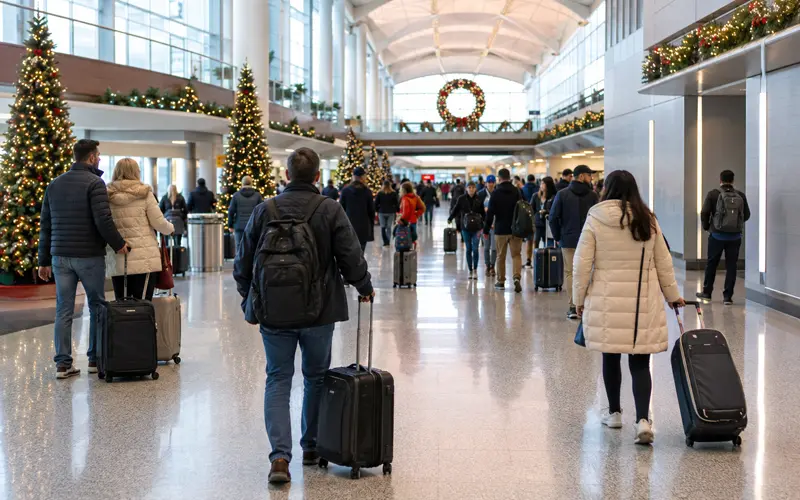
A normal airport routine may take longer during the holiday season. Parking garages can fill, shuttle buses may be crowded, airline counters can have longer lines, and security checkpoints can move more slowly simply because so many people are traveling at once.
Build extra time into the entire process rather than focusing only on security. That includes driving to the airport, finding parking, checking luggage, getting through the terminal, and reaching the gate without rushing.
The Transportation Security Administration is also the best source for current security screening information and rules about what can be packed in carry-on and checked luggage.
Pack for the Trip You Planned—and the Delay You Didn’t
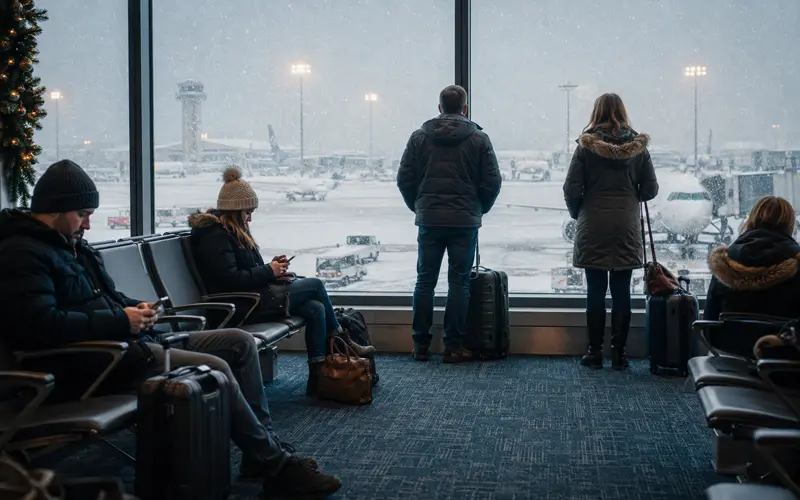
Holiday travel often overlaps with winter weather, which means even a well-planned itinerary can change unexpectedly. A storm does not have to be happening at your departure airport or destination to affect an incoming aircraft, connecting flight, or crew.
Keep anything you would struggle to replace in your carry-on. At minimum, I would keep the following within reach:
- Prescription medications
- Phone and device chargers
- Identification and travel documents
- A basic change of clothes
- Essential toiletries
- Valuables
- Items children will need during the trip
- Snacks for longer delays
Packing strategically can also make crowded airports easier to navigate. Instead of bringing something for every possible situation, focus on the travel essentials that are genuinely useful and leave unnecessary extras at home.
Keep Reservations and Important Information Easy to Find
Holiday travel is much easier when you are not standing in a crowded terminal searching through old emails for a confirmation number. Keep flight information, hotel reservations, rental car details, addresses, and other important travel information together on your phone.
Screenshots are particularly useful for information you may need quickly, especially when airport Wi-Fi or cellular service is unreliable. Save the address of your hotel or the home where you are staying before you leave, along with phone numbers for anyone you may need to contact.
For international holiday trips, check passports and entry requirements well in advance. A passport issue discovered a few days before Christmas can be much harder to solve than one discovered months earlier.
Flying vs. Driving for the Holidays
Sometimes the transportation decision is obvious, but families traveling a moderate distance may have a realistic choice between flying and driving. Neither is automatically easier during Thanksgiving or Christmas.
| Consideration | Flying | Driving |
|---|---|---|
| Schedule | Fixed departure times | More control over departure |
| Luggage | Airline limits may apply | More room for bags and gifts |
| Delays | Weather and airline disruptions | Traffic and road conditions |
| Children | Shorter travel time but airport waits | Longer ride with more flexibility |
| Holiday gifts | Can be awkward to transport | Easier to carry larger items |
| Changes | Rebooking may be necessary | Route and timing can often change |
Cost matters too, particularly for larger families. Airfare for several people can become expensive, while a long road trip adds fuel, food, possible hotel stays, and wear on the vehicle. Looking at the entire trip rather than just the ticket or gas price usually gives you a better comparison.
Prepare the Car Before a Holiday Road Trip
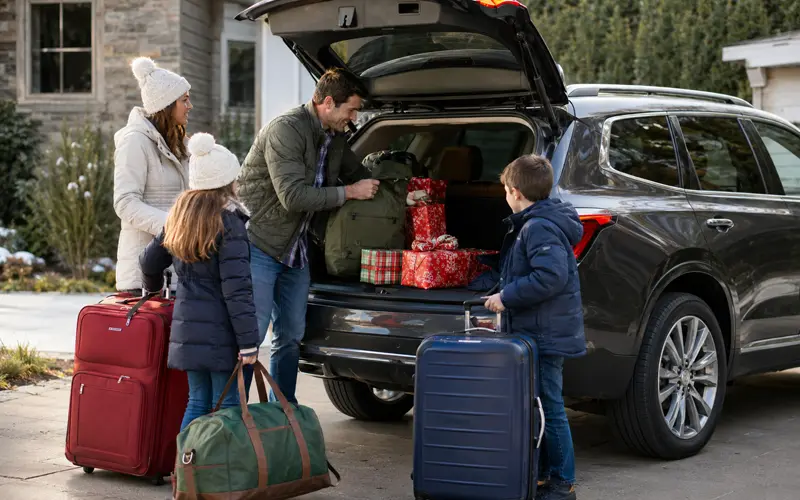
Holiday road trips require a different kind of preparation. Check the vehicle before departure rather than waiting for a warning light somewhere between home and your destination.
Make sure the tires are properly inflated, the gas tank is full or the vehicle is charged, fluids are at appropriate levels, and everyone has enough room to travel comfortably. Keep water, snacks, chargers, medications, and basic emergency supplies where they can be reached without unpacking the entire vehicle.
Long drives are easier when the car is organized before everyone gets inside. Packing comfort items, entertainment, snacks, and practical family road trip essentials can make the drive feel far less chaotic, especially when children are traveling with you.
Traffic is another reason to stay flexible. Check the route shortly before leaving rather than assuming the drive will take the same amount of time it usually does, and be willing to adjust your departure time if traffic or weather conditions make another option more sensible.
Watch Winter Weather Along the Entire Route
Checking the weather at your destination is not always enough. A winter storm hundreds of miles away can affect a connecting airport, incoming aircraft, or highway you planned to use later in the trip.
Start watching conditions several days before you leave and pay attention to the entire route. The National Weather Service provides forecasts, winter weather advisories, warnings, and other information that can help you identify potential problems before travel day.
If you are flying, keep airline notifications turned on and check your flight status before heading to the airport. For a road trip, know your alternate routes but avoid treating a detour as automatically safer when severe weather is involved. Sometimes delaying the trip is the better choice.
Build Flexibility Into Family Plans
Holiday schedules tend to become crowded quickly. Travel time, family dinners, parties, shopping, sightseeing, and traditions can end up packed together with almost no room for something to go wrong.
Avoid scheduling an important event immediately after your expected arrival whenever possible. A flight scheduled to land at 5:00 p.m. does not guarantee that you will be sitting at the dinner table at 6:00 p.m., especially during one of the busiest travel periods of the year.
Families traveling with children may benefit from even more downtime. A long flight or car ride can be tiring, and arriving somewhere new immediately followed by several hours of activities is not always the easiest start to a holiday visit.
Have a Simple Backup Plan
You do not need an elaborate contingency plan for every possible travel problem, but it helps to know what your next move would be if the original plan falls apart.
Before leaving, know:
- Whether later flights serve your destination
- What your airline offers if a flight is canceled
- Where you could stay if an overnight delay becomes necessary
- Whether your hotel or rental car reservation can accommodate a late arrival
- Which alternate road routes are reasonable
- Who needs to know if your arrival time changes
Air passengers can review current rules regarding cancellations, refunds, baggage, and other consumer protections through the U.S. Department of Transportation. Knowing the basics before a problem occurs is far easier than trying to understand your options while standing in a crowded airport.
Make the Trip Part of the Holiday
Thanksgiving and Christmas travel will probably never be completely predictable. Airports will be busy, highways will have traffic, weather will occasionally interfere, and some delays simply cannot be prevented.
Good planning is less about controlling every detail and more about removing avoidable stress. Leave enough time, pack the things you truly need, stay flexible when circumstances change, and avoid building such a tight schedule that one delay affects the entire holiday.
The airport, highway, and suitcase are only how you get there. The people and traditions waiting at the other end are the reason you made the trip in the first place.