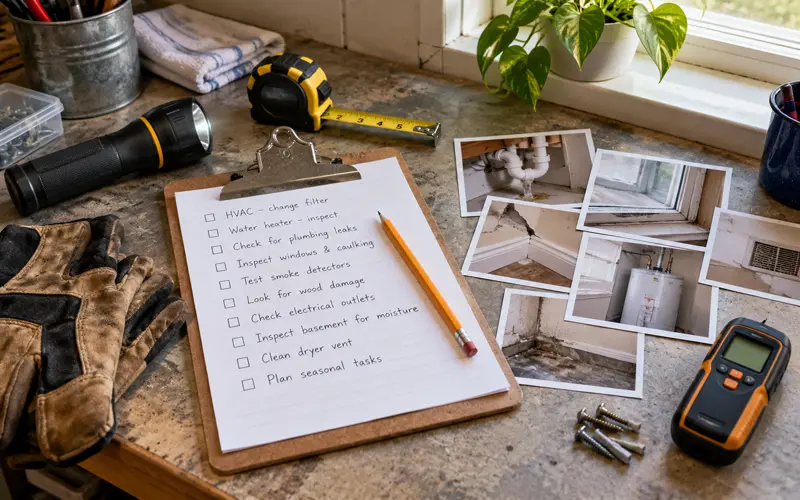
For homeowners, routine maintenance can quickly become a long list of seemingly unrelated jobs: clean the gutters, repaint the trim, service the heating system, repair a loose deck board, and eventually deal with an aging roof.
A better strategy is to rank projects by what can cause secondary damage. Instead of asking which improvement is most noticeable, consider which neglected system could create the most expensive chain reaction.
Put Water-Control Systems at the Top of the List
The roof, flashing, gutters, downspouts, siding, windows, and exterior drainage form a connected defense against water. When one part fails, the evidence may appear somewhere else entirely. A ceiling stain, for example, does not necessarily reveal the exact point where rain entered.
An aging roof deserves early attention because replacement involves more than purchasing shingles. Roof area, pitch, valleys, ridges, existing layers, ventilation, skylights, gutters, labor, tear-off, disposal, and concealed decking damage can all influence the project.
For homeowners trying to understand a new roof cost in Vancouver, those variables explain why a useful estimate needs to reflect the actual house rather than a simple citywide price.
Have questionable areas inspected before budgeting for interior improvements that could be damaged by continued leakage. Staying ahead of problems is one of the simplest ways to keep routine upkeep manageable, something I also focus on when looking at home maintenance that can prevent costly repairs.
Use the Gutter Test During Real Rain
A rainy day can tell you a lot about how well your home is handling water. From a safe position on the ground, watch for water spilling over gutter edges, leaking at joints, or collecting near the foundation. Check where downspouts discharge and whether water is being directed away from vulnerable areas.
Overflow does not always mean the gutter itself needs replacement. Leaves, blocked outlets, poor slope, or drainage problems may be responsible. The important thing is finding the cause before repeated wetting begins affecting fascia, siding, landscaping, or other materials.
Good drainage also extends beyond the house itself. Landscaping can influence how water moves around a property, which is one reason thoughtful low-maintenance landscaping and watering practices can be an important part of caring for the exterior.
Treat Small Exterior Gaps as Early Warnings
Exterior maintenance often becomes expensive because small defects are allowed to remain through multiple wet seasons.
Walk around the house periodically and look for deteriorated sealant, damaged trim, cracked siding, loose components, peeling finishes, and gaps around penetrations. Pay particular attention to transitions where different materials meet because these areas frequently depend on proper flashing or sealing.
At the same time, do not automatically fill every suspicious gap with caulk. Some assemblies are designed to drain or ventilate, and improper sealing can trap moisture. When the purpose of a joint is unclear, getting appropriate advice may prevent a small repair from creating another problem.

Follow Interior Stains Back to Their Source
Water stains are clues, not repairs.
Painting over a discolored ceiling may temporarily improve the appearance of the room, but the stain can return if the source remains active. Photograph new discoloration, note whether it changes after rain, and watch for related symptoms such as damp odors, peeling paint, softened materials, or visible moisture.
Possible causes include roofing defects, plumbing leaks, condensation, window problems, and exterior water intrusion. Because water can travel along framing and other surfaces, the visible stain may be some distance from where the problem began.
Resolve the moisture problem first. Then determine whether affected materials need drying, cleaning, repair, or replacement before restoring the finish.
Check the Attic Before It Becomes an Emergency
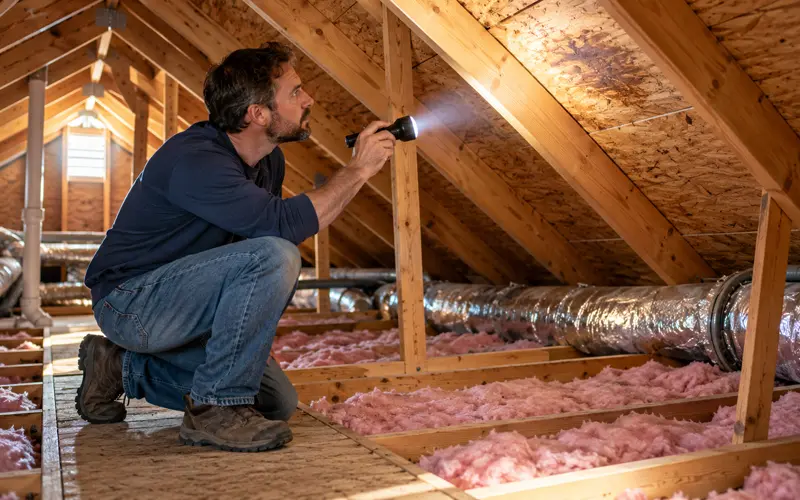
An attic can reveal conditions that are difficult to see from finished rooms. When the space is safe and accessible, occasional checks may uncover staining, damp insulation, unusual odors, daylight through unintended openings, or other signs that deserve further investigation.
Ventilation matters as well. Roofing systems often include components designed to manage airflow and moisture, and roof repairs or replacement can provide an opportunity to assess whether the existing setup is functioning as intended.
Avoid walking in unsafe attic areas or disturbing materials you cannot identify. Older homes may contain materials that require professional evaluation or handling.
Schedule Maintenance Around Consequences
Some household jobs fit predictable schedules, such as changing appropriate filters, servicing equipment according to manufacturer guidance, cleaning drainage components, and checking safety devices. Other projects depend more heavily on what inspections reveal.
One simple way to keep the list manageable is to divide maintenance into three categories:
- Protect now: Active leaks, safety concerns, or defects likely to cause additional damage.
- Monitor: Stable conditions that do not require immediate work but should be checked periodically.
- Plan: Aging systems that are still functioning but could require significant future spending.
This keeps every small imperfection from feeling like an emergency while making it harder for genuinely important problems to disappear into an endless household to-do list.
Budget for What Demolition Might Reveal
Some home-maintenance costs remain hidden until materials are removed. Roof tear-off, wall opening, flooring removal, and similar projects can expose deterioration that was not visible during the initial inspection.
With roofing work, for example, moisture may have damaged portions of the wood decking. Areas around skylights, chimneys, and other penetrations can also reveal problems once the covering is removed.
Before work begins, ask contractors how unforeseen conditions will be documented, priced, and approved. Keeping some room in the project budget for unexpected repairs is much easier than allocating every available dollar to the initial estimate.
Keep a Maintenance History for the House
Homeowners often remember that something was repaired but forget when it happened, why it was needed, or exactly what was done. A simple property record can solve that problem.
Save invoices, warranties, inspection reports, product information, photographs, and major service dates. Include roof work, exterior repairs, gutter changes, plumbing incidents, appliance replacements, painting, and other substantial maintenance.
Over time, that history becomes a useful diagnostic tool. Repeated repairs in one area may suggest that the underlying cause has not been resolved, while service dates can help you anticipate when major systems deserve closer attention.
Plan Improvements Around the Protective Shell
Once water intrusion, drainage, safety, and structural concerns are under control, improvements become much easier to sequence.
Before installing new interior finishes, consider whether upcoming roofing, plumbing, electrical, window, or exterior work could disturb them later. Before adding solar equipment or changing skylights, think about the condition of the roof underneath. Before investing heavily in landscaping, understand how water moves across the property.
This does not mean postponing enjoyable projects indefinitely. It simply means protecting those improvements from predictable rework.
Good home maintenance is less about constantly fixing things and more about understanding how different parts of the house depend on one another. A roof protects the attic, drainage protects exterior materials and lower areas, sound plumbing protects interior finishes, and early inspections can protect the budget from avoidable surprises.
For Vancouver homeowners, the most useful maintenance question may not be, “What should I improve next?” Instead, ask, “What could damage something else if I leave it alone?” Addressing those issues first makes the rest of the home-maintenance list much easier to prioritize.