
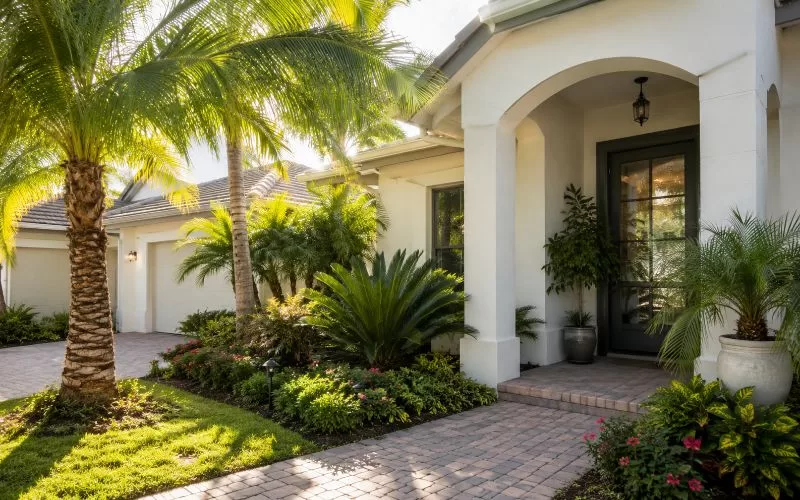
Florida summer has a way of settling into the house before you even realize it. The afternoon sun hits the windows, the humidity makes the air feel heavier, and the air conditioner can feel like it is running nonstop just to keep up. A cooler home is not always about lowering the thermostat. In many cases, comfort comes from blocking heat before it gets inside, reducing moisture in the air, and making the rooms you use most feel easier to live in.
The good news is that you do not have to make major changes to feel a difference. A few smart habits and small updates can help your Florida home feel cooler through the hottest months of the year, especially when the heat and humidity are both working against you.
Block the Sun Before It Warms the Room
One of the simplest ways to make a Florida home feel cooler in summer is to stop direct sunlight from heating the room in the first place. Large windows, sliders, and rooms that face east, west, or south can warm up quickly, especially during the late morning and afternoon.
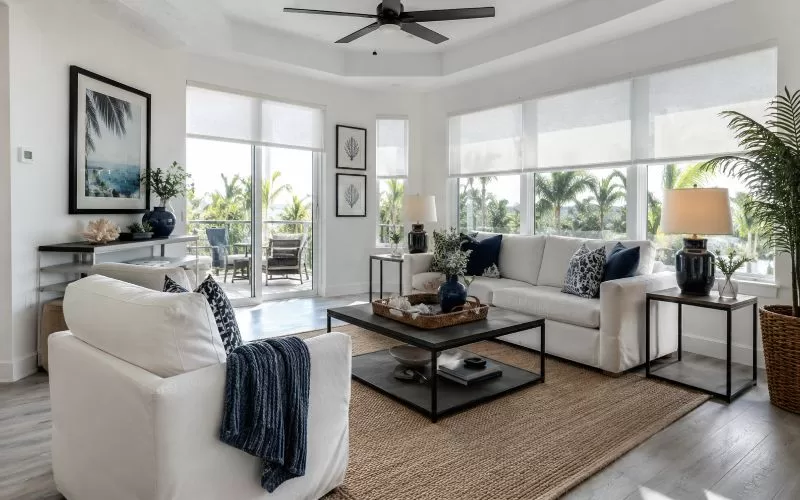
Window coverings make a bigger difference than many people realize. The U.S. Department of Energy recommends closing curtains on windows that receive direct sunlight and using shades, drapes, or blinds that help reflect heat away from the home. Light-colored curtains, solar shades, blackout panels, and plantation shutters can all help soften the heat before it takes over the room.
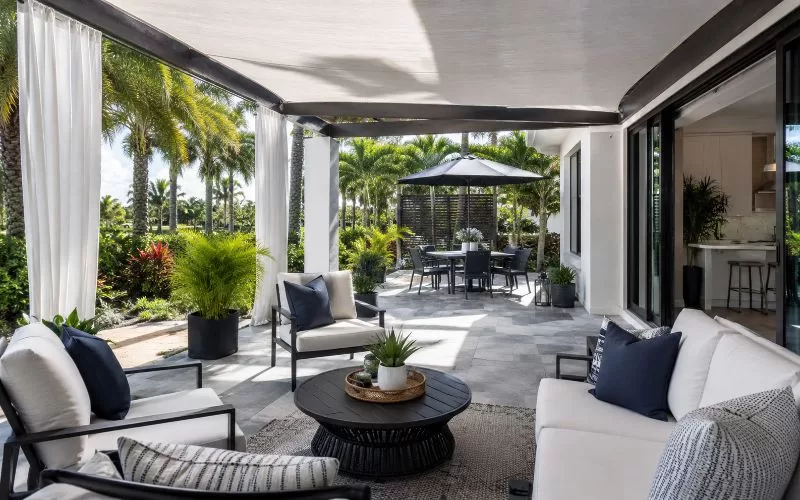
Exterior shade can be even more effective because it stops some of the heat before it reaches the glass. Awnings, shade screens, outdoor curtains, and covered patio areas are especially helpful around sliders and windows that get the strongest sun.
Use Ceiling Fans the Right Way
Ceiling fans can make a room feel cooler, but they do not actually lower the temperature. They help by moving air across your skin, which makes the room feel more comfortable while you are in it.
In summer, ENERGY STAR recommends running ceiling fans counterclockwise to create a downward breeze. If a fan has been set the other way, the room may not feel as cool as it should.
The habit that matters most is turning fans off when you leave the room. Since fans cool people rather than spaces, leaving them on in empty rooms only uses extra electricity without making the house cooler.
Pay Attention to Humidity
Humidity is one of the biggest reasons Florida homes can feel warmer than the thermostat says. When the air inside is too damp, the house can feel sticky and heavy, even if the AC is running.
The EPA recommends keeping indoor humidity below 60 percent, and ideally between 30 and 50 percent when possible. A small indoor humidity monitor can help you see what is happening inside your home instead of guessing.
A few simple habits can help keep moisture under control:
- Run bathroom fans during showers and for a little while afterward.
- Use the kitchen exhaust fan when cooking.
- Avoid leaving exterior doors open for long stretches.
- Check for condensation around windows, vents, and pipes.
- Use a dehumidifier in rooms that tend to feel damp.
If one area of the house always feels humid, it may be worth having your AC checked. A system that is not removing enough moisture can leave the home feeling warmer than it should.
Keep the Kitchen From Heating the House
The kitchen can warm up the house quickly during a Florida summer, especially when the oven is running in the afternoon. This is one of those everyday habits that can quietly make the whole home feel less comfortable.
On hotter days, lean on meals that do not require long oven times. The air fryer, slow cooker, outdoor grill, or a simple cold meal can help keep the kitchen from becoming the warmest room in the house. Lighter summer meals also tend to fit the season better. For easy ideas that do not feel too heavy, these healthy summer snacks are a natural fit for warm-weather days.
If you do need to bake or cook something longer, try doing it earlier in the morning or later in the evening. Running the dishwasher after dinner instead of during the hottest part of the day can also help keep extra heat out of the kitchen.
Add Shade Outside the Home
Outdoor shade helps cool the areas around your home before the heat pushes inside. In Florida, this matters around patios, lanais, pool decks, backyard seating areas, and any exterior wall or window that gets strong sun.
Pay special attention to sliders, patios, and lanais that sit in direct sun. When those areas heat up, the glass and surrounding walls can make nearby rooms feel warmer too. Adding outdoor curtains, umbrellas, shade sails, or a covered seating area can help reduce the heat around the home before it pushes inside.
Patio umbrellas, pergolas, outdoor curtains, and shade sails can make outdoor spaces more comfortable while also reducing the amount of direct heat near the house. If your patio or backyard feels too hot to use during the summer, adding shade may be more useful than buying more furniture or decor.
This is also where landscaping can help. Palms, shrubs, and well-placed plants can soften the heat around windows and outdoor living areas without making the space feel closed in. If you are already thinking about improving your patio or backyard, a more intentional outdoor space design can help you plan shade where it will make the biggest difference.
Quick Cooling Fixes by Room
Sometimes the whole house does not need a major change. One warm room, one sunny window, or one humid area can make the home feel less comfortable than it should.
| Area of the Home | Simple Cooling Fix |
|---|---|
| Sunny living room | Close shades before the afternoon sun hits |
| Kitchen | Cook earlier, grill outside, or use small appliances |
| Bedroom | Use breathable bedding and blackout curtains |
| Patio or lanai | Add outdoor curtains, umbrellas, or shade sails |
| Garage entry | Check the door sweep and weather stripping |
| Bathroom | Run the fan after showers to reduce humidity |
These small fixes work best when they become part of the daily routine. Closing blinds after a room is already hot will help a little, but closing them before the heat builds up is much more effective.
Solving summer heat room by room can be more useful than lowering the thermostat for the whole house, especially when the problem is one sunny living room, one warm bedroom, or one humid bathroom.
Check Doors, Sliders, and Weather Stripping
Florida homes often have several places where warm air can sneak inside, especially around sliders, patio doors, garage entry doors, and older weather stripping. Even a small gap can make a room feel warmer, particularly near the garage or back patio.
Check for:
- Worn weather stripping
- Loose door sweeps
- Sliders that do not close tightly
- Gaps where light comes through
- Hot air leaking in from the garage
- Dirty slider tracks that keep the door from sealing well
These are small maintenance issues, but they can affect comfort. They also fit into the kind of seasonal upkeep that helps homeowners avoid bigger repairs later. If you are working through household projects, these Florida home maintenance tips are a helpful way to stay ahead of problems before they become more expensive.
Help Your AC Work Smarter
The air conditioner does a lot of heavy lifting in Florida, but it should not have to fight poor airflow, dirty filters, direct sun, and extra humidity all at once. The easier you make the job, the better the house will feel.
Start with the basics. Change filters regularly, keep vents open, and make sure furniture is not blocking airflow. If one room feels warmer than the rest of the house, look at that space first. A sunny window, blocked vent, worn door seal, or closed interior door may be part of the problem.
A programmable or smart thermostat can also help manage cooling more efficiently. The U.S. Department of Energy recommends setting the thermostat as high as comfortably possible in summer and raising the temperature when you are away. In a Florida home, even a small adjustment can help reduce unnecessary cooling without making the house uncomfortable.
Regular AC maintenance is worth keeping on the calendar too. Clean coils, clear drain lines, and proper airflow matter when the system is running through long stretches of heat and humidity.
Make Bedrooms Feel Cooler at Night
A bedroom that holds heat can make summer nights feel uncomfortable, even when the rest of the house feels fine. Start by looking at the windows. If the room gets afternoon sun, close the curtains or shades before the room heats up, not after it already feels warm.
Bedding also makes a difference. Cotton, linen, and other breathable fabrics tend to feel cooler than heavy comforters or thick synthetic layers. During the hottest months, a lighter blanket or coverlet may be more comfortable than keeping the same bedding you use all year.
If the room still feels warm, use a ceiling fan or small fan to move air across the bed. The goal is gentle airflow that makes the room feel more comfortable, not a harsh breeze that dries you out overnight.
Small Changes Can Make a Florida Home Feel Cooler
Making a Florida home feel cooler in summer usually comes down to several small changes working together. Better window coverings, smart fan use, lower humidity, shaded outdoor areas, and a few daily habits can all help the house feel more comfortable.
Start with the rooms that heat up the fastest, then work through the simple fixes that make the most sense for how you live. Florida summer may be long, hot, and humid, but your home does not have to feel like it is losing the battle every afternoon.