
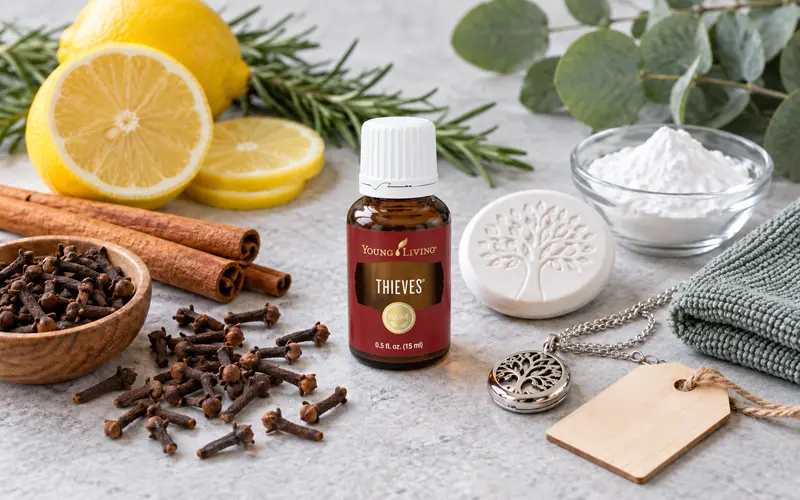
When I first started using essential oils, Thieves was one of the blends I reached for most often. Its combination of citrus, cinnamon, clove, rosemary, and eucalyptus has a distinctive spicy scent, but adding fragrance to a room is only one way to use it.
Practical Thieves oil uses can include general cleaning, odor control, personal accessories, travel, seasonal projects, and carefully prepared DIY products. I do not use essential oils to treat illnesses or replace medical care, but I enjoy finding simple ways to incorporate the blend into everyday routines.
What Is Thieves Oil?
Thieves oil is an essential oil blend rather than one individual oil. The original Young Living Thieves Essential Oil Blend contains:
- Clove essential oil
- Lemon essential oil
- Cinnamon bark essential oil
- Eucalyptus radiata essential oil
- Rosemary essential oil
The name was inspired by a legend about four thieves who supposedly used aromatic herbs during a plague outbreak. Although the story is folklore rather than a documented medical discovery, the combination created a warm, recognizable fragrance that has remained popular.
Thieves is highly concentrated, so I always begin with a small amount. Poison Control’s guidance for essential oils recommends following the product label, avoiding ingestion, diluting oils before approved topical use, and keeping bottles away from children and pets.
20 Practical Ways to Use Thieves Oil
1. Use Thieves Oil in a Diffuser
Diffusing remains one of the easiest Thieves oil uses. I usually start with one or two drops because the cinnamon and clove can become strong quickly. More can be added if the room is large or the fragrance feels too light.
I prefer running the diffuser for a short period instead of leaving it on continuously. This keeps the fragrance noticeable without overwhelming the room.
Anyone with pets should use diffusers conservatively in a ventilated area where animals can leave. The ASPCA’s recommendations for essential oils around pets also advise keeping diffusers and concentrated oil where animals cannot reach or knock them over.
2. Prepare a Room Spray
A properly formulated spray can distribute the scent without requiring a diffuser. Essential oils do not dissolve in plain water, so the bottle should contain a suitable solubilizer or a spray base made specifically for essential oils.
I prefer following established essential-oil air freshener methods instead of simply mixing oil and water. Shake the bottle before each use and test the spray before applying it near fabric or furniture.
3. Add It to a Passive Aroma Stone
Ceramic aroma stones provide a simple alternative to misting diffusers. Add one drop and place the stone in a small space, such as a bathroom, office, guest room, or entryway.
Keep the stone on a protective dish so concentrated oil cannot transfer to furniture, paint, or fabric.
4. Fill a Personal Aroma Inhaler
Add one or two drops to the wick inside a personal essential oil inhaler and seal it according to the manufacturer’s directions. An inhaler allows you to enjoy the fragrance without diffusing it throughout a shared space or placing the oil directly on your skin.
I like that a capped inhaler is small enough to keep in a purse, desk drawer, or travel bag.
5. Use a Car Diffuser Clip
Apply the amount recommended by the car diffuser manufacturer instead of dripping Thieves oil directly onto an air vent. A single drop is often enough because fragrance builds quickly inside an enclosed vehicle.
Avoid applying undiluted oil to the dashboard, upholstery, plastic trim, floor mats, or air-conditioning system.
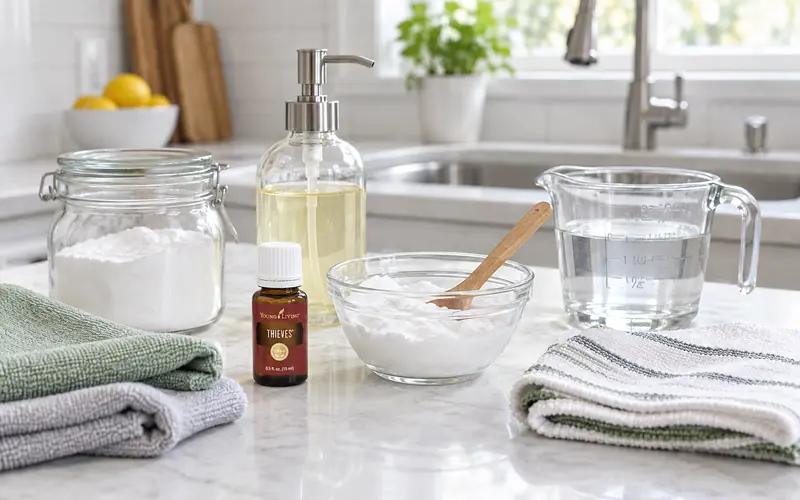
6. Make a Quick Sink Scrub
Thieves oil can be added to a simple cleaning paste for compatible sink surfaces. Combine:
- 1/2 cup baking soda
- 1 tsp mild dish soap
- 1 or 2 drops Thieves oil
- Enough water to form a soft paste
Use the mixture immediately, scrub gently, and rinse the sink thoroughly. The baking soda provides mild abrasion, the dish soap helps loosen grime and grease, and the Thieves oil adds a small amount of citrus-based cleaning power along with its fragrance.
Baking soda can scratch certain finishes, so test a small area first and avoid using the paste on natural stone.
7. Prepare a General Cleaning Solution
Mix two cups of warm water, one teaspoon of mild dish soap, and one or two drops of Thieves oil. Use the solution immediately on compatible sealed surfaces, then rinse food-contact surfaces with clean water.
The mixture can be useful for ordinary cleaning jobs such as:
- Wiping sealed cabinet fronts
- Cleaning baseboards
- Removing greasy fingerprints
- Wiping sealed shelves
- Cleaning washable plastic containers
Thieves oil should not be treated as a proven disinfectant. When disinfection is necessary, the EPA’s registered disinfectant guidance recommends using a registered product and following its stated contact time.
8. Make Reusable Cleaning Wipes
Instead of buying disposable wipes, dip clean microfiber cloths into a freshly prepared mixture of warm water and a small amount of dish soap. Add one or two drops of Thieves oil to the entire bowl, not to each cloth.
Use the damp cloths immediately, then wash and dry them before their next use. I would not store homemade water-based wipes for long periods because mixtures without a proper preservative can develop microbial growth.
Reusable cloths work well for ordinary household cleaning but should not replace registered disinfecting wipes when disinfection is needed.
9. Clean Trash Cans and Outdoor Bins
Trash cans can collect spills, sticky residue, and unpleasant odors even when liners are used. After emptying the container, wash it with dish soap and water, adding one or two drops of Thieves oil to the cleaning solution if the material is compatible.
Rinse thoroughly and allow the container to dry completely before adding a new liner. Removing the actual residue is more effective than trying to cover the smell with fragrance.
10. Freshen the Garbage Disposal
After cleaning the disposal according to its manufacturer’s instructions, place one drop of Thieves oil on a spoonful of baking soda. Add the mixture to the disposal and flush thoroughly with cool running water.
The baking soda and rinsing help remove lingering residue, while the oil leaves behind a fresh citrus-and-spice scent. This should be an occasional finishing step rather than a replacement for proper disposal cleaning.
11. Loosen Sticky Residue on Glass or Metal
The lemon oil in the blend may help loosen small amounts of sticker or adhesive residue. Place one drop on a cloth rather than directly on the item, gently rub the residue, and wash the area with dish soap afterward.
Always test a hidden spot first. Avoid using Thieves oil on painted surfaces, finished wood, natural stone, delicate materials, or plastics that could become stained or damaged.
12. Deodorize a Shoe Cabinet
Fill a small vented jar with baking soda and mix in one or two drops of Thieves oil. Place the jar inside the shoe cabinet without allowing it to touch footwear or flooring.
The baking soda helps absorb odors instead of simply covering them. Replace the mixture when it no longer smells fresh or appears damp.
13. Make a Deodorizing Sachet
A baking soda sachet can be used inside a gym bag, luggage, mudroom basket, or another odor-prone area. Place the baking soda in a breathable fabric pouch, add one drop of Thieves oil, and set the sachet where it will not come into direct contact with clothing.
Useful locations include:
- Gym bags
- Suitcases between trips
- Sports-equipment bins
- Coat closets
- Laundry hampers
- Storage cabinets
Keep the sachet away from children and pets and replace it if the fabric becomes damaged.
14. Control Odors Around a Trash Can
Add one drop to a cotton pad and secure it beneath the liner or on the outside bottom of the trash can. The cotton pad should remain separated from the trash and inaccessible to children and animals.
I use this only after washing the container. Fragrance can improve the area temporarily, but removing spills and residue is what addresses the source of the odor.
15. Include It in Melt-and-Pour Soap
Thieves oil can be added to a melt-and-pour soap project when the soap-base manufacturer provides directions for essential oils. Follow the recommended usage rate instead of estimating how many drops the soap can safely hold.
Cinnamon and clove oils can irritate sensitive skin, so a tested recipe and conservative concentration are important. Homemade soap should be clearly labeled with its ingredients, especially when it will be given as a gift.
16. Make a Shower Steamer
Thieves oil can be incorporated into a tested shower-steamer recipe designed for essential oils. The finished steamer is placed on the shower floor away from the direct water stream, where moisture gradually releases its fragrance.
A shower steamer should not be used as a bath bomb or placed where concentrated oil could touch the skin. The shower floor should also be rinsed afterward to prevent residue from becoming slippery.
17. Create a Diluted Fragrance Roller
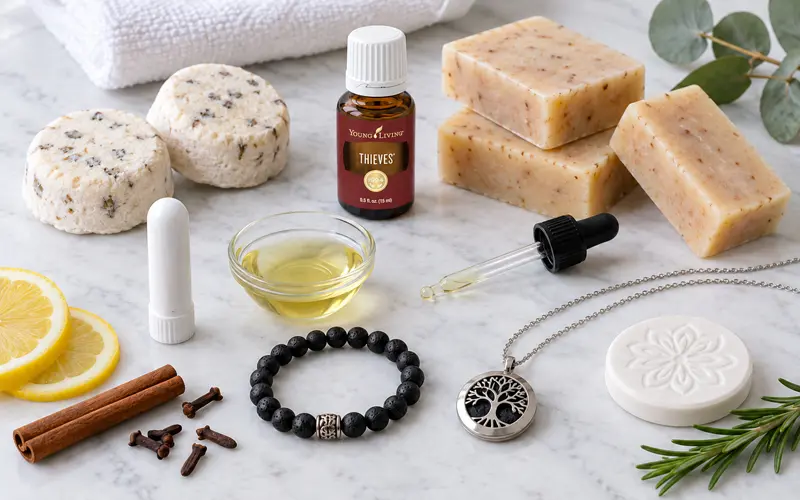
If the product label permits topical use, combine one drop of Thieves oil with one tablespoon of carrier oil and test a small area first. The finished mixture can be applied sparingly as a personal fragrance.
I would never apply the undiluted blend directly to my skin. Cinnamon and clove can be irritating, especially on sensitive or damaged skin, and the mixture should remain away from the eyes and mouth.
18. Add It to Diffuser Jewelry
Diffuser bracelets and necklaces contain absorbent beads or pads designed to hold essential oils. One drop is generally enough to enjoy the scent without applying the blend directly to the skin.
Let the oil absorb before wearing the jewelry and follow its care instructions. This is also a convenient option for offices, travel, or other situations where operating a diffuser would affect everyone nearby.
19. Use It in Seasonal Decorations
The warm spice notes work especially well with fall and winter decorations. Place dried potpourri in a paper bag, add one or two drops of Thieves oil to the bag, close it, and shake gently. Let everything dry before returning the potpourri to its bowl.
For wreaths or pinecone arrangements, add a drop to an unfinished wooden ornament or removable felt pad attached to the back. Using a separate scent holder helps protect ribbon, greenery, furniture, and painted surfaces from oil stains.
20. Make a Giftable Aroma Jar
Combine baking soda and several drops of Thieves oil in a small jar with a vented lid. Decorate the outside with ribbon and add a label explaining that the jar is intended for household deodorizing and fragrance.
Aroma jars are easy to make in small batches and can be personalized for different seasons. Guided projects such as the recipes included in Simply Earth essential-oil subscription boxes provide additional inspiration for essential oil gifts and household products.
What Thieves Oil Cannot Do
Some older lists recommend using Thieves oil for toothaches, cold sores, cuts, sore throats, heartburn, warts, congestion, or illness prevention. I would not use concentrated essential oil for any of those purposes.
Thieves oil should not be swallowed, gargled, applied inside the mouth, placed on damaged skin, or substituted for appropriate medical or dental care. A toothache, infected cut, persistent rash, breathing problem, or other health concern needs proper evaluation rather than an essential oil remedy.
Diffusing Thieves oil also will not eliminate airborne mold. Mold must be addressed by correcting the source of moisture and properly cleaning or removing the affected material.
Choosing and Storing Thieves Oil
Always review the ingredients, intended uses, warnings, and label directions because blends sold under similar names may not contain identical formulas. The existing Amazon listing for Thieves oil provides another purchasing option for anyone who prefers shopping through Amazon.
Store essential oils tightly closed in a cool, dark location. I also keep bottles somewhere children and animals cannot reach, especially because such a small bottle contains a highly concentrated product.
Finding Uses That Fit Your Routine
Thieves oil can do more than add fragrance to a room. It can become an optional ingredient in everyday cleaning, help control odors, loosen certain sticky residues, travel in personal accessories, or add character to carefully prepared DIY projects.
I tend to use only a few drops at a time and choose the method based on what I am already doing. That makes one bottle last longer without relying on exaggerated promises about what an essential oil can accomplish.