
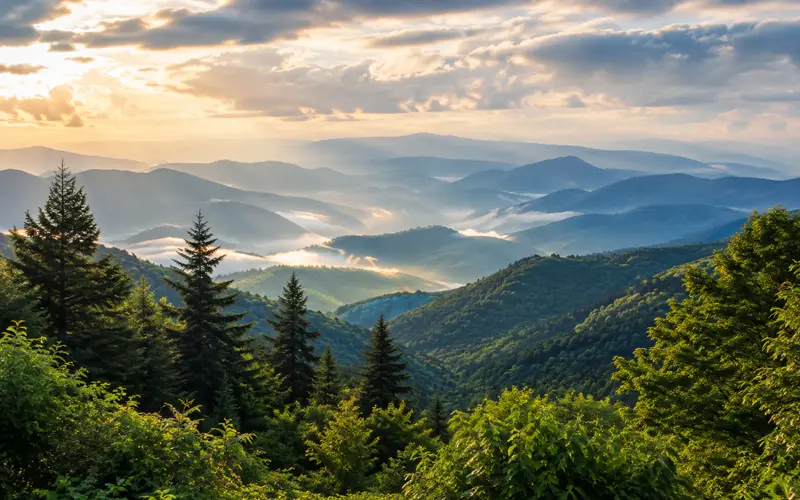
There are places where the drive is simply how you get from one attraction to another, and then there are the Smoky Mountains, where the drive can easily become one of the best parts of the trip. Between mist-covered mountain ridges, waterfalls, historic buildings, wildlife, and overlooks that make you want to pull over every few miles, Great Smoky Mountains National Park gives you plenty to see.
The park covers more than 500,000 acres across Tennessee and North Carolina, so trying to see everything in one visit isn’t realistic. Instead, it helps to choose a few of the must-see places in the Smoky Mountains and leave enough time to enjoy them without rushing. The National Park Service’s Great Smoky Mountains trip-planning information is a good resource to check before your visit, especially since road and facility conditions can change throughout the year.
If you’re staying on the Tennessee side, you can also combine your time in the national park with a few days exploring Pigeon Forge, giving you an easy mix of mountain scenery and family-friendly attractions.
Cades Cove
Cades Cove is one of the best-known places in Great Smoky Mountains National Park, and for good reason. The broad valley is surrounded by mountains and feels very different from the heavily wooded roads found throughout much of the park. An 11-mile, one-way loop road winds through the area, passing historic churches, cabins, barns, and other structures that offer a glimpse into life in the Smokies before the national park was established.
The open landscape also makes Cades Cove one of the more popular areas for wildlife viewing. White-tailed deer are common, and visitors may also spot turkeys, coyotes, and black bears. Wildlife should always be viewed from a safe distance, and traffic can slow considerably when animals appear near the road.
Don’t plan on rushing through Cades Cove. Even without stopping everywhere, the loop takes time, and you’ll probably find several places where you want to get out, take photos, or simply enjoy the scenery.
Kuwohi
For sweeping mountain views, make room for Kuwohi, the highest point in Great Smoky Mountains National Park. You may recognize it by its former name, Clingmans Dome; the mountain’s Cherokee name, Kuwohi, was officially restored in 2024.
At 6,643 feet, Kuwohi provides a completely different perspective on the Smokies. A paved but steep half-mile trail leads from the parking area to the observation tower, where clear conditions can provide expansive views across the surrounding mountains.
Weather at this elevation can be dramatically different from what you experience in Gatlinburg or the lower areas of the park. Temperatures are often cooler, clouds can move in quickly, and visibility varies from day to day. Even when distant views disappear behind the mist, the drive and high-elevation forest make Kuwohi worth including on a Smoky Mountains itinerary.
Newfound Gap
Newfound Gap is another mountain overlook that doesn’t require a long hike to enjoy. Located along Newfound Gap Road, the scenic route connecting Gatlinburg, Tennessee, with Cherokee, North Carolina, it sits at an elevation of 5,046 feet.
The overlook provides beautiful views across the mountains, but there’s also a bit of history here. President Franklin D. Roosevelt formally dedicated Great Smoky Mountains National Park at Newfound Gap in 1940.
The Appalachian Trail also crosses the road here, so you can technically step onto one of America’s most famous long-distance hiking trails without committing to anything resembling a thru-hike.
Roaring Fork Motor Nature Trail
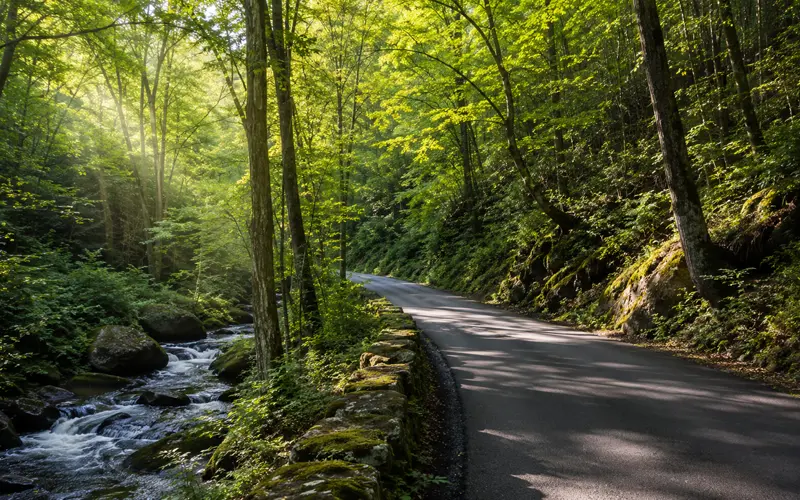
If you like scenic drives that feel tucked deep into the forest, Roaring Fork Motor Nature Trail deserves a spot on your list. The narrow, winding, one-way road travels through dense woodland just outside downtown Gatlinburg and offers access to historic buildings, rushing mountain streams, and several hiking trails.
The drive has a more intimate feel than the park’s broad mountain overlooks. Instead of looking across miles of ridges, you’re surrounded by trees, moss-covered rocks, old homesteads, and water moving through the forest.
Because the road is narrow and seasonal closures are possible, check current conditions before heading out. This is also a drive where taking your time is part of the experience rather than something to squeeze between other attractions.
Laurel Falls
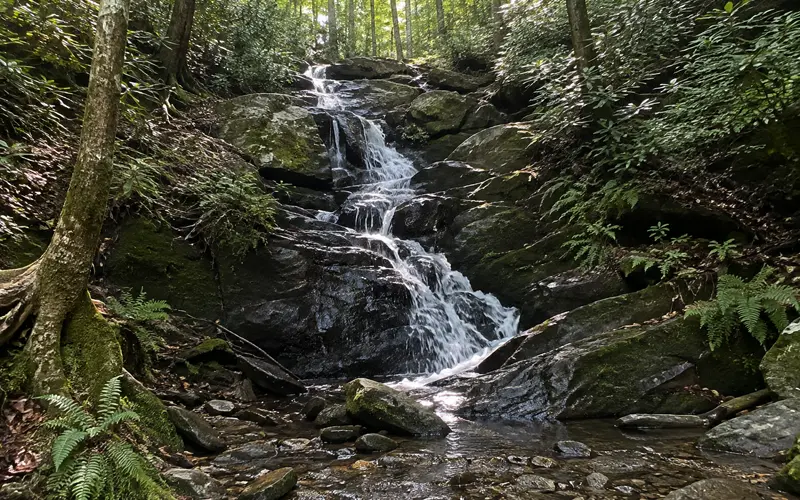
Waterfalls are one of the highlights of the Smoky Mountains, and Laurel Falls has long been among the park’s most recognizable. The 80-foot waterfall is divided into upper and lower sections, with a walkway crossing the stream near the base of the upper falls.
Access conditions for popular trails can change because of rehabilitation projects, weather, and seasonal closures, so check the National Park Service’s current conditions and trail information before planning your day around a specific waterfall.
If Laurel Falls isn’t accessible during your trip, don’t worry. The Smokies have plenty of other places where you can experience mountain streams and waterfalls, including the Deep Creek area on the North Carolina side of the park.
Oconaluftee Valley
Crossing Newfound Gap Road into North Carolina brings you to another side of the Smokies. The Oconaluftee area combines mountain scenery, history, and some of the park’s best opportunities to see elk.
The Oconaluftee Visitor Center makes a convenient first stop. Nearby, the Mountain Farm Museum includes historic log structures gathered from different locations throughout the park and arranged to show what a traditional mountain farmstead might have looked like.
Elk are often seen in the fields around Oconaluftee, particularly in the early morning and evening. They may look calm from a distance, but they are large wild animals and need plenty of space.
Cataloochee Valley
Travelers willing to venture farther from the busiest sections of the park should consider Cataloochee Valley. Once home to a thriving mountain community, the valley still contains historic homes, churches, and other structures surrounded by peaceful mountain scenery.
Cataloochee is also one of the best-known places in the Smokies for viewing elk. Visiting around dawn or dusk generally gives you a better chance of spotting them in the open fields.
Getting there takes more effort than visiting some of the park’s major roadside attractions, and portions of the approach can be narrow and winding. That relative isolation, however, is part of what makes Cataloochee feel so different from heavily traveled areas closer to Gatlinburg.
Deep Creek
Near Bryson City, North Carolina, Deep Creek is a good choice if waterfalls are high on your Smoky Mountains wish list. Several waterfalls can be reached in the area, including Tom Branch Falls, Indian Creek Falls, and Juney Whank Falls.
This is also a nice place to slow down and spend more than a few minutes outside the car. Depending on the route you choose, you can combine waterfalls and wooded trails without committing to one of the park’s more strenuous mountain hikes.
If you enjoy exploring on foot, you can extend your time in the mountains with some of the best walking and hiking trails in North Carolina, many of which offer another way to experience the region’s forests, waterfalls, and mountain scenery.
Foothills Parkway
Some of the best Smoky Mountain scenery can be enjoyed without leaving your vehicle for very long. Foothills Parkway travels along the Tennessee side of the mountains and provides a series of overlooks with wide views of the surrounding landscape.
It’s especially appealing when you want a slower day between hikes or attractions. You can drive, stop at overlooks when something catches your eye, and enjoy the scenery without following a strict schedule.
The National Park Service maintains current information for Foothills Parkway, which is worth checking before your drive. If you enjoy scenic routes, a little road trip planning can make the journey through the mountains even easier.
The Mountain Views Along Newfound Gap Road
Not every memorable Smoky Mountains sight needs to be a named attraction. Newfound Gap Road itself is one of those drives where you’ll probably stop more often than expected.
The road travels approximately 30 miles between Gatlinburg and Cherokee, climbing from lower-elevation forests into cooler mountain environments before descending on the other side. Along the way are overlooks where layers of blue-green mountains seem to stretch endlessly into the distance.
Give yourself more time than the mileage suggests. Between scenic stops, changing weather, wildlife, and traffic, this isn’t a road where the goal should be getting from one end to the other as quickly as possible.
Planning Your Smoky Mountains Sightseeing
You don’t need to see all ten places during one trip. In fact, trying to do that would probably take away from what makes the Smokies enjoyable in the first place. Choose sights that work well together geographically and allow some flexibility for weather, road conditions, wildlife sightings, and those unexpected overlooks where you decide to stop.
Before entering the park, there is one important detail to know. Great Smoky Mountains National Park does not charge an entrance fee, but vehicles parked for more than 15 minutes generally need a parking tag. Current rates are $5 daily, $15 weekly, or $40 annually. You can review the requirements and purchase options through the National Park Service’s official Smokies parking information before your trip.
Mountain weather can change quickly, particularly at higher elevations, so it’s also smart to check road and trail conditions each morning. Pack water, comfortable shoes, layers, and a few snacks even when you’re mostly sightseeing by car. Cell service is unreliable in many parts of the park, making it a good idea to download maps or directions before leaving town.
The Smoky Mountains are one of those destinations where you don’t have to fill every hour with an attraction. Some of the most memorable moments can be as simple as watching mist settle between the ridges, spotting elk in a quiet valley, standing beside a rushing mountain stream, or pulling into an overlook because the view was too beautiful to pass by. Give yourself enough time to wander a little, and the scenery will do much of the work for you.