Packing a suitcase sounds simple until everything you want to take is spread across the bed and there suddenly seems to be far less room than expected. Whether you are packing for a weekend getaway or a longer vacation, knowing how to pack a suitcase efficiently can help you bring what you need without hauling around an unnecessarily heavy bag.
Good packing is less about squeezing as much as possible into a suitcase and more about making thoughtful choices before anything goes inside. Clothing that works together, smart use of available space, and a little organization can make the suitcase easier to close, easier to carry, and much easier to unpack once you arrive.
1. Check Your Luggage Limits Before You Pack
If you are flying, start by checking the baggage rules for your airline and ticket type. Carry-on dimensions, checked-bag weight limits, and baggage fees are not identical across airlines, and discovering that your suitcase is too large or too heavy at the airport is an expensive way to begin a vacation.
Pay particular attention to:
- Maximum carry-on dimensions
- Checked-bag weight allowances
- Personal-item size restrictions
- Fees for checked or overweight luggage
- Restrictions that apply to unusual or oversized items
Once the luggage itself is sorted out, taking care of a few travel details before leaving home can make the airport portion of the trip easier, especially on busy travel days.
2. Make a Packing List Before Filling the Suitcase
I find it much easier to overpack when I start pulling things directly from the closet. One shirt turns into another, a second pair of shoes seems harmless, and before long there are several outfits that probably will not leave the suitcase.
Instead, build your packing list around the trip itself. Consider how many days you will be gone, the weather, planned activities, restaurants or events that require different clothing, and whether laundry will be available.
A beach trip naturally requires a different mix of clothing and gear, so things like swimsuits, cover-ups, sunscreen, and sandals can be planned separately using your beach vacation packing list rather than adding them randomly while you pack.
3. Pack Outfits, Not Random Clothes
Choosing complete outfits is one of the simplest ways to reduce the amount of clothing in your suitcase. Instead of asking whether you like a particular shirt, ask what you are going to wear with it.
A pair of neutral pants or shorts that works with several tops earns its suitcase space much more easily than something that only works with one outfit. The same idea applies to jackets, sweaters, accessories, and shoes.
For longer trips, choosing a loose color palette helps even more. Everything does not have to match perfectly, but having pieces that can be mixed in different combinations gives you more outfit options without adding more clothing.
4. Lay Everything Out Before You Pack
Do not start putting things into the suitcase as soon as you choose them. Lay everything out first so you can see the complete packing pile.
This gives you a chance to notice duplicates and remove items before an organized suitcase convinces you that there is room for more.
Look at the pile and ask:
- Am I packing two things that serve the same purpose?
- Will I realistically wear every outfit?
- Can one pair of shoes work with several looks?
- Am I bringing something solely because I might need it?
- Can I buy an inexpensive item at the destination if an unlikely need comes up?
You do not have to eliminate every just-in-case item, but this is usually where the easiest cuts become obvious.
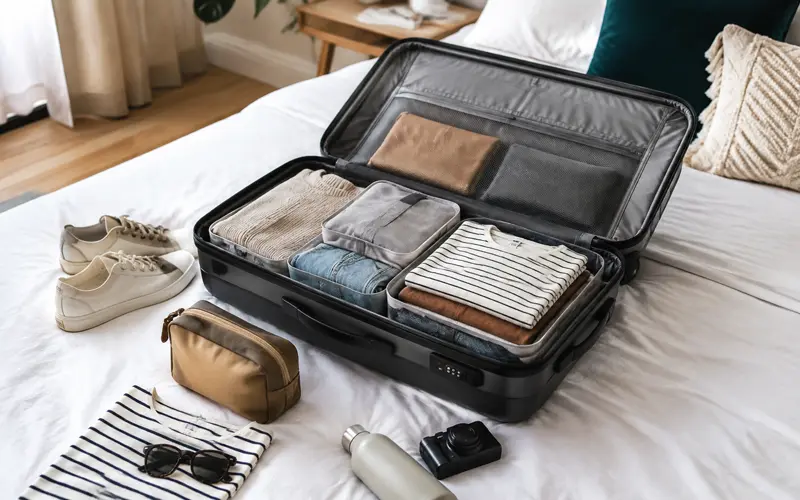
5. Know What to Roll and What to Fold
Rolling and folding both work well, but they are better suited to different types of clothing.
| Roll | Fold |
|---|---|
| T-shirts | Jeans |
| Leggings | Sweaters |
| Pajamas | Jackets |
| Workout clothing | Structured clothing |
| Casual soft tops | Wrinkle-prone garments |
Rolled clothing fits nicely into narrow spaces and makes individual pieces easy to see. Bulkier or structured clothing generally stacks better when folded.
There is no reason to commit to one packing method for the entire suitcase. Using both usually makes better use of the space you have.
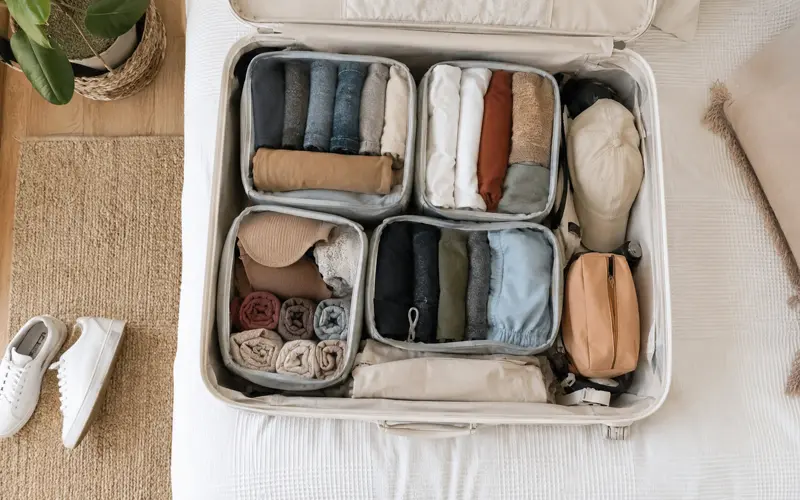
6. Use Packing Cubes for Organization
Packing cubes do not create extra room, but they can make the space inside a suitcase much easier to manage. They keep similar items together, prevent stacks of clothing from shifting around, and save you from digging through everything to find one shirt.
You can organize cubes by clothing type, by outfit, or even by traveler when several family members share luggage. I prefer a system that makes unpacking simple because an entire cube can move from the suitcase into a drawer without reorganizing everything.
Compression cubes can reduce the volume of soft clothing, although they do not reduce its weight. A compact suitcase can still be an overweight suitcase.
7. Use the Small Spaces You Already Have
After the larger clothing and packing cubes are in place, there are usually plenty of small gaps left inside a suitcase. Socks, underwear, swimsuits, belts, scarves, and other flexible items can fill those spaces without disrupting the rest of the packing.
Shoes have usable space inside them as well. Clean socks or other small soft items can be tucked inside before the shoes go into individual bags to keep the soles away from clean clothing.
There is still no need to fill every last inch. A little open space makes closing the suitcase easier and gives you somewhere to put something you buy while traveling.
8. Be Selective About Shoes
Shoes can take up a surprising amount of suitcase space, particularly when every outfit seems to call for a different pair. For many vacations, three categories are enough:
- Comfortable shoes for walking
- A casual pair for everyday activities
- A dressier option when the itinerary calls for one
The exact combination will depend on the destination. A hiking vacation, cruise, city getaway, and beach trip obviously have different footwear needs.
When practical, wear the bulkiest pair during travel and pack the lighter options. Packed shoes generally fit best around the perimeter or toward the bottom of the suitcase rather than piled in the middle.
9. Pack Toiletries Without Wasting Space
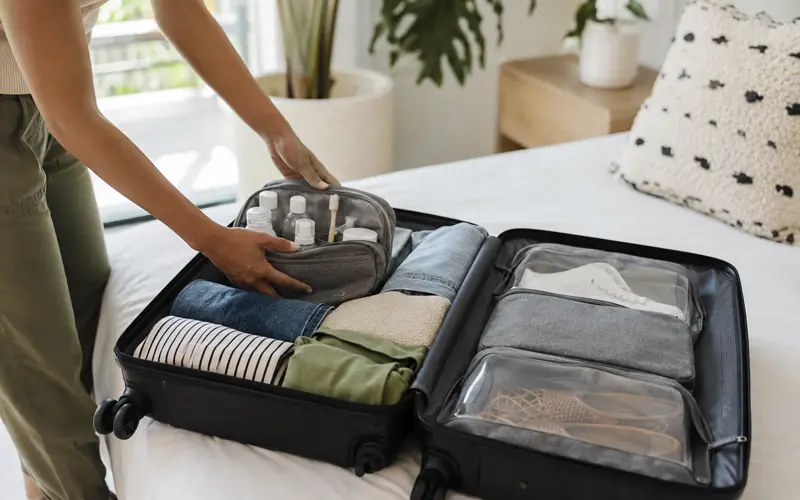
Full-size bottles can add a lot of weight and take up more room than necessary for a short vacation. Transfer products into travel-size containers when possible and leave behind anything your hotel provides that you are comfortable using.
Keep liquids together in a leak-resistant toiletry bag and make sure every cap is secure. I would rather spend an extra minute checking bottles before leaving than open a suitcase to find shampoo throughout my clothing.
For travelers using a carry-on, TSA currently limits most liquids, aerosols, gels, creams, and pastes to containers of 3.4 ounces or less inside a quart-size bag. The current requirements are available directly from the Transportation Security Administration.
10. Keep Important Items With You
Anything that would create a major problem if your checked suitcase were delayed should travel with you in your personal item or carry-on.
That generally includes:
- Identification and travel documents
- Prescription medications
- Money and credit cards
- Keys
- Valuable jewelry and electronics
- Essential medical items
- A few basic necessities for the first night
Depending on the trip, I also like the idea of keeping a clean shirt and underwear accessible. You may never need them, but they take very little room and can make a delayed bag far less disruptive.
Chargers, comfort items, and other small things that are useful during the journey itself also belong with the travel essentials you want within easy reach rather than buried at the bottom of a checked suitcase.
Spare lithium batteries and power banks require special handling when flying and should remain in carry-on baggage according to current FAA PackSafe guidance.
11. Weigh the Suitcase at Home
A suitcase can close easily and still be overweight. If you are checking luggage, weighing it before leaving home takes away the guesswork.
A small luggage scale works well, but a household scale can also help. If the bag is too heavy, you have time to decide what to remove or redistribute while everything you own is still nearby.
That is much easier than opening the suitcase on the airport floor and deciding which pair of shoes you are willing to carry through the terminal.
12. Leave Yourself Some Extra Room
It is tempting to view an empty corner of a suitcase as a packing failure. It is not.
Leaving a little space makes the bag easier to close and gives clothing room to settle during travel. It also becomes valuable on the way home when you have souvenirs, shopping purchases, or simply clothing that does not seem to pack quite as neatly as it did when you left.
The same principle applies to vacation planning in general. Packing efficiently means bringing what supports the trip rather than preparing for every possibility. When the itinerary includes several different experiences, deciding on your vacation activities before packing makes it much easier to know which clothing and gear truly deserve space.
Learning how to pack a suitcase gets easier once you stop treating the goal as fitting in as much as possible. Start with what you will genuinely use, choose clothing that works together, organize the space intentionally, and keep the things you cannot afford to lose with you. A well-packed suitcase should make travel easier, not simply prove how much you managed to squeeze inside.