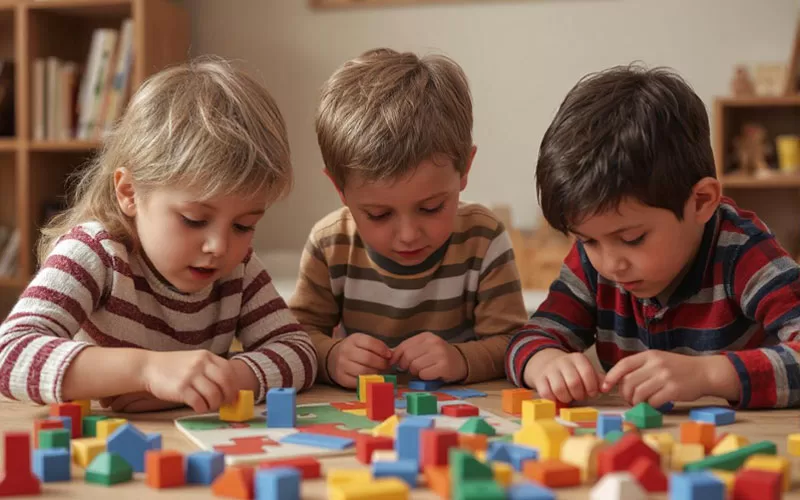
Hand-eye coordination games can give your child a real advantage in early learning. They’re not just fun, they help build motor skills, improve focus, and strengthen problem-solving abilities. When your child plays these kinds of games, they’re actually building brain pathways they’ll need for everyday tasks like writing, buttoning a shirt, or tying shoes.
Including kids’ eye coordination exercises in your child’s playtime can help them feel more confident as they explore the world and take on new challenges. Even if your child has specific needs, like being on the autism spectrum, these activities can support their unique development. Games that mix movement with concentration keep learning active, engaging, and great for both the brain and body.
The content provided here is for informational purposes only and is not intended to diagnose or treat any medical condition. Always consult your healthcare provider before making any health decisions.
Key Takeaways
- Hand-eye coordination games help children build essential learning skills.
- These games make daily tasks and academics easier for young learners.
- Practical exercises can boost confidence and support all developmental needs.
The Impact of Hand-Eye Coordination Games on Early Learning
Hand-eye coordination games offer targeted benefits for young children. These activities support skill development, encourage physical activity, and strengthen cognitive connections that are crucial for early growth.
Understanding Hand-Eye Coordination
Hand-eye coordination is the process of synchronizing visual input with hand movement. For children, this means the ability to see something, process what’s needed, and then guide their hands to perform the task. Examples include catching a ball, stacking blocks, or drawing shapes. These actions seem simple, but they help build the foundation for more complex skills like writing and self-care.
The development of eye-hand coordination in childhood lays the groundwork for both academic and everyday tasks. Children who participate in activities designed to boost this ability are more likely to experience fewer struggles with fine motor and visual-motor challenges.
How Coordination Games Promote Skill Development
Hand-eye coordination games target core aspects of coordination skills by blending play with learning. Activities such as threading beads, building with blocks, or tossing bean bags help children practice precise movements while staying engaged.
Key skills developed include:
- Fine motor control
- Visual tracking
- Concentration
- Problem-solving
Frequent participation in these games supports better pencil grip, scissor control, and even self-feeding. Play provides immediate feedback, allowing children to adapt their movements and improve accuracy.
Role in Cognitive and Physical Growth
Coordination games aid both cognitive and physical development by encouraging the brain and body to work together. They help children process sensory input, plan movements, and build spatial awareness—all of which are important for academic readiness.
Physical activity through these games also fosters muscle strength and endurance, helping children transition smoothly into sports and classroom tasks. Integrating hand-eye coordination activities into daily routines has been shown to enhance overall learning outcomes and support healthy childhood development.
Key Activities and Practical Benefits for Child Development
Hand-eye coordination games target both fine and gross motor skills, helping children build necessary foundations for daily tasks and academic success. By engaging in structured and creative activities, children enhance visual perception, attention span, and the ability to interact with their environment in meaningful ways.
Fine Motor Skills Through Creative Play
Creative play activities such as drawing, finger painting, and arts and crafts offer children a hands-on way to practice precision and control. Manipulating pencils, crayons, and brushes builds the muscles in the hands and fingers, directly supporting writing readiness and self-help skills.
Tasks like cutting with scissors, threading and lacing, and lacing beads require focus and steady hands. These activities challenge children to coordinate their visual input with their hand movements, which is essential for performing detailed tasks at school and home. Using puzzles, especially jigsaw puzzles, further encourages visual discrimination, problem-solving, and patience. Construction toys and building blocks invite children to stack, sort, and connect objects, fostering dexterity and bilateral hand coordination. These activities make practice engaging and help bridge play with early academic needs.
Building Gross Motor Skills With Movement
Outdoor and indoor movement games play a central role in developing gross motor skills. Activities like bean bag toss, ball games such as throwing and catching a ball, and running games encourage children to move their arms and bodies in rhythm with what they see. Ball activities help children practice timing, force, and accuracy. Successfully catching or kicking a moving ball is a complex task that refines both visual tracking and large muscle coordination. This directly supports a child’s readiness for physical education and organized sports as they get older.
Games that involve hopping, jumping, and navigating simple obstacle courses benefit balance and core muscle stability. These outdoor activities not only build strength and endurance but also support coordination between the left and right sides of the body, critical for many daily and classroom tasks.
Conclusion
Hand-eye coordination games help children connect visual input with precise hand movements. These activities support the development of timing, accuracy, and spatial awareness, which are vital for numerous early learning tasks.
Research shows that engaging in goal-oriented play can strengthen motor skills without causing boredom, making it a practical tool in early childhood education. Puzzles, building blocks, and vision-based learning games each offer unique ways to improve hand-eye coordination and fine motor control.