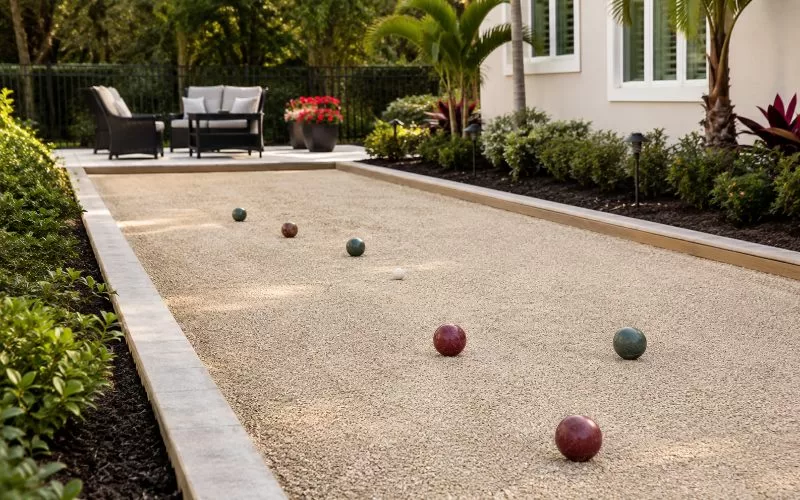
A backyard bocce court can turn an unused stretch of yard into a relaxed outdoor entertaining space. It does not have to feel overly formal or complicated, especially if your goal is casual family play, weekend gatherings, or creating a backyard feature that gives guests something fun to do while food is on the grill. The biggest decision is choosing the best bocce court surface for the way you actually plan to use the space.
Bocce is simple enough for beginners but still competitive enough to keep people engaged. Players roll bocce balls toward a smaller target ball, often called the pallino, and the court surface affects how smoothly the balls travel, how much they bounce, and how much maintenance the court will need over time. A good backyard bocce court should be level, well-draining, comfortable to play on, and easy enough to maintain that it stays enjoyable instead of becoming another outdoor chore.
If you are already thinking about improving your outdoor space, a bocce court fits naturally with other backyard upgrades like seating areas, lighting, landscaping, and casual entertaining zones. The right surface choice can help your court blend into your backyard while still giving you a smooth, playable area.
What You’ll Learn in This Guide
- The most common bocce court surface materials
- Which options work best for casual backyard play
- What surfaces need the least maintenance
- Why drainage matters, especially in Florida
- How to choose a surface that fits your outdoor space
What Is the Best Surface for a Bocce Court?
The best bocce court surface depends on your climate, budget, maintenance preferences, and how serious you want the game to feel. Traditional bocce courts often use crushed oyster shell blends because they create a firm, smooth surface with a controlled ball roll. However, backyard courts may also use decomposed granite, stone dust, sand, artificial turf, or clay-based blends.
According to the United States Bocce Federation open rules, official bocce courts are larger than many homeowners can fit in a typical backyard, and unofficial courts can be smaller. That means you have room to adapt the court to your space, especially if you are building it for casual outdoor fun rather than tournament-level play.
For most backyard homeowners, the best surface is usually one that balances playability with drainage and upkeep. In humid or rainy areas, drainage matters just as much as how the surface looks. A beautiful court that holds water, shifts after storms, or grows weeds quickly will become frustrating no matter how nice it looked on installation day.
Quick Pick: For most casual backyard bocce courts, decomposed granite, crushed oyster shell, or artificial turf are usually the most practical options. They offer a nice mix of appearance, playability, and maintenance without feeling too complicated for a home backyard.
Quick Comparison of Bocce Court Surface Options
| Surface Type | Best For | Maintenance Level | Backyard Feel |
|---|---|---|---|
| Crushed oyster shell | Smooth, traditional play | Medium | Classic and polished |
| Decomposed granite | Casual backyard courts | Low to medium | Natural and practical |
| Stone dust | Firm, compacted surface | Medium | Simple and understated |
| Sand | Budget-friendly casual play | Medium to high | Beachy and informal |
| Artificial turf | Clean, low-maintenance look | Low | Modern and neat |
| Clay-based blends | Controlled ball roll | Medium to high | Traditional court feel |
Crushed Oyster Shell
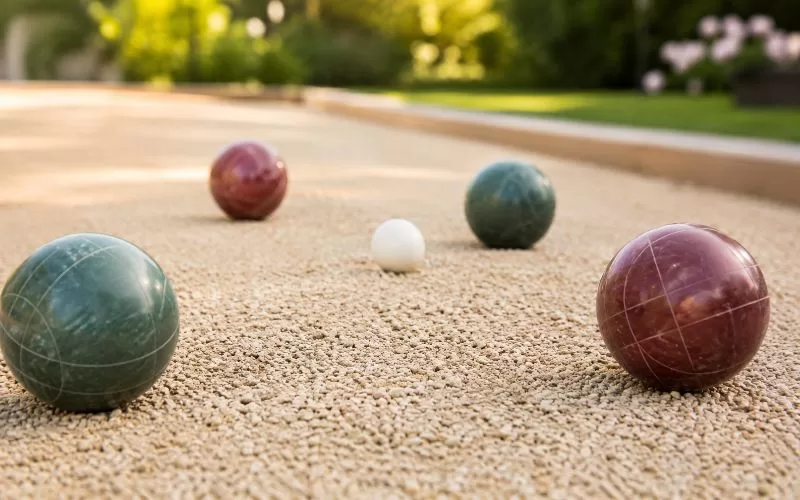
Crushed oyster shell is one of the most popular bocce court surface materials because it compacts well and creates a smooth, attractive playing area. It has a traditional look and can help the ball roll with more control than loose sand or grass. Many bocce court builders use oyster shell blends or oyster shell flour as part of the top playing layer.
This surface works especially well if you want the court to feel more intentional and polished rather than like a temporary backyard game area. It can also look beautiful in a coastal or Florida-style backyard because the light color feels bright, clean, and natural.
The downside is that oyster shell may require occasional raking, rolling, misting, or topping off depending on weather and use. If you live somewhere with frequent rain, you will want to pay close attention to drainage and installation. A smooth oyster shell court starts with a solid base underneath, not just the top layer.
Decomposed Granite
Decomposed granite is a practical choice for many backyard bocce courts. It creates a firm surface when compacted properly, drains better than many loose materials, and has a natural look that blends well with landscaping, pavers, patios, and garden areas. It is also often easier to source than specialty bocce blends.
For casual backyard play, decomposed granite can be a strong option because it does not feel too precious. It works well for homeowners who want a nice court but do not necessarily need a tournament-style surface. If your backyard already includes stone, pavers, gravel paths, or tropical landscaping, decomposed granite can look like it belongs there.
The key is compaction. If it is too loose, the ball will not roll consistently. If the base is uneven, the surface will settle and create low spots. Decomposed granite is usually best when installed over a properly prepared base with edging to keep the court contained.
Stone Dust
Stone dust is another compacted surface option that can work for bocce courts. It can create a firm playing area and is sometimes used in combination with other materials. Like decomposed granite, stone dust needs proper grading and compaction to perform well.
This may be a good option if you want a simple, understated court that does not draw too much attention away from the rest of the backyard. It can work nicely beside a patio, fire pit area, or seating zone where the court becomes part of the overall outdoor layout instead of the only focal point.
The main thing to watch is drainage. Stone dust can compact tightly, but if water has nowhere to go, puddling and uneven spots can become a problem. For Florida homes especially, any outdoor project should be planned with storms, humidity, and heavy rain in mind. These same concerns come up often with Florida home maintenance because small drainage issues can quickly turn into bigger outdoor headaches.
Sand
Sand is one of the easiest materials to understand because it feels familiar, especially in a beach-loving backyard. It can be affordable, casual, and simple to install compared with more polished court surfaces. For very relaxed play, sand may be enough.
However, sand is not always the best bocce court surface if you want consistent ball movement. The balls may slow down quickly, leave tracks, or roll unevenly if the surface is too soft. Sand can also shift after rain, wind, or repeated play, which means it may need more frequent leveling.
Sand makes the most sense for a casual, beachy backyard court where the overall vibe matters more than precision. If you are building a bocce area mainly for parties, cookouts, or occasional weekend fun, it can work. If you want a smoother and more predictable game, oyster shell, decomposed granite, or artificial turf will usually be better choices.
Artificial Turf
Artificial turf is a popular option for homeowners who want a clean, finished look with less loose-material maintenance. It can make a bocce court feel polished and easy to care for, especially when installed over a properly prepared base. It also keeps the court looking green without mowing, watering, or dealing with bare patches.
The best artificial turf for bocce should be short, dense, and smooth enough for consistent ball roll. A thick, fluffy lawn-style turf is not ideal because the bocce balls may drag or slow down too much. The base underneath still matters, so turf should not be treated as a shortcut around proper leveling and drainage.
Artificial turf may be especially appealing if your backyard already has a modern patio, pool area, or clean outdoor entertaining setup. It pairs well with lighting, seating, and low-maintenance landscaping. If you are trying to create a backyard that feels usable after sunset, adding Florida outdoor lighting around the court can help the space feel more inviting.
Clay-Based Bocce Blends
Clay-based blends can create a smooth, controlled playing surface, but they are usually better suited for people who want a more traditional court experience and do not mind extra upkeep. Clay can be sensitive to moisture, and it may need routine attention to stay level and playable.
This type of surface may not be the easiest choice for a casual backyard unless you are committed to maintaining it. In warm, wet, or humid climates, clay-based surfaces can become more work than some homeowners expect.
If you love the traditional feel of a bocce court and want something closer to club-style play, it may be worth researching. For most casual homeowners, though, decomposed granite, oyster shell blends, or artificial turf are usually more practical.
Best Bocce Court Surface for a Florida Backyard
For a Florida backyard, drainage should be one of the first things you consider. Afternoon storms, humidity, sandy soil, and heavy rain can all affect how an outdoor court holds up. A surface that works beautifully in a dry climate may need extra prep work in Florida.
Crushed oyster shell and decomposed granite are both strong options because they can create a firm playing surface while still fitting the relaxed, coastal feel of a Florida outdoor space. Artificial turf can also work well if you want a cleaner look and less loose material around the yard. Sand may fit the Florida vibe visually, but it is usually better for casual play than for a smooth, consistent roll.
The Bocce Standards Association court design recommendations note that a desirable bocce court location should have good natural drainage. That advice is especially important in Florida, where outdoor surfaces need to handle rain without becoming uneven, muddy, or difficult to maintain.
How to Choose the Right Surface for Your Backyard
Once you understand the main surface options, the best choice usually comes down to how you want the court to look, how often you plan to use it, and how much maintenance you realistically want to do.
For a casual backyard bocce court, decomposed granite is one of the most practical choices because it has a natural look, works well with landscaping, and can create a firm playing surface when installed correctly. Crushed oyster shell is a strong option if you want a more classic bocce court feel with a smooth, polished appearance.
Artificial turf may be the better choice if you want a cleaner, lower-maintenance surface with less loose material around the yard. Sand can work for a relaxed, beach-inspired space, but it is usually better for casual play than for consistent ball movement. Stone dust and clay-based blends can also work, but they are usually better for homeowners who are comfortable with a little more upkeep.
For most Florida backyards, I would focus on three things before making a final decision: drainage, maintenance, and how naturally the court fits into the rest of the outdoor space. A bocce court should make your backyard more enjoyable, not create another project that needs constant attention.
What Size Should a Backyard Bocce Court Be?
Official bocce courts are quite large, but most backyard courts are smaller. Many homeowners adjust the dimensions based on the space they have available. A long side yard, open lawn area, or unused stretch beside a patio can often become a casual bocce court with the right layout.
If you are short on space, focus on creating a court that is long enough for enjoyable play and wide enough for comfortable movement. It does not have to be regulation size to be fun. For a family backyard, the goal is usually to create a smooth, dedicated area where people can play without chasing balls through the grass or garden beds.
You will also want to think about what surrounds the court. Seating, shade, lighting, and easy access to food and drinks can make the area feel more like an outdoor entertaining feature instead of a random game strip. A nearby table with snacks or an easy summer charcuterie board can make the space feel ready for guests without much effort.
Drainage and Base Layers Matter More Than You Think
The top surface gets most of the attention, but the base underneath is what helps the court last. A bocce court needs a level, compacted foundation so the surface does not shift, settle, or collect puddles. Edging also helps keep the playing material contained and gives the court a clean shape.
A good base may include compacted gravel or crushed stone, landscape fabric, and a finished playing layer. The exact materials will depend on your yard, budget, and chosen surface. If your yard already has drainage issues, it is worth solving those before installing the court.
Before choosing a surface, think about:
- How much rain your yard gets
- Whether the area already drains well
- How much maintenance you realistically want to do
- Whether the court will be used casually or often
- How the court will look with the rest of your backyard
Simple Bocce Court Maintenance Checklist
- Rake loose surface materials after heavy use
- Remove leaves, weeds, and debris regularly
- Check for low spots after heavy rain
- Refresh oyster shell, sand, or granite as needed
- Keep edging secure so the court material stays contained
- Make sure water drains away from the court
- Brush artificial turf occasionally to keep the surface even
- Inspect borders or frames for shifting, rot, or damage
A little routine attention can make a big difference. It is much easier to smooth out small uneven areas or clear debris regularly than to fix a court after it has been neglected for months.
How to Make a Bocce Court Feel Like Part of Your Backyard
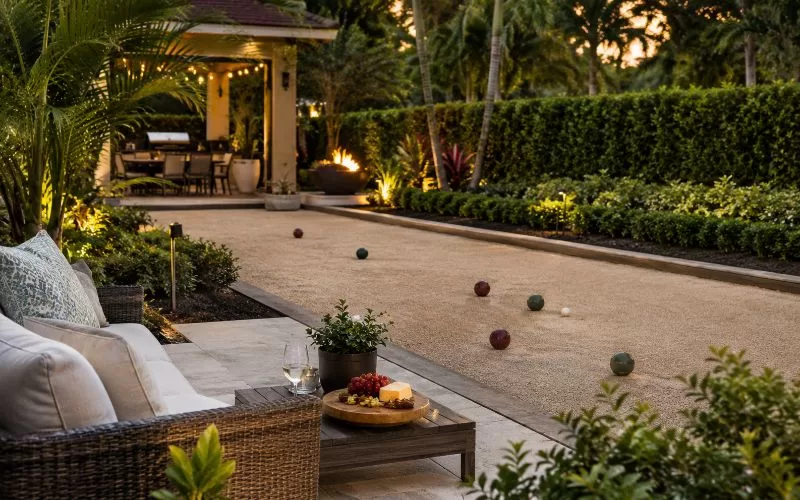
A bocce court looks best when it feels connected to the rest of the outdoor space. Instead of treating it like a separate sports area, think of it as one more backyard zone. Add nearby seating, a small table, shade, potted plants, or soft lighting to make the court feel inviting even when no one is playing.
In a Florida backyard, tropical plants, warm lighting, and comfortable seating can help soften the look of the court. If your home already has a patio, pool deck, or outdoor kitchen, place the court where it supports that flow. Guests should be able to move naturally from conversation to food to play without feeling like the game area is tucked away.
This is where bocce becomes more than just a game. It can help make your backyard feel more interactive, relaxed, and ready for casual entertaining.
Choosing the Right Bocce Court Surface
The best bocce court surface is the one that matches your backyard, your weather, and the amount of maintenance you are willing to do. Crushed oyster shell is a classic choice with a smooth, traditional feel. Decomposed granite is practical and natural-looking for casual backyard play. Artificial turf is clean and low-maintenance when installed correctly. Sand is affordable and relaxed, but less consistent. Stone dust and clay-based blends can work well with the right prep and upkeep.
For many homeowners, the sweet spot is a surface that drains well, stays level, and feels easy to maintain. A backyard bocce court should make your outdoor space more enjoyable, not give you another complicated project to worry about.
A Backyard Game Worth Planning Around
A bocce court can be a fun way to bring more life to an outdoor space, especially if you enjoy relaxed gatherings, warm evenings, and simple backyard entertaining. You do not need to be an expert in the game to appreciate how well it fits into a casual home setting. With the right surface, good drainage, and a layout that works with your yard, a bocce court can become one of those backyard features people naturally gather around.
Whether you choose oyster shell, decomposed granite, artificial turf, or another surface, the goal is the same: a smooth, inviting space that makes it easy to enjoy time outside.