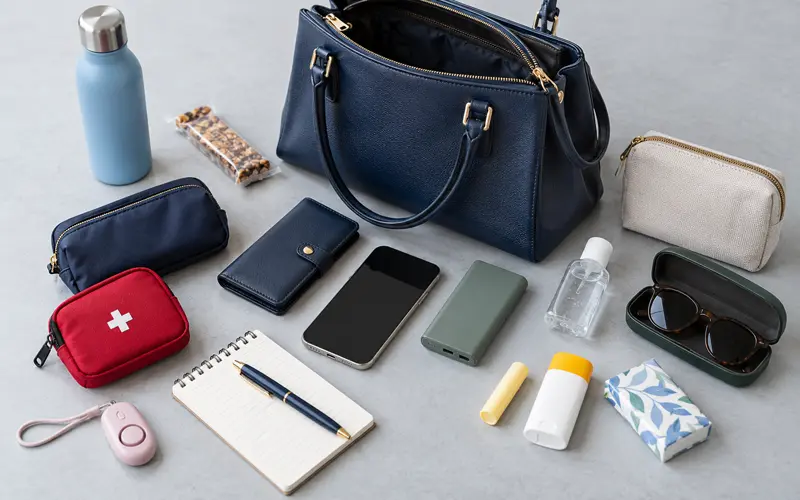
A purse can quickly become a catch-all for receipts, loose change, old lip products, and items we forgot were even in there. Yet when it is stocked thoughtfully, it can make everyday errands, workdays, appointments, and unexpected situations much easier.
The best purse essentials are not about carrying everything you could possibly need. They are the practical items you are likely to reach for when you are away from home. I prefer keeping smaller or travel-size versions in my bag whenever possible so they are useful without weighing it down.
What Should You Keep in Your Purse?
Everyone’s routine is different, so the perfect list will vary. Someone commuting to an office may need different items than someone running errands close to home. The season, weather, purse size, and amount of time you spend away from home can also affect what you carry.
These 15 purse essentials create a practical foundation that can be adjusted to fit your daily life.
1. Wallet, Identification, and Payment Methods
A wallet is the most obvious purse essential, but it is worth checking regularly to make sure it contains only what you need. Carry your driver’s license or identification, one or two payment cards, your health insurance card, and a small amount of cash.
Remove expired cards, unnecessary receipts, and anything containing personal information that you do not need every day. A slimmer wallet saves space while making important cards easier to find.
2. Cell Phone and Portable Charger
Most of us depend on our phones for directions, communication, appointments, payments, and emergency information. Unfortunately, a phone is not very helpful when the battery dies.
A compact portable charger or charging cable can be invaluable during a long day. Check the charger periodically to ensure it still has power, especially before traveling or attending an event where outlets may not be readily available.
3. Hand Sanitizer
We touch shopping carts, door handles, payment terminals, elevator buttons, and countless other shared surfaces throughout the day. A small bottle of hand sanitizer is convenient when soap and water are unavailable.
It becomes especially useful during flu season, while traveling, or before eating on the go. Choose a bottle with a secure cap and place it in a small zippered pouch to protect the rest of your purse from leaks.
Hand sanitizer should not replace washing your hands when a sink is available, but it is a useful backup when you are away from home.
4. Tissues and Cleansing Wipes
A small package of tissues can handle everything from allergies and runny noses to small spills. Individually wrapped cleansing wipes are another convenient option for sticky hands, smudged makeup, or a quick cleanup.
Keep wipes sealed so they do not dry out, and avoid using heavily fragranced products on your face if your skin is sensitive. These simple supplies take up very little room and are often among the most frequently used items in a purse.
5. Lip Balm with SPF
The skin on your lips can become dry and uncomfortable after exposure to sun, wind, air conditioning, or cold weather. A moisturizing lip balm is easy to carry and can be reapplied throughout the day.
A lip product with SPF provides additional protection when you spend time outside. This is especially helpful in Florida, where sun exposure is a year-round concern. Lip balm also fits naturally alongside the products in a simple skincare routine for mature skin without requiring you to bring your entire beauty bag.
6. Sunscreen
A travel-size sunscreen is one of the most useful purse essentials, particularly if your schedule changes unexpectedly. It allows you to reapply protection before eating outside, watching a sporting event, walking around a festival, or spending extra time in the sun.
Choose a container that closes securely and store it inside a washable cosmetic pouch. Sunscreen sticks can also be convenient because they are compact and less likely to leak.
7. Personal-Care Products
A small personal-care pouch keeps private necessities organized and easy to locate. Depending on your needs, it may include menstrual products, bladder-leak protection, hair ties, a compact mirror, or a small comb.
Keeping these products together prevents you from digging through your purse when you need something quickly. It also makes transferring your essentials to another handbag much easier.
8. Necessary Medication
If you may need medication while away from home, carry it in its original labeled container or an appropriate travel container. This might include a prescribed medication, allergy medicine, or another product recommended by your healthcare provider.
Avoid carrying loose pills in the bottom of your purse. They can be difficult to identify, exposed to dirt or moisture, and unsafe around children. Medications that are sensitive to heat should not be left in a hot vehicle or stored in a purse for long periods.
9. A Small First-Aid Kit
You do not need a full medical kit in your handbag, but a few basic supplies can be helpful. Consider carrying:
- Adhesive bandages
- Alcohol-free antiseptic wipes
- Blister bandages
- A small packet of antibiotic ointment
- Safety pins
Place everything in a slim zippered pouch so the supplies remain clean and organized. A miniature first-aid kit is useful for minor cuts, uncomfortable shoes, and other small mishaps that happen away from home.
Preparedness does not have to be excessive. The same practical approach can help when developing a family emergency plan for situations that require more than the few supplies carried in your purse.
10. Breath Mints, Gum, and Dental Floss
Breath mints or sugar-free gum can help freshen your mouth after coffee or a meal. Individually packaged dental floss or a small container of floss is also useful when food becomes stuck between your teeth.
Keeping these items in a separate pouch helps prevent wrappers and loose pieces of gum from collecting at the bottom of your bag. Replace them occasionally, especially if your purse is regularly exposed to heat.
11. A Nutritious Snack
Busy days do not always go according to plan. A shelf-stable snack can hold you over when an appointment runs late, errands take longer than expected, or you cannot get a meal right away.
Protein bars, nuts, roasted chickpeas, or whole-grain crackers are generally easier to carry than foods that melt or require refrigeration. Look for packaging that will not tear easily, and check expiration dates when cleaning out your purse.
A few of the options included among healthy snacks that help keep you full can also work well when you need something portable.
12. Refillable Water Bottle
Hydration is easy to overlook when you are busy. A slim refillable water bottle can prevent you from needing to buy a drink every time you leave home.
Choose a leak-resistant bottle that fits securely inside your purse or its exterior pocket. If carrying water makes your bag too heavy, bring a smaller bottle and refill it during the day rather than carrying a large one.
13. Sunglasses and an Eyeglass Cloth
Sunglasses protect your eyes while driving, walking outdoors, or sitting near a bright window. Store them in a protective case so they do not become scratched by keys or other items.
A small microfiber cloth is also useful for cleaning sunglasses, prescription glasses, phone screens, and camera lenses. It takes up almost no space and is much safer for lenses than using a tissue or the edge of your shirt.
14. Pen and Small Notepad
Even with a phone nearby, there are times when a pen is still necessary. You may need one to complete a form, write down information, label something, or leave a quick note.
Choose a pen with a secure cap or retractable tip to prevent ink marks inside your purse. A thin notepad can be useful when your phone battery is low or you need to hand information to someone else.
15. Personal Safety Item
A personal alarm or whistle can provide an added layer of security when walking through a parking lot, traveling alone, or returning to your car after dark. Choose something you understand how to operate and can reach quickly.
Emergency contact information should also be accessible from your phone’s lock screen. If your phone offers a medical ID or emergency-contact feature, take a few minutes to set it up rather than relying entirely on information stored inside a locked device.
How to Organize Your Purse Essentials
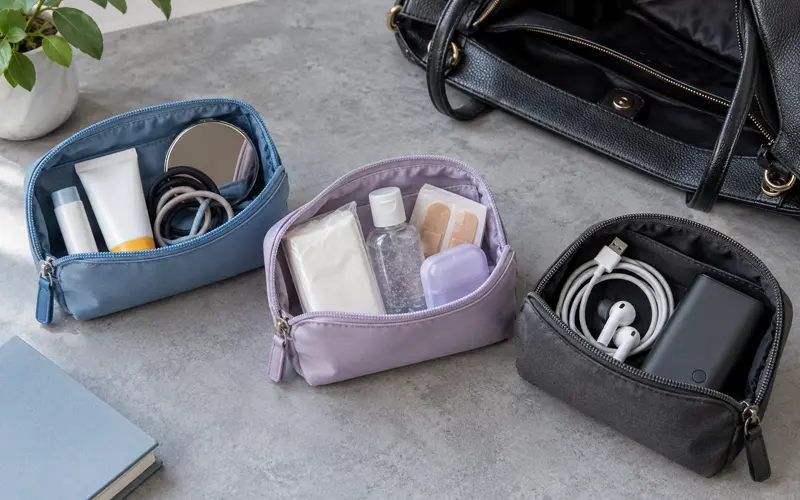
Purse organization is much easier when items are divided into a few small pouches. Instead of allowing everything to settle at the bottom of the bag, group similar supplies together.
A simple system might include:
- A personal-care pouch for lip balm, sunscreen, hair ties, and menstrual products
- A health pouch for medication, tissues, sanitizer, and first-aid supplies
- A technology pouch for charging cables, earbuds, and a portable charger
This system makes it easier to locate what you need and transfer your purse essentials when changing bags. Clear or brightly colored pouches can help you identify each category quickly.
Clean out your purse at least once a month. Throw away receipts and wrappers, replace expired products, recharge your portable battery, and check for leaking containers. Removing unnecessary items also reduces the weight placed on your shoulder and keeps the essentials easier to reach.
A well-packed purse should make your day more convenient, not feel like luggage. Start with the items you use most often, choose compact versions, and leave behind anything that has been sitting untouched for months. The right purse essentials provide a comfortable balance between being prepared and carrying only what you genuinely need.