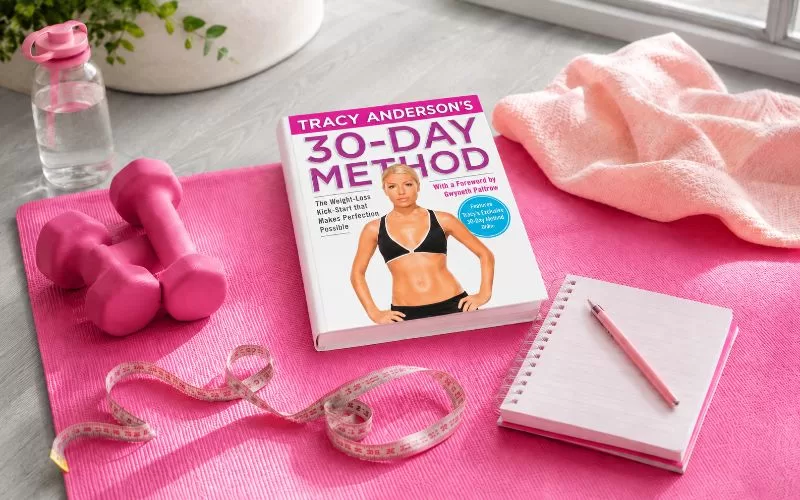
Editor’s Note: This article is based on my personal experience with Tracy Anderson’s 30-Day Method years ago. The book is no longer widely available in the same way it once was, although copies can still be found through used book sellers and resellers. I originally wrote several separate posts as I worked through the program, and I am now combining them into one archive-style review so the experience is easier to read in one place.
This post is not medical, nutritional, or fitness advice, and it is not a recommendation to follow this diet or exercise program. It is simply an honest look back at what I tried, what I liked, what did not work for me, and why I stopped early. Always speak with a qualified healthcare professional before making major changes to your diet or exercise routine, especially if you have health concerns, take medication, or have a history of disordered eating.
A few things to know before reading:
- This review reflects my original experience at the time.
- My thoughts today are shaped by years of life, parenting, work, and a more balanced view of health.
- The weight numbers included are my original numbers, not typical or promised results.
- Early weight changes can happen for many reasons, including food changes, water weight, and a sudden shift in activity.
Why I Tried Tracy Anderson’s 30-Day Method
Looking back, I can absolutely see why Tracy Anderson’s 30-Day Method caught my attention. At the time, I was interested in fitness, weight loss, and trying programs that readers might also be curious about. I liked the idea of documenting the experience as a normal, busy woman, not as a fitness professional or someone with unlimited time to work out and cook every meal from scratch.
The program had a very specific promise and a very structured format, which made it appealing from a review perspective. I wanted to know whether the workouts felt doable, whether the food plan was realistic, and whether the overall method made sense for everyday life. It also fit into the kind of health and fitness content I was sharing then, much like my older Cinch diet book review that I later archived in the same way.
What interested me most was:
- The combination of dance cardio and muscle design workouts
- The idea of trying something outside my usual routine
- The promise of visible results in a short period of time
- The chance to share real progress notes instead of just reviewing the book from the outside
What Was Included in Tracy Anderson’s 30-Day Method
Tracy Anderson’s 30-Day Method was a book-based fitness and eating plan that also included a companion DVD. The book laid out a 30-day structure with dance cardio, muscle design exercises, and a detailed meal plan. The workouts focused heavily on what Tracy called accessory muscles, with the goal of creating a leaner, dancer-like look rather than a bulky strength-training style.
The plan also included a very specific eating schedule, with recipes and daily menus designed to be followed closely. That was one of the biggest challenges for me because the food plan was not simply a list of general meal ideas. It required shopping, prepping, cooking, and following many different recipes without much repetition, which quickly became difficult alongside work and family life.
The main pieces of the program included:
- A 30-day workout and meal plan
- Dance cardio sessions
- Muscle design exercises
- A companion DVD for demonstrations
- Daily menus and recipes
- A strong emphasis on following the plan exactly
My First Impression Looking Back
My first impression of the book was actually positive. I liked reading about the method, and I found the theory interesting, especially the idea of working smaller muscles in a different way. The workouts seemed unique enough that I wanted to try them, and I appreciated that the book came with a DVD to help explain the exercises.
At the same time, I had concerns before I even started. The plan expected daily workouts, a lot of cardio, and a level of meal prep that felt intense for someone working full-time with kids in activities. Today, when I think about starting a running program or any new fitness routine, I look much more closely at whether it fits real life instead of only whether it sounds effective.
My biggest concerns from the beginning were:
- Working out 7 days a week with no rest days
- Building up to 40 to 60 minutes of cardio
- Adding muscle design exercises on top of the cardio
- Shopping for specialty ingredients
- Preparing multiple recipes every day
- Not repeating meals to save time or money
Day 1: Starting the Tracy Anderson 30-Day Method
On Day 1, my starting weight was 158.5 pounds. I began with the exercise portion first because I knew I needed to get it done early if I wanted any chance of sticking with the plan. The cardio surprised me because it was more fun than I expected, but it was also very high-impact and moved quickly from one step to the next.
The dance cardio was not a polished, follow-along workout with lots of instruction. It was more like watching Tracy move and trying to keep up as best as I could. I remember deciding that if I could not follow every move perfectly, I would just keep dancing and keep moving, which honestly made the workout feel less intimidating.
My Day 1 exercise takeaways were:
- The cardio got my heart pumping quickly.
- The moves changed fast and were not easy to follow perfectly.
- The muscle design workout felt different from traditional strength training.
- My arms and body felt challenged without using heavy weights.
- I realized the DVD was more of a demonstration tool than a full guided workout.
The food plan was a much bigger adjustment. I spent extra money on groceries and even needed a trip to Whole Foods for ingredients I could not find at my regular store. The meals were not repeated during the week, which made the plan feel less practical because I could not simply cook once and use leftovers later.
By the end of that first day, I already knew the meal plan would be harder for me than the workouts. Preparing multiple recipes ahead of time took far more effort than I expected. With kids, sports, work, and regular family dinners, the plan felt like a second job before I had even made it through the first full day.
Day 2: The Workouts Felt Effective, But the Food Was Hard
On Day 2, my weight was 156.5 pounds. That early drop was motivating, but looking back now, I would not treat it as proof that the plan was magic or that the same thing would happen for everyone. A sudden change in food, calories, sodium, carbohydrates, and exercise can all influence the scale quickly, especially in the first few days of a strict plan.
The workouts were still the part I enjoyed most. I felt energized during the day, and I could feel my outer thighs and glutes from the previous workout. I also timed the cardio and realized the two cardio sections were about 10 minutes each, which meant getting to the full recommended cardio time would require repeating them.
The exercise felt effective in these ways:
- My legs and glutes felt worked.
- The cardio was sweaty and challenging.
- Stretching felt good before the muscle design work.
- The muscle design portion took about 30 minutes when doing 20 reps.
- Twenty minutes of high-impact dance cardio felt like enough for me at that stage.
The food, however, was already becoming a problem. I used FitDay at the time to estimate the calories and macronutrient balance, and I was concerned by how little I had eaten earlier in the day. The total calories may not have seemed shocking by the end of the day, but the way they were distributed did not feel balanced for my body.
This is one of the places where current-day me looks back and sees the difference between a plan that may produce quick movement on the scale and a plan that feels sustainable. I now care much more about steady energy, protein, strength, and consistency than forcing myself through a rigid routine. That is also why broader wellness pieces like the surprising benefits of exercise feel more aligned with how I think about health today.
Day 3: Making Adjustments to Fit Real Life
On Day 3, my weight was 155.5 pounds, which meant I had lost 3 pounds from Monday morning to Wednesday morning. At the time, that felt exciting, but it also came with a very important realization. I was losing weight, yet I was not enjoying the process enough to imagine doing it for the full 30 days.
The food plan was where I started making changes. Some of the recipes and food combinations were simply not foods I enjoyed, and I knew that if I wanted to make it through even one week, I would have to adapt a few things. I changed a veggie roll-up into a more normal omelet, swapped or simplified ingredients, and made the meals feel a little more realistic for my own taste.
Some of the Day 3 adjustments included:
- Making an omelet instead of pureeing vegetables
- Swapping certain ingredients for foods I already had
- Eating blueberries and apples instead of making blueberry applesauce
- Preparing salmon in a way that felt more normal for me
- Trying to stay close to the plan while still making it livable
This was the turning point for me because Tracy Anderson’s plan stressed following the method closely. I wanted to review it fairly, but I also had to be honest about what I could actually do. A plan can look very organized on paper and still be difficult to follow once it collides with work, kids, family meals, errands, and personal food preferences.
Why I Stopped the Tracy Anderson 30-Day Method Early
I stopped the program early because it was not working for my real life. I thought about it carefully because I do not like quitting things, especially when I had told readers I was going to share my progress. But after a few days, it became clear that the plan was taking too much time, requiring too much food prep, and making me feel like I was on a diet in a way I did not like.
The biggest issue was not the exercise. The workouts were challenging, but I actually liked parts of them and appreciated that they got me moving again. The meal plan was the part that felt overwhelming, especially because I had to prepare food ahead of time and could not rely on simple repeated meals to make the week easier.
Here is what made the plan hard for me:
- It took too much time at night to prepare food for the next day.
- The recipes were not enjoyable enough for me to stick with them.
- The plan felt restrictive instead of motivating.
- I felt deprived, which was something I had worked hard to get away from.
- My mood and energy started to feel off.
- It did not fit my schedule as a working mom with kids in sports.
The mental side mattered just as much as the physical side. I did not want to lose weight in a way that made me feel irritable, tired, or preoccupied with food. I would rather lose weight more slowly while feeling satisfied than force myself through a plan that made healthy eating feel like punishment.
What I Still Liked About the Program
Even though I stopped early, I do not look back at the entire experience negatively. The workouts were interesting, and they were different from the more traditional exercise routines I had done before. The cardio was not easy, but it was more fun than I expected once I let go of trying to do every move perfectly.
I also liked that the program pushed me to exercise again. That was one of the best things to come out of the experience because I remembered how much better my body felt when I was moving consistently. Even now, I think there is value in trying new workouts if they help you reconnect with movement in a way that feels good and realistic.
The positives for me were:
- The workouts felt fresh and different.
- The cardio was challenging and effective.
- The muscle design exercises worked muscles I was not used to targeting.
- The program helped me restart an exercise habit.
- It gave me a real experience to share instead of a surface-level review.

What Did Not Work for Me
The biggest thing that did not work was the lack of flexibility. I need a plan that leaves room for normal meals, family schedules, simple prep, and foods I actually enjoy. Tracy Anderson’s 30-Day Method felt too exact, and that made it harder for me to adapt without feeling like I was no longer truly following the program.
The food plan also felt too complicated for daily life. There were too many recipes, too many separate meals, and too many ingredients I would not normally keep on hand. While I understand that some people enjoy a fully planned menu, I prefer an approach that allows for simple protein, vegetables, healthy fats, and familiar meals that can be repeated.
The parts that did not fit my life were:
- Too much meal prep
- Too many one-time recipes
- Too many specialty ingredients
- Not enough flexibility
- Not enough meals I enjoyed
- No easy way to simplify the week
- A routine that did not feel realistic long-term
Today, this is why I think practical health content matters so much. Weight loss and fitness plans are only useful if they can be repeated in real life, and that is something I would emphasize much more now in a post about effective weight loss tips. A routine does not have to be perfect to be useful, but it does have to be livable.
My Original Tracy Anderson 30-Day Method Results
My original results were simple: I lost 3 pounds in the few days I followed the plan. I weighed 158.5 pounds on Monday morning, 156.5 pounds on Tuesday morning, and 155.5 pounds on Wednesday morning. At the time, I was happy to see the scale move, but I also knew the experience did not feel right enough for me to continue.
| Day | Weight |
|---|---|
| Starting Weight | 158.5 |
| Day 2 | 156.5 |
| Day 3 | 155.5 |
| Total Change | 3 pounds lost |
Those numbers are part of my original archive, but they should not be treated as typical results. A short-term drop on the scale can come from many things, and a few days is not enough time to judge whether a program is healthy, sustainable, or right for someone long-term. For me, the more important result was realizing that quick weight loss was not worth feeling deprived, tired, or disconnected from the way I wanted to eat.
My Honest Thoughts Looking Back Now
Looking back now, I can appreciate why the program appealed to me at the time. It had structure, energy, a recognizable name, and the promise of a clear start and finish. When you are in a season of wanting change, a 30-day plan can feel very motivating because it gives you a specific path to follow.
Current-day me sees it differently. I would not personally choose a plan that feels that restrictive or requires that much food prep unless I truly enjoyed the meals and the process. I now place more value on strength, protein, balance, rest, and routines that can fit into normal life without taking over everything.
The biggest lessons I take from this archive are:
- Fast results are not always the most important results.
- Enjoying your food matters.
- Exercise should support your life, not consume it.
- A plan can be popular and still not be practical for you.
- Your mood, energy, and mindset matter just as much as the number on the scale.
This is also why I like keeping old posts like this instead of pretending every review was a perfect success story. It shows what really happened. It also shows how much my view of health and fitness has changed over the years.
Would I Recommend Tracy Anderson’s 30-Day Method Today?
I would not give a blanket yes or no because people enjoy different types of workouts and respond differently to structure. Someone who loves dance cardio, enjoys detailed plans, and has time for meal prep may see this program differently than I did. The workout portion may still appeal to someone who likes high-energy movement and wants something different from traditional gym exercises.
The meal plan is where I would be more cautious. It felt restrictive to me, and I did not enjoy enough of the meals to make the full 30 days realistic. Anyone considering a major diet or exercise change should compare it with current adult physical activity guidelines, general healthy eating guidance, and advice from a qualified professional who understands their health history.
If you are considering an older program like Tracy Anderson’s 30-Day Method, I would think through these questions first:
- Do you enjoy high-impact dance cardio?
- Do you have time to prepare detailed meals every day?
- Do you like following strict plans exactly?
- Will the food plan leave you feeling satisfied?
- Can the workouts be modified safely for your body?
- Does the program fit your current season of life?
Final Thoughts on My Tracy Anderson 30-Day Method Experience
This Tracy Anderson 30-Day Method review is part of my blogging history, but it is also part of my personal health and fitness history. I tried the program with good intentions, shared my progress honestly, and stopped when I realized it was not the right fit for me. That does not make the experience a failure; it makes it a useful reminder that not every popular plan belongs in every person’s real life.
I am glad I documented the process because it gave me more than a simple book review. It showed me what I liked in a workout, what I needed from a meal plan, and how quickly a strict routine could shift from motivating to frustrating. It also reminded me that health is not just about doing the hardest plan or following someone else’s rules perfectly.
Today, I would rather build habits around realistic meals, strength, movement, and consistency. A simple home setup, flexible workouts, and a routine that fits your actual schedule can be far more useful than a plan that looks impressive but feels impossible to maintain. That is the kind of perspective I would bring now to anything from a new workout routine to creating a comfortable workout room at home.
In the end, Tracy Anderson’s 30-Day Method gave me a short but memorable experiment. I lost 3 pounds, remembered that I enjoyed moving my body, and learned that a plan can be effective on paper while still not being right for me. That is exactly why this post belongs in the archives: not as a perfect success story, but as an honest one. Hope you will join me in my progress!