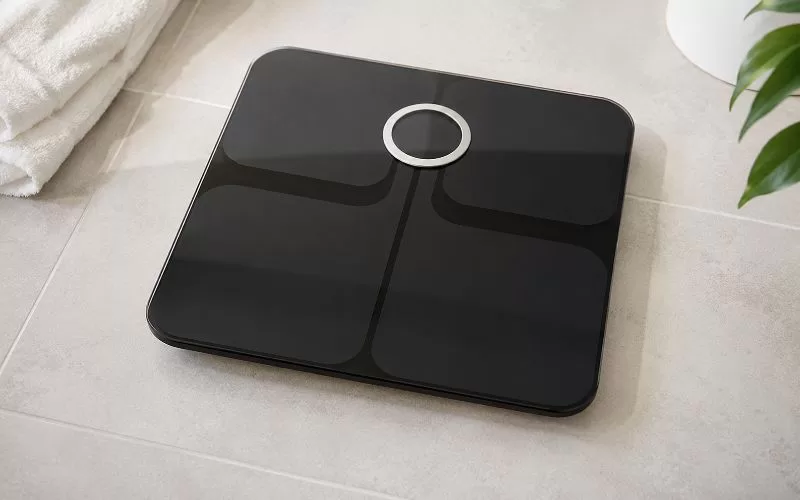
Updated note: This Fitbit Aria scale review is based on my original experience using the older Fitbit Aria Wi-Fi Smart Scale for more than six months. I no longer use this scale, and the Fitbit app experience has changed since this review was first published. However, the original review still has value for anyone who owns an older Fitbit Aria, is considering buying one secondhand, or wants to understand the pros and cons before putting time into setup.
I have used and reviewed several Fitbit products over the years, including the Fitbit Ultra, Fitbit One, and Fitbit Premium membership. The Fitbit Aria scale felt like a natural addition because it promised one of the things I wanted most from a smart scale: automatic weight tracking without having to manually log every weigh-in. The idea was excellent. The experience was more complicated.
The Fitbit Aria was designed to measure weight, estimate body fat percentage, recognize multiple users, and upload the data to a Fitbit account. On paper, that made it a helpful tool for anyone trying to keep better track of weight trends as part of a broader healthy living routine. In real life, the scale had features I genuinely liked, but it also came with setup issues, Wi-Fi frustrations, and accuracy concerns that made it harder to fully trust.
What the Fitbit Aria Scale Was Designed to Do
The original Fitbit Aria was a Wi-Fi smart scale that measured body weight and estimated body fat percentage using bioelectrical impedance analysis. According to the original Fitbit Aria user manual, the scale was intended for home use and automatically uploaded weight and body fat data to a Fitbit dashboard once connected. That automatic syncing was the feature that made the scale so appealing.
Instead of weighing yourself and then remembering to enter the number later, the Aria was supposed to handle that part for you. Step on the scale, let it recognize the user, and have the data recorded in your Fitbit account. For people already using a Fitbit tracker, that kind of connection made sense.
The promise was convenience, consistency, and better tracking over time. When it worked, that part was great. The problem was that getting to that point was not as smooth as it should have been.
Fitbit Aria Setup Issues
Setup was one of my biggest frustrations with the Fitbit Aria scale. The official instructions were not as clear as they needed to be, and my first mistake was assuming that the Fitbit software I already had on my computer was the same setup needed for the scale. It was not.
I eventually learned that the scale required a separate setup process. Once I found that, I still had to deal with extra steps that felt more complicated than they should have been. At one point, I had to disconnect my Ethernet cord from my computer to get the scale connected, which was not something I expected from a consumer product that was supposed to make tracking easier.
This became even more frustrating when I changed routers and had to reconnect the scale. I consider myself comfortable with technology, but even then, getting the Fitbit Aria scale connected again took longer than it should have. If you are dealing with this older scale today, my archived post on setting up the Fitbit Aria scale may still help explain what the original process looked like, but the app and account experience has changed since then.
Wi-Fi and Connectivity Problems
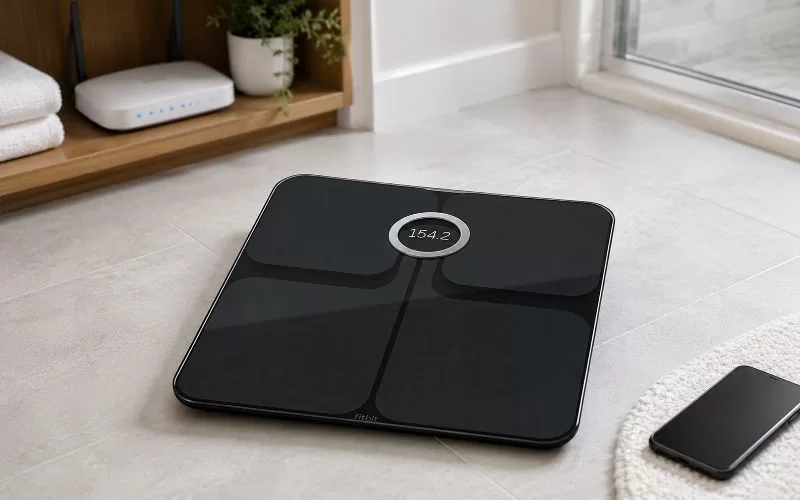
The Fitbit Aria scale connected through Wi-Fi, which sounded convenient until the connection became unreliable. In my case, keeping the scale in the bathroom created problems because it did not always connect to my router from that location. I had to move it out of the bedroom area to get it to upload.
To be fair, the scale did not lose the record of the weights. It held the weigh-ins and uploaded them once it was able to connect. That was a useful feature, but it still defeated part of the purpose of having an automatic smart scale.
The original Aria also had specific network requirements. The Fitbit Aria user manual says the scale required an 802.11b-compatible wireless network, which helps explain why some users may run into problems with newer routers or updated home Wi-Fi settings. If you already own this scale and it still syncs reliably, that is a point in its favor. If you are buying one used, Wi-Fi compatibility is one of the first things I would consider.
Accuracy and Body Fat Readings
Accuracy was the most disappointing part of the Fitbit Aria scale for me. I know that different scales can show slightly different numbers, and I do not expect every scale to match perfectly. What I do expect is consistency from the same scale used under the same conditions.
With the Fitbit Aria, I could step on the scale three times in a row in the morning and get different weight readings. That made it harder to trust the number, especially if I was using it to track weight loss or changes over time. The body fat percentage readings were even more frustrating because they had large swings from day to day that did not feel realistic.
Body fat estimates from home scales should always be treated as estimates, not medical measurements. The original Aria used bioelectrical impedance analysis, and factors like hydration, timing, foot placement, and the surface under the scale can affect readings. Even knowing that, the inconsistency made me question whether the scale was giving me a helpful trend or just adding confusion.
What I Liked About the Fitbit Aria Scale
There were several things I liked about the Fitbit Aria, which is why I wanted to like the scale more than I did. The design felt sturdy, and the scale itself had a larger surface that made it comfortable to stand on. It also gave a quick reading without needing the tap-to-start process that some older digital scales required.
The user recognition feature also worked well in our house. My husband and I had different enough weights that the scale could tell us apart without any issue. I did wonder how well that would work in a household where multiple users were closer in weight, but for us, that part was fine.
The biggest positives were:
- Sturdy design and solid feel
- Larger surface area
- Quick step-on reading
- Automatic syncing when the Wi-Fi connection worked
- User recognition for multiple people
- Weight and body fat tracking in one device
Those features are why the idea behind the scale was so good. It aimed to remove the extra step between weighing yourself and tracking your progress, which is exactly what many people want from a smart scale.
What I Did Not Like
The problems were not small enough for me to overlook. The setup process was frustrating, the Wi-Fi connection was not reliable from the room where I wanted to keep the scale, and the readings were not consistent enough for me to trust completely. A smart scale can have great features, but if the basic number feels questionable, the extra technology loses some of its value.
The biggest drawbacks were:
- Setup was more complicated than expected
- Router changes could create more setup frustration
- Wi-Fi connection depended heavily on location
- Weight readings varied during back-to-back weigh-ins
- Body fat percentage changed more than seemed reasonable
- The scale added convenience only when everything worked correctly
The Fitbit Aria had a good concept, but the execution did not fully match the promise for me. I wanted a scale that made tracking easier and more reliable. Instead, I often felt like I was questioning whether the number was useful.
Fitbit Aria vs. Fitbit Aria Air
The current Fitbit scale sold through Google is the Fitbit Aria Air, which is not the same product as the original Fitbit Aria reviewed here. This matters because people searching for a Fitbit Aria scale review may be comparing older Aria models with the newer Aria Air. The newer model focuses more on weight tracking, BMI in the Google Health app, Bluetooth syncing, and trend charts.
According to Google’s Fitbit scale help page, the original Aria and Aria 2 measured weight and body fat percentage, while Aria Air does not calculate body fat percentage. Aria Air also syncs differently because it uses Bluetooth through the Google Health app instead of the older Wi-Fi setup process. That may make setup simpler for some users, but it also means the newer scale is not a direct replacement if you specifically want body fat percentage from the scale itself.
Is the Fitbit Aria Scale Still Worth Using?
If you already own the original Fitbit Aria and it still works, I would not rush to replace it just because it is older. If it connects, syncs, recognizes users correctly, and gives you consistent enough readings to track long-term trends, it may still serve its purpose. For someone who is already invested in the Fitbit or Google Health ecosystem, that can still be useful.
If you are considering buying a used Fitbit Aria, I would be more cautious. The scale may be inexpensive secondhand, but the setup and Wi-Fi requirements are the risk. You may spend more time troubleshooting than the savings are worth, especially if your main goal is simple weight tracking.
I would only consider buying the older Fitbit Aria scale used if:
- The price is very low
- You are comfortable troubleshooting older tech
- You understand that setup may not match older instructions
- You are okay with possible Wi-Fi compatibility issues
- You mainly want weight trends, not perfect daily precision
For most people who want a smart scale today, a current Bluetooth scale may be the easier option. It depends on whether you want to tinker with an older device or simply step on the scale and move on. After using the Fitbit Aria, I eventually switched to a RENPHO Smart Scale, which has been a better fit for how I track weight and body composition today.
Frequently Asked Questions About the Fitbit Aria Scale
Does the Fitbit Aria scale measure body fat?
Yes, the original Fitbit Aria measured weight and estimated body fat percentage. Google’s current scale support information also notes that Aria and Aria 2 measure body fat percentage, while Aria Air does not. Since body fat readings from home scales are estimates, I would use them as a trend rather than a precise measurement.
Why did my Fitbit Aria scale have Wi-Fi issues?
The original Fitbit Aria connected directly to a home wireless network and had specific network requirements. In my experience, the scale did not always connect well from the bathroom, so location mattered. Older smart devices can also be more sensitive to router changes, network names, passwords, and compatibility settings.
Is Fitbit Aria the same as Fitbit Aria Air?
No. The original Fitbit Aria was a Wi-Fi smart scale that measured weight and estimated body fat percentage. The Fitbit Aria Air is a newer Bluetooth scale that displays weight and syncs to the Google Health app, where users can view BMI and trends.
Should you buy a used Fitbit Aria scale?
Only if it is inexpensive and you are comfortable with possible setup issues. The scale may still be useful if it connects properly, but I would not buy one expecting a smooth modern setup experience. For most people, a current smart scale will probably be less frustrating.
What was the biggest issue with the Fitbit Aria scale?
For me, the biggest issue was accuracy and consistency. Setup and Wi-Fi problems were frustrating, but inconsistent weight readings and large body fat percentage swings made it harder to trust the scale for tracking progress.
Overall Verdict on the Fitbit Aria Scale
The Fitbit Aria scale had a strong idea behind it. I liked the automatic syncing, the sturdy design, the larger surface, and the convenience of having weigh-ins connected to my Fitbit account. When the scale worked the way it was supposed to, I could see why people wanted this kind of product.
The problem was that the weak points mattered. Setup was frustrating, Wi-Fi connectivity was not as reliable as I hoped, and the readings were not consistent enough for me to fully trust. For an older Fitbit user who already owns the scale and has it working, the Aria can still be useful. For someone considering buying one today, I would go in knowing that the setup process, Wi-Fi requirements, and accuracy concerns may be more trouble than they are worth.