
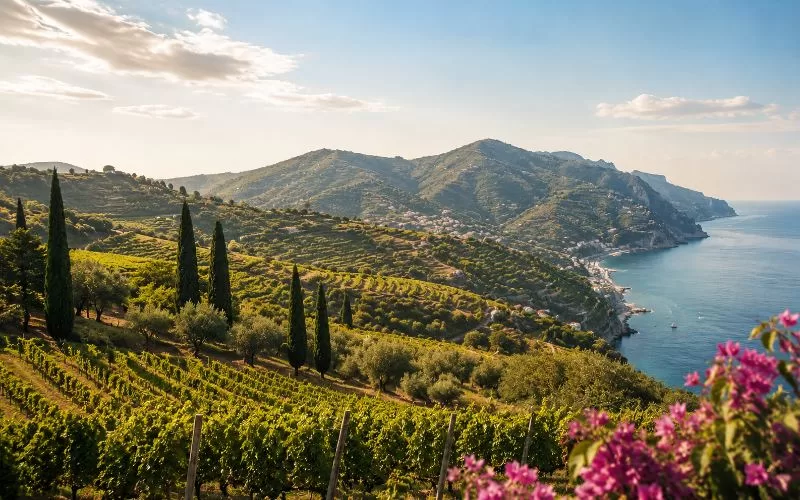
Planning a Tuscany and Amalfi Coast itinerary gives you the best of Italy’s countryside and coast. Tuscany is known for Renaissance cities, rolling countryside, vineyards, medieval hill towns, and long, leisurely meals. The Amalfi Coast offers dramatic cliffs, pastel villages, sparkling water, lemon groves, and some of the most memorable coastal views in Europe. Together, they make a beautiful Italian trip for travelers who want a mix of culture, scenery, food, and relaxed exploring without spending the entire vacation in one place.
The key is not trying to see everything. Tuscany and the Amalfi Coast are not side-by-side, so this itinerary works best when you give yourself enough time to enjoy each region and plan the travel day between them carefully. If you are traveling internationally for the first time in a while, building in a little breathing room can make the entire trip feel more manageable.
How Many Days Do You Need for Tuscany and the Amalfi Coast?
A Tuscany and Amalfi Coast itinerary is best with at least eight to ten days. You can do a shorter version in one week, but it will feel more rushed, especially once you factor in arrival time, transportation, hotel changes, and sightseeing.
For a more comfortable pace, plan on spending four or five days in Tuscany and three or four days along the Amalfi Coast. This gives you time to enjoy Florence, see the countryside, visit a smaller Tuscan town, and still have several days for Positano, Amalfi, Ravello, or a nearby coastal base like Sorrento.
A ten-day trip gives you the most flexibility. You can start in Florence, explore Tuscany, take a travel day south, and then finish with the Amalfi Coast before flying home from Naples or Rome.
Best Route for a Tuscany and Amalfi Coast Itinerary
For most travelers, the easiest route is to begin in Tuscany and end near the Amalfi Coast. Florence is a natural starting point because it is well connected by train and makes a good base for the first part of the trip. From there, you can visit Siena, Chianti, and other nearby towns before heading south toward Naples, Sorrento, or Salerno.
A simple route could look like this:
Day 1: Arrive in Florence
Day 2: Explore Florence
Day 3: Visit Siena
Day 4: Spend the day in Chianti or the Tuscan countryside
Day 5: Travel from Florence to Naples or Sorrento
Day 6: Visit Positano
Day 7: Explore Amalfi and Atrani
Day 8: Spend time in Ravello
Day 9: Add Capri, Pompeii, or a relaxed coastal day
Day 10: Depart from Naples or Rome
This route keeps the trip organized without forcing too many hotel changes. It also gives you a nice contrast between the city, countryside, and coast.
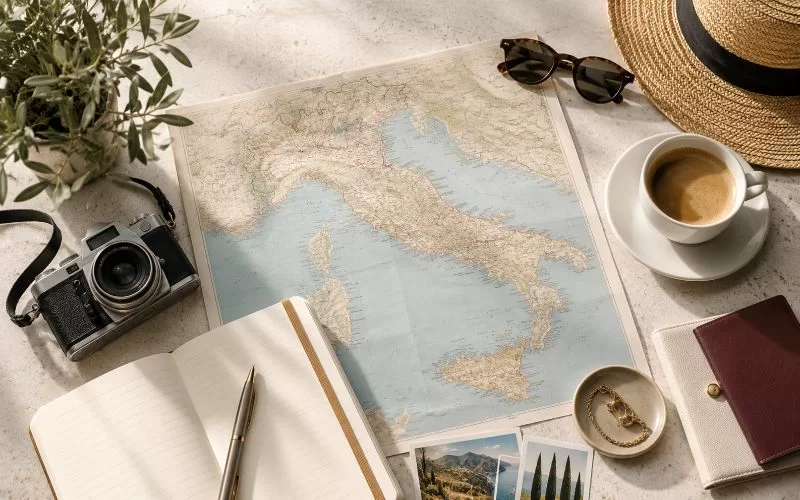
Days 1–2: Florence and the Heart of Tuscany
Florence is one of the best places to begin a Tuscany trip because it gives you history, architecture, art, shopping, and memorable food in one walkable city. Spend your first full day getting oriented instead of trying to rush through every major attraction.
The Duomo is the city’s most recognizable landmark, and even if you do not climb to the top, it is worth taking time to admire the cathedral, the dome, and the surrounding piazza. The Uffizi Gallery is another major stop for art lovers, while the Ponte Vecchio, Piazza della Signoria, and the streets along the Arno River are perfect for slower exploring.
If you only have one full day in Florence, choose two or three main sights and leave room for wandering. Florence is best enjoyed when you are not moving from reservation to reservation all day. A quiet dinner, a gelato stop, and an evening walk can be just as memorable as the museums.
Day 3: Siena and a Slower Look at Tuscany
Siena is a beautiful day trip from Florence and a wonderful way to experience a different side of Tuscany. The city feels more intimate than Florence, with winding streets, warm-toned buildings, and one of Italy’s most famous public squares, Piazza del Campo.
Spend time walking through the historic center, visiting the Siena Cathedral, and enjoying the views from the city’s higher points. Siena is the kind of place where you do not need an overly packed schedule. A few hours of relaxed exploring can give you a strong sense of the city’s character.
If you prefer not to move hotels, you can visit Siena as a day trip and return to Florence in the evening. If you want a more countryside-focused itinerary, consider spending this night outside Florence in a Tuscan villa, agriturismo, or small-town hotel.
Day 4: Chianti and the Tuscan Countryside
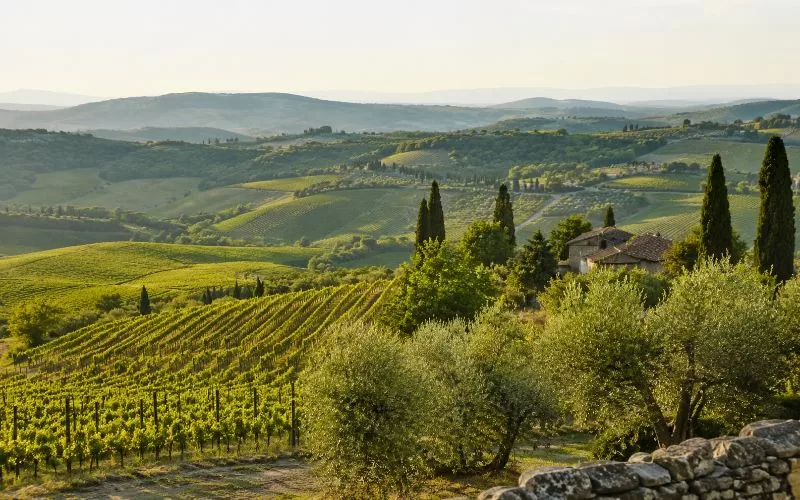
A Tuscany and Amalfi Coast itinerary feels more complete when you include at least one day in the countryside. Chianti is one of the most popular choices because it offers vineyard views, small villages, olive groves, scenic drives, and long lunches that feel exactly like the Italy many travelers imagine.
Greve in Chianti, Castellina in Chianti, and nearby countryside routes all make good options depending on where you are staying. If you plan to visit wineries, consider booking a tour or driver instead of renting a car and trying to manage tastings on your own.
This is also a good day to slow down and enjoy the food side of Tuscany. Pasta, local cheeses, olive oil, rustic bread, and regional wines are part of the experience. If you are keeping an eye on your travel budget, choose one special meal or tasting experience and keep the rest of the day simple.
Day 5: Travel from Tuscany to the Amalfi Coast
The travel day between Tuscany and the Amalfi Coast is the part of the trip you want to plan carefully. It is very doable, but it is not the day to add too many extra stops.
Most travelers will take a train from Florence to Naples, then continue toward Sorrento, Salerno, or the Amalfi Coast. From Naples, you can continue by train, ferry, bus, or private transfer depending on where you are staying and how much luggage you have.
If you are arriving through Naples or want a more direct option after a long travel day, booking a private transfer from Naples to Sorrento can make the transition easier, especially if you are traveling with family, larger luggage, or do not want to manage multiple connections.
This is also where packing light matters. The Amalfi Coast has stairs, hills, ferries, and narrow streets, so anything that makes luggage easier will help. Simple tips for packing your suitcase can make hotel changes and train travel feel much less stressful.
Days 6–8: Positano, Amalfi, and Ravello
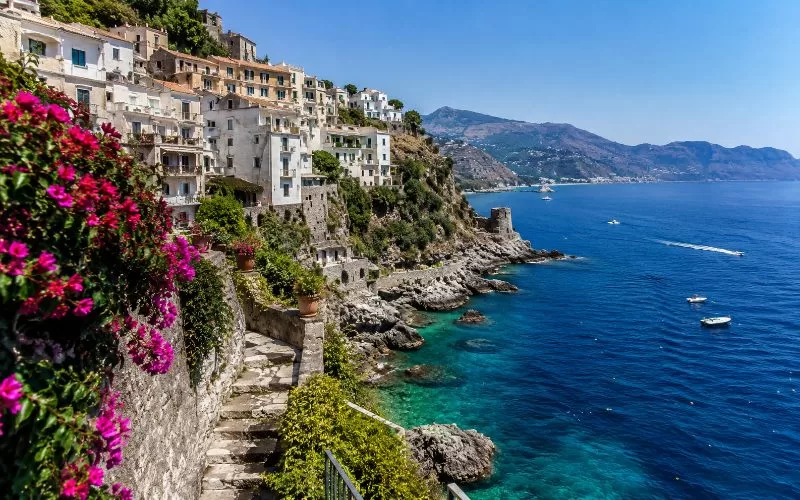
After several days in Tuscany, the Amalfi Coast feels like a completely different kind of Italy. The pace is slower, the views are dramatic, and the towns are built into the cliffs in a way that makes even a short walk feel scenic.
Positano
Positano is the Amalfi Coast town many people picture first, with colorful buildings stacked above the sea and steep lanes leading down toward the beach. It is beautiful, but it can also be busy and expensive, especially during peak season.
Spend your time walking through the town, browsing small shops, stopping for coffee or lunch with a view, and enjoying the beach area. Positano is not a place where you need a long list of attractions. The setting itself is the experience.
Amalfi and Atrani
Amalfi is a good coastal stop because it has history, restaurants, shops, and easier access than some smaller towns. The cathedral is the main landmark, and the central piazza is a nice place to pause between exploring.
Nearby Atrani is smaller and quieter, and it can be a lovely addition if you want to step away from the busiest parts of the coast. Since it is close to Amalfi, you can often pair both towns in the same day without feeling rushed.
Ravello
Ravello sits high above the coast and offers some of the most beautiful views in the region. It is quieter than Positano and Amalfi, with gardens, villas, and a more peaceful atmosphere.
Villa Rufolo and Villa Cimbrone are two of the most popular stops, especially for the views. Ravello is a good choice for travelers who want the Amalfi Coast scenery without spending the entire day by the beach.
Where to Stay: Tuscany and Amalfi Coast
Where you stay can shape the entire feel of the trip. In Tuscany, Florence is the most practical base if you want easy access to trains, museums, restaurants, and day trips. If you want a more romantic countryside experience, consider staying outside the city for one or two nights in Chianti or near Siena.
On the Amalfi Coast, Sorrento is often more practical for first-time visitors because it has strong transportation connections and is easier to manage than some cliffside towns. Positano is the most iconic and romantic, but it is usually more expensive and involves more stairs. Amalfi is central and convenient for exploring the coast, while Ravello is best for travelers who want quiet views over beach access.
If this trip is for a honeymoon, anniversary, or milestone vacation, it may also be worth comparing curated Italy luxury trips before booking everything separately. For a special occasion, having help with hotels, transfers, and the overall flow of the itinerary can be worth considering.
Best Ways to Get Around Tuscany and the Amalfi Coast
Tuscany and the Amalfi Coast require different transportation strategies. In Tuscany, trains work well between larger cities like Florence and Siena, but a car can be helpful if you want to explore smaller villages or the countryside at your own pace.
The Amalfi Coast is different. Driving gives you flexibility, but the roads are narrow, parking is limited, and summer traffic can be stressful. Many travelers are happier using ferries, buses, private drivers, or a combination of options depending on the season and where they are staying.
Ferries can be a beautiful way to see the coast from the water, but schedules are seasonal and weather-dependent. Buses are budget-friendly, but they can be crowded. Private transfers cost more, but they can be helpful on arrival and departure days.
The best choice depends on your comfort level, luggage, budget, and travel season.
When to Visit Tuscany and the Amalfi Coast
Spring and fall are often the best times to plan this itinerary. May, early June, September, and early October usually offer a nice balance of pleasant weather and manageable crowds.
July and August can still be beautiful, but they are hotter, busier, and more expensive along the Amalfi Coast. If you travel during peak summer, book hotels early, reserve popular restaurants when needed, and keep your daily plans realistic.
Spring brings flowers, green hills, and comfortable sightseeing weather in Tuscany. Fall brings harvest season, warm colors, and a slightly calmer feeling once the busiest summer crowds begin to fade.
Tips for Planning a Smoother Italy Trip
A Tuscany and Amalfi Coast itinerary works best when you resist the urge to add too much. Florence, Siena, Chianti, Positano, Amalfi, and Ravello already give you a full and varied trip. Adding Rome, Capri, Pompeii, Pisa, Lucca, or Cinque Terre can be wonderful, but only if you have enough days.
Book major museums and popular experiences ahead of time, especially in Florence. Leave space between train arrivals and transfers. Give yourself slower mornings when possible. Italy is not the kind of trip that needs to be packed from sunrise to bedtime to feel worthwhile.
It also helps to think about what kind of trip you want most. If you care about art and food, give Tuscany more time. If you want sea views, boat rides, and coastal villages, lean more heavily toward the Amalfi Coast. If this is a family vacation, build in extra downtime so the trip feels enjoyable instead of exhausting.
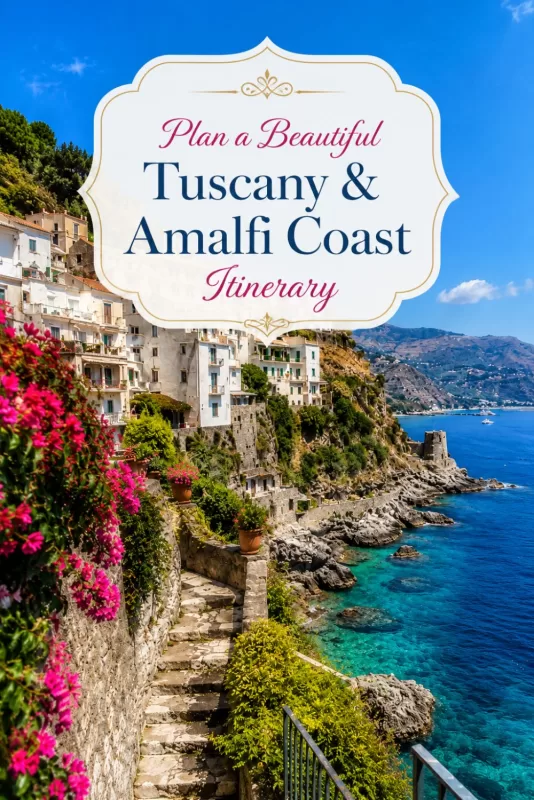
Save this Tuscany and Amalfi Coast itinerary for planning a beautiful Italy trip with countryside views, coastal villages, and practical travel tips.
Is Tuscany and the Amalfi Coast a Good Combination?
Tuscany and the Amalfi Coast are a beautiful combination because they offer contrast without feeling disconnected. Tuscany gives you art, history, countryside, wine, and quiet villages. The Amalfi Coast gives you sea views, cliffside towns, bright citrus flavors, and a slower coastal rhythm.
The trip does require thoughtful planning, but it is worth the effort. With the right route, enough time in each region, and a realistic approach to transportation, a Tuscany and Amalfi Coast itinerary can feel both polished and relaxed.
It is the kind of Italy trip that gives you more than one version of the country: the timeless beauty of Florence and Siena, the soft hills of Chianti, and the unforgettable coastline of Positano, Amalfi, and Ravello.