
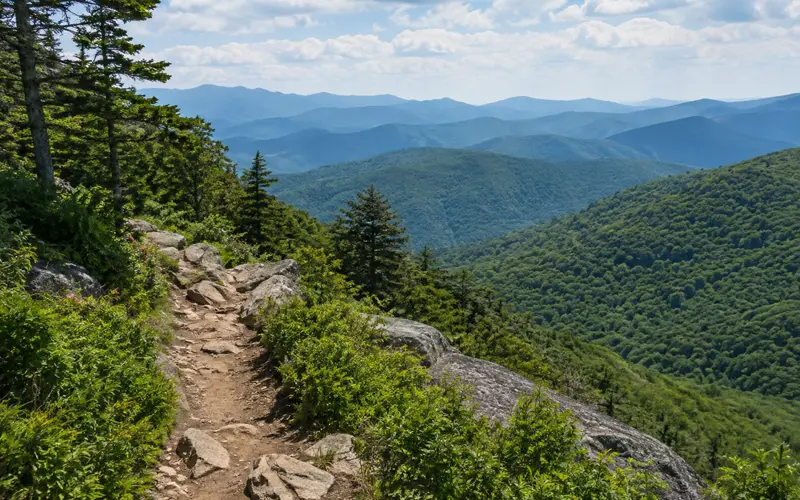
North Carolina is one of those states where the scenery can change dramatically depending on where you go. Head west and you will find the Blue Ridge Mountains, rocky summits, waterfalls, grassy balds, and sections of the Appalachian Trail. Head east and the landscape gradually shifts toward flatter terrain, coastal forests, wetlands, and nature trails, while areas around Charlotte offer wooded hiking options without venturing deep into the mountains.
That variety makes hiking in North Carolina appealing whether you want a relatively easy nature walk or a trail that requires considerably more effort. Some of the best hiking trails in North Carolina lead to waterfalls and panoramic overlooks, while others take you across mountain ridges where the hike itself is as memorable as the destination.
If exploring trails is something you enjoy wherever you travel, North Carolina offers a very different experience from our Florida hiking trails, trading palms and wetlands for mountain forests, granite faces, and high-elevation views.
North Carolina Hiking Trails at a Glance
| Hiking Area | Best For | General Difficulty |
|---|---|---|
| Grandfather Mountain | Mountain views and challenging terrain | Moderate to strenuous |
| Art Loeb Trail | Backcountry hiking and high-elevation scenery | Strenuous |
| Graveyard Fields | Waterfalls and shorter hikes | Easy to moderate |
| Stone Mountain State Park | Waterfalls, granite formations, and variety | Moderate |
| Roan Mountain | Grassy balds and mountain views | Easy to moderate |
| Chimney Rock State Park | Waterfalls and panoramic views | Moderate |
| Appalachian Trail | Classic North Carolina mountain hiking | Varies |
| Looking Glass Rock Trail | A challenging day hike | Moderate to strenuous |
| Whitewater Center | Convenient wooded trails near Charlotte | Easy to moderate |
Trail conditions, road access, and temporary closures can change, particularly in mountain areas, so it is worth checking the appropriate park or forest website before heading out.
Grandfather Mountain
Grandfather Mountain is one of North Carolina’s most recognizable mountain destinations, and there are trails here for very different ability levels. Experienced hikers looking for a serious challenge can tackle the Grandfather Trail, which crosses the mountain crest over MacRae, Attic Window, and Calloway peaks. This is not a casual walk. The route includes steep sections where hikers use installed cables and ladders, and Grandfather Mountain recommends it only for experienced hikers.
Fortunately, you do not have to take on the most technical trail to enjoy the mountain. The Black Rock Trail is a much more approachable alternative, running about one mile each way with roughly 300 feet of elevation change. It leads through woodland and rock formations to panoramic mountain views, making it a good choice when you want the scenery without the ladders and extremely steep climbs.
Grandfather Mountain is also home to the Mile High Swinging Bridge, so it is easy to turn a hike into a longer day of sightseeing in the Blue Ridge Mountains.
Art Loeb Trail
For hikers looking for something considerably more adventurous, the Art Loeb Trail is one of western North Carolina’s classic backcountry routes. Rather than thinking of it as a single afternoon hike, it is better viewed as a trail that can be explored in sections or combined with connecting trails to create shorter routes.
One of the most scenic portions crosses Black Balsam Knob and Tennent Mountain, where elevations rise above 6,000 feet and open grassy balds provide expansive views. The U.S. Forest Service rates this section as difficult and notes that weather can change quickly at these elevations. Once the trail enters Shining Rock Wilderness, hikers should also be comfortable navigating because wilderness sections are not marked with the usual trail signs and blazes.
For a shorter option, hikers can combine part of the Art Loeb Trail with the Ivestor Gap Trail to create a roughly five-mile loop through some of the area’s beautiful high-country scenery.
Graveyard Fields
Despite its unusual name, Graveyard Fields is one of the most inviting hiking areas along the Blue Ridge Parkway. Located at Milepost 418.8, the area sits in a high mountain valley surrounded by ridges and is especially well known for its waterfalls.
The Graveyard Fields Loop Trail is about 1.3 miles and is generally considered an easy hike, although the spur trails leading toward the waterfalls become steeper. The route begins by descending from the overlook and includes paved sections before continuing onto more natural terrain that can become muddy after rain.
This is a good choice for travelers who want a shorter North Carolina hike that still delivers the kind of mountain scenery that makes the Blue Ridge Parkway so popular. Because parking at Graveyard Fields can fill quickly during busy seasons, arriving earlier in the day can make the visit much easier.
If you are building a longer mountain getaway around this area, there are plenty of amazing sights to see in the Smoky Mountains, including waterfalls, scenic drives, and mountain overlooks.
Stone Mountain State Park
Stone Mountain State Park combines mountain hiking with waterfalls, forests, historic sites, and the enormous granite dome that gives the park its name. It is a particularly good destination when you want enough trail choices to spend several hours exploring rather than hiking to one overlook and heading home.
The Stone Mountain Loop Trail is one of the park’s signature hikes, traveling around the granite mountain and connecting several of the area’s major sights. Depending on the route and current access, hikers can encounter waterfalls, expansive views, forested sections, and the historic Hutchinson Homestead.
The park maintains a network of trails with varying difficulty levels, so there are options beyond the main loop. Because sections occasionally close for maintenance or construction, check the official Stone Mountain State Park trail information before planning your hike.
Roan Mountain and Carvers Gap
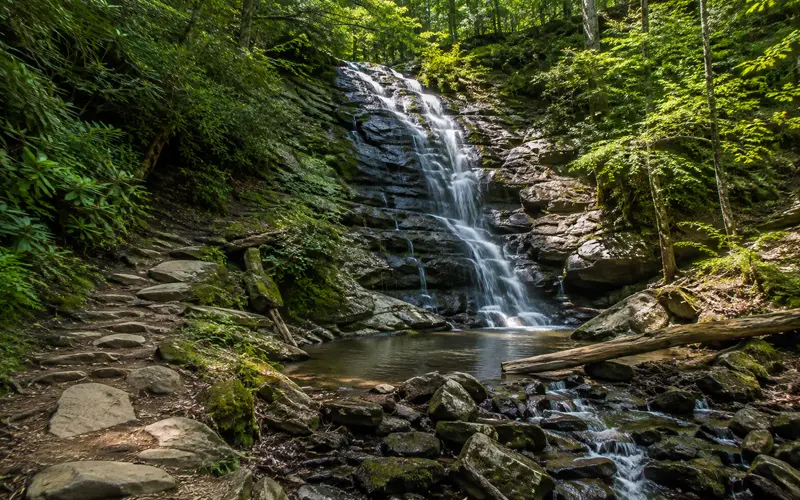
The Roan Highlands straddle the North Carolina-Tennessee border and offer some of the most beautiful high-elevation hiking in this part of the Appalachians. From Carvers Gap, which sits directly on the state line, hikers can step onto the Appalachian Trail and begin climbing across the area’s famous grassy balds.
A popular hike travels from Carvers Gap toward Round Bald and Jane Bald, where open terrain creates wide mountain views that can feel almost endless on a clear day. The parking area at Carvers Gap is about 14 miles north of Bakersville, North Carolina, and the Appalachian Trail Conservancy notes that it is extremely popular and can fill quickly.
For something gentler, the Cloudland Trail follows the crest of Roan Mountain for approximately 1.2 miles and is rated easy by the Forest Service. Late spring and summer bring additional color to the area, while fall transforms the surrounding mountains into layers of red, orange, and gold.
Chimney Rock State Park
Chimney Rock State Park offers the combination many travelers want from a mountain hike: dramatic views without requiring an all-day backcountry trek. The park has multiple trails ranging in difficulty, so you can choose a route based on how much climbing you want to do.
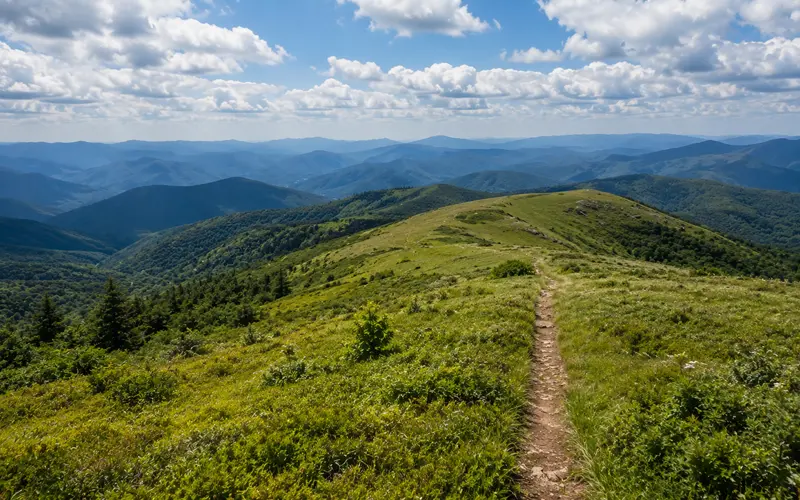
At the main Chimney Rock access, trails lead toward the park’s namesake rock formation as well as Hickory Nut Falls. The Outcroppings Trail uses a long series of stairs to reach Chimney Rock, where the reward is a sweeping view over Hickory Nut Gorge and Lake Lure.
The park currently offers 10 trails spread among several access areas, with some requiring paid admission at the Chimney Rock attraction and others accessible from free areas of the state park. Before visiting, check the official Chimney Rock State Park website for current trail availability and entry information.
Appalachian Trail
You certainly do not need to hike from Georgia to Maine to experience the Appalachian Trail. More than 200 miles of the A.T. travel through Pisgah and Nantahala National Forests in North Carolina, providing plenty of opportunities for day hikes.
One of the most accessible places to get a taste of the trail is Max Patch near Hot Springs. The 1.6-mile hike climbs onto a broad grassy bald with 360-degree mountain views, making it one of the better options for hikers who want a memorable payoff without committing to a long-distance trek. The Appalachian Trail Conservancy asks visitors to remain on designated trails to help protect the fragile landscape.
Hot Springs provides another interesting way to experience the A.T. because the trail passes directly through town. From there, hikers can take the Lover’s Leap route for elevated views of the French Broad River and surrounding mountains.
If your North Carolina trip includes a few hours on the road, these road trip tips can help make the drive more comfortable and enjoyable along the way.
Looking Glass Rock Trail
Looking Glass Rock rises prominently above Pisgah National Forest and has become one of the area’s signature landmarks. The hike to the top is rewarding, but it requires more effort than the distance alone might suggest.
The Looking Glass Rock Trail is approximately 3.1 miles one way and gains about 1,700 feet in elevation. The Forest Service rates it moderate, although the sustained climb can make it feel more demanding, especially in warm weather.
Switchbacks help manage the elevation gain as the trail climbs through the forest. Near the upper portions of the route, hikers can reach broad rock surfaces with impressive views across Pisgah National Forest. These exposed areas can have steep drop-offs, so caution is important near the edges.
Looking Glass Falls and Sliding Rock are also nearby, making this part of North Carolina easy to turn into a full day of outdoor sightseeing.
Whitewater Center Trails
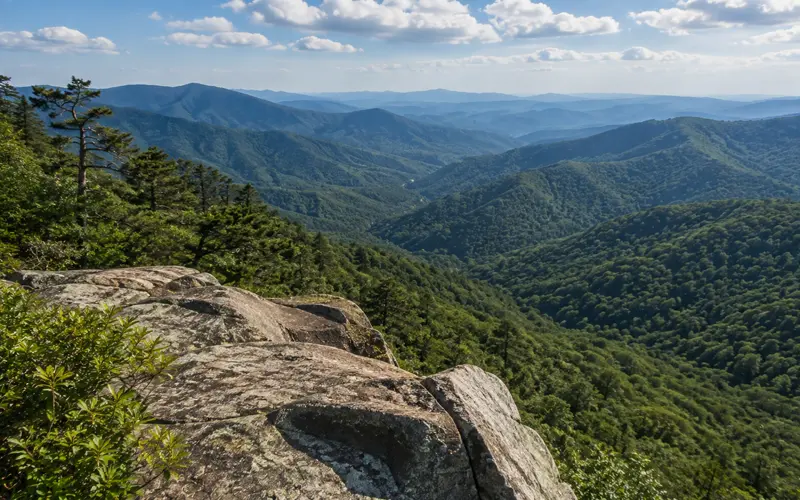
Not every great North Carolina hike requires a drive into the Blue Ridge Mountains. The Whitewater Center in Charlotte maintains more than 40 miles of trails across roughly 1,300 acres along the Catawba River. The network winds through hardwood and pine forests and gives hikers, runners, and mountain bikers an extensive outdoor playground close to the city.
The trails themselves do not require an activity pass, although parking fees may apply. Because rain and wet conditions can temporarily close trails to protect them from damage, it is a good idea to check the Whitewater Center’s current trail information before leaving.
This is one of the most convenient choices on the list for travelers staying around Charlotte who want to fit a few hours outdoors into a larger vacation without planning an entire mountain excursion.
Choosing the Right North Carolina Hike
The best hiking trail in North Carolina depends largely on the experience you want. Graveyard Fields works well when waterfalls and a shorter hike are the priority, while Grandfather Mountain and Looking Glass Rock provide more demanding climbs. Art Loeb appeals to hikers looking for a true backcountry experience, and the Roan Highlands and Max Patch are hard to beat when wide-open mountain views are at the top of your list.
Conditions in the North Carolina mountains can also be very different from what you find at lower elevations. Weather can change quickly, trails can remain muddy after rain, and storm damage or maintenance may affect access. Check current trail and road conditions, carry water, wear appropriate shoes, and choose a hike that fits the ability of everyone in your group.
For longer hikes, downloading a few podcasts for hikers before you head out can make quieter stretches of the trail more enjoyable.
Whether you want a waterfall walk, a challenging summit, or an afternoon surrounded by mountain scenery, the hiking trails in North Carolina offer an impressive amount of variety. You can spend one morning walking through a high-elevation valley and the next climbing toward a rocky overlook, which is exactly what makes this part of the country such a rewarding place to explore on foot.